PC reports and market data
Documents
Shooter Monthly #10: War Dogs Sells 2.2M, Cash Economy Breakdown and the 1v1v1 Debate
Bulkhead Studios’ War Dogs has disrupted the military shooter landscape, achieving 2.2 million sales within its first four days by prioritizing a systems-based design over traditional genre conventions.
- Bulkhead Studios’ War Dogs sold 2.2 million units in its first four days by utilizing a 100-player, three-team format and a systems-based design.
- The game’s persistent in-round cash economy allows players to purchase tactical reinforcements, which incentivizes objective-oriented play and reduces gear fear.
- The 1v1v1 format creates a unique dynamic that increases player agency and comeback potential, though it introduces concerns regarding positioning and vulnerability.
Where's Xbox going, and what happens when it gets there?
Microsoft is currently executing a significant restructuring of its Xbox division, prioritizing the profitability of established intellectual property such as Call of Duty, Fallout, and Halo.
- Microsoft is restructuring its Xbox division to prioritize the profitability of established IP like Call of Duty, Fallout, and Halo, moving away from a broad portfolio toward a model of consistent, high-impact output.
- The Game Pass subscription model is driving a shift toward fiscal discipline and organizational streamlining across the gaming industry to address inherent financial constraints.
- Disney has shifted its strategy from internal studio ownership to a disciplined licensing model, highlighted by a $1.5 billion investment in Epic Games.

Microsoft Moves Halo to Activision, Discord Courts Fanduel & Is RPG Grind Gone? |Games for Breakfast
Microsoft is undergoing a significant structural transformation, marked by 268 layoffs across its first-party studios and the strategic reassignment of the Halo franchise to Activision-led teams.
- Microsoft has laid off 268 employees from Halo Studios (formerly 343 Industries) and is shifting the development of future Halo titles to an Activision-based team.
- Discord is updating its age verification processes to facilitate the integration of advertisements for FanDuel, a move linked to the platform's broader push into sponsored content.
- The role of 'grind' in modern RPGs is being criticized as an outdated mechanic used to artificially extend game length, with hosts suggesting that developers should instead offer level-boosting options or better-integrated side content to prevent player frustration.

Design Club: Shroom and Gloom!
Shroom and Gloom represents a significant evolution in the roguelike deckbuilder genre by subverting established conventions popularized by titles like Slay the Spire.
- Shroom and Gloom utilizes a dual-deck system that separates combat cards from exploration and survival cards, creating a strategic interplay between the two mechanics.
- The game replaces traditional block mechanics with a health-management system where healing is tied to specific kill conditions, such as 'if fatal' effects, forcing players to plan turns around securing specific eliminations.
- The game features 'evolving' cards that become more powerful after being lodged in an enemy and returned to the player's hand upon the enemy's death.
Rainbow Six: Siege boss: We'll treat our players like kings and queens when GTA 6 comes out
Rainbow Six: Siege maintains its long-term viability by prioritizing a service-oriented model that emphasizes technical stability and tactical depth over the development of a sequel.
- Ubisoft is prioritizing long-term player retention and service quality to mitigate potential market disruption caused by the upcoming release of GTA 6.
- The development team manages a workforce of over 600 people to maintain the game through a modular architecture that avoids the need for a full sequel rebuild.
- The studio is leveraging a strategic partnership with Tencent to improve communication, bolster regional expansion, and enhance security protocols following previous cyberattacks.

These 3 Mistakes Will Destroy Your Game
Achieving a "Very Positive" rating on Steam is a predictable outcome of rigorous product management rather than viral marketing or gimmicks.
- To maintain high review scores, developers must simplify their game's core identity into a clear, concise message—such as a single hook—to ensure the product delivered matches the player's expectations.
- Bugs, Optimization, Pricing, and Settings (BOPS) are the primary factors that destroy review scores, with game-breaking bugs and inconsistent frame rates being the most critical technical failures.
- Developers should conduct thorough playtesting with a diverse group of testers—including critical peers—to accurately predict performance, as evidenced by a 97.5% recommendation rate from 170 playtesters closely mirroring the game's 94.9% Steam score.

The state of Japan's video game industry, plus how GTA 6 influenced Valor Mortis' $40 price point
Japan’s video game industry remains a global powerhouse, anchored by the enduring success of console giants like Nintendo and Capcom.
- Japan’s video game market generates $17 billion annually, with the $12 billion mobile sector facing increased competition from Chinese developers like Tencent and NetEase.
- PC gaming in Japan has more than doubled its market share since 2019, driven by pandemic-era consumer habits and increased publisher support.
- Lyrical Games is pricing its upcoming title, Valor Mortis, at $40 to position it as a high-value 'triple-I' alternative to massive AAA releases like GTA 6.

TWIG #401: Blizzard Goes All In, Roblox Breaks Out of Its Own App and Aniimo Nails Launch Day
The gaming industry is currently defined by a tension between aggressive expansion strategies from established giants and the emergence of high-performing independent titles.
- Blizzard Entertainment is aggressively expanding its production pipeline under Microsoft, with active development on multiple World of Warcraft iterations, a new Diablo title, and an open-world StarCraft shooter.
- Independent titles are finding significant market success by differentiating from platform shooters, evidenced by Wardogs reaching 2.2 million sales with 430,000 peak concurrent users and Aniimo hitting 125,000 concurrent users on Steam.
- Roblox is attempting to break out of its walled garden by launching standalone apps and browser-based play to improve discoverability and compete with broader free-to-play ecosystems.
Beyond Balatro: Why PlayStack doesn’t want a 100% hit rate
The modern gaming landscape is undergoing a fundamental shift where the traditional distinction between indie and AAA titles is becoming increasingly irrelevant.
- PlayStack strategically avoids a 100% hit rate to ensure resources are available for experimental projects that push genre boundaries.
- Maintaining an 85% profitability rate is the established benchmark for financial health at PlayStack.
- The traditional distinction between indie and AAA titles is becoming irrelevant, with success now driven by authentic, passion-led experiences rather than budget size.

Colossal Order's Mariina Hallikainen on leaving Paradox and life after Cities: Skylines
Colossal Order CEO Mariina Hallikainen reflects on the studio’s 17-year history, its recent departure from long-term publisher Paradox Interactive in November 2025, and the company’s future trajectory.
- Colossal Order ended its 15-year partnership with publisher Paradox Interactive in November 2025 after releasing four games, including the Cities: Skylines franchise.
- The studio is now self-sufficient and no longer requires publisher funding, allowing them to explore self-publishing or alternative partnerships that prioritize trust and open communication.
- Colossal Order is currently developing a new, unannounced simulation title, maintaining its long-standing focus on the PC simulation genre.
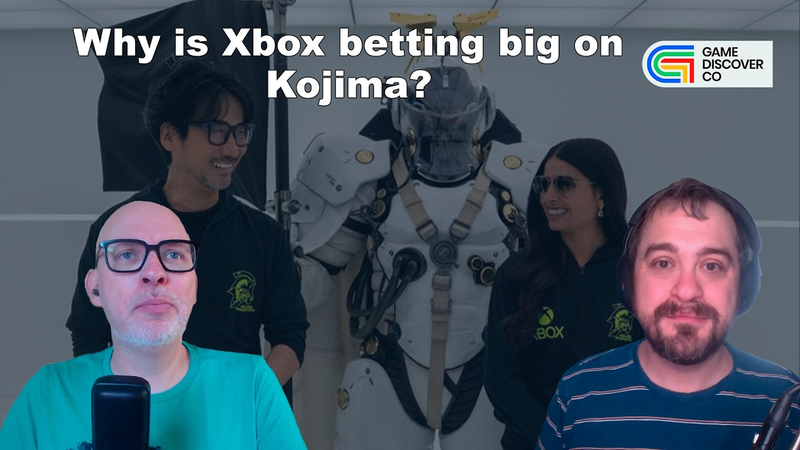
Why is Xbox betting big on Kojima?
The gaming industry is currently undergoing a structural transformation as the dominance of proprietary PC launchers wanes and the financial viability of massive, high-budget single-player projects faces intense scrutiny.
- Sony’s decision to drop Hideo Kojima’s 'Physint' project is likely driven by the financial risk of high-budget titles, as games like 'Death Stranding' require sales of 6 to 7 million copies to justify production costs estimated at $150 million to $200 million.
- Ubisoft is beginning to scale back its intrusive PC launcher on Steam, testing the removal of the requirement on 'Prince of Persia: The Lost Crown' as part of a broader strategy to improve user experience.
- The AAA game industry is facing a structural shift where the traditional model of massive, high-cost investment is becoming unsustainable, leading to calls for a period of 'faceplanting' to force a transition toward more unconventional and cost-effective development methods.

The shooter that Tencent abandoned: Wardogs hits 2m sales in one weekend
The tactical shooter Wardogs has emerged as a significant commercial success, achieving 2 million unit sales during its opening weekend.
- The tactical shooter Wardogs achieved 2 million unit sales during its opening weekend, reaching profitability shortly after launch.
- Bulkhead successfully launched Wardogs independently after losing support from Tencent and navigating a period of organizational instability.
- The studio’s operational model prioritizes internal autonomy and a developer-led creative vision, explicitly rejecting external publisher influence and industry trends.