PC reports and market data
Documents
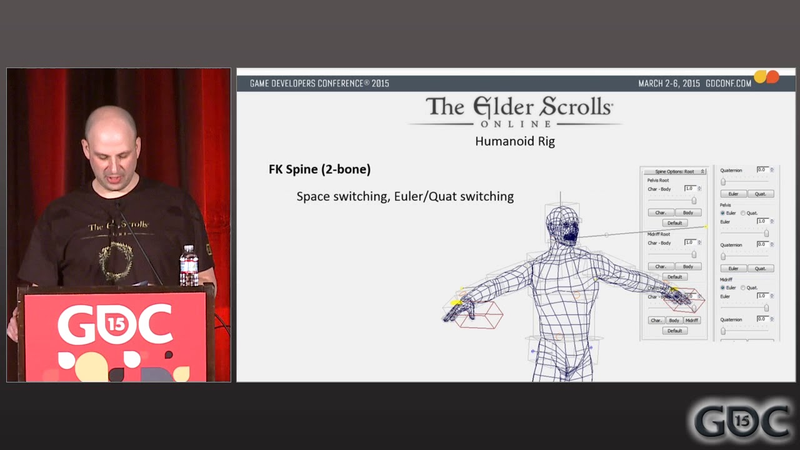
Tech Art in Tamriel: The Elder Scrolls Online's Character Tools and Pipeline
The development of The Elder Scrolls Online required a sophisticated, data-driven technical art pipeline to manage the massive scale of its character assets.
- The Elder Scrolls Online utilized a modular, XML-based rigging system in 3ds Max to manage character assets across ten playable races and ninety unique monster rigs.
- To meet DirectX 9 performance constraints, the team enforced a standardized humanoid rig limited to 77 bones, enabling automated asset creation and procedural animation for elements like robes and tails.
- A data-centric architecture allowed for the management of thousands of armor and character combinations while enabling tool updates across the network without requiring software restarts.

DayZ - Tragedy of the Commons: The Game - Extra Credits
The tragedy of the commons serves as a foundational economic and ecological theory, illustrating how individual self-interest often leads to the depletion of shared resources, ultimately harming the collective and the individual alike.
- The 'tragedy of the commons' occurs in multiplayer survival games like DayZ when individual mistrust and fear of scarcity lead players to hoard resources and attack others, ultimately destroying the collective environment.
- Multiplayer environments disrupt the long-term strategic resource management typically found in single-player games because players assume bad faith from others, triggering a self-fulfilling cycle of competition and waste.
- Traditional solutions to resource depletion, such as privatizing assets or implementing punitive enforcement, often fail to solve the problem efficiently due to high overhead costs and reduced system utility.
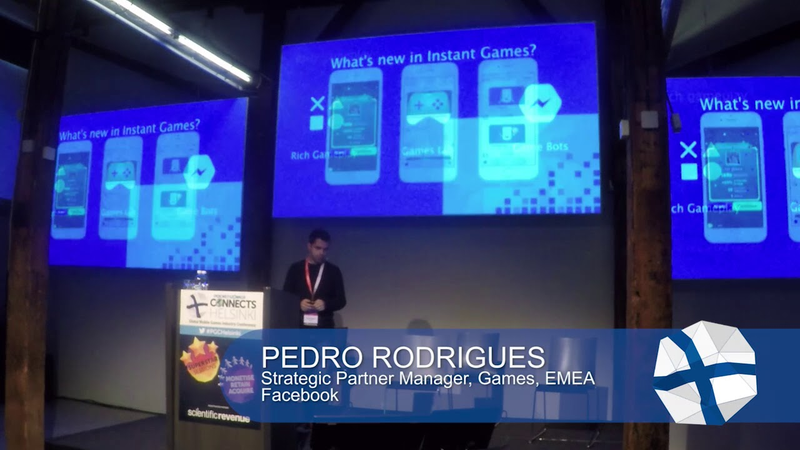
Build smarter, grow faster and monetise better
Facebook aims to solidify its position as a central hub for the global gaming community by providing end-to-end solutions for discovery, engagement, and monetization.
- Facebook leverages a social graph of 800 million monthly active users to integrate gaming directly into social contexts like Messenger, groups, and feeds to improve retention and re-engagement.
- The platform's video strategy targets a monthly audience of 665 million gaming content viewers by integrating live streaming and eSports content into the dedicated Watch tab.
- The Instant Games platform utilizes HTML5 technology to facilitate frictionless, social-first mobile gaming experiences driven by leaderboards, messenger bots, and turn-based notifications.
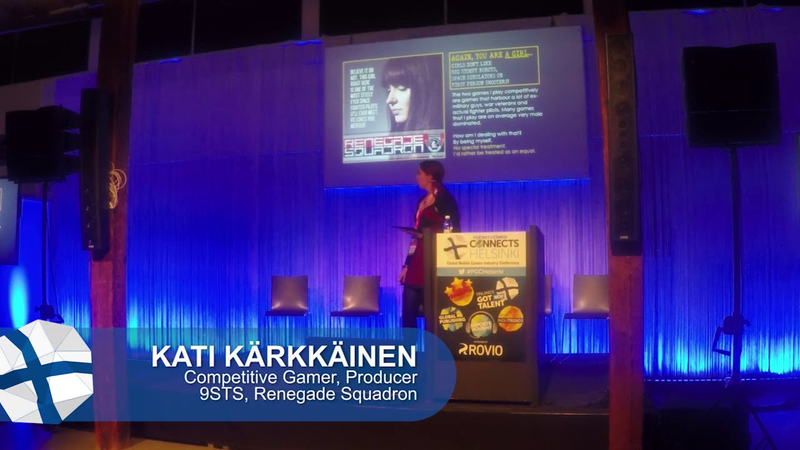
Piloting my way up – Being a competitive woman In gaming
Kati Kärkkäinen, a producer and competitive gamer, explores the cultural and psychological barriers preventing women from participating in esports.
- The underrepresentation of women in esports is primarily driven by societal conditioning that discourages girls from developing traits like aggression, competitiveness, and assertiveness, rather than solely by harassment.
- Competitive success in high-performance gaming requires specific, non-gendered psychological traits including stress tolerance, resilience, and ego strength, all of which can be cultivated through deliberate practice.
- Women often gravitate toward games marketed to their gender or those perceived as requiring 'hard work' over 'brilliance,' reflecting broader societal beliefs about gendered capabilities.

Trial by Fire: The Making of Little Inferno
Little Inferno, developed by Tomorrow Corporation, serves as a case study in indie game development, specifically highlighting the challenges of balancing creative ambition with production constraints.
- Tomorrow Corporation achieved commercial success with Little Inferno, selling over one million copies across six platforms including PC, mobile, and Wii U.
- The project served as a critical transition for the developers, allowing them to move from traditional industry roles into full-time independent game development.
- Development took two and a half years, significantly exceeding the team's original six-month projection due to the complexity of the project.

Evoking Emotions and Achieving Success by Breaking All the Rules
The primary objective of modern game design should be the prioritization of emotional resonance over the adherence to traditional mechanical conventions.
- Prioritize emotional resonance over traditional mechanical conventions to foster deeper player immersion and narrative engagement.
- Dismantle standard industry tropes like combat systems, competitive scoring, and punishing death loops to shift the experience from trial-and-error to a cohesive role-playing encounter.
- Replace traditional fail states with dynamic systems that emphasize psychological tension, as demonstrated by the success of 'Amnesia: The Dark Descent'.
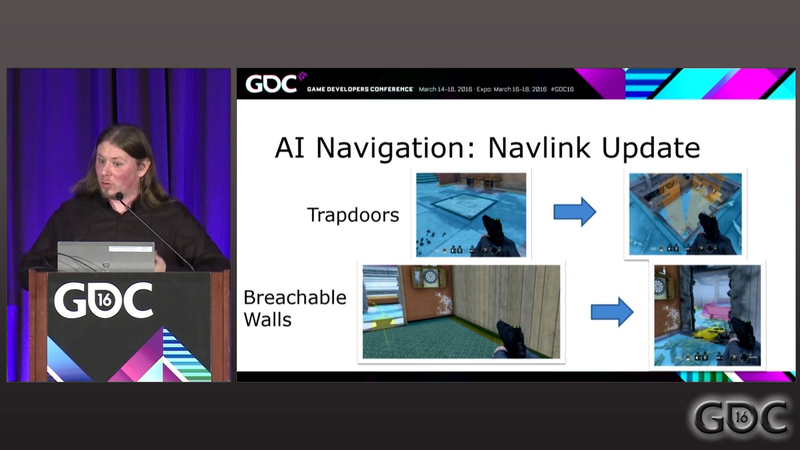
The Art of Destruction in Rainbow Six: Siege
The Realblast engine serves as the foundational architecture for Rainbow Six: Siege, shifting environmental destruction from a scripted visual effect to a core tactical mechanic.
- Destruction in Rainbow Six: Siege is a core gameplay mechanic that functions as a tactical tool, allowing players to create new paths, sightlines, and murder holes while enabling defenders to reinforce walls to funnel attackers.
- The development team utilized a custom-built solution called 'Realblast' to manage environmental destruction, which relies on a graph-based model where connections between objects are broken to create independent, destructible fragments.
- To maintain performance, the team implemented 'surface destruction' for planar objects, using 2D convex hulls to represent holes rather than costly full-geometry simulations.

The GDC 2015 Live 2D Animation Demo
The creation of high-fidelity 2D animation for fighting games requires a meticulous balance between traditional artistic principles and the rigid technical constraints of gameplay mechanics.
- High-fidelity 2D fighting game animation requires a 30fps workflow where frame holds are precisely adjusted to align with combat timings for optimal responsiveness.
- Dynamic impact is generated through manual simulation of secondary motion, such as hair and cape movement, to compensate for the lack of procedural physics in 2D engines.
- Visual clarity during high-speed sequences is maintained by utilizing classic animation techniques like torso twisting, limb delay, and smear frames to bridge key poses.

Innovation on Demand: Paradox Interactive's Strategic Initiatives Division
Paradox Interactive established the Strategic Initiatives division to preserve a grassroots, collaborative culture while navigating the complexities of rapid organizational scaling.
- Paradox Interactive created the Strategic Initiatives division to bypass hierarchical bottlenecks and maintain a grassroots, collaborative culture during periods of rapid organizational scaling.
- The division operates on a lean model that hands off successful projects to permanent departments, preventing internal bloat and ensuring creative momentum remains fluid.
- Performance metrics for the division show a 30 percent success rate, 30 percent mixed results, and 40 percent of initiatives remaining unexecuted.

The 1996 Psychic Detective Postmortem
Psychic Detective represents a significant evolution in interactive cinema, prioritizing a relentless narrative pace over the traditional, disruptive puzzle-solving mechanics common in mid-1990s gaming.
- Psychic Detective utilized a hub-and-spoke technical architecture to manage complex branching paths, resulting in 14 distinct narrative endings.
- The game prioritized narrative pace by replacing traditional, disruptive puzzle-solving mechanics with decision-making integrated directly into live-action footage.
- Development relied on a proprietary authoring environment that bridged video editing and software coding, allowing for narrative flow without the need for external instruction manuals.
Creating Complex AI Behavior in Stellaris Through Data-Driven Design
Stellaris employs a sophisticated, data-driven, utility-based artificial intelligence architecture designed to manage complex decision-making processes within a grand strategy framework.
- Paradox Interactive utilizes a data-driven AI architecture in Stellaris to separate game logic from content, allowing designers to modify NPC behavior via scripts without requiring constant code recompilation.
- The system uses a weighted algorithm to drive AI decision-making, where designers assign values to specific actions (such as ship construction or perk selection) that the AI evaluates against current game states.
- Data-driven design enables rapid content expansion; for example, implementing complex features like traditions and ascension perks required less than a day of programming work because the underlying logic was already modular.

Games You Might Not Have Tried - ep 13 - Find New Games - Extra Credits
This overview highlights a curated selection of underappreciated video games, focusing on titles that offer unique design concepts, experimental mechanics, or novel approaches to established genres.
- Game design innovation often stems from mechanical hybridization, such as Children of Zodiarcs blending card and dice mechanics or Kingsway utilizing a retro operating system interface for RPG gameplay.
- Niche, hyper-detailed titles like Gary Grigsby's War in the West demonstrate that there is a viable market for deep, complex simulation games that prioritize mechanical density over mass appeal.
- Full-motion video (FMV) and text-heavy, dialogue-driven formats like Contradiction and Subsurface Circular offer effective, low-cost alternatives for delivering compelling narrative-focused mystery experiences.