Key insights
7 slides
Market structure
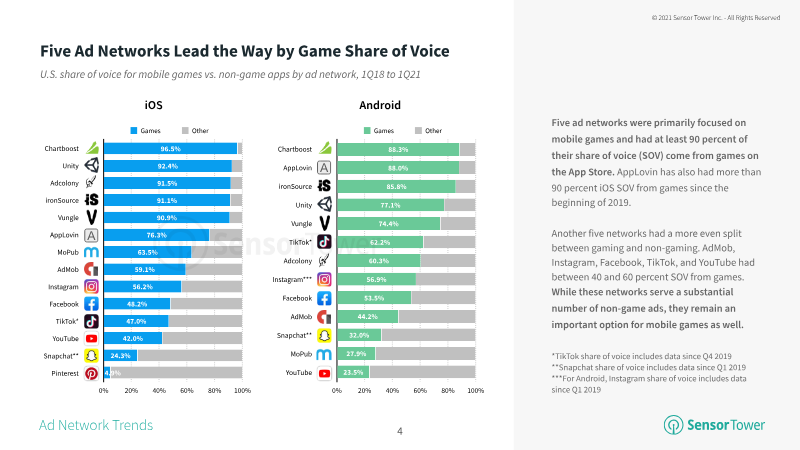
Five gaming-centric networks dominated mobile game advertising in 2021.
Chartboost, Unity, Adcolony, ironSource, and Vungle each maintained over 90% share of voice from games on iOS and Android.
Late pivot
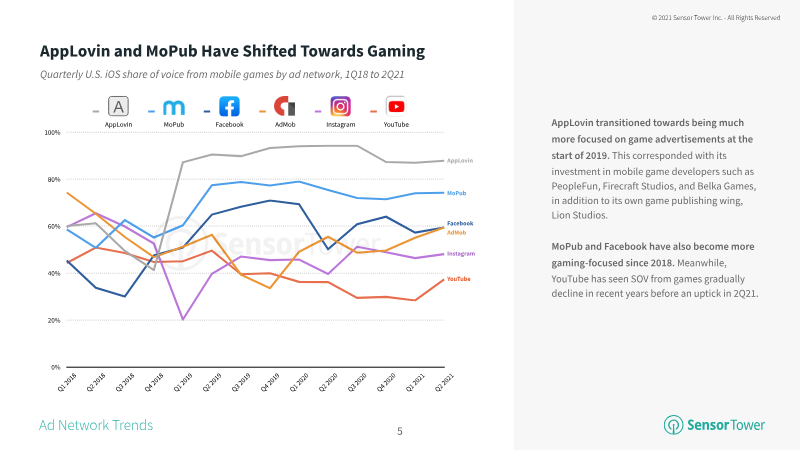
AppLovin and MoPub shifted toward gaming in late 2018.
They invested heavily in hypercasual publishers, increasing their game SOV to roughly 90% on iOS and 80% on Android by early 2021.
Play focus
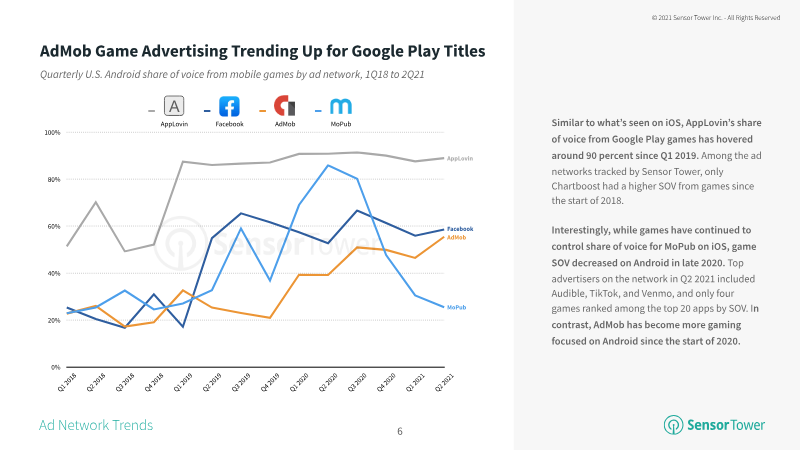
AdMob raised its game share of voice by Q2 2021.
AdMob increased its focus on Google Play titles, raising its game SOV from 60% to 80% by Q2 2021.
Dominant format
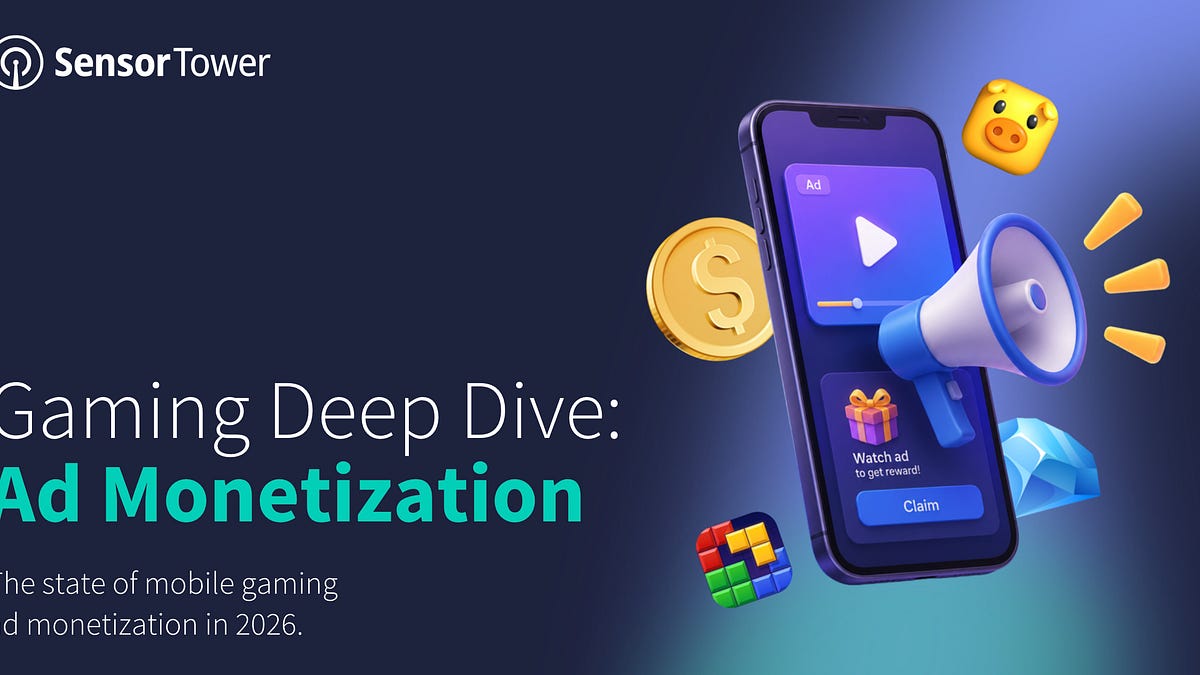
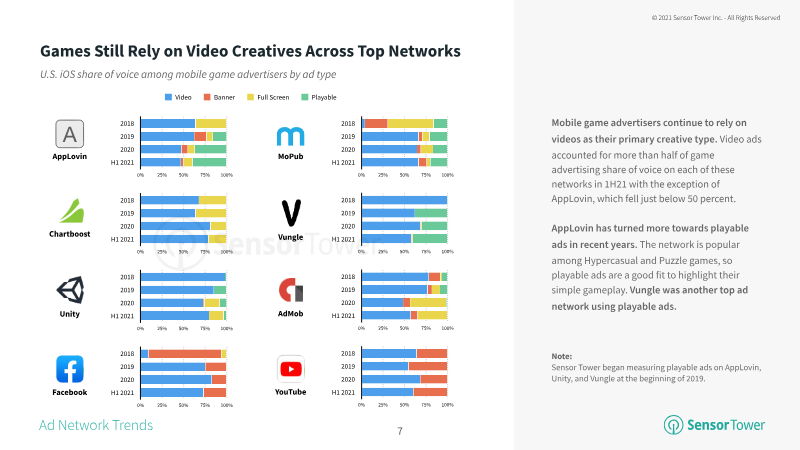
Video ads accounted for over 50% of game ad spend.
Video ads remain the primary creative format, accounting for over 50% of total game ad spend across both iOS and Android platforms.
Playable expansion
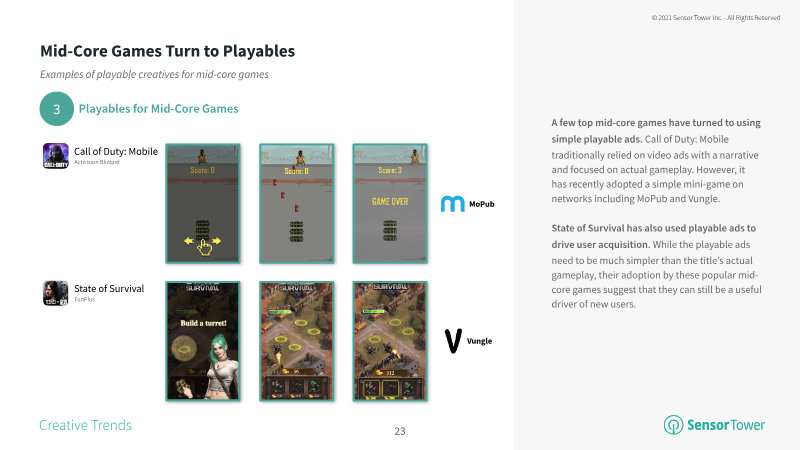
Playable ads expanded beyond hypercasual titles to mid-core games.
Playable ads gained traction among hypercasual publishers and, more recently, mid-core titles such as Call of Duty: Mobile and State of Survival.
Balanced mix
Mainstream social platforms maintained a balanced gaming and non-gaming mix.
Facebook, Instagram, TikTok, and YouTube displayed a more balanced mix of gaming and non-gaming ads, with SOV from games ranging 40–60%.
Social mix. Mainstream social platforms maintain a more balanced advertising mix, with gaming-related content representing only 40–60% of their total SOV.
Page 13 of the report40–60%
SOV from games on mainstream social platforms
- SOV from games on gaming-centric networks
- >90%
Volume stability
Game advertising volumes remained stable into 2021 despite IDFA changes.
The study concludes that despite IDFA changes, game advertising volumes remained stable into 2021.
1 / 7
Ask AI about this report