Monetization reports and market data
Documents

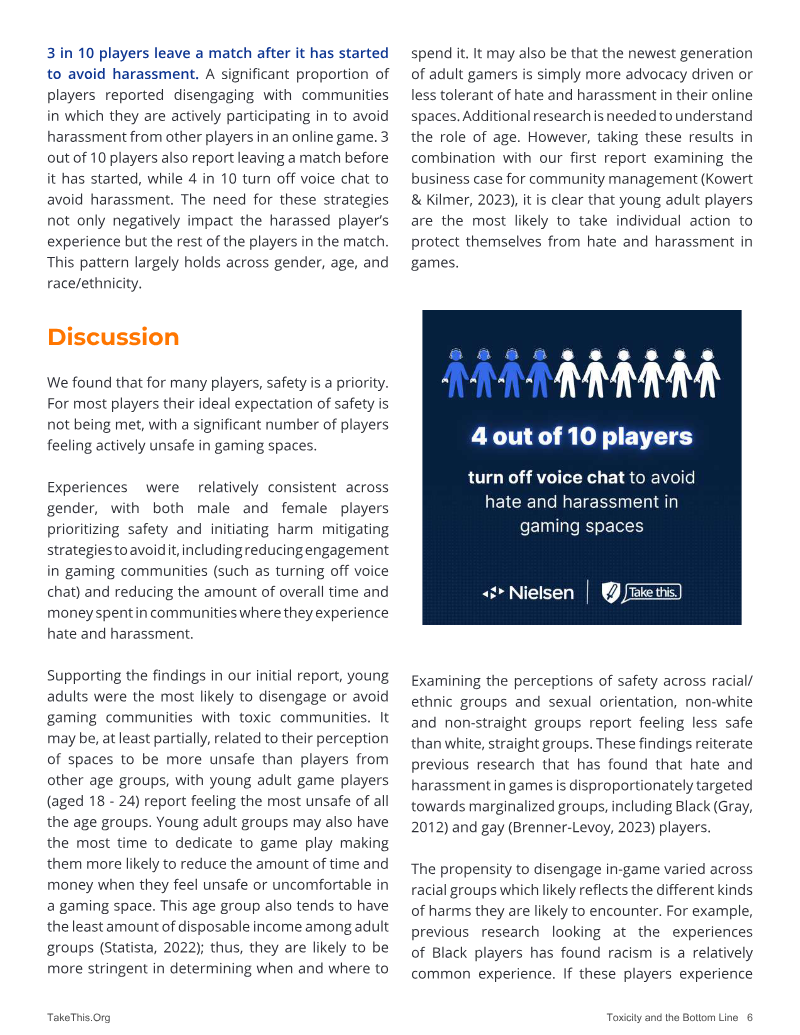
Toxicity and the Bottom Line: The Impact of Hate and Harassment on Player Retention and In-Game Purchases
Toxicity and harassment in online gaming environments significantly impact player retention and monetization, creating a direct financial incentive for studios to prioritize trust and safety.
- Toxicity directly suppresses revenue, as 19% of players spend less money and 21% reduce their overall playtime to avoid harassment.
- Safety is a critical player priority, with 75% of the 2,408 surveyed gamers identifying protection from hate and harassment as a high priority.
- Harassment causes significant engagement loss, with 44% of players disabling voice chat, 31% abandoning active matches, and 27% leaving lobbies to avoid abuse.



Games Market Trends 2024
This analysis examines the 2024 global games market, forecasting a period of recovery and strategic restructuring following the post-pandemic market correction.
- The global games market is entering a recovery phase with a projected Compound Annual Growth Rate (CAGR) of +1.3% through 2026.
- The live-service market is consolidating, with just 19 titles currently capturing 60% of total player engagement, prompting a strategic shift back toward premium, finite gaming experiences.
- Developers are increasingly mitigating financial risk by prioritizing established Intellectual Property and sequels over new, unproven concepts.

AD APOCALYPSE 2024 (???) with Felix Braberg
Mobile game monetization currently exists in a state of high volatility, characterized by a transition from traditional waterfall structures to automated programmatic bidding.
- In-app advertising remains a critical revenue pillar, contributing approximately 20 percent of total income even for core RPG titles.
- The mobile ad ecosystem is currently reliant on controversial fingerprinting methods to maintain eCPMs following the post-IDFA transition.
- Publishers must shift their focus from eCPM to ARPDAU as the primary health metric to accurately reflect total revenue in a volatile programmatic bidding environment.
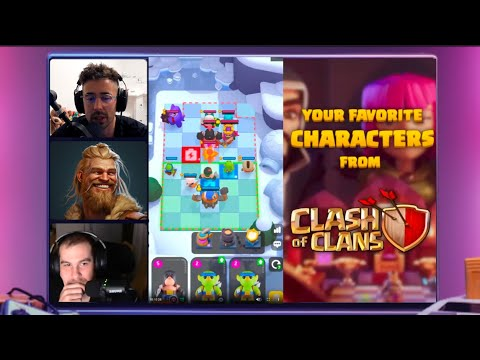
Supercell's Clash Mini Softlaunch: Game design, UA & Creative review (#90)
Clash Mini represents a strategic attempt by Supercell to capture the mobile auto-battler market, a genre that has historically demonstrated significant revenue potential in Asian territories compared to Western regions.
- Supercell’s Clash Mini faces a high probability of cancellation or fundamental restructuring due to its inability to meet the company's rigorous internal benchmarks for a global release.
- Since its November 2021 soft launch, the game has generated $2 million in revenue from 4.7 million downloads, failing to demonstrate the revenue depth required for long-term viability.
- The game’s monetization strategy, which locks high-impact units behind binary gacha systems, has created a pay-to-win dynamic that alienated players and hindered revenue performance.

Mobile Gaming Market in 2024 with Lexi Sydow of Data.ai
The mobile gaming industry is currently navigating a period of intense consolidation and structural adjustment, marked by a challenging environment for smaller startups.
- The mobile gaming market is shifting away from traditional core genres like strategy, RPG, and casino games, which have seen a consistent decline since 2021.
- Privacy-centric changes such as IDFA have fundamentally increased user acquisition costs and forced developers to abandon speculative development in favor of data-backed strategies.
- Growth in 2024 is increasingly driven by genre hybridization and expansion into emerging geographic markets, specifically India and South Korea.
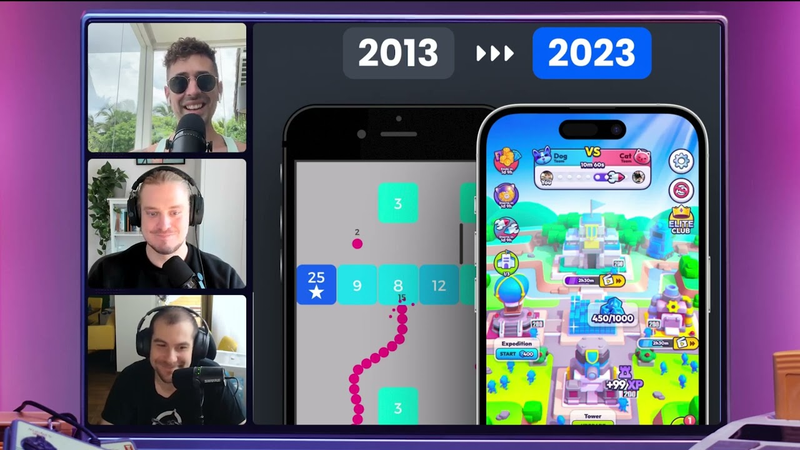
Voodoo Block Jam 3D Hybrid casual story: Is Voodoo a Rising Phoenix? (#89)
Voodoo is successfully executing a strategic pivot from its hyper-casual origins toward a hybrid-casual model, a transition that now accounts for 75 percent of the company’s total revenue.
- Voodoo’s 'Block Jam 3D' demonstrates a shift toward hybrid-casual, where in-app purchase (IAP) revenue shows a hockey-stick growth curve while download volume remains flat or declining.
- Interstitial ads drive the majority of the game's revenue, accounting for approximately 50% to 66% of total ad income, with an average of 8–9 impressions per session.
- The game utilizes a 'VIP experience' branding for its no-ads option rather than a standard 'no-ads' label, a strategy that reportedly increased purchase conversion rates by 1,000%.
GTA VI Trailer / Hybridcasual Success / Africa's Gaming Market
The global gaming industry is currently defined by a strategic shift toward long-term engagement, platform diversification, and the exploration of emerging markets.
- The hybrid-casual mobile gaming sector generated $2.1 billion in 2023, marking a 30% year-over-year growth as developers shift away from hyper-casual models to combat rising user acquisition costs.
- Sub-Saharan Africa is emerging as a critical growth frontier, with a gaming population of 186 million and annual revenues projected to exceed $1 billion by 2024.
- Major industry players like Grand Theft Auto VI are anchoring fiscal growth strategies by utilizing sophisticated live-service models and acquisitions to extend product lifecycles.
Kwalee’s John Wright On Attracting Valuable Users With A Loyalty-Driven Approach
The mobile gaming industry has reached a critical inflection point where the traditional hypercasual model is no longer viable due to escalating user acquisition costs and the depreciation of tracking identifiers.
- The shift from hypercasual to hybrid-casual mechanics—integrating meta-layers and live operations—has increased average revenue per user (ARPU) from the traditional $0.30–$0.50 range to $1.50–$2.00.
- Studios must transition from high-volume, short-term user acquisition to a loyalty-driven model that prioritizes long-term retention to counter rising acquisition costs and the loss of tracking identifiers.
- Treating games as part of a broader portfolio ecosystem allows studios to mitigate revenue decay by cross-promoting players across multiple titles rather than relying on isolated products.
Zenless Zone Zero: First look! Everything we know from Closed Beta (#88)
HoYoverse continues to solidify its dominance in the global gaming market by applying a highly refined, high-production-value gacha model to its latest title, Zenless Zone Zero.
- HoYoverse employs a standardized, highly profitable template for its gacha-based titles, allowing the company to develop new games in roughly half the time required by Western studios.
- Zenless Zone Zero utilizes a gacha monetization model identical to Honkai: Star Rail, featuring a 1% base pull rate for top-tier characters and a pity system that guarantees an S-rank character after 50 pulls.
- The game features a complex progression system with six equipment slots and randomized stats, requiring players to repeatedly farm artifacts to achieve optimal character builds.

UEFN Studios: Boom, Bust, or Choose Roblox?
The Unreal Editor for Fortnite (UEFN) represents a transformative shift in the gaming industry, functioning as a high-efficiency incubation platform that bridges the gap between professional game development and user-generated content.
- UEFN serves as a high-efficiency incubation platform that allows studios to iterate on new intellectual property in months rather than years by leveraging an existing ecosystem of 250 million players.
- Epic Games currently dominates its own platform, with internal titles accounting for 81% of the top four games within the UEFN ecosystem.
- While UEFN offers superior graphical fidelity and professional development tools, it currently faces technical constraints on camera control, character movement, and core mechanics that limit design flexibility.



Mobile Game Market Review December 2023
The mobile gaming market in December 2023 was characterized by aggressive experimentation with cross-genre mechanics and high-profile intellectual property collaborations.
- Clash of Clans experienced a 350% daily revenue spike in the U.S. following the December 2023 release of Town Hall 16, new building-merging mechanics, and a hero equipment system.
- Mobile developers are increasingly adopting cross-genre mechanics, such as Royal Match integrating cooperative partner events and midcore titles like Diablo Immortal adding roguelite survival modes.
- Tencent’s new party royale title, DreamStar, emerged as a top-grossing competitor to Eggy Party in China by focusing on social hubs and user-generated content.

Bootstrap or Finding a Publisher for Indie Game?
Navigating the decision between bootstrapping and seeking a publisher is a critical juncture for independent game developers, particularly those working on their first title.
- Developers should prioritize defining the game's core vision through prototyping before initiating publisher conversations, as early-stage projects often require significant scoping and thematic adjustments to find their 'soul'.
- Bootstrapping allows developers to retain 100% of income and maintain creative control, but it requires a disciplined, lean team structure and a commitment to handling the business and marketing aspects of development alongside production.
- When seeking funding, developers should prepare a realistic budget for their first title and then double it to account for the unpredictable nature of game development and the risk of over-scoping.