Monetization reports and market data
Documents
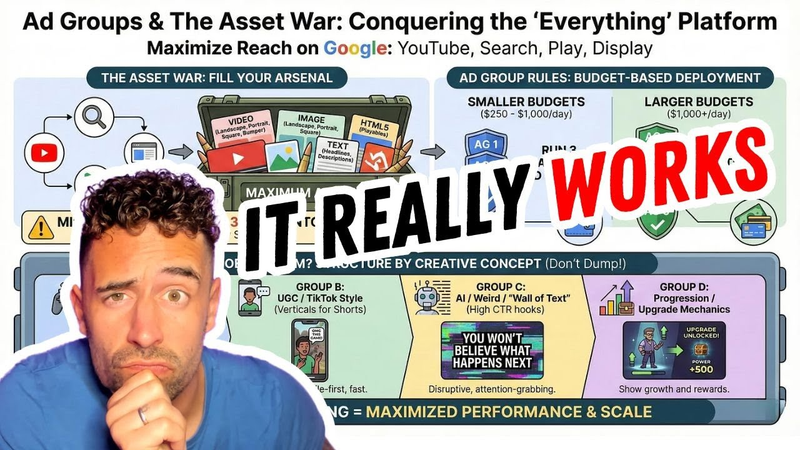
🧠 MVP UA template: How to set up your Google Ads campaigns for Success by Matej Lancaric
This analysis outlines a strategic framework for managing Google Ads campaigns for mobile games, emphasizing a structured, data-driven approach to user acquisition.
- Integrate Firebase with your Mobile Measurement Partner (MMP) to track high-quality engagement events like tutorial completions and in-app purchases, rather than relying on low-quality install metrics.
- Optimize for faster algorithmic feedback by adjusting the conversion window from the default 90 days to a 7-to-14-day period.
- Consolidate campaigns by grouping countries into tiers—such as US, Tier 1, and Rest of the World—to ensure sufficient data volume for machine learning models.
Rewarded Returns: The Player Perspective
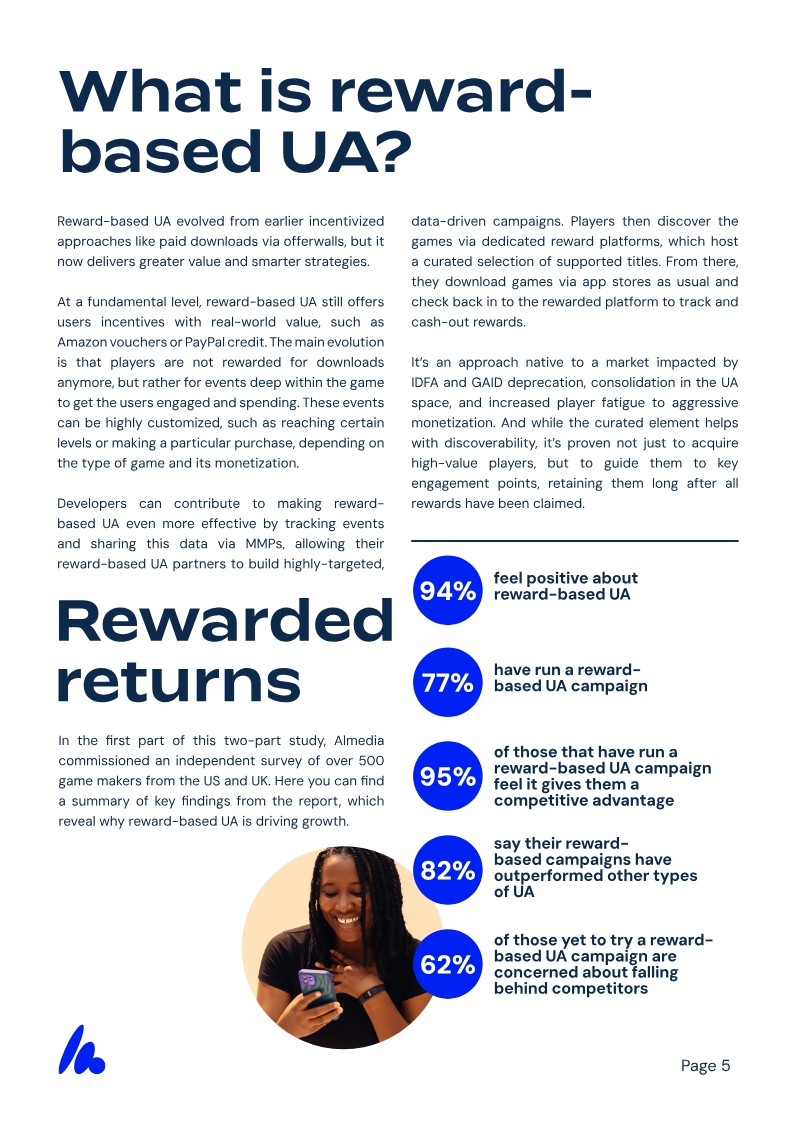
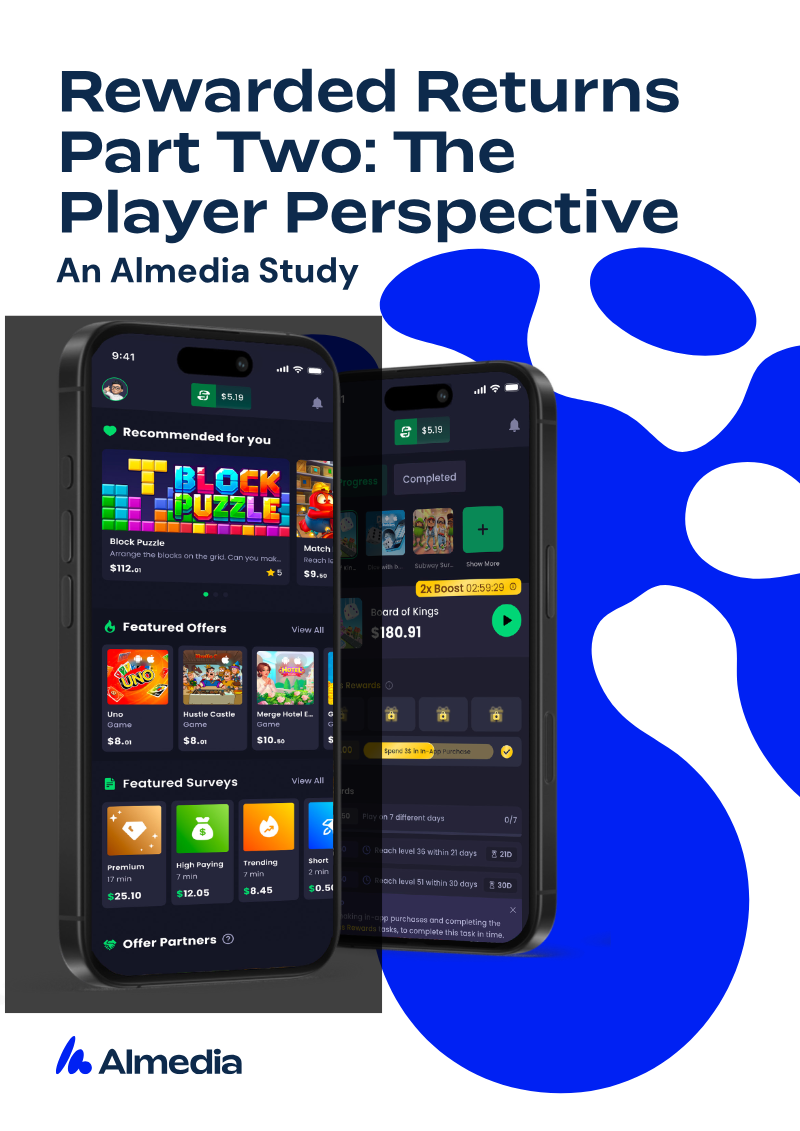
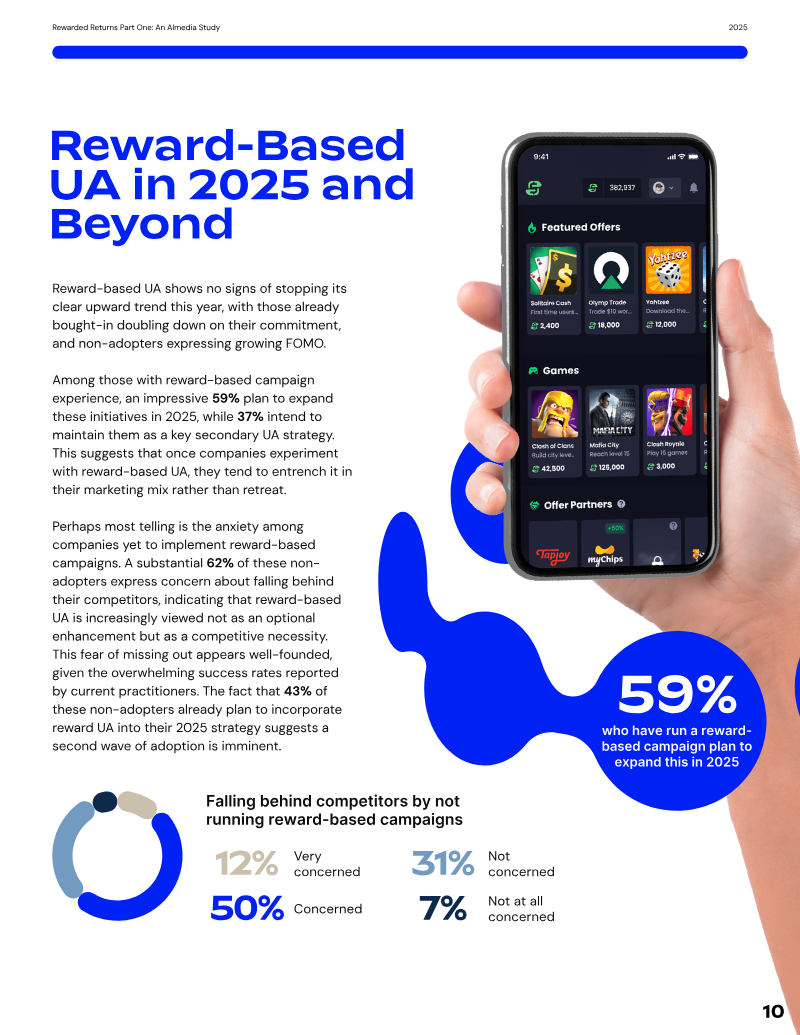
Reward-based user acquisition has emerged as a transformative strategy for mobile game developers, shifting from traditional incentivized downloads to a model focused on deep-funnel engagement and real-world value.
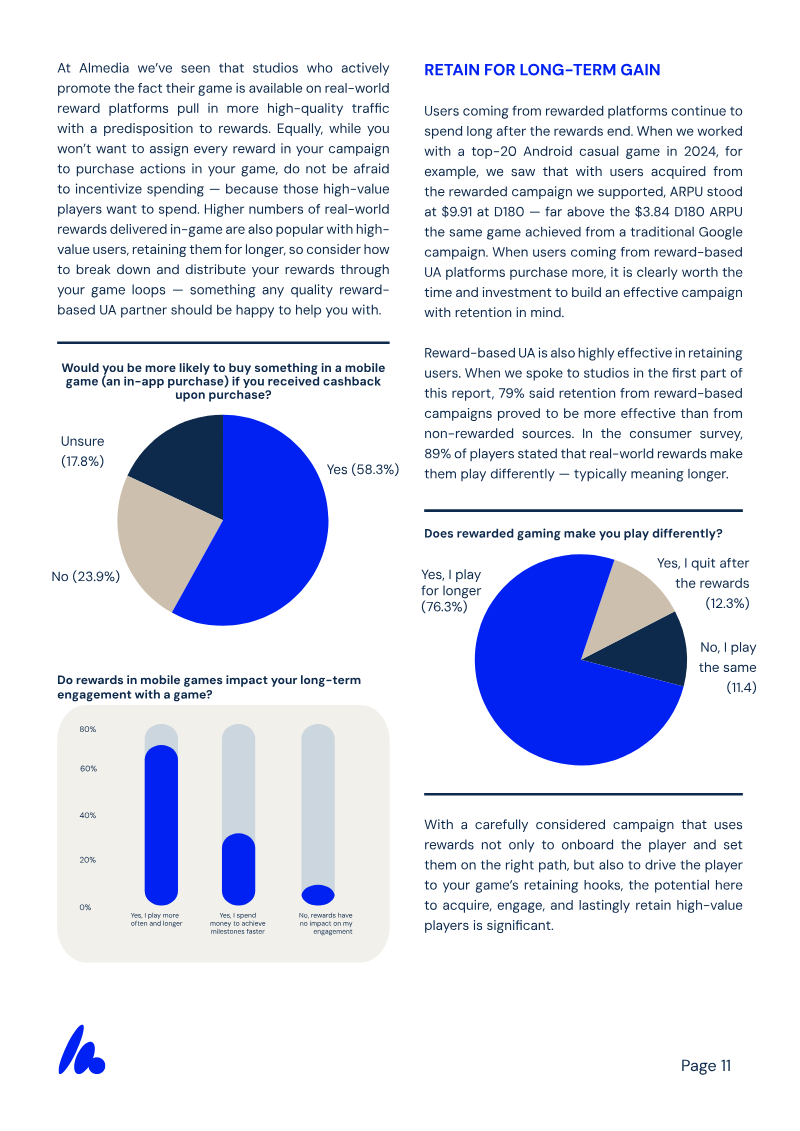
- 75% of mobile gamers hold a positive view of titles offering real-world rewards, and 72% of experienced users actively seek out games that provide these incentives.
- 85% of players who engage with reward-based platforms continue playing even after the initial incentives have been exhausted, indicating strong long-term retention.
- 95% of surveyed game developers express confidence in reward-based acquisition, with 77% having already implemented such campaigns to gain a competitive advantage.

Rewarded Returns: The Developer Perspective
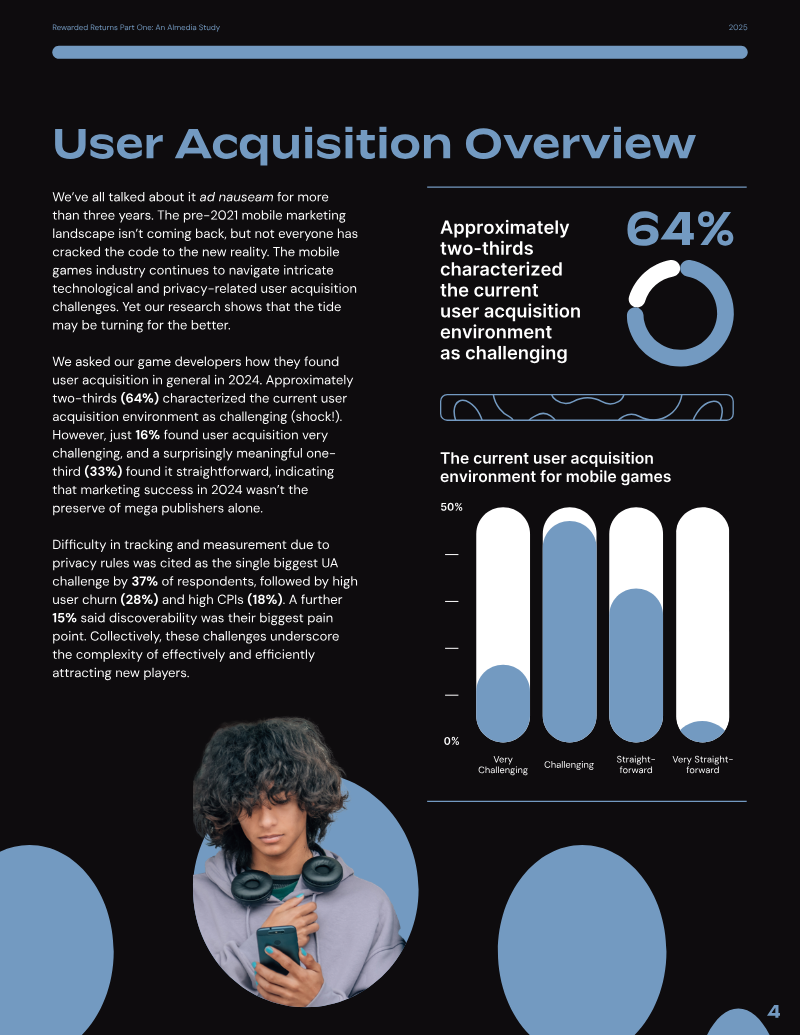
This study examines the evolution of reward-based user acquisition (UA) within the mobile gaming industry, arguing that the practice has transitioned from a controversial, legacy tactic into a sophisticated, data-driven marketing strategy.
- 82% of developers report that reward-based user acquisition (UA) campaigns outperform traditional non-rewarded methods.
- 95% of practitioners view reward-based strategies as a competitive edge, with many allocating up to 50% of their total UA budgets to this channel.
- 77% of surveyed developers have already implemented reward-based UA, and 62% of those who have not expressed concern about falling behind competitors.
India Mobile Gaming 2026 Report: Market Size, Trends
The Indian mobile gaming market is currently positioned as one of the most significant growth opportunities for the industry heading into 2026.
- The Indian mobile gaming market is projected to reach a value of $4.4 billion by 2030, supported by a 31% compound annual growth rate since 2023.
- Average revenue per user (ARPU) in India increased 9x between 2020 and 2025, driven by a rising middle class and higher discretionary spending power.
- The monetization model is shifting from a reliance on in-app advertising toward in-app purchases as the market matures.

Why short drama is beating games at Engagement & UA (Holywater's Bogdan Nesvit Explains)
The entertainment landscape is undergoing a fundamental shift as short-form drama platforms emerge as primary competitors to traditional mobile gaming for user attention and acquisition budgets.
- Short-form drama platforms are directly competing with mobile games for user attention and acquisition budgets by utilizing web-based, direct-to-consumer funnels that bypass traditional app store constraints.
- These platforms operate on high-volume production cycles, releasing hundreds of series annually to maintain continuous user acquisition funnels and optimize payback periods.
- Artificial intelligence is the core production engine, enabling the rapid generation of thousands of creative variations that function simultaneously as high-performing advertising assets and narrative content.

Game Rewiew Radar #10: What happened to these games?
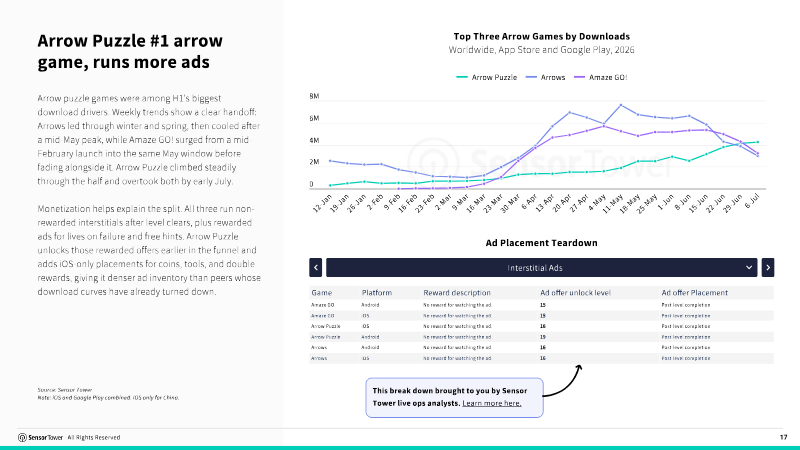
The mobile gaming industry is currently defined by a volatile landscape where long-term viability depends less on innovative design and more on aggressive user acquisition, sophisticated live operations, and hybrid monetization strategies.
- Long-term viability in mobile gaming is increasingly driven by sophisticated live operations and hybrid monetization rather than creative innovation.
- High-performing puzzle games, particularly the 'block blast' style, are currently outperforming other genres due to their superior capacity for sustained engagement.
- Top-tier titles like Gossip Harbor demonstrate the scale of the current market, reaching $80 million in monthly revenue.
Gaming Digital Market Index: H1 2026
The global gaming market in the first half of 2026 reflects a period of structural maturity characterized by stagnant mobile in-app purchase revenue and a persistent decline in global download volumes.
- Global mobile gaming is experiencing structural stagnation, characterized by flat in-app purchase revenue and a persistent decline in total download volumes.
- Browser gaming has reached 9.5 billion global visits, driven by significant growth in Asia despite a contraction in European engagement.
- Monetization strategies are bifurcated by region, with developing markets relying on in-app advertising for up to 70% of revenue while mature markets remain dependent on in-app purchases.



Beyond the App Store: A Guide to Direct Linkouts and Out-of-App Monetization
The mobile gaming industry is undergoing a structural shift as regulatory changes and legal precedents in the United States, Europe, Asia, and Latin America dismantle long-standing app store monopolies.
- Global regulatory shifts are dismantling app store monopolies, enabling publishers to bypass 15% to 30% platform commissions by utilizing direct, out-of-app payment channels.
- Well-executed webstore programs have demonstrated a 17% increase in total revenue and a 78% rise in first-time purchase rates for mobile game publishers.
- Publishers should treat recovered margins as strategic reinvestment capital for live operations and audience growth rather than immediate profit.
Gaming Deep Dive: Ad Monetization 2026
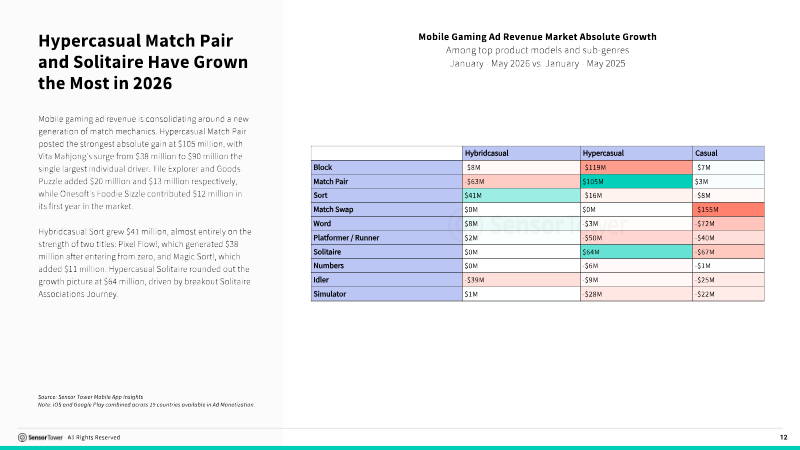
Mobile gaming has structurally reorganized to treat advertising as a foundational revenue model, generating $12 billion annually across 19 global markets.
- Ad-supported titles now represent 84% of all mobile game downloads, establishing advertising as a foundational revenue model generating $12 billion annually across 19 global markets.
- The ad monetization market is highly consolidated, with AppLovin and AdMob controlling 65% of total industry ad revenue.
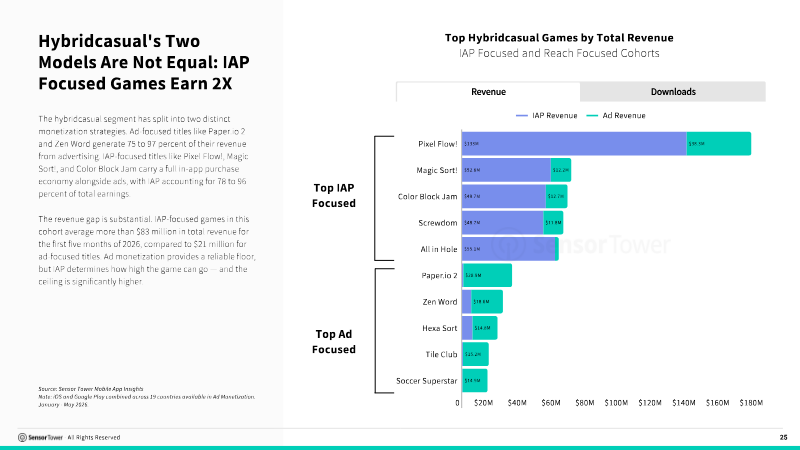
- Pure ad-only monetization models are increasingly insufficient, forcing top-tier publishers to shift toward hybrid strategies that integrate in-app purchases to maximize profitability.

How to Build an Effective Offer System in Your Game
A well-designed in-game offer system is presented as the most potent driver of lifetime value and average revenue per paying user.
- A tiered pricing ladder ranging from under $1 to $99, which escalates after purchases and regresses during inactivity, allows for precise alignment with individual player spend propensity.
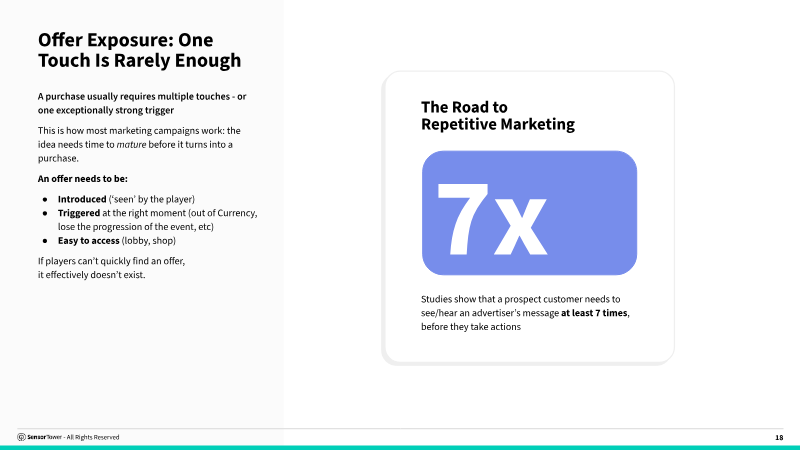
- Conversion is driven by repeated exposure, with players typically requiring seven viewings of an offer before completing a purchase.
- Strategic implementation of a limited set of offer types can drive conversion rates as high as 96% on login offers and increase repeat-purchase value by approximately 20% through endless offers.

TWIG Jr: Awards, Predictions, and Gen Alpha's Take on Gaming
Generation Alpha’s gaming preferences reveal a sophisticated shift away from hypercasual mobile titles toward experiences that offer depth, narrative, and social utility.
- Generation Alpha is shifting away from hypercasual mobile games toward indie titles like Hollow Knight and Undertale, citing a preference for mechanical depth and a dislike for intrusive advertising.
- Platforms like Roblox and Fortnite are functioning as essential digital third spaces, though players are showing signs of fatigue regarding the aggressive pop-culture collaborations currently driving Fortnite’s model.
- Children are developing high brand awareness for sports betting platforms like FanDuel and PrizePicks due to the pervasive integration of wagering advertisements into televised sports and gaming environments.
🎙️ Creative & Category Blocking: Save your retention by Felix Braberg
Active management of ad creative and category blocking is a critical, often overlooked component of mobile game monetization that directly impacts user retention.
- Proactive management of ad creative and category blocking is essential for user retention, as mediation platforms act as marketplaces rather than global kill switches.
- Publishers must maintain a centralized, comprehensive block list across every individual ad network to counter the daily influx of new, potentially irrelevant or explicit app content.
- Blocking methodologies vary by network; while AdMob and Unity offer direct dashboard controls, AppLovin and IronSource require using SDK-integrated review tools and manual reporting to account managers.