1 free read left. Create a free account for unlimited reading + AI research.
Create free accountReport Sensor Tower
1 free read left. Create a free account for unlimited reading + AI research.
Create free accountReportSensor Tower
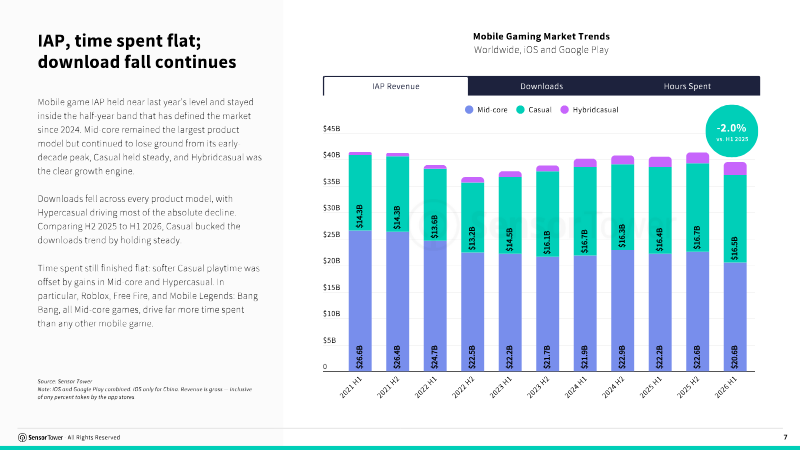
In-app purchase revenue is flat, and total download volumes are persistently declining. The industry is shifting focus from broad expansion to retention.
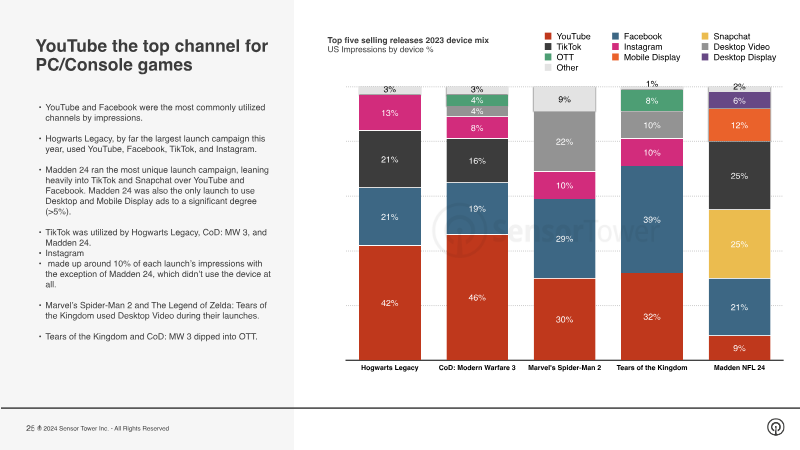
The global gaming market in the first half of 2026 reflects a period of structural maturity characterized by stagnant mobile in-app purchase revenue and a persistent decline in global download volumes. Despite this broader plateau, the industry is experiencing localized growth through specific genres, most notably puzzle games, which have become essential for maintaining player engagement. The competitive landscape for user attention has intensified, with major platforms like YouTube driving higher advertising costs and forcing publishers to adopt more aggressive creative strategies. Success is increasingly tied to high-volume creative refreshes and the implementation of cross-genre live operations, such as integrating sports-themed events to capitalize on real-world cultural moments.
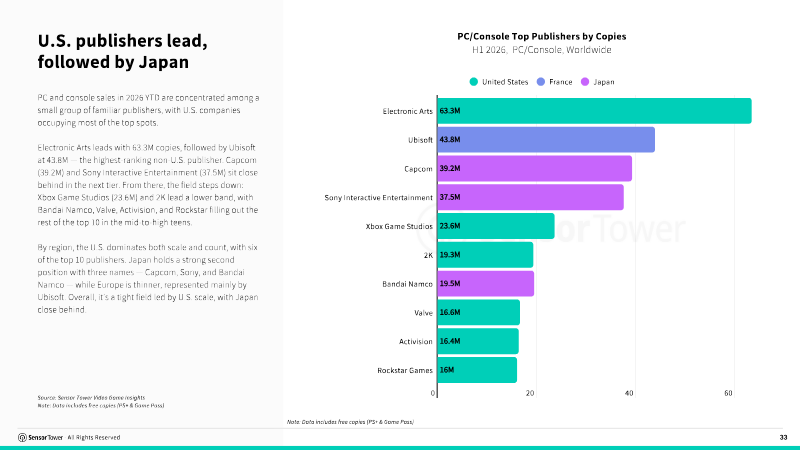
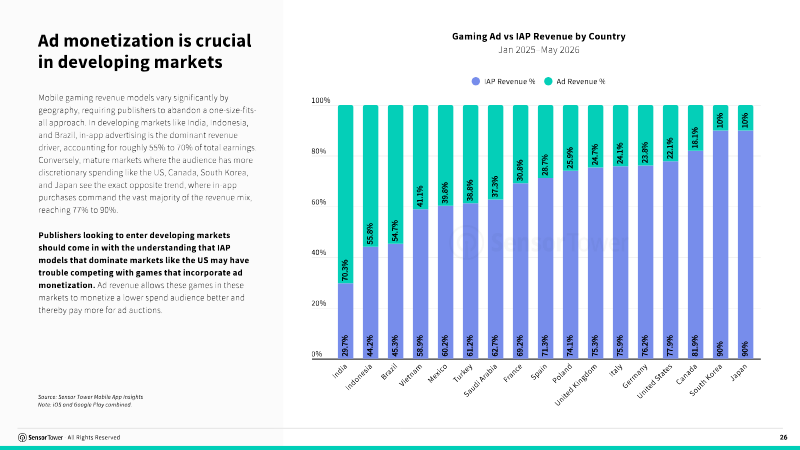
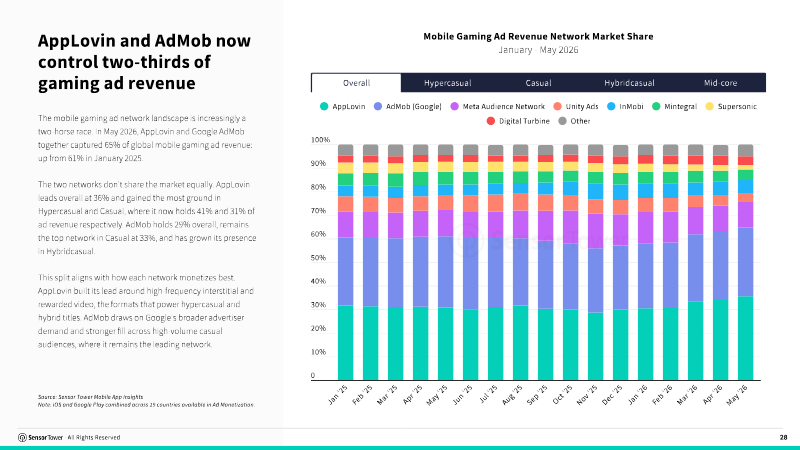
Monetization models remain sharply divided by economic maturity. Developing regions continue to lean heavily on in-app advertising, which accounts for up to 70 percent of revenue, whereas mature markets remain anchored by in-app purchases. This ecosystem is supported by a consolidated advertising infrastructure, where AppLovin and Google AdMob command a significant majority of global revenue. Meanwhile, the PC and console sectors are witnessing a cooling trend on platforms like Steam; despite a record volume of new releases, growth has decelerated, leaving the market largely dominated by established U.S.-based publishers.
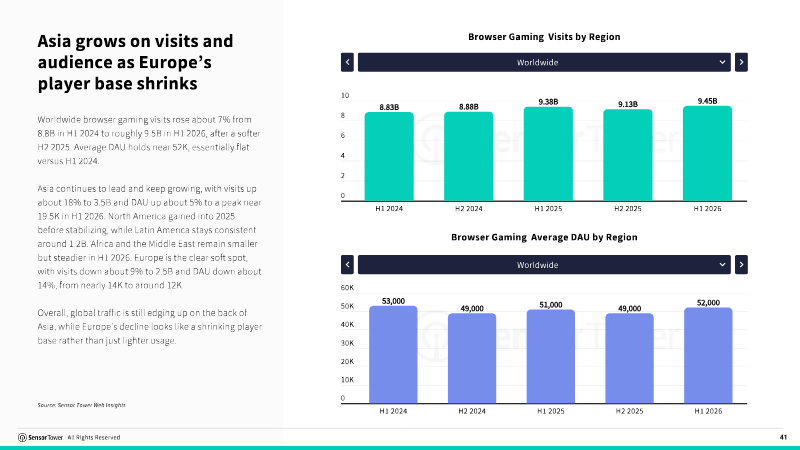
Browser gaming presents a divergent narrative, with global visits climbing to 9.5 billion. This growth is heavily concentrated in Asia, contrasting with a notable contraction in European engagement. While platforms such as Poki, itch, and Crazy Games maintain dominance, session depth varies significantly across the sector. Ultimately, the industry is shifting away from broad-based expansion toward a focus on retention, geographic-specific monetization, and the strategic use of live services to sustain player interest in an increasingly crowded and competitive digital environment.
Sensor Tower · 2026
Sensor Tower · 2026
Sensor Tower · 2026
Sensor Tower · 2026
Sensor Tower · 2026
Sensor Tower · 2026
Sensor Tower · 2026
Sensor Tower · 2026

Sensor Tower · 2026
Sensor Tower · 2026

Sensor Tower · 2026

Sensor Tower · 2026

Deconstructor of Fun · 2025