Updated Mar 17, 2026 by Sensor Tower
Report · January 1, 2026
Published by Sensor Tower
A well‑designed in‑game offer system is presented as the most potent driver of lifetime value and average revenue per paying user. By integrating a limited set of synergistic offer types—login bonuses, triggered prompts, endless streams, “1 + X” bundles, battle‑passes, stamp‑cards, and curated bundles—and optimizing their frequency, timing, pricing, segmentation, and economic balance, developers can achieve conversion rates as high as ninety‑six percent on login offers and lift repeat‑purchase value by roughly twenty percent through endless offers. Conversion is shown to be a function of repeated exposure rather than a single impression; players typically require about seven viewings before taking action. The most effective moments to surface offers are at login, during “out‑of‑currency” events, after level failures, or in high‑momentum gameplay phases. A dynamic, tiered pricing ladder that escalates after each purchase and regresses after periods of inactivity—exemplified by a seven‑tier structure ranging from under one dollar to ninety‑nine dollars—enables precise alignment with player spend propensity while avoiding both under‑monetization of high‑potential users and alienation of low‑spenders. Segmentation must extend beyond basic recency and frequency metrics to incorporate geographic tier, acquisition source quality, and player progression. Lower‑tier regions demand adjusted price ladders and reduced offer frequency, whereas high‑quality acquisition channels justify more complex bundles. Early‑game players respond best to inexpensive, simple offers, while mid‑ and late‑game users can be presented with higher‑value packages. Anchoring the entire shop around a stable, low‑priced entry pack establishes a reference point that shapes perceived value across all offers. Collectively, these principles apply to mobile and casual games operating globally, reflecting current industry practices and data from recent case studies. Implementing the outlined framework promises measurable improvements in monetization efficiency, player satisfaction, and overall revenue performance.
SAVINGS Deliwery Continue? 4 CONGRATS! You've got a coupon Add 15 moves CLAIM Play On900 600% How to Build an STAMP CARD MORE CLAIM Effective Offer Make purchases to & win the gra System in Your Game or Bigger 1000 SE YOUR PACK! ②C0 A Discover how top games structure Offer System, what’s $3.99 new, and how to build a scalable system that performs. Getstampin Ends in 072054 and how to a scalable that Ends in 5118.12 new, build e system performs. FREE
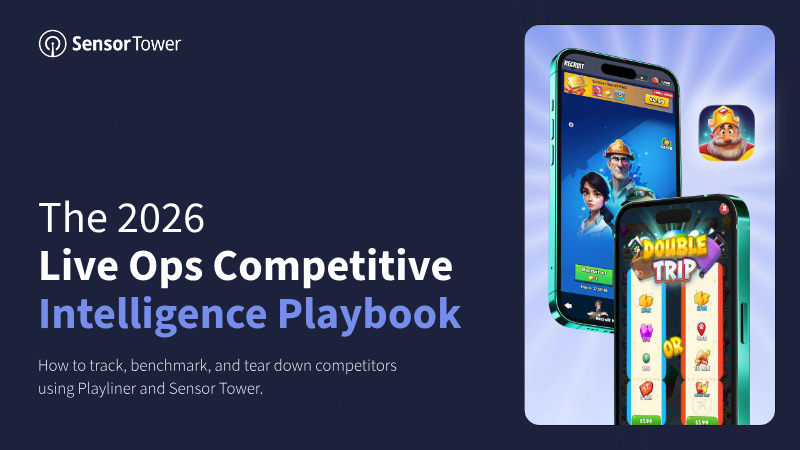
Playliner Playliner by Sensor Tower by Sensor Tower Playliner, Sensor Tower’s state-of-the-art platform for analyzing Live Ops, enables you to dive into a rich repository of events, updates, and monetization offers across hundreds of top games. Whether you’re designing a new offering, reengaging existing players, or optimizing your monetization tactics, use Playliner to secure your competitive edge in the mobile gaming world. players, or optimizing your monetization tactics, use Playline This report gives you a preview of the rich insights available in-platform – use these evidence-based recommendations to move with confidence and revamp your strategy for 2026. in-platform - use these evidence-based recommendations to move with confidence and revamp your strategy for 2026.
WHY Do You Need an Offer System? LTV Maximization 0 14:09 13 66033 8 Full 1840 ARpU growth comes from multiple levers: MYTHIC ARpU growth comes from multiple levers: Disco x DEAL x Conversion, Repeat Purchases, Average Transaction Value, Demand Sale 1d 23h Segmentation & Personalization While Shop covers basic, always-on needs Offers deliver higher value, urgency, and personalization Adaptive offers respond to player behavior, needs, and capacity to pay 95% OFF 35% The goal is not just to sell x3 X3 OFF x8 x8 x8 8 The goat is mot jast to sett 1000 x3 x3 12h A good offer system: 40000 x8 60h â—Ź Helps players overcome friction $0.99 â—Ź Supports progress at critical moments $ 44.99 â—Ź Feels like 'this is exactly what I need right now', not pressure Feels like 'this is exactly what I need right now', not pressure 8 2d 23h
Common Myths About Offers The more offers you have, the better they perform The more offers you have, the better they perform Players don’t want more offers → They want the right offer, at the right moment, for the right reason 3 Cheaper offers always mean a better conversion strategy $ Players buy only emotionally - because of visuals and excitement Low entry price boosts conversion However, some players are ready to pay more from the start Starting too cheap hides willingness to pay and caps future spend Visuals and presentation attract attention, while value is evaluated intuitively, not through deep calculations. Players buy only emotionally – because of visuals and excitement So HOW do you avoid ? Players buy only rationally – by calculating value and efficiency Purchases happen at the intersection of emotion + calculation + context. these mistakes, and build an Visuals and presentation attract attention, while value is evaluated intuitively, not through deep calculations. effective offer system? Visuals and presentation attract attention, while value is evaluated intuitively, not through deep calculations.
Core Building Blocks of an Offer System 1 2 3 Frequency Frequency Total Money (Spend per Period) Offer Types & Visualization Triggers & Timing Pricing Strategy How often the player buys How often the player buys Increase when players are ready What types of offers exist and When and why an offer appears Roll back when they are not what problem each one solves spending with Recency & Average Transaction Shows upper potential for repeat Shows upper potential for repeat Value purchases purchases 4 5 6 Segmentation & Personalization Adapting offers to player behavior, context, and capacity to pay Usually used as a supporting signal, not a primary one Offer Compatibility Economic Balance Offers don’t compete or cannibalize Economy-aware design each other Controlled inflation and sustainable value Clear comparison and value differentiation Device a primary one Player Engagement and Turnover etc
There are dozens of offer types on the market today. But that doesn’t mean you need ALL of them. ~~When choosing offer types, focus on:~~ More offers ≠better performance. Your KPIs – what exactly you want to A strong system is built on a few improve (conversion, repeat rate, ARPPU) Visual variety – to keep offers feeling fresh types that work well together. and 'new' System synergy – offers should complement each other, not compete complement each other, not compete Next, we’ll break down the TOP-performing offer types and what makes them work.
The mobile gaming landscape in mid-2022 is defined by the maturation and diversification of Battle Passes and gacha mechanics, which serve as the primary drivers for revenue in top-grossing titles. Battle Passes have evolved into sophisticated retention tools, appearing in 60% of high-performing games and incorporating social elements like guild-wide rewards and cooperative progression. Gacha mechanics remain even more pervasive, integrated into 93% of top titles in Japan and 75% of the top 20% grossing games in the United States. To maintain player trust and engagement, these systems increasingly feature transparency-focused innovations such as "pity" mechanics, player-selected prize pools, and social "joint-pull" events. Monetization strategies are shifting away from direct gameplay boosters toward meta-layer engagement, focusing on narrative depth and cosmetic customization. Successful developers utilize psychological triggers like urgency and exclusivity through "Mystery Shops" and randomized discount events. For instance, mechanics that allow players to manipulate bundle contents or discount rates increase perceived agency, while quantity-based limitations create social pressure to purchase. These tactics are particularly effective when combined with hybrid monetization models, such as ad-supported tracks that convert non-paying users into the ecosystem. Data indicates a clear correlation between sophisticated in-app purchase structures and market success. Progressive reward systems, which grant bonuses based on cumulative spending thresholds, are utilized by 23% of the top 20% grossing US iOS games, a significantly higher adoption rate than the 9% seen in lower-performing titles. By prioritizing player agency and social integration over simple transactional offers, developers are able to drive higher conversion rates and long-term player loyalty across diverse global markets and genres.
Modern mobile game monetization is increasingly defined by the integration of sophisticated Battle Pass systems and gacha mechanics, which serve as the primary drivers for the industry's highest-grossing titles. Gacha mechanics are nearly universal among top-tier games, appearing in 93% of the top 20% grossing titles, while Battle Passes are utilized by 60% of this same demographic. These tools have evolved from simple transactional models into complex systems that leverage social cooperation, urgency, and psychological progression. Innovations such as auto-renewing subscriptions, social gifting within guilds, and "pity" systems for gacha pools have become standard practices to ensure transparency and maintain long-term player engagement without compromising core gameplay balance. The geographic focus remains centered on the United States mobile market, where 75% of top-grossing games now employ gacha mechanics. A significant shift is occurring in the nature of in-app purchases, moving away from direct gameplay boosters toward meta-layer content such as narrative elements and collectibles. Furthermore, progressive reward systems—which provide escalating gifts based on cumulative spending—have seen a steady two-year increase in adoption. These systems are highly correlated with financial success, as they are nearly three times more likely to be found in top-performing iOS games than in lower-grossing titles. Ultimately, the most successful monetization strategies rely on emotional triggers and social integration rather than isolated transactions. Features like randomized "Mystery Shops" and quantity-limited community offers create a sense of scarcity and collective participation. Developers who find success in this landscape are those who look across diverse genres to adapt innovative features like piggy bank integrations and co-op progression tracks. By focusing on these sophisticated meta-layer incentives, studios can drive both retention and revenue while fostering a more committed player base.
The 2024 mobile gaming landscape is defined by a strategic transition from volume-based user acquisition toward high-value retention and diversified monetization. While only 1.83% of users convert to in-app purchases, nearly 29% of those individuals become repeat buyers, with the vast majority of transactions occurring within the first 30 days of installation. To capitalize on this window, developers are increasingly mapping specific products to game stages, utilizing starter bundles for early engagement and limited-time events to sustain mid-to-late-game revenue. This shift reflects a broader industry move away from traditional cost-per-install models in favor of return-on-ad-spend and event-based optimizations. Monetization strategies are becoming more sophisticated through the integration of rewarded video and offerwalls. Rewarded video engagement is particularly high in Word, RPG, and Casual genres, especially when placements are context-sensitive, such as offering additional moves or resources during critical gameplay moments. However, offerwalls represent a superior revenue driver for non-paying users, generating a monthly ad revenue of $4.04 per converter compared to just $0.15 for rewarded video. Users acquired through offerwalls, specifically via Multi-Reward CPE campaigns with multiple engagement steps, demonstrate significantly higher long-term value and retention. Advertisers are further diversifying acquisition through Daily Reward CPE to engage casual users with low-friction tasks, which see near-total conversion rates for early milestones like tutorials. On the publishing side, maximizing performance requires prominent UI placements and the strategic use of monthly currency sales, which can increase conversions by up to 46%. These findings, derived from Unity Cloud, Unity Ads, Tapjoy, and ironSource data, cover global markets categorized by purchasing power and English proficiency, providing a comprehensive view of the current mobile ecosystem across Tier 1, Tier 2, and emerging regions.
The mobile gaming landscape in 2023 reflects a strategic pivot toward operational efficiency as developers navigate softening in-app purchase (IAP) and advertising revenues. Success currently hinges on capturing player interest within the first 14 days, a critical window where 77% of all conversions occur. To capitalize on this timeframe, monetization strategies emphasize low-friction price points between $1.01 and $5.00, with high-performing assets such as virtual currencies, limited-time bundles, and sales generating over 56% of total IAP revenue. Beyond direct purchases, the integration of rewarded video ads and offerwalls has become essential for sustaining non-paying user bases. Strategic ad placement between levels or within game lobbies yields the highest engagement, particularly when incentivized by currency or gacha mechanics. Offerwalls, in particular, represent a significant growth lever, contributing 33% of total ad revenue for games utilizing multi-faceted monetization. These tools also serve as powerful retention drivers; players engaging with offerwalls demonstrate a 14% retention rate at Day 90, vastly outperforming the 3% rate seen among non-converters. From a global marketing perspective, hypercasual advertising remains the most effective conversion engine across the majority of gaming genres. Advertisers are increasingly looking toward high-value Tier-2 markets, noting exceptional click-through rates for sports titles in Japan and trivia games in South Korea. Furthermore, the adoption of Custom Store Pages is emerging as a vital tactic for improving return on investment, particularly within the puzzle, casino, and lifestyle segments. These findings underscore a broader industry trend toward data-driven personalization and diversified revenue streams to maintain long-term player lifetime value.