Monetization reports and market data
Documents

Session: Future of UA: Creatives, Predictions & Funding - Halil Ibrahim Özdemir, Leus Capital.
The mobile gaming industry faces significant challenges in user acquisition (UA), specifically regarding the identification of high-performing creative assets, the accuracy of long-term return on ad spend (ROAS) and lifetime value (LTV) predictions, and the availability of sufficient marketing capital to scale effectively.
- Leus Capital provides marketing capital funding for mobile game studios, covering up to 80% of monthly User Acquisition (UA) budgets to help scale operations without requiring traditional equity investment or publishers.
- The firm utilizes a predictive analytics tool that claims 99% accuracy in forecasting app performance, including ROAS and LTV metrics, across channels, countries, and companies for up to 52 weeks.
- Leus Capital offers a 'Visual' search tool that allows studios to identify 'heat creatives' by analyzing competitor strategies, hook types, and CTA performance across various ad networks.

Session: From Installs To Lifetime Value How Snapchat Powers Gaming Growth - Sara Antonelli, Snap.
Snapchat’s strategy for driving growth in the gaming sector centers on a four-pillar framework: scalable audience reach, performance-driven solutions, accurate measurement, and automated onboarding.
- Snapchat's 'App Power Pack' suite of performance solutions has demonstrated a 25% lift in app installs for advertisers focusing on mid-funnel volume.
- Snapchat's audience is highly relevant to gaming, with 78% of daily Snapchat users engaging with gaming apps and a significant portion playing multiple times per day.
- Target Cost bidding solutions have enabled gaming advertisers to achieve up to 84% lower CPIs and 90% lower cost per purchase, while simultaneously driving six times more first-time depositors.
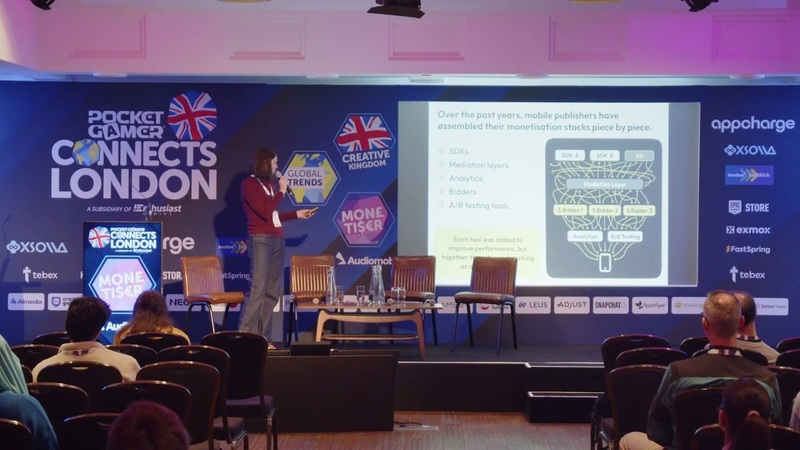
Session: What’s Really Limiting Publisher Monetisation Today - Olga Zharuk, TeqBlaze.
Modern mobile game monetization is increasingly hindered by an overly complex ad technology stack that strips publishers of essential control over their own revenue streams.
- The modern mobile ad tech stack has become overly fragmented, forcing publishers to rely on multiple vendors and mediation platforms that prioritize their own internal metrics over the publisher's long-term business health.
- Current monetization infrastructure functions as a 'black box,' preventing publishers from auditing auction outcomes, diagnosing revenue fluctuations, or maintaining granular control over the specific ads displayed in their apps.
- Loss of control over the ad stack creates operational risks, including the unintentional promotion of direct competitors and the delivery of poor-quality, long-form ads that negatively impact player retention.
Fireside Chat: The State of DTC In Mobile Games - Maor Sason & Harri Manninen.
The mobile gaming industry is undergoing a fundamental shift toward direct-to-consumer (D2C) monetization strategies, moving away from total reliance on platform-controlled payment ecosystems.
- Direct-to-consumer (D2C) monetization has transitioned from an experimental tactic to a core strategic pillar, with early adopters in social casino and casual gaming sectors now generating 30% to 40% of their total revenue through these channels.
- Successful D2C implementation requires a dedicated operational stack that integrates community building, personalized player interactions, and automated engagement rather than simple payment processing.
- Developers are segmenting their D2C strategies by player value, utilizing human-touch experiences for high-spenders and AI-driven automation with real-time data analysis for broader player bases.

Panel: Running DTC at Scale - Lessons From Mobile Game Leaders.
This panel discussion explores the strategic shift toward Direct-to-Consumer (DTC) models within the mobile gaming industry, emphasizing how publishers are leveraging web shops to bypass traditional app store fees and improve monetization.
- Direct-to-Consumer (DTC) web shops are now a core strategic requirement for mobile game publishers to bypass app store fees and improve monetization in a difficult user acquisition environment.
- Aggressive education of creators and players can drive rapid adoption, with one platform increasing web shop revenue from 10% to 40% in just a few months.
- Successful DTC implementation requires integrating the web shop into the core product vision rather than treating it as a bolted-on utility.
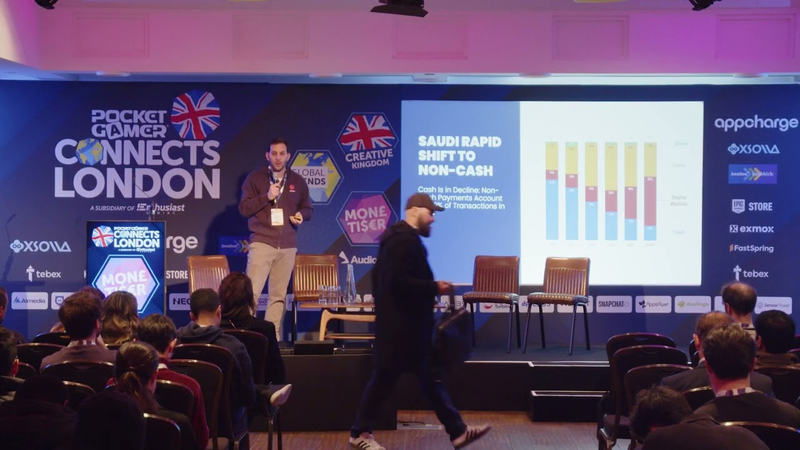
Session: Unlocking MENA Gaming Growth Through Local Payment Methods - Faisal Al Bitar, Tamatem.
The Middle East and North Africa (MENA) gaming market represents a significant growth opportunity, currently valued at over $7 billion.
- The MENA gaming market is valued at over $7 billion with a young demographic of 500 million people, 67% of whom are under age 35.
- Developers can increase ARPU by 100% and improve checkout conversion rates by 30% by implementing localized payment solutions that cater to the region's high unbanked population.
- Adopting a direct-to-consumer (DTC) strategy allows developers to reduce transaction fees from the standard 30% down to as low as 5%.

Curated Panel: The Privacy-First Advantage: Smarter Data, Smarter Monetization In 2026.
By 2026, privacy compliance has transitioned from a mere legal obligation into a fundamental operational strategy that dictates the success of monetization and user experience within the gaming industry.
- Privacy compliance has evolved from a legal checkbox into a core component of the monetization stack, with non-compliance leading to significant financial penalties, such as the $1.4 million fine issued to Jam City for CCPA violations.
- Publishers must shift from passive data collection to active activation of first-party data to improve ad targeting, eCPMs, and overall monetization strategies.
- Major ad networks, including Google, have moved toward making the sharing of publisher first-party data a default requirement to improve ad relevance and player journey insights.

Session: From Steps to Spending: A New Motivation Loop That Turns Player Movement Into Engagement...
The integration of physical activity into mobile gaming serves as a novel motivation loop designed to address two persistent industry challenges: low player retention and stagnant conversion rates.
- A 'conditional payer' segment exists among non-paying mobile gamers, representing 5% to 15% of that group, who are willing to make purchases if they can offset costs using earned rewards.
- Allowing users to pay for a portion of in-game currency with earned rewards significantly increases purchase intent, with a 3x growth in intent at a 50% reward-coverage level and a 5x growth at 75%.
- Integrating physical activity into a motivation loop drives retention, as 73% of surveyed gamers reported they would check their earnings progress at least once daily.
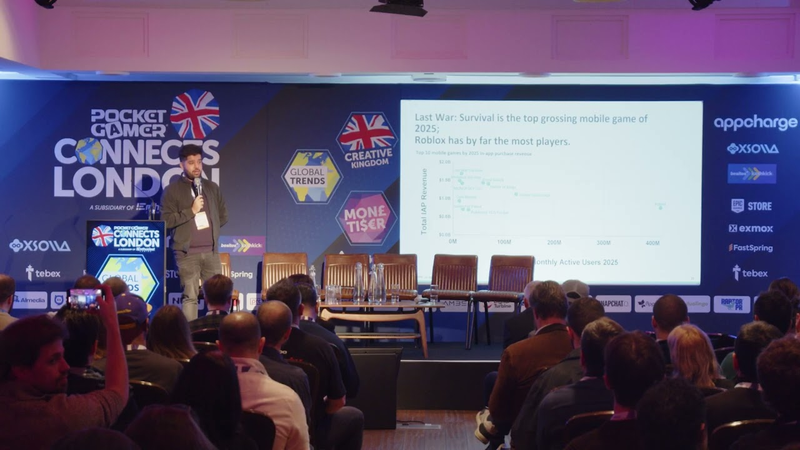
Session: State of the Gaming Industry - Chirag Ambwani, Sensor Tower
The global gaming industry demonstrated significant resilience and growth in 2025, marking a record-breaking year across mobile, PC, and console platforms.
- The mobile gaming market is shifting toward a live-service model, evidenced by a decline in new game launches from nearly 100,000 in 2022 to under 70,000 in 2025 as publishers prioritize existing titles.
- Mobile revenue remains resilient at $82 billion, despite a 15% decline in downloads, with the UK market showing notable strength through 10% year-over-year revenue growth.
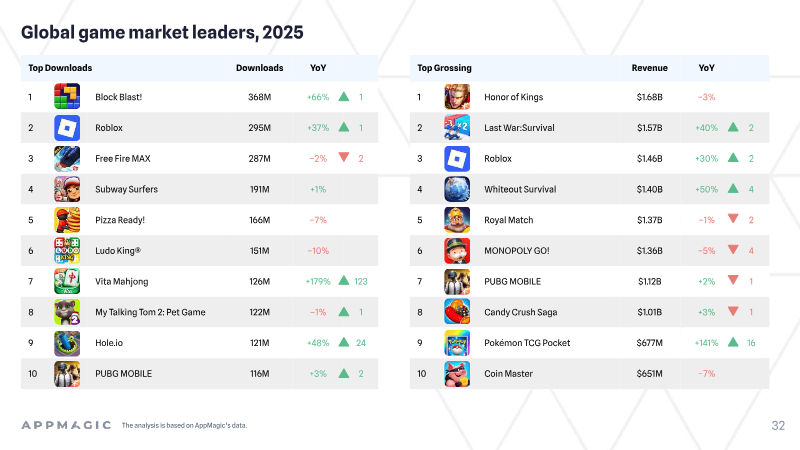
- Competition in the mobile space is increasingly dominated by Eastern publishers, who now hold five of the top nine spots in the Western market with titles like 'Whiteout Survival' and 'Last War: Survival' grossing over $1 billion within a year of launch.

How Finch turned self-care into a $100M+ game
Finch has established itself as a dominant force in the mental health and stress management sector by successfully merging productivity tools with addictive, Tamagotchi-style gamification.
- Finch has achieved a valuation exceeding $100 million by merging mental health utility with Tamagotchi-style gamification, reaching 10 million daily active users.
- The app maintains a strong 20% day-60 retention rate by utilizing streak mechanics, collectibles, and emotional engagement to sustain its core loop.
- The company bypasses mobile store fees by utilizing a direct-to-consumer web model powered by Stripe, which includes a 'Guardian' program for gifted subscriptions.

Mobile Market Landscape 2026
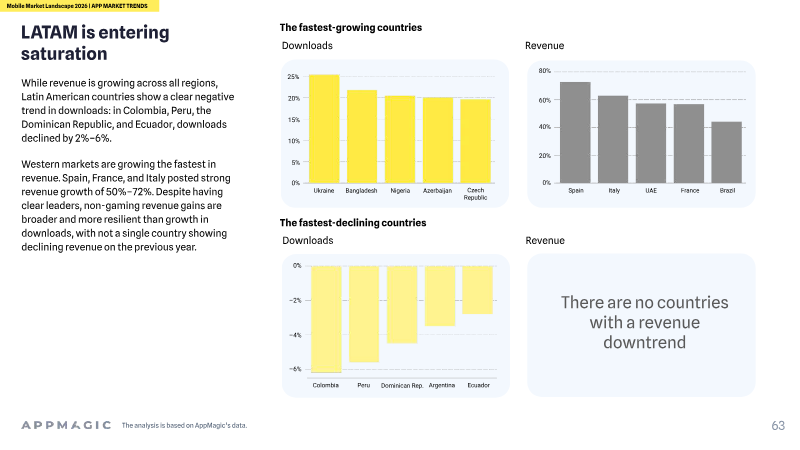
The mobile ecosystem is undergoing a fundamental structural transformation as the industry shifts from a volume-based growth model to one defined by monetization efficiency and technological integration.
- Non-gaming applications surpassed gaming in total revenue for the first time in late 2025, driven by a 273% revenue surge in generative AI and utility-based tools.
- The mobile market has reached saturation, with a 25% year-over-year increase in app releases while only 10% of new titles successfully capture meaningful user attention.
- Hypercasual gaming revenue grew by approximately 80% as developers pivoted toward hybridization, blending deeper monetization mechanics into puzzle and simulation subgenres.

Vietnam Mobile Gaming 2025: The Next Billion-Dollar Frontier in Southeast Asia
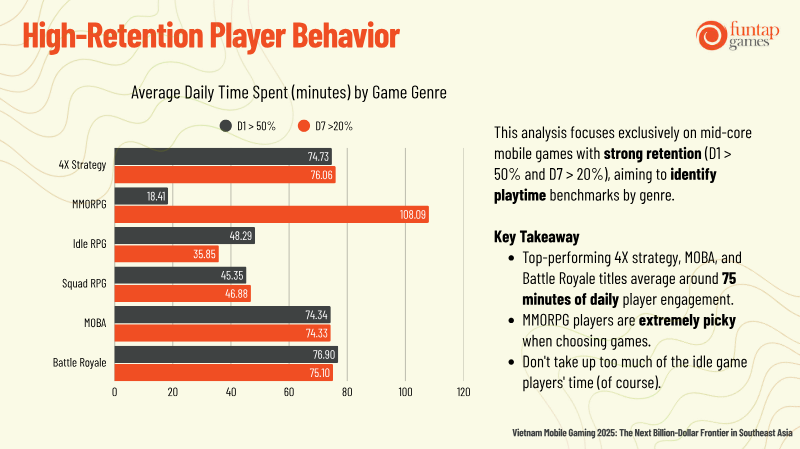
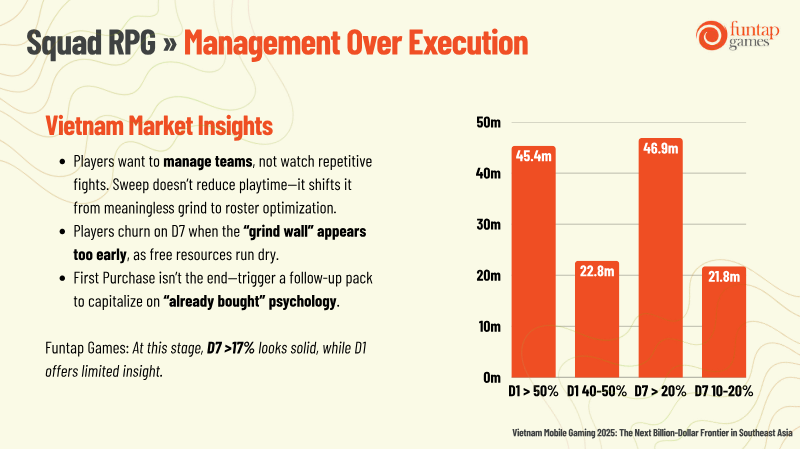
The report argues that Vietnam’s mobile gaming sector will reach a billion-dollar valuation by 2025, driven by an expanding user base and high spending per download.
- Vietnam's mobile gaming market is projected to reach a billion-dollar valuation by 2025, supported by a 9.8% compound annual growth rate.
- A 2025 regulatory crackdown resulted in the removal of 1,081 unlicensed titles, leading to a 13.7% decline in total downloads but fostering a more stable environment for compliant mid-core games.
- Vietnam demonstrates strong monetization potential, with revenue per download exceeding that of the Philippines by at least 28%.