Monetization reports and market data
Documents
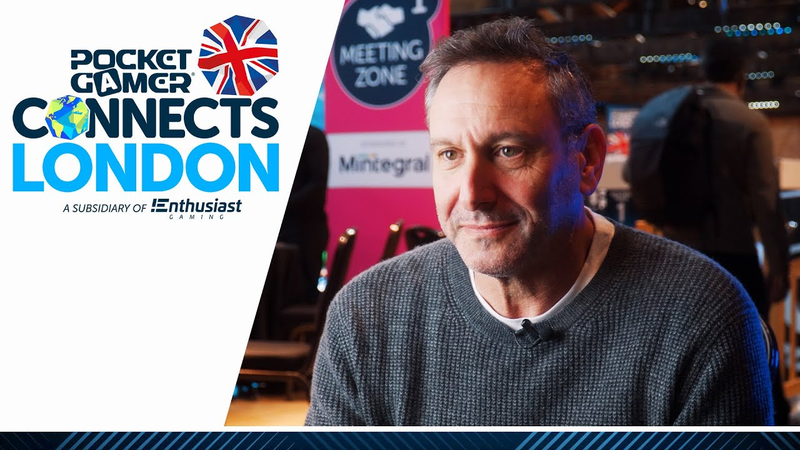
How D2C lets you "take the power back" from app stores | David Stelzer from AppCharge #PGConnects
The direct-to-consumer (D2C) model in the mobile gaming industry has evolved from a niche strategy into a necessary operational framework for developers and publishers seeking to reclaim control over their revenue and customer relationships.
- Converting 20% to 25% of total player traffic to D2C channels is considered a benchmark for success, resulting in substantial cost savings and improved profit margins.
- D2C storefronts allow developers to bypass app store restrictions by implementing features like multi-item carts, alternative currency exchanges, and direct loyalty programs.
- Web-based storefronts function as comprehensive IP hubs that integrate physical merchandise, linear media, and community initiatives, rather than serving solely as transaction points.
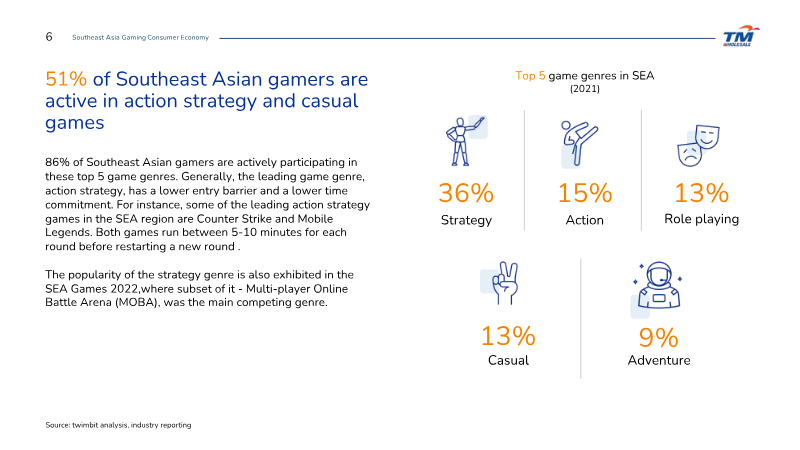
Southeast Asia Gaming Consumer Economy
The Southeast Asia Gaming Consumer Economy report, produced jointly by Telekom Malaysia and twimbit in Q2 2022, examines the region’s rapidly expanding gaming market.
- The Southeast Asian gaming population is projected to reach 367.8 million by 2025, with Indonesia, Malaysia, the Philippines, Singapore, Thailand, and Vietnam accounting for 85% of the total regional gamer base.
- Mobile gaming is the dominant market force, generating 70% of in-game revenue and achieving a 13.7% CAGR in consumer spending between 2018 and 2021, reaching a total of US$5.57 billion.
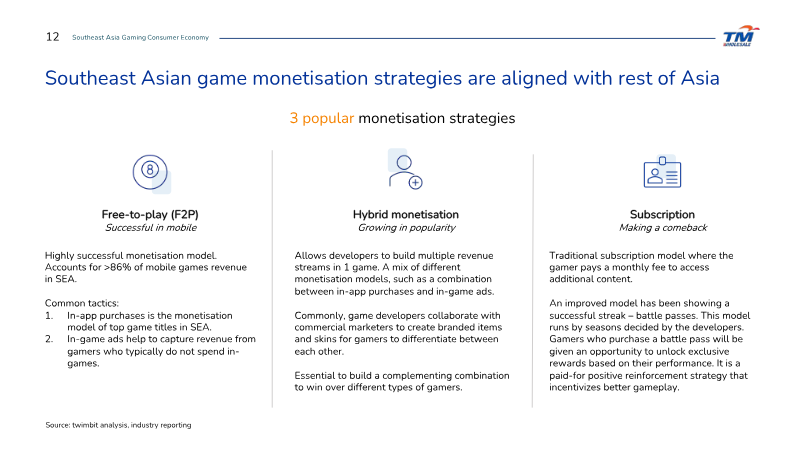
- Monetization is heavily reliant on free-to-play models with in-app purchases, which account for 86% of total revenue, though hybrid and subscription models are increasingly utilized.
Vietnam Gaming Outlook 2026: Building Sustainable Growth
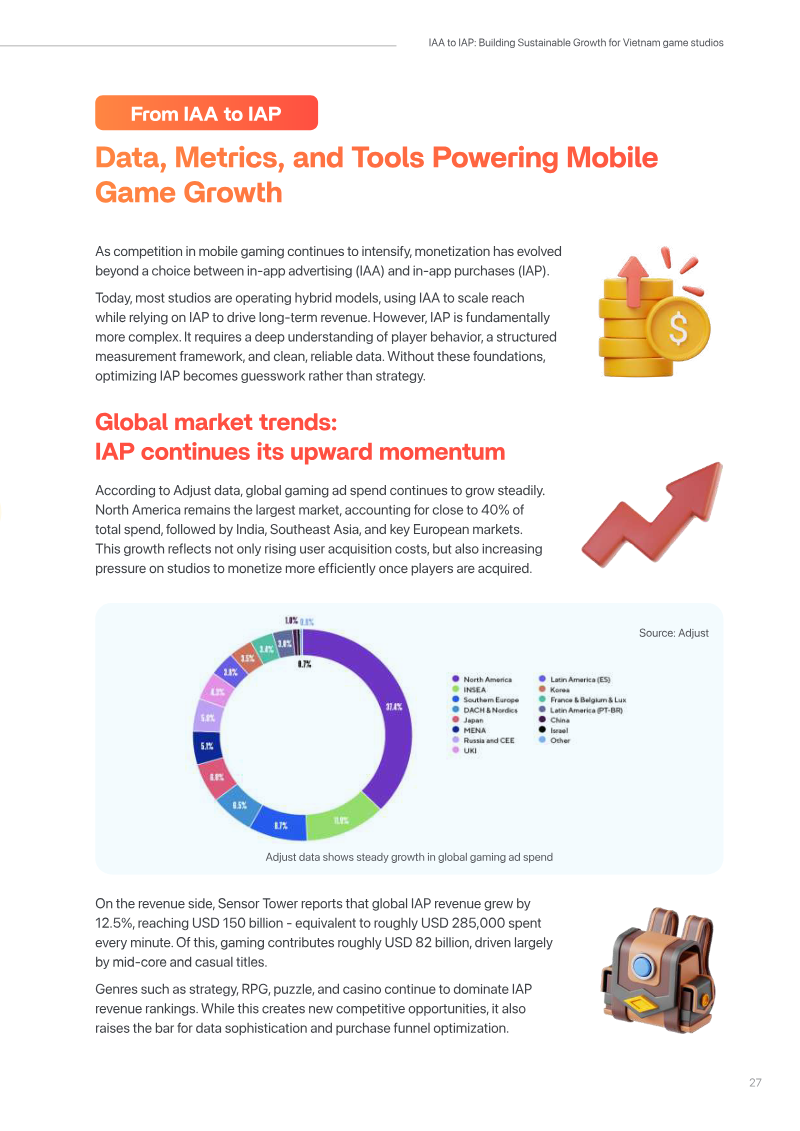
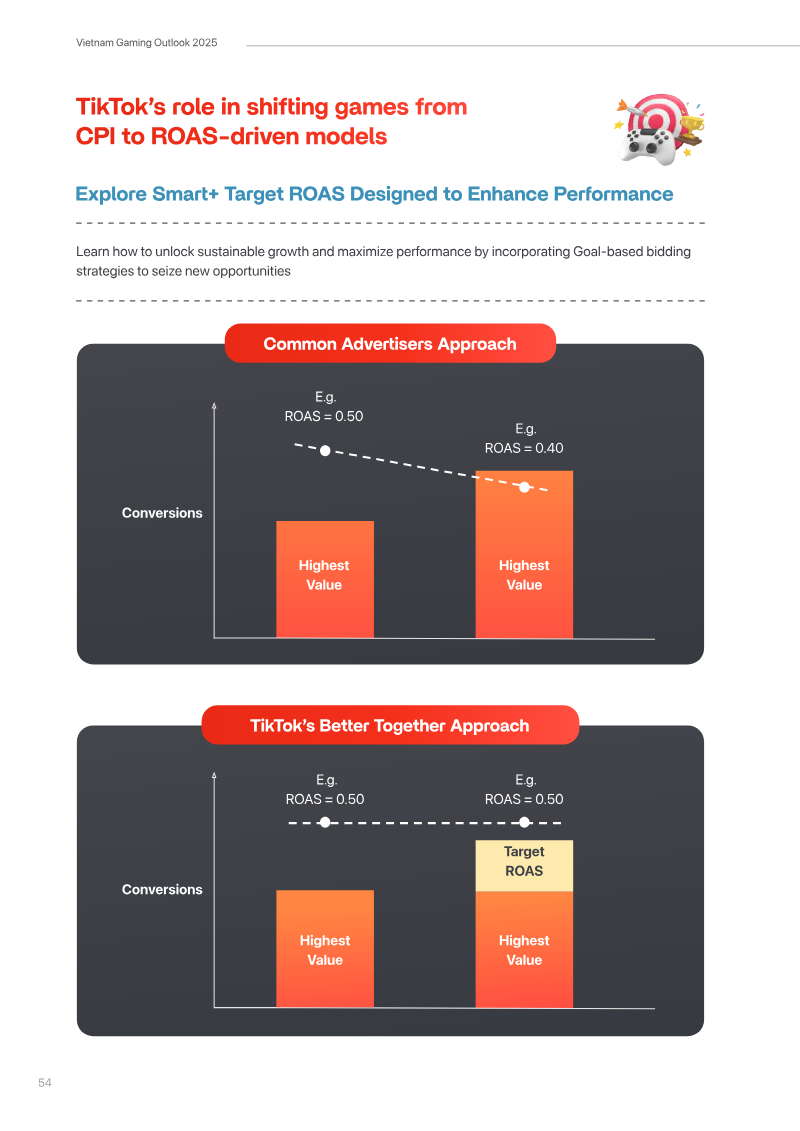
Vietnam’s mobile gaming landscape is rapidly evolving from a download-centric, ad-driven model to a hybrid ecosystem that prioritizes in-app purchases (IAP) and subscription revenue.
- Vietnam’s mobile gaming sector is shifting from an ad-driven model to hybrid-casual titles prioritizing in-app purchases (IAP) and subscriptions, following a 65% surge in local IAP growth in 2025.
- While Vietnam led global Google Play downloads with 6.1 billion installs in 2024, the market generated only $430 million, highlighting the profitability ceiling of pure advertising models.
- Localized pricing strategies, including purchasing power parity tiers and one-tap tokenized payments, can increase conversion rates by over 20% and reduce checkout abandonment by up to 30%.

How D2C can build personal relationships | Liam Wiltshire from Tebex #PGConnects
Direct-to-consumer (D2C) strategies in the gaming industry are evolving beyond simple fee avoidance, shifting toward building deeper, more sustainable relationships between developers and players.
- Direct-to-consumer (D2C) strategies are shifting from simple fee avoidance to building sustainable, long-term relationships through web-based shops and community portals.
- Developers are increasingly utilizing D2C platforms to bypass in-app purchase limitations, enabling personalized engagement tools like tailored offers and direct communication channels.
- Subscription-based monetization models are replacing one-off microtransactions to provide predictable revenue and support the long-term maintenance of live-service games and modding ecosystems.
The soft launch checklist everybody needs to follow by Matej Lancaric
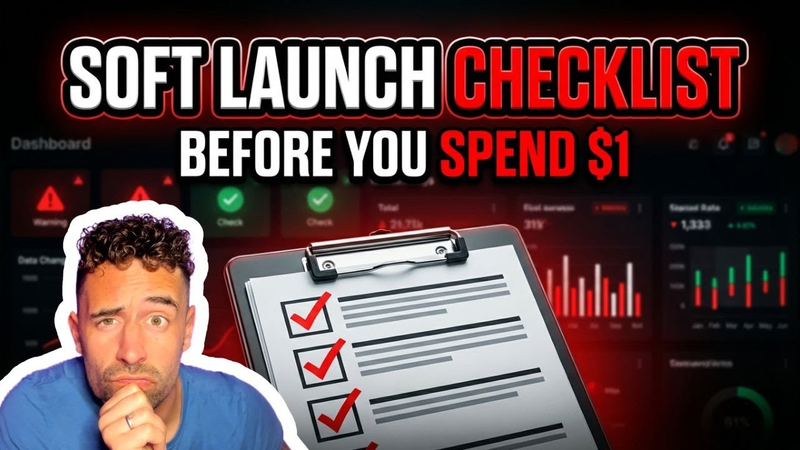
A successful soft launch in the mobile gaming industry requires a rigorous technical and operational foundation to ensure that subsequent data analysis—such as CPI, retention, and ROAS—is accurate and actionable.
- Prioritize a dedicated 'technical stage' during soft launch to verify that tracking, attribution, and monetization infrastructure are accurate before scaling, as flawed data leads to unreliable performance metrics.
- Implement a Mobile Measurement Partner (MMP) and Firebase to track core events, including installs, sessions, purchases, and ad impressions, while ensuring revenue deduplication across SDKs to prevent double-counting.
- Maintain app stability by keeping crash and 'App Not Responding' (ANR) rates below established thresholds to avoid platform penalties and ensure a reliable user experience.
Unit Economics for Free-To-Play Games
Transitioning from hobbyist game development to a sustainable commercial enterprise requires a rigorous, data-driven approach to unit economics.
- Transitioning from a hobbyist to a professional game developer requires treating game development as a business model where revenue generation, scaling, and profitability are forecasted before or during development rather than hoping for success post-launch.
- Use an LTV (Lifetime Value) calculator to model financial assumptions, such as targeting $1.2 million in revenue, to determine if a game concept is viable before committing significant resources.
- Pricing strategies must align with the required LTV; for example, setting an 'Ad Removal' IAP at $3.99 may fail to meet business goals if the model requires a higher average revenue per paying user to achieve profitability.
State of Mobile 2026: 9 Trends That Matter
The mobile ecosystem is undergoing a fundamental transition from a volume-based growth model to a monetization-first strategy.
- The mobile market has shifted from volume-based growth to a monetization-first model, evidenced by a 1% stagnation in global downloads contrasted with an 11% surge in in-app purchase revenue.
- Non-game applications are currently outperforming the gaming sector, recording a 21% year-over-year revenue increase compared to the 1% growth seen in gaming.
- The United States remains the dominant revenue driver, accounting for 35% of global totals, while Western Europe and Brazil are identified as the most critical emerging growth regions.

🤬 Meta is NOT back on iOS. We have been FOOLED!
Meta’s recent, transient surge in iOS advertising revenue does not represent a technological breakthrough or a successful circumvention of Apple’s App Tracking Transparency (ATT) framework.
- Meta’s recent spike in iOS advertising revenue was a temporary anomaly driven by aggressive ad formats rather than a circumvention of Apple’s App Tracking Transparency (ATT) framework.
- The performance surge lasted only 48 hours, as the use of intrusive end-cards and double-ad templates led to a sharp decline in user retention that neutralized initial gains.
- Meta has failed to regain its pre-2021 market dominance on iOS, as the underlying signal loss issues caused by privacy-centric restrictions remain unresolved.

What's behind the Xsolla rebrand? | Berkley Egenes from Xsolla #PGConnects
The gaming industry is currently undergoing a significant shift toward direct-to-consumer (D2C) models, driven by evolving global regulations that have dismantled traditional walled gardens on mobile platforms.
- The gaming industry is shifting toward direct-to-consumer (D2C) models, allowing developers to bypass mobile app store limitations through web shops and independent monetization strategies.
- Developers are increasingly utilizing third-party partners as merchants of record to manage the technical and legal complexities of global compliance and international taxation.
- Integrating payment systems with social platforms like Discord and Reddit enables developers to foster community-driven experiences that improve player retention and revenue capture.

🚨📢 BREAKING NEWS: Mobile Stagnates, Monopoly GO Hits $6B, Liftoff Files for IPO
The mobile gaming industry experienced a period of divergence in 2025, characterized by a slight rise in global revenue to $81.8 billion while traditional app store metrics suggested stagnation.
- Scopely’s Monopoly Go became the fastest mobile game in history to reach $6 billion in lifetime revenue, achieving the milestone in 1,275 days and currently generating approximately $200 million per month.
- Global mobile gaming revenue reached $81.8 billion in 2025, though traditional app store metrics show stagnation due to a massive shift toward web stores that bypass platform fees.
- Industry observers estimate that 40% to 50% of revenue from large-scale developers is now excluded from standard iOS and Google Play tracking, meaning official reports likely underrepresent actual market performance.

TWiG #368: Ubisoft Cuts, TikTok Slips, and Gaming’s Next Distribution Crisis
The global gaming industry is currently navigating a period of significant structural volatility, characterized by widespread workforce reductions and evolving regulatory pressures.
- Ubisoft has reduced its workforce by over 3,000 employees within the last two years, reflecting broader structural volatility in the gaming industry.
- Valve is facing an $897.7 million legal challenge regarding its Steam commission structure while implementing new AI disclosure rules that only require transparency for content used in gameplay, store pages, or marketing.
- TikTok’s mobile advertising share has dropped from 21% to 12% amid stagnant daily active user growth and ongoing efforts to decouple from its parent company, ByteDance.

🎯 Hunting Sniper Review: Old game, new UA = SERIOUS Money!
The mobile game Hunting Sniper has emerged as a significant financial success within the realistic sports genre, generating approximately $200,000 in daily revenue.
- Hunting Sniper generates approximately $200,000 in daily revenue, outperforming established genre competitors like Hunting Clash by nearly tenfold.
- The game’s rapid scaling since its August 2024 launch is driven primarily by an aggressive user acquisition strategy rather than innovative game design.
- Developers maintain a high-volume creative output, releasing hundreds of new marketing assets monthly across Facebook, Google, and TikTok.