Monetization reports and market data
Documents
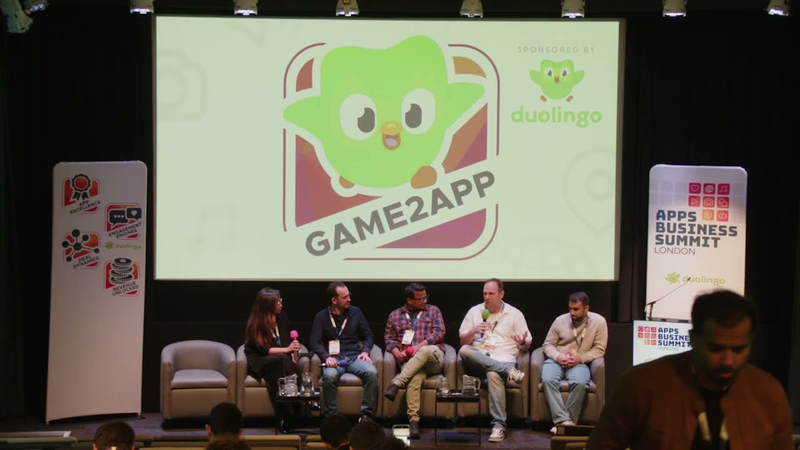
Panel: From App To Super App: Expanding Mobile Apps Beyond A Single Experience.
Mobile applications are increasingly evolving into super apps, platforms that integrate diverse services into a single ecosystem to enhance user retention and overcome distribution hurdles.
- Successful super app expansion relies on identifying 'value leakage'—tracking when users leave an app to complete a related task—and building features to capture that activity within the existing ecosystem.
- When expanding into new categories, companies should prioritize a unified brand identity, as seen with Duolingo consolidating math, music, and language learning under a single app to maintain a consistent user experience and simplify internal growth optimizations.
- To avoid internal competition and 'Lord of the Flies' style silos, organizations must establish clear, company-wide objectives where user engagement and experience take precedence over short-term monetization.

Session: Leveling Up Loyalty: Essential Lessons From Rewarded Gaming For Loyalty Leaders.
Rewarded gaming programs serve as a powerful tool for app developers to drive user retention and incremental revenue by creating an equitable value exchange.
- The global gaming market is projected to reach $125 billion by 2025, presenting a significant opportunity for non-gaming sectors like fintech and e-commerce to leverage rewarded engagement.
- Rewarded gaming programs drive user retention and incremental revenue by establishing an equitable value exchange where users receive real-world benefits for active participation.
- Implementation should follow a phased strategy, starting with low-friction tests like simple ad units before scaling to permanent, integrated features.

Curated Panel: How Brands & Publishers Are Navigating The New Gaming Media Landscape In 2026.
The gaming media landscape in 2026 is undergoing a fundamental transition as publishers and brands move away from a singular focus on performance-based advertising toward more sophisticated, brand-centric strategies.
- The gaming media landscape in 2026 is shifting from performance-based advertising to brand-centric strategies that prioritize user retention and revenue diversification.
- Publishers are increasingly integrating non-intrusive, custom in-game placements to keep users within their ecosystems and prevent churn to external competitors.
- Measurement is evolving beyond simple app-install KPIs to include first-party data, brand lift studies, and attention-based metrics that align with broader marketing objectives.

Panel: The Future Of Monetisation: Is Now The Time To Take Advantage Of Direct-To-Consumer?
Direct-to-consumer monetization has emerged as a critical strategic imperative for mobile game publishers, driven by the necessity to capture higher margins amidst evolving regulatory landscapes and platform-level changes like IDFA.
- Bypassing traditional in-app payment rails through direct-to-consumer (D2C) web shops can increase net revenue by more than 20 percent.
- Once a player completes their first purchase on a web shop, subsequent conversion rates for that user can reach as high as 97 percent.
- D2C strategies are currently most prevalent in the midcore and casino genres, where web shops are used as tools for holistic player engagement rather than just payment processing.

Fireside Chat: How Yodo1 Grew Transformers: Earth Wars Webshop Revenue Share 2.2× In Under A Year.
This discussion examines the successful implementation of a direct-to-consumer (DTC) web shop strategy for the mobile game Transformers: Earth Wars, which resulted in a 2.2-fold increase in web shop revenue share within one year.
- Yodo1 Games increased the webshop revenue share for Transformers: Earth Wars by 2.2x in under a year by shifting player spending away from in-game stores to a direct-to-consumer (DTC) web platform.
- Moving transactions to a webshop allows developers to bypass the 25-30% commission fees typically charged by Google and Apple, significantly increasing profit margins.
- To drive initial traffic and habituate users to the webshop, Yodo1 offered free gifts and lower-value conversion bundles that were not available inside the game.
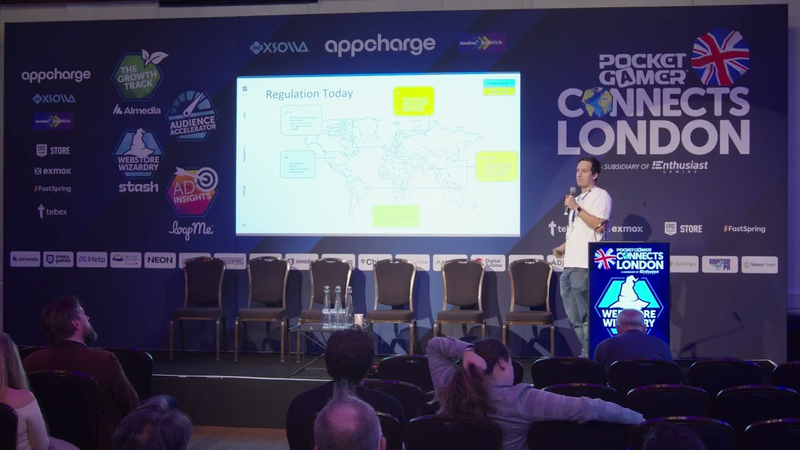
Session: The End of Global DTC: How Regulation Is Forcing Regional Player Flows - Archie Stonehill.
The global landscape for direct-to-consumer (DTC) game distribution is undergoing a significant transformation driven by a patchwork of regional regulations and legal challenges.
- The global DTC landscape is shifting from a uniform model to a fragmented, country-by-country regulatory framework that requires developers to adopt agile, region-specific distribution strategies.
- In the U.S., the dismantling of anti-steering restrictions since 2021 has enabled link-out strategies that now account for over 50% of transaction volume for some developers.
- Regulatory environments currently fall into three archetypes: traditional (restrictive), open steering (U.S.-style, allowing tax-free web checkouts), and taxed/mixed (EU-style, which often includes new fees or UX limitations).
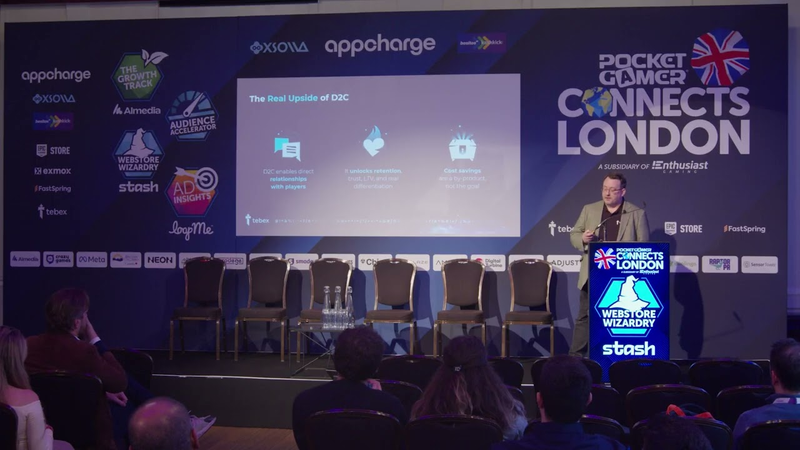
Session: D2C Monetisation: A Cost-Saving Shift Or Something More? - Liam Wiltshire, Tebex
Direct-to-consumer (D2C) monetization in the gaming industry has evolved from a simple cost-saving measure into a strategic necessity for long-term growth.
- D2C monetization is shifting from a platform-fee avoidance strategy to a core growth engine focused on enhancing player lifetime value (LTV) and direct engagement.
- In many global regions, up to 70% of transactions are conducted via local wallets or alternative payment methods rather than traditional credit cards, necessitating localized payment strategies.
- Successful D2C implementation requires treating payments as a specialized product function to manage the complexities of global tax compliance, fraud detection, and chargeback mitigation.

Fireside Chat: Money Talks - Listening To Buyer Signals - Adam Smart & Edik Mitelman, AppsFlyer.
The data collaboration platform SignalHub, developed by AppsFlyer, enables gaming companies to leverage real-world consumer spending data for highly targeted user acquisition.
- AppsFlyer’s Signal Hub platform allows game studios to build custom user acquisition audiences based on real-world consumer spending data from partners like Mastercard, Factures, and Equifax.
- The platform enables targeting based on specific merchant transactions, product SKUs, spending ranges, and socioeconomic status, allowing studios to reach users with high propensities for in-app purchases.
- Data is processed through a privacy-compliant, hashed, and encrypted environment where no raw data is downloadable or shared, meeting strict audit requirements from major financial institutions.

Session: You Grew D2c In 2025. Now What? How To Level Up D2c In 2026 Chip Thurston, FastSpring.
Direct-to-consumer (D2C) revenue has evolved from a nascent strategy into a critical pillar of gaming monetization.
- The D2C landscape is maturing rapidly, with 57% of publishers currently operating a web store and 96% of those without one planning to launch one.
- Recent regulatory shifts have accelerated investment, as 95% of existing web store operators have increased their capital allocation toward these channels following landmark Epic versus Apple and Epic versus Google rulings.
- The era of 'fee-free' steering is ending, with new legislation like Japan's Mobile Software Competition Act likely to introduce platform fees on linked payments that could reach 20% or more by 2026.
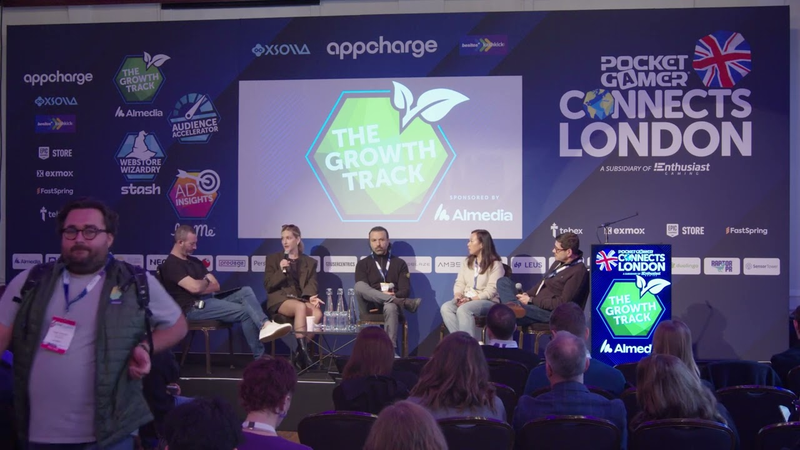
Panel: Best Practices For Navigating The Rewarded UA Space.
Rewarded user acquisition has evolved from a volume-centric strategy into a sophisticated, data-driven channel focused on long-term player loyalty.
- Rewarded user acquisition has evolved from a high-fraud, low-quality volume play into a data-driven channel that provides high-intent users who engage with games deeply to reach specific milestones.
- Unlike traditional media sources that may require up to 365 days to realize ROI, rewarded UA allows developers to recover costs and generate revenue earlier, facilitating faster reinvestment and scaling.
- Modern rewarded platforms utilize adaptive economy models and real-time automation to personalize reward structures based on individual user behavior, moving away from outdated fixed-CPI models.
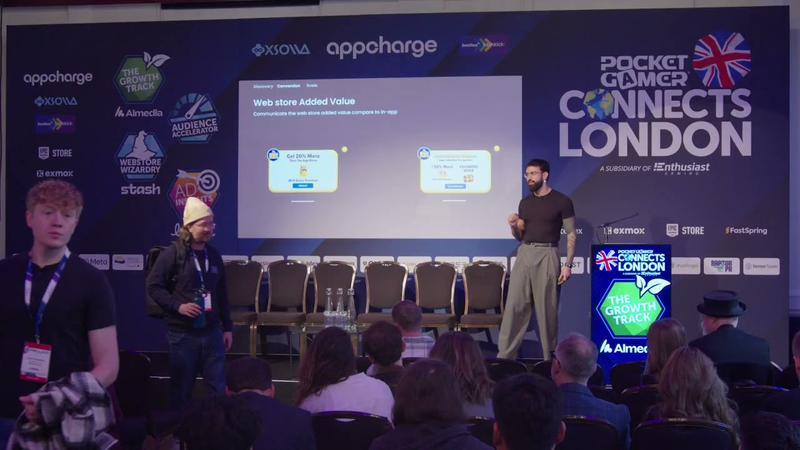
Session: How To Get To 30% DTC Revenue Share - Omer Torok-Arlosoroff, Appcharge.
Direct-to-consumer (DTC) revenue strategies have transitioned from optional experiments to mandatory components for mobile game studios.
- Direct-to-consumer (DTC) web stores are now considered a mandatory strategy for mobile game studios, with top performers achieving 30% to 40% of their total revenue share through these channels.
- Achieving three repeat purchases on a web store creates a high retention threshold, with an 84% probability that the user will continue to conduct the majority of their future transactions there.
- Web store offers should prioritize adding 15% to 25% more value to a purchase rather than offering simple discounts, as this approach is more effective at driving both first-time deposits and higher average revenue per user.
Session: Rewarded UA In 2026: The Growth Playbook - Jan Sommerfeld, Almedia.
Rewarded user acquisition (UA) is evolving from a simple volume-based strategy into a sophisticated, data-driven channel that functions as a long-term loyalty program.
- Rewarded user acquisition has shifted from focusing on install volume to prioritizing long-term engagement, with platforms now extending reward windows from 30 days to 90 days and beyond to drive Day 360 performance.
- The US market for rewarded platforms has grown to an estimated 100 to 150 million users, with major players like Freecash acquiring 3 to 4 million users per month and reaching a total user base of 60 million.
- Modern rewarded platforms now utilize automated bidding systems, such as Almedia's 'Max ROAS,' which allow advertisers to define return-on-ad-spend targets rather than manually managing individual CPIs.