VideoPocketGamer.biz
Session: From Steps to Spending: A New Motivation Loop That Turns Player Movement Into Engagement...
9 Feb 202619 min video
Transcript
Uh, so let's get things started. started with Luke Mikass from GoPlay.
I'd like to start by asking you all a question. Hopefully, this is an easy one. Uh, how many of you play games on your mobile device? Go ahead and raise your hand if you do. Okay, this is awesome. I'm in the right spot. U, let me ask you this. How many of you have never made a purchase using real money for in-game currency in those games that you play? Anybody here? There's one, two, three. Maybe the rest of you are afraid to raise your hands or you're just really
committed gamers. Um, that's good to know. You guys who raised your hands, you non-payers as this industry calls you. Um, you're part of the vast majority of gamers uh for um freetoplay games on mobile devices. Sorry, I was just wondering where this was. Um over the the uh next 20 minutes we're going to talk about uh this concept of turning uh steps to spend. And I'm going to be presenting to you some industry data and some surveys that we have put together over the last three or four years uh of free-to-play mobile gamers. Uh and specifically uh how physical activity uh and earned physical effort can help uh can help move the needle on two of the biggest problems that this industry sees which is without a doubt uh retention uh and conversion. Now you guys if you're game developers
or publishers probably very familiar with uh these these industry statistics about retention over day 30. That's tends to be quite a big challenge. Uh, and conversion rates in mobile games, you all know, sort of hovers around 2%, I mean, give or take, depending on the game. Uh, I think this was a a stat uh last year from Unity, um, that said it was less than 2%. Uh and so at GoPlay when we started thinking about ways to solve this problem um we really wanted to ask a fundamental question which was uh can we use physical activity as a motivation loop uh to help improve those two those two metrics. Um and throughout this presentation uh you're going to hear me use this phrase motivation loop uh or maybe just the loop. Um, and so I want to make sure you guys understand what I'm talking about uh when I do say that. So the motivation
loop uh that I'm referring to is one that uh we've built a platform around uh and it really starts with a behavior um that everybody does. Nearly every gamer is doing this every day. So it's nothing new and that's walking. Basically creating steps. You can do that through walking, running, uh any any other physical activity. um that behavior is tracked. Uh if you've got a mobile device, a phone, your phone's tracking that. Uh and lots of us have uh I'm wearing an Apple watch. Lots of us have watches and lots of us also have uh dedicated fitness trackers like whoop, you know, uh there's aura rings, whoop bands, um iOS, Android, doesn't matter. There's lots of trackers. Uh and so this motivation loop is actually quite simple. It's taking the steps that you have uh and converting that into a reward point uh in go play. We call that a go bit. That's the reward point. Uh and then you can use those go bits uh or that reward point to do something with it. And specifically what we're talking about is the ability to uh use that um
currency or sorry use that uh reward point uh and exchange it for in-game currency in an enrolled game. Uh you can also use it kind of the way you can use airline miles. Uh and that is uh pay pay for part of an in-game currency purchase using your rewards points uh and then you pay the rest in cash. So kind of like an airline that lets you pay with miles and then the rest in cash. Um, and as I mentioned, this uh this loop is actually quite powerful um because whenever you're trying to uh modulate behavior of any any group, it's very difficult to get people to do something new. And this one's built in. Uh so it doesn't really require you to do anything new. Uh, and so as I go through the the the following slides, uh, which really dive into specific questions that we asked, um, over 3,000 mobile gamers. Um,
the, uh, the I want to sort of set the stage for you guys. The, the scenario that we gave them was imagine there's an app that lets you uh, rewards you for the steps you take with a reward point. you can then use those reward points to um uh either pay for part of an in-game purchase or to exchange for in-game currency. Um and so with that that sort of daily loop that was the the uh underlying scenario. Um so diving into some of the questions particularly uh around how it can affect retention. Um, we first asked uh this question. Uh, would this motivation, Luke, would it make you uh play your current games more often? And we saw a pretty significant response uh especially on the top two boxes. So, this one uh was just short of a thousand gamers uh and over one quarter of them said very likely. Um, and that's that's an interesting metric
because it does start to point towards u re-engagement with the game which ultimately helps uh you know retention and in in uh particular if you look at the top two boxes uh 70% at least likely to play more often. Um so that was something that was sort of encouraging to see and and we were we started to think okay well physical activity maybe there is something to this. Uh [clears throat] we asked a second question of them which was when would you play the game that you just either bought currency in uh or traded your uh rewards points for? And this is really um a a question designed to measure a specific uh part of this loop which is that that last two steps. What is the lag time between the using uh using of the rewards points to either exchange for currency or to make an in-game currency purchase and actually then firing up the game and playing doing a a
gaming session. Uh and this one was quite remarkable. Um we saw 46% nearly half said immediately they told us that the very next thing they're going to do uh is play that game. And that's um behaviorally that's a that's a pretty significant trigger for uh gameplay sessions. Um and once uh once again also if we look at the top two boxes here uh 69% were indicating to us that they were going to play in less than 24 hours. Uh that's pretty impressive we thought and we wanted to take a look at that uh and measure it sort of against um another question that was able to kind of like dive into is there is there a first step to this uh frequency question? Is there a first step to this uh getting people to earn the currency and then get into the games and play? And there is it's it's actually when we told them uh in the beginning the
scenario which was imagine there's an app uh that allows you to uh participate in this motivation loop. So we asked them how often would they check their earnings progress which you know said another way how often do we are you going to go check how many steps you've had and how many steps or how much currency sorry how many rewards points that currency uh has generated for you. And as you can see, multiple times a day was the uh far and away largest response. It's 42%. Uh we've asked this over um probably three or four surveys over the last four or five years. It always stays consistent with the top box being multiple times. Uh and we in one survey in particular, we uh had actually broken that down to one to two times a day, three to five times a day, and we we topped that out at nine plus. And 18% of these folks said nine or more times a day, which was interesting. That's uh
sort of Facebook-ish territory, at least when Facebook was still popular. Um [cough] [clears throat] this is important because this is an engagement metric in the motivation loop. And you can think of it this way. Daily checking is daily thinking about playing games. And for games that are enrolled, it really becomes a game awareness moment. Uh, and this is happening all outside of the game. Um, there's no additional kind of UA uh UA spend on this. There's no marketing. Uh, this this is really happening every minute of the day that a gamer is not actually playing that game. So, it's it's the majority of time. Uh, and the more we can get people to be having these game awareness moments, these multiple touch points throughout the week, uh, throughout the day, the more likelihood, the the higher the likelihood is we're going to trigger a game session.
Um, yeah, you guys probably did the math on that before I clicked the button. 73% at least once a day. So, it was pretty significant what we were seeing on the retention side, but we also talked about the conversion side. Um those retention metrics are actually across both payers and non-pairs. We didn't segment them. Um although if you're interested in that data, we have it and come find me. I'm happy to nerd out on all the uh data with you guys if you're into that. Uh on the conversion side, um we specifically wanted to look at one group and that's this, you know, vast majority of of gamers, which is the non-payers. And um we we wanted to really dig into will this convert somebody? Can we get an umpire to actually buy something? Uh and the large question that we were asking was you if they could use their earned effort uh points to pay for part of a
purchase that that being kind of the mechanic, would it make a difference? And what we discovered was uh interesting. And I say the word discovered because I haven't heard the term I'm about to tell you guys before. So I'm going to claim we discovered it. Uh the industry looks at gaming uh and when you read kind of, you know, industry data and and statistics on it, it's really binary. We talk about payers and we talk about the non-paying group. And as I said in the beginning, you know, the vast majority of these are are non-payers. Um two things. Number one, these guys are not to scale. and two there are actually a hundred total there. So this is this is actually the graph is right. So um it turns out that our data uncovered a third segment. Uh and that third segment we're calling the conditional payers. Now what we found out is that a conditional payer will pay if the conditions of the transaction
are different. Uh and what I mean by that is or what I should say is that um this third segment uh we found out through uh the data that I'm about to share with you is actually is is meaningful. Uh somewhere between five and 15% of those non-payers are actually conditional payers. They're they're willing to do it if you give them the right transaction. Um, and so we asked in our survey, uh, to these non-payers only, uh, how likely would you be to purchase if your reward points covered 10% of the purchase price and the rest you paid in cash? Uh, and then we asked them these in tiers. So up to 25%, 50% and finally up to 75%. Uh and we saw uh with the conditional pairs. So just to kind of set this up here along the bottom there is the um the growing paid with uh rewards points
from 10% up to 75%. Uh and when we looked at the uh the the non-payers who responded uh likely to buy, you can see it started at about 11%. And it kind of grows modestly as it goes up to 50% and then you see it actually dipped down at 75%. And that's a little bit weird uh until you see what the the very likely group said. Very likely started at about 5% uh or four and a half percent. Now admittedly that's like basically at the margin of error for this. So you could say that's zero. Uh but it quickly outpaces the margin of error uh significantly especially on the very likely. Uh and as I mentioned the the likely group at 75% dipped. That's because their investment in making that purchase actually went up. They became very likelies. Uh and so we see that group start to kind of pull away. Um this is pretty significant in
that from uh in that very likely group from 10% up to 50% that's a three times uh growth of the intent in that group. Uh and at 75% it's actually five times. So that's using the base of 4.6 to 12.8. That's a three times increase. So that's kind of like wow that actually seems like uh there are conditional buyers out there. Now, there's some nonpatteries that did raise their hand in this room, and I'm not going to make raise make you raise your hand again, but if you could have paid for some inapp purchases, uh, or in-game currency purchases in the games that you play, effectively with your steps, would you have made a purchase? Um, this data would say that yeah, some of them would, and maybe some of these guys in here are conditional payers. So, kind of to put this in context, um, on the left here, you see a typical discount. Now, this is just two identical, an illustration of two identical in-game currency purchases. On
the left, $20. It's a bag of 200 coins. Typical discount. You see this in games all the time. Uh, 50% discount. So, it's it's a $10 purchase. And the non-paying group doesn't buy it. um they've already decided psychologically, I don't spend money. I'm not going to buy it. Uh and so effectively, this is this is speaking to the payers you already have. Uh and the non-paying group is saying, I've already made a decision about this. I don't buy in-game currency. Uh on the right, we have the exact same um purchase or offer. And with an earned effort discount, you're now paying for part of that effectively with your steps. You're still spending $10. But we saw in the graph before and the intent that they were showing is that now that conditional payer is saying now it's not silly for me to spend money in video games. It's now silly for me not to make the most of the reward points that I earned through my physical
activity. So why? That's kind of the big question. Why does this work? And it comes down to three things. Earned effort from physical activity feels real. If you walk 10,000 steps or whatever you walk, you feel it. Um, it's different than other types of effort that you spend. Our brains kind of calculate and assign a value to effort uh that's gained through physical activity differently than they do every other type of effort. The second reason is that it's done. Um, that means this is latent. when a there's latent value here when a gamer is uh all of a sudden presented with hey I've already taken all these steps now I can do something with it and if I don't I'm going to waste those steps that I took. Uh it is what I was talking about in the beginning of this that this behavior is not something we're asking them to start doing in
order to get a reward. Uh it's something that they've already done. So, we're trying to um [clears throat] use this motivation loop to maximize that. And lastly, it amplifies. And specifically, what I'm talking about here is really two things that you probably are familiar with and heard a number of times. Um and that's the sunk cost fallacy and loss aversion. Um lots of um retail mechanics kind of rely on that. This amplifies it. uh when they're faced with uh an offer to maximize their their effort that they put out, um it takes that sunk cost fallacy and really cranks it up. And the loss aversion part kicks in as that uh mechanism in our brains to just say, "Hey, I do not want to waste this. I want to make the most of what I what I earn through my physical activity." Uh so that's what we've been working on uh at GoPlay. Um, I am going to turn this over for questions. Uh, if you have any, happy to answer them and
happy to get with anybody in here that wants to talk a bit more about this. Uh, I would, uh, be completely shocked by my co-founder if I did not tell you guys GoPlay has built this platform. It exists. Um, it is production ready and we would love to talk to game developers looking to enroll uh, in our free platform and we can talk a bit more that about that one-on-one. So, thank you. I appreciate your time.
[applause]
Auto-generated captions from YouTube — names and numbers may be misheard.
Key insights
6 takeaways · ~2 min read- 01A 'conditional payer' segment exists among non-paying mobile gamers, representing 5% to 15% of that group, who are willing to make purchases if they can offset costs using earned rewards.
- 02Allowing users to pay for a portion of in-game currency with earned rewards significantly increases purchase intent, with a 3x growth in intent at a 50% reward-coverage level and a 5x growth at 75%.
- 03Integrating physical activity into a motivation loop drives retention, as 73% of surveyed gamers reported they would check their earnings progress at least once daily.
- 04The motivation loop creates an immediate trigger for gameplay, with 46% of users stating they would play a game immediately after exchanging earned rewards for in-game currency.
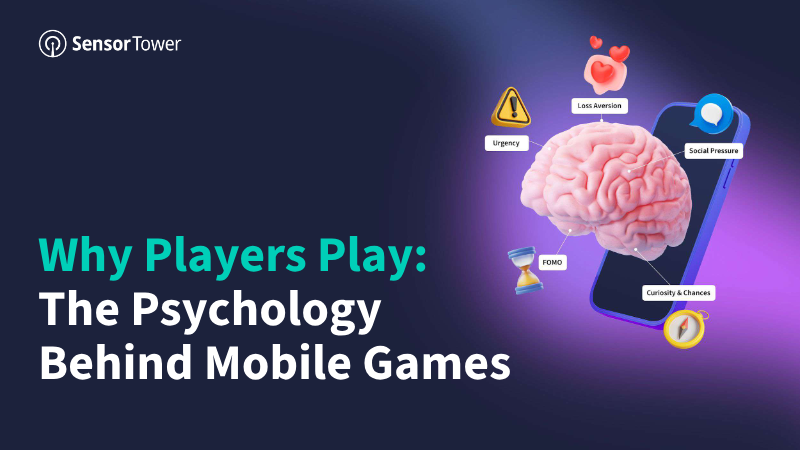
- 05Physical activity-based rewards leverage psychological triggers like the sunk cost fallacy and loss aversion, encouraging users to spend money to avoid 'wasting' the effort they have already exerted.
- 06Surveys of over 3,000 mobile gamers indicate that 70% of players are more likely to play more frequently when physical activity is integrated into the game's reward structure.
Ask AI about this video
Cite this video
Citation
Generating citation…



















Comments