VideoPocketGamer.biz
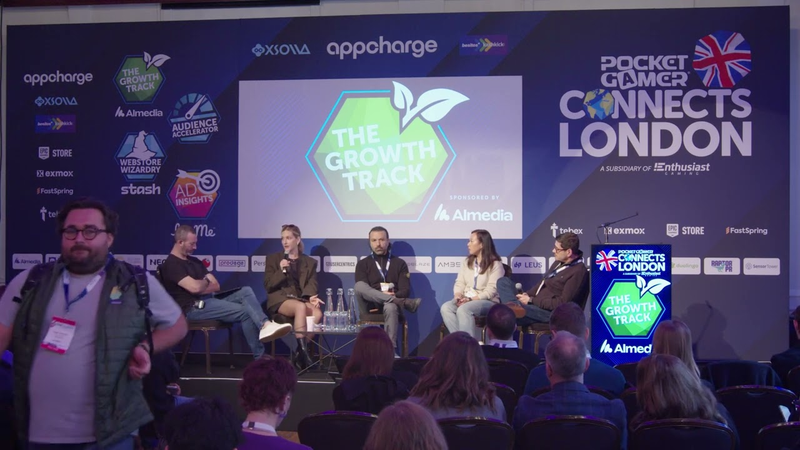
Curated Panel: The Privacy-First Advantage: Smarter Data, Smarter Monetization In 2026.
9 Feb 202642 min video
Transcript
Next up we have um a panel being moderated by Jackie Vors uh on the privacy first advantage, smarter data, smarter monetization in 2026.
Hello everyone. Ah, it works. That's good. We're starting well. Okay. Um thank you. We're in that sort of graveyard shift straight after food. I hope you enjoyed your lunches. Um my name is Jackie Vors. Um, I'm the CEO of Damoso, uh, the greatest PR and marketing company in the world for mobile games and all its suppliers.
There we go. My pitch is there. So, I'm here with an amazing panel, um, who, uh, we are basically going to talk to you about the privacy advantage. So, what we're going to I'm going to get everybody to introduce themselves first and then I'm going to come back to you guys.
It doesn't work. Yeah, it does. Okay. I hope I'm never the first one all the time [laughter] on all your questions. Uh, hi, I'm Sophia. I lead AMIA side of advertising for a very small company called Zinga. Uh, we've uh clearly deal dealt with uh the subject of this discussion for many years and many years to come. So, I did see the presentation before clearly and I can tell you like we really did our best to make this very boring topic a little bit less boring. Um, hello everyone. My name is BJO. I work as a head of admonetization at Gamebase Consulting. Uh, and I help game
uh studios and app studios around Europe and beyond uh to increase their ad revenue and help them optimize their ARBO. And as a company, you also focus on helping studios with user acquisition.
Hello everybody. I'm uh Kristen Rivers. I'm co-founder and CEO of Adenmo. Uh we're an in-game monetization platform. So we we combine ads and IPS and other types of monetizations to to try and help developers make more money from their games. And I guess the one thing that's kind of interesting to me throughout this whole conversation is although we are a monetization platform and I think most of the world kind of looks at us as probably billboards and games and ads that way. We fundamentally have always thought of ourselves as a data company and you know how we talk about consent to data and trusted data is an interesting topic as we uh are on the on the panel today. Uh hello everyone, my name is Alexander or people just call me Alex because you
know those [clears throat] long Eastern European names that is hard to pronounce. Um I'm senior product marketing manager at user centrics and we are doing CMP that definitely looking on your faces you really like and enjoy. [laughter] But uh we don't do dull stuff. We do something interesting. And today we'll try to show you together with all of my amazing colleagues that this topic is very important, essential and basically is changing and shaping uh the new world in which we already live. Thank you.
Yeah, Alex is absolutely correct. This is the third year we've all come together for this panel to to see how the landscape is changing in this world of this increasingly um important world of uh observing people's privacy in games. Um before we get starting started um who in the audience are developers hands. This is great. Publishers yep and any adtech martekch people?
Indie studios. Indie Studios. Indie Studios. Great. Adtech Martekch. Even better. We have the right audience here. This is great. Okay. So, um assisted by this, that's us lot assisted by this uh clicker. Um what we're going to talk about now first is the sort of trends that happening. So, I'm I promised Sophia I wouldn't pick on her first. So [laughter] Kristen, what's happening in 2026?
That's why I sat down at this end so I wouldn't have to uh get the first question. Um, so look, I think 2026, and I'm still having to remind myself to say 2026 and not 2025, so bear with me. Uh, I think this is a year that that that privacy compliance uh becomes operationally imperative. Uh, this is, you know, it's no longer an option. We've got a lot of um a lot of trends
coming down the pipeline, whether it's COPA uh 2.0 compliance, uh the Apple and Google sending uh age verification signals, which I presume we're going to talk about here uh at some point as well today. You know, this becomes the the year that everybody has to think about this as a as a part of their business uh finally. And I know we've been talking about this as you said for three years. Uh but but now the the thing that it opens up and I know privacy is kind of boring uh if you're not as excited about it as I am, but it really does open up this concept of a a trusted and consented relationship with your player is uh is more valuable and and we can measure that. We we've done case studies with user centric where we we can measure that uplift in terms of LTV, in terms of retention. Uh so now finally it's no longer something that that maybe uh a few of us are harping on about. Hopefully this is something that that that everybody is thinking about. So yeah, I think that's my takeaway for
2026 is um this is no longer a checkbox. Uh and again I think we'll come into it a little bit as well. It's no longer a legal checkbox which I think it was always viewed as. It's uh it's hopefully a part of the the business and a part of the monetization stack.
Yeah. I'm going to pass over to Bojo. I mean it is it's moved from afterthought more into the consciousness of the product set.
Yeah. Yeah. I I would say that we have to be really conscious that privacy is also a lot about perception, right? And what people hear about in the media, what the narratives are from the big companies such as Apple and Google. Um for example, I've seen just in the news as I was preparing for the panel that Jam City got fined by 1.4 million last year. uh because uh they were fined as non-compliant uh by under CCPA in the United States uh which is a C Californiaifornian privacy law and under the same law Tilting Point was um fined
$500,000 and I think that and the reason why I'm mentioning this is because sometimes we need these signals as an industry that the regulators are actually paying attention and this is something that triggers more publishers even mediumsiz and smaller size publishers to actually act on these uh regula on these regulations. So I think that sometimes um that you know these are the signals that that regulation is here to stay uh that is going to be implemented and let's say um uh they're going to hold us responsible to these uh these um standards moving forward even more so uh so I think this is something that that we can expect in 2026. Um apart from that uh Christian also mentioned we have Apple and Google who have to take responsibility now and are asked to collect user age and to pass that those signals on to developers. I know there there's been some delay um in some of the US states but Utah Louisiana I think
they're they're they still have plans to implement it. So I think that more regulation is coming and more um let's say um accountability of publishers to actually um align them uh themselves with this um is going to be the narrative of 2026 for sure.
So this time last year we were saying still people were not
really worried about being compliant. They thought that all the fines were just going to hit the big guys if at all if anybody was watching. Are you saying for 2026 this is going to be a different landscape?
Yeah, I think I mean I think that the regulators also have to start somewhere, right? So they're going to start with the big guys and once the entire industry sees that this is being regulated is not is not only words on paper. It's not only something that you know somebody's saying but they're not doing anything about it. then I think publishers will be more proactive to actually adopt those practices and say okay we don't want to get into trouble
because if you're I don't know Jim said or tilting point maybe you can afford to pay $1 million fine but if you're a midsize publisher similar as with GDPR there were they were threatening with fines of up to 20 thou $20,000 or up to 5% of annual revenue that was motivating enough for pe for people to introduce some popups and to start worrying about I don't know having um spe spe spe spe spe spe spe spe spe spe spe spe spe spe spe spe spe spe spe spe spe spe spe spe spe spe spe spe spe spe spe spe spe spe spe spe spe spe spe spe specific sections in the privacy uh notices related to GDPR and to notify users about u how they're using their data. So I think that these kinds of things can help push the industry a little bit forward um compared to where we were uh one or two years ago.
For sure. I mean you're one of those big publishers, Sophia, I do come to you now. Um, how do you feel about these regulations for 2026?
Actually, fantastic. Uh, I know it's not expected. Well, unlike Jam City,
uh, compliance has always been a priority for us and I just encourage all of you to see this from the positive side of things. For example, the age verified signals, right? So prior to this change, how did we get the age of the player is a as a user input which obviously was not ever accurate. Uh now we're going to have an extremely accurate data. It's verified and it's something that you can have on your side. This is the zero party data for you. So the possibilities or the opportunities you can look into can include an actual uh personalized user content. You can do personalized user experience, live ops and of course advertising. So um I would say we should all look into a safety by design approach in 2026 or more. And what you are going to get is in return is like a sort of a clean room of verified data which you can easily use to personalize
to improve your gameplay and your games.
Great. So, um, sorry, sorry, Alex, carry on through on this one. So, we're looking at now, um, the, uh, sorry, I was just playing with my notes, which is really stupid of me. So, what what do you see from, um, a CMP distribution perspective?
Um, so let's look on the numbers which we have at the very beginning of 2026. If right now we'll try to measure um the distribution of CMP through both of App Store and Google Play Store, we can see that around 60% of games they already have implemented Google CMP. Around 35% still doesn't have any and only 2% have a specific CMP that was developed by CMP vendor. So basically what this data can tell us is that like starting from something good already CMP is implemented in more than a half and more than 80% of games. However, on the other
side, we can say we can see that games have implemented very basic solution which limits the ability for customization which limits the ability for providing some AB testing and what is more critical it limits the ability for analytics. So basically there is a really good quote that I like you cannot control something that you do not measure and without having a clear data what exactly is happening with CMP how your players react on it what they like what they dislike and etc it's not possible to move on and step in because basically the second thing that we see in the very beginning of the 2026 is the rise of um first party data and basically right now it's becoming more and more important and and first privacy for first party data almost equal to CMP you are not able to collect to collect it in any other way
for sure right now I'm going to use the magic buttons first party data thank you good segue um so why would so what have studios already done what's what's the what's the next thing what's the biggest missed opportunities we're seeing in first party data
I'll just start with you Olex Yeah. Yeah. Got it. Got it. Yeah. Sorry. I really happened a really really good segue. So, um continuing on my thoughts on the first uh first party data. First of all, we already can see that most of the studios have already figured out what data they collect. Um they already pass it to other vendors to SDKs whatever they need. However, in 2026, right now is the year when they have to learn how exactly to activate it and how to use it as an advantage on the market. Um, the other thing that I also wanted to add here as some kind of missed opportunity that could rise is still
traing treating CMP as a legal checkbox. So basically what happens um we hear a lot of things like this behind the curtains that I want to implement it and forget about it. But right now we already cannot talk about it in this way. Why is it so? Basically right now CMP is becoming a new conversion point inside of your funnel and you don't you have to think not only on how to optimize it but what numbers do you have there why it's working or why it's not working why it's working in this exact way and etc. So um the last point maybe to add here is also first party data is having a big impact on attribution and analytics from the perspective that you have to start building new attribution models where you stop relying on something that you've used to do for many many years and you have to start
start relying on the new data and I'll be a little bit brave and say that we are moving from the approach where we have more aggregated data speaking about our audience is coming from this source and doing this to more human faced more player faced analytics attribution which I really hope will ends with more enhanced game planes on boarding that are tailored not to a specific cohort but they have more human face
well user expectations very different as well now as we all become digital or ingrained grown up digital citizens. We we expect more from when we're having that first interaction and user centric CMP is that first interaction, isn't it? On the first party data side of things, we've just got a good slide up here from you.
Yeah, maybe maybe I can comment a little bit about that. I think that um from the ad monetization side because this is something I deal with on a let's say daily basis what we've seen u let's say
in early 2025 was that some networks uh were asking publishers to share some of the first party data and were enabling them by um through the API to share some of the data that the publisher has but the network doesn't have and the promise was let's use that first party data to actually um improve uh uh the the let's say the targeting that we have and to serve more relevant ads and consequently improve the eCPMs or how much money we're making uh for ads that we're showing uh and in the beginning um I can name a couple of networks it was uh lift off monetize in moi uh but then last year later in the year Google and this is what we see in this slide Google actually went a step ahead and instead of just saying you can do it if you want and this is how you you can implement it by through through API size and so on. Google just said this is a new default. A new default is that the publisher first data is being shared with Google
and we are going to use it to optimize your traffic. And what we've seen in the reports that are available on Google AdMob is that eCPM uh of the impressions of ads that are served uh with firstparty data being processed is 100% higher than of impressions that are served without any first-party data which just goes to show how valuable this first party data is and that we should find a way to um as Sophia was mentioning to kind of have clean data and to figure out how to use it in the best possible way. In this case, what I was explaining was for ad monetization, but Sophia was mentioning um also on the app monetization or inner purchase monetization, maybe uh early user funnels or many many different ways how we can actually use the data that we already have and it's not necessarily personal, right? Because the the regulators and we as users are usually mostly concerned with data that is highly personal,
sensitive data, maybe even health data, things like that. But nobody cares if a lot of data is being processed on a super high level, uh where there's no personalization and no attribution to an actual human being. In that case, we can just use it to leverage uh to improve our products. Right,
Kristen? You were nodding away vehemently there. Have you got anything to add on that?
Yeah, it was interesting. A couple thoughts on that. You know, we do still as an industry, we think about first party data as as basically stopping at uh at admonetization. I mean, still I I think every time we talk about that, that kind of comes up. And the reality is if we just look at this as admonetization, as you're seeing, as you're seeing, we're leaving a lot of money on the table. There's a whole bunch of other uh behavioral data that a a properly defined uh personalized monetization uh system can really can really extract,
right? And it's things like understanding where your player is, what are they what are their challenges, what uh you know, are they are they stuck at this level? Are they progressing at that level? How are things happening with with other players that hit that same spot? so that we're, you know, we're actually able to to figure out the the right offer to show that player and that, you know, sometimes the the best way to monetize a player is not to show them an ad. And I think that's one of the things that we get stuck on is we have this silo of ad monetization and the silo of um of of inapp monetization and and there's an in between, right? And understanding where that player is in their journey to to to um to make sure we're getting the the right message to them at that right time. and and that will help your retention etc. So yeah, I think that's a, you know, the more sophisticated developers and publishers are starting to view that uh that that type of data and using that first-party data for that way and contextual sometimes a bad word, right? And contextual is still a way to target a player, right? So even if we don't have
uh the ability to personalize, there's still relevance in contextual. And I guess the final one uh final kind of thought I was I was thinking about when when you were talking about uh the the evolution and we we've been on that as part of our business is ad monetization uh of demand partners requesting additional uh additional data and hopefully making better use of it is I think the other thing that that publishers uh maybe don't really appreciate or developers not all of them many of them but maybe not all of them appreciate is that data is so valuable and giving it away to your your ad monetization partners, unless they're really giving you additional value for that, right? They're creating segments that that are um that are targeting these signals you're sending them, it feels to me like we're just spewing data out and not getting value back from that. And again, some of the more sophisticated ones that I'm seeing are actually withholding some of that data unless you can prove that your ad monetization partners are doing something with because you know they're selling that data later, right? Or they're using it in their own systems. So, I think that's the other part to this is just recognizing this is not
just an ad monetization story. there's a data story here and the value of your data and making sure that you exploit that as is as as best as possible.
That's a really good point. Thank you Kristen. Um so actually before we move on to my next question which is about the core challenges for publishers. Um can I just get a show of hands on [clears throat] who here has actually implemented a CMP? Oh, we have a few. And can I just ask have you is that uh Google or have you got a user centric CMP?
Nobody's nobody's answering me here.
Google something called one trust in the US.
Okay. You know those?
Yeah. Cool. Thank you. That's good. And and who's considering um implementing a CMP?
Nobody yet. Okay. Good. They don't to be sold to. Um okay. So let's just go into um what is actually blocking CMP adoption. Um
she says operating the channels. So core challenges um yeah so what's blocking the adoption? Let's move over to you Bojo quickly.
Um yeah maybe like we put this uh on this slide just to kind of show one of the multiple options publishers have when implementing a CMP. And for me, I think that working with different publishers, I think that's the biggest challenge for them, right? There are so many options and for a sevy publisher, it's good to have options. That means that you can actually choose uh how you want to implement it. Um you can experiment with different options and then see what works best for you and for your users. But if you're a small publisher, it can be overwhelming, right? Um first you need to make a decision whether you want to implement a CMP or not. Once you do that, you need to figure out which CMP provider you want to go with. We saw that some people in the audience have implemented Google. Alex mentioned that 60% of publishers who have implemented are using Google to
um to show the CMP popup. Here in this example, uh we see um two different uh let's say scenarios. One in uh where the pop-up also contains the reject all button and the other one where it doesn't. And even though it's seemingly a very small difference in just showing an extra button or not, we actually know from the data that uh on pop-ups where reject all button isn't shown, uh we have 27% higher adoption rate. And so if you are just starting out and you don't have the expertise or it's your first game, first app, you might just go ahead and implement all of the buttons that are available. And in that way you minimize the adoption rate and consequently uh your monetization and everything else. So I think that one of the those challenges is just the overwhelming amount of options that publishers have and how to navigate to successfully implement the CMP.
And also quite naturally, you know, some some people going into this first off
could just see that as the beall and end all. You know, Google's got it. It's there. It's a feature. I can use it. No problem. You know, I'll just go and do that. But what we're kind of saying here is that it is actually one of your first touch points. So just to consider all of those options um now could really stop you leaving money on the table as as Kristen said.
Yeah, exactly. I mean the users are going to download your game and the first thing they're going to see is terms of service privacy policy. The next pop-up they see is the CMP
and that's their first relationship with you.
So you need to
bizarre. You think they're just downloading your game, but the first thing you hit them with is is the popup.
Exactly. So, they don't even know your game, but you're already asking them to do something for you. And so, this needs to be done the right way in order for them to kind of proceed and not quit. Maybe even on this screen.
So, really what we're saying is start viewing that pop-up as more of a value exchange to say, okay, if you if you do this for us, we might do this for you.
Exactly.
So, we'll come on to that. Okay. Sophia, what are the potential challenges that publishers face because you are again from Zingga, you know this.
Yeah, definitely. I mean, there's plenty and for everyone and you guys were kind of stealing my point, but I'll count to it now. Um I think well, first of all, uh we we see that right that not many people even want to implement the CMP. Now imagine that you've decided okay we're going with a certain provider user centrics obviously uh of course um and then you go ahead and then you are just creating sort of like a unit which is a privacy engineering which you'll have to dedicate a ton of resources starting with legal then goes to data science then data engineering is involved and of course the actual developers have to develop something for you so that becomes a proper hurdle for any developer it doesn't matter like the size but I do imagine that not everyone can even afford privacy engineering department in your company. So that's by
itself a huge challenge. And then you can also look at this and that was the point we're about to steal to the player. Um what our players will thank us for definitely not for the popups that you open the game open any game right now. You get at, you get terms and conditions like you were saying, you get uh SCMP, then there is some kind of a welcome pack, then there is announcement on the live ops, push notification,
push notifications. Thank you. What else are your players going to have? And imagine just your first interaction with the game. So, it's a minimum of three popups. So, that is something that is also cost your time, money, and resource. And at this point it might be not extremely resolvable because of all of these regulations that are present and are coming.
Olex.
Um yes. So first thing that I want to highlight uh you've mentioned about that CMP is the first interaction with your game brand whatever but I want to make
the thought even a little bit wider. [snorts] When we talk about players, we like try to focus only what happens in games and we forget that they are all real people who have different much more different interactions. For example, with websites with other apps where CMP is already a part of user experience and for example whenever they open a website or install any app or a game where there is no CMP pop-up, they already feel concerned like what's going on here? Why is it's not present? Is it something suspicious? Is it something that better delete or quit if we talk about website? So this is already a part of user experience the way how it should be. This is like the first thing. The second thing is also the mindset that still circulate inside of the studios. So let's also have a look on it as user experience when on a daily basis you have to face and operate multiple SDKs
uh mediation pass uh the data from one system to another plus here you also have to implement CMP and then it comes with TCF GDPR CCPA and you're completely lost yeah that's too over overwhelming but doing any profession engineering marketing product it is still the same. It's very overwhelming. We have to know so many details. And what is the key issue is that still treating that CMP as something legal asked us to do. And when we have such feelings, we don't don't look and we don't try to unlock new opportunities. What benefits it can bring us, what advantages it could bring us, how we can start building trust from the very single step that our player take in a game. And then probably this will be like very good first experience when they see that yeah my choices are respected and then for example we will implement the same strategy with showing ads providing promises and etc. So this is
the first step of building trust. Um just the last thought you know it's more like when you buy fish uh there there are only two types of fish it could be fresh or not the same here you can start building the trust and which will definitely impact you your player engagement from the first step [snorts] or you won't
absolutely
I was just going to add a little little to that only a little bit because honestly I was just looking at my notes here of bullet points I was going to touch on and everybody here has already uh hit those but I think you know that that is The the the kind of critical takeaway here for for for publishers is that just what what everybody else has said is that you know privacy studios and developers look at privacy as the legal compliance bucket and monetization as monetization tools as monetization bucket. They're the same thing. You know consent uh consent engineering is part of your monetization uh platform, right? And we know as adimo we see and you know we're we're a we're a tool we're an SDK
every percentage point of consent that you get from your players directly translates to LTV positive LTV and positive retention. So trying to figure out and I know you know as as a um as a product person I imagine you know you have this challenge all the time in your studios CPA is you know looking at privacy and consent it's not as much fun for your developers right as new features and uh and new events and those sorts of things but trying to figure out how to how to convey that that this is you know your monetization strategy is your consent strategy there there's no separation there uh is that that's the the key thing that I think every uh every studio every product team needs take away
and the sooner you do it the better basically just just get that CMP implemented and and don't don't ignore following up afterwards
and and do it well consent engineering sorry to add one more thing to that because it is you know as B as said it's it's a shitty experience for players right you launch your first game it
really is and I was just think you know Apple you know they were sued funnily enough they were trying to push for privacy right but the reason they were sued and paid a fine in France is they made it too complicated, right? The the French government said what they achieved in two or three pop-ups really should have been uh one popup. So, back to everybody should be thinking about what is that player experience because that that ultimately, you know, if the player turns out, off, they're you know, you didn't make any money out of them.
I was waiting for the [laughter] um so taking a step on from where you were Kristen, which is how um we look at privacy as a revenue opportunity. Um so just moving straight into that Olex you know um what how do we how can we make that turn in our mindset through from a a privacy to a revenue op
amazing question. [laughter] Um so what we definitely can
yeah um what we definitely can say here is that when it comes to revenue it's we can see like the final numbers on the dashboard but if we want to impact it we have to take so many steps backs back and see it from the perspective of you where it starts for example when you run your acquisition campaigns and if you don't have CMP you didn't uh have Google consent mode uh implemented it means that you log data then you go through wrong decisions basically you can switch off the campaigns uh that are performing well and your user acquisitions turns from something data driven to more like guessing you're drinking coffee and looking okay I think those campaigns are performing great let's keep them um so basically this is how privacy impact your first steps, your first acquisition and then of course it end ups with revenue. On the other hand, this is also
a question how exactly you analyze your current players. If at the from the very beginning you start missing some data then of course you won't be able to provide some hypothesis ideas and even see how those cohorts are playing in your game what exactly they are doing and understand if your last update or the new levels you've launched if they are good if players like them and so on. So basically if we try to imagine that yeah let's imagine something fancy that in the end of the year you want to see your revenue with like a huge amount of coins and basically if you want to see that huge amount privacy are the first layer. If that first layer is missing, then basically the whole thing collapse.
And then you can talk to contextual uplift in terms of um making those revenues as well, Kristen.
Yeah. Um and I'm going to jump away from contextual for a second though and maybe even flip the question around because you know we are here. How do we make more money, right? Um and and there isn't a magic bullet. We know all that. I guess the other way to look at this. So instead of saying how do I make more money from privacy, privacy isn't the magic bullet that's going to make you know you turn on privacy whatever you call that and you make more money. We got privacy now we're making more money. I told I said earlier at the start of this that Adamo we view ourselves as a data company and consented privacy equals higher quality signal. So back to what Alex was saying you know the better data you have the better signal quality you have the better decisions you can make right. So the as I said earlier, the more consented data you can get, the higher quality decisions you can make. Now contextual is still good, right? A contextual player, a player that hasn't consented, they're not a lost player. They're just a player that has lower quality signal, right? So you still want to convert as many of those to highquality signals, but you can still
make money from those folks as well. Contextual is relevance. So but but our starting point should be uh you know how do we how do we get as high quality signal from our players uh that we can action upon um but also recognizing even if it's low quality there's something there you haven't lost that player because they didn't consent but context cont sorry um getting back to privacy engineering trying to get as many of those convert it's going to be better for everybody so yeah but that's the I guess the the kind of takeaway here is it's not a how do I make more money from privacy it's how do I get more signal more high quality signal I can make the right decisions to make more money from and privacy is a part of that
yeah I think that uh to what you were saying Christian about the signals I think that here on the slide we have a little bit of data coming from Google and just as a reminder the reason why we're talking about a CMP today in this room and last year in the room upstairs was because Google at one point just said we need a a CMP
signal a TCF signal uh for every single user if you want to show Google ads that's it and so because Google is such a significant provider in the space uh that's why publishers went ahead and started implementing it early in 2024 and we can actually see from Google's own data how much higher eCPMs we have when there is a CMP implemented so in the um in the first uh graph we see that one that eCPM of users where u the data processing is allowed through a CMP we have a 167% higher ACPM and similarly also the fill rates from Google ad network are going to be more than twice uh as high as when uh CMP is not implemented. So we can see that actually the CMP TCF signal that we get um through CMP implementation actually translates into real uh real money and
to what you were saying Christian also uh I think that what's interesting maybe to understand is that um for the advertisers and for the for the entire pipeline there um it's not only important to get a yes signal even getting a no signal but the signal that contains certain elements even on a technical perspective active will be more valuable than if you don't have a CMP at all. So I think that's also something to important to stress out. Yes, it's important to maximize the CMP concentrates, but even having the CMP in the first place will be valuable.
Great.
I'm going to skip on if that's all right because I've just looked at the the timer and we're we're we're burning through this time. So,
[clears throat]
um, privacy has privacy become a marketing discipline then that's really where we're moving it into. Um, we've got a a slide here behind here. Um, so where do we see this as a as part of the marketing mix? It's it's got to be sort of at the top of the funnel then I
guess.
Yep. [laughter] Ox.
Yeah. Yeah. Uh, so first of all, let me comment a little bit on the numbers that you see right now on the screen. Those are basically the average concentrates for CMP through almost two last years. Um this data starts from the Q2 because in the Q4 we had digital marketing act which impacted a lot of new installations and the data through that period is a little bit messy and not very relevant for analysis. But what basically we can see that during Q2 and Q3 there was like a learning phase where a lot of new CP were implemented and both game developers and players start dealing with it using it and numbers started getting higher but starting from Q4 2024 the numbers are very stable. We can see a very small drop in Q4 2025 but we cannot even say that this is like a really a drop. First of all, it could be
just a measurement noise. Second of all, it could be it it could be and it is that a lot of studios already like have a pretty level of maturity using CMP. So they move on into doing new test experiments how they can get better numbers. Of course all some tests are going good, some tests are not. So but in general this is that's could impact that the numbers shifts a little bit. But in general we already can say that four or five players already uh consent. And moving on to marketing, if we talk about concentrates, it even by the rates and that there is a conversion, it already feels like a marketing. And basically, CMP as we previously said, they brought first party data like the main data into our lives. And this is the common language between product, marketing and ad monetization teams. So this is
something that they have to share and talk in the same way because especially what marketing can do with CMP. It's not only about experimenting and changing I don't know the layout the color uh the copy uh when it's triggering how it's triggering but it also has to be very very tight with acquisition campaigns because you cannot test CMP like in a vacuum that you've changed the color and now numbers got better. So this is basically the whole stuff that they are responsible for which they have to connect and understand which exact their actions in acquisition campaigns end up with better users and also thinking about how exactly CMP converts it like a middle step in that short funnel where like marketing stands in.
So we talked a lot about
we're going to have to call it there.
Oh [laughter] wow that's a a brutal end there Eron.
[laughter]
Oh, he's he's keeping us strict.
Keep [laughter] on schedule, I'm afraid. But
thank you very much. Thank you panel. Um uh any questions that you want to ask any of the panel, please feel free to grab them as you see them around the the building today. I'm sure anybody from ourselves or user centrics from Olex would be happy to talk to you. Thank you very much and please thank my panel.
Yeah, thank you all. Thank you so much.
[applause]
Thanks.
Auto-generated captions from YouTube — names and numbers may be misheard.
Key insights
7 takeaways · ~3 min read- 01Privacy compliance has evolved from a legal checkbox into a core component of the monetization stack, with non-compliance leading to significant financial penalties, such as the $1.4 million fine issued to Jam City for CCPA violations.
- 02Publishers must shift from passive data collection to active activation of first-party data to improve ad targeting, eCPMs, and overall monetization strategies.
- 03Major ad networks, including Google, have moved toward making the sharing of publisher first-party data a default requirement to improve ad relevance and player journey insights.
- 04Implementing a Consent Management Platform (CMP) requires a dedicated 'privacy engineering' function that integrates legal, data science, and development resources to manage complex frameworks like TCF, GDPR, and CCPA.
- 05Failure to implement tools like Google Consent Mode leads to data loss in acquisition campaigns, forcing publishers to rely on guesswork rather than data-driven decision-making for user acquisition.
- 06CMP consent rates stabilized throughout 2025 following a learning phase in 2024, with approximately 60% of publishers who have implemented a CMP utilizing Google’s solutions.
- 07Effective monetization requires breaking down silos between ad revenue and in-app purchases by using high-quality player signals to determine whether to serve an ad or offer an in-game purchase.
Ask AI about this video
Cite this video
Citation
Generating citation…



















Comments