Monetization reports and market data
Documents
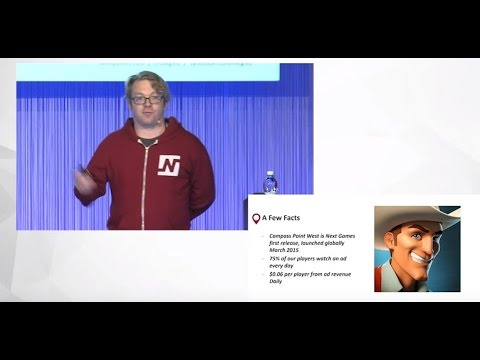
Next Games' top tips for making money from incentivised video ads
Next Games’ strategy for monetizing the mobile title Compass Point: West centers on the effective integration of incentivized video advertisements.
- Integrating incentivized video ads as a core game feature in 'Compass Point: West' resulted in 75% of daily active users watching at least one ad, generating $0.06 in ARPDAU from ad inventory alone.
- A/B testing revealed that players exposed to incentivized ads showed a 20% increase in repeat purchases and a 15% higher conversion rate compared to non-exposed players.
- Next Games successfully incentivized non-paying users by offering rewards valued at approximately $0.30 in exchange for 15 seconds of engagement.

The 6 game UX roles
The primary purpose of this analysis is to clarify the multifaceted nature of user experience (UX) roles within the game development industry.
- Effective UX requires evidence-based iteration through active user testing; without this, design remains purely aesthetic rather than functional.
- Studios should distinguish between six specific UX disciplines—User Researcher, Information Architect, UX Designer, Interaction Designer, UX Developer, and UI Artist—to avoid the common mistake of conflating UX with UI design.
- The six specialized UX roles can be consolidated into three core functions for most studios: research to understand the player, design to structure the experience, and visual artistry to execute the interface.

How Farm Away neatly integrates incent video ads
Incentivized video advertising has emerged as a primary monetization strategy for free-to-play mobile games, effectively balancing developer revenue goals with player experience.
- Futureplay’s Farm Away integrates incentivized video ads directly into core gameplay loops, allowing players to exchange ad views for tangible benefits like temporary gold production multipliers.
- This monetization model replaces intrusive banner or interstitial ads with a value-exchange system that prioritizes player experience and retention.
- The game utilizes a dual-monetization strategy that successfully balances traditional in-app purchases with voluntary, short-form video advertising.

FTUE: Farm Away
Farm Away, a mobile title developed by Futureplay Games, serves as a primary case study for the mechanics and user experience of idle farming games.
- Futureplay Games designed Farm Away to transition players from active manual tapping to automated idle production, prioritizing immediate gratification over complex resource management.
- The onboarding process is optimized for brevity, ensuring new users understand the core gameplay loop within the first ten minutes.
- The game employs a 'view-to-play' advertising model that incentivizes users to watch short video ads in exchange for temporary profit multipliers.

Monetizer: The Walking Dead: No Man's Land
The Walking Dead: No Man's Land, developed by Next Games, utilizes a hybrid monetization model common in mobile strategy and RPG titles.
- The Walking Dead: No Man's Land, developed by Next Games, maintains a consistent position within the top 50 grossing mobile charts in major markets like the United States.
- The game utilizes a hybrid monetization model that pairs traditional time-gating for base-building and survivor training with hard currency (gold) bypass options.
- Revenue is driven by a tiered currency purchasing structure and starter bundles that provide immediate utility, such as legendary equipment and additional squad slots.

Monetizer: Star Wars: Uprising
Star Wars: Uprising, a mobile RPG developed by Kabam, utilizes a complex monetization strategy centered on character progression and gear acquisition.
- Star Wars: Uprising utilizes a dual-currency model featuring soft currency earned through gameplay and hard currency, known as chromium, available for purchase.
- The game employs a tiered in-app purchase structure that restricts access to higher-value spending options until after initial transactions are completed to prioritize player retention.
- The primary monetization driver is the Premium Crane, a gacha-style mechanic where players spend hard currency to acquire high-rarity gear and crafting materials.

Monetizer: Dawn of Steel
Dawn of Steel, a mobile real-time strategy (RTS) game developed by Superweapon and published by Flaregames, represents a refined entry into the competitive mobile strategy genre.
- Dawn of Steel is a mobile real-time strategy game developed by Superweapon and published by Flaregames that differentiates itself from mass-rush competitors through granular, tactical unit control.
- The game utilizes a standard monetization model centered on 'influence,' a hard currency used to bypass time-based gating for building upgrades, unit repairs, and research tasks.
- To drive higher spending, the developers implemented a tiered pricing structure for hard currency that offers increased value for larger real-money purchases.

Digital Spelförsäljning i Sverige: 2013-2015
This document analyzes the Swedish digital game sales market between 2013 and 2015, highlighting significant growth and evolving revenue models.
- The Swedish digital gaming market reached a total value of 3.3 billion SEK in 2015, marking a 34 percent year-over-year growth.
- Revenue growth is driven primarily by a 26 to 35 percent increase in average revenue per paying user (ARPPU) rather than an increase in the conversion rate of active players.
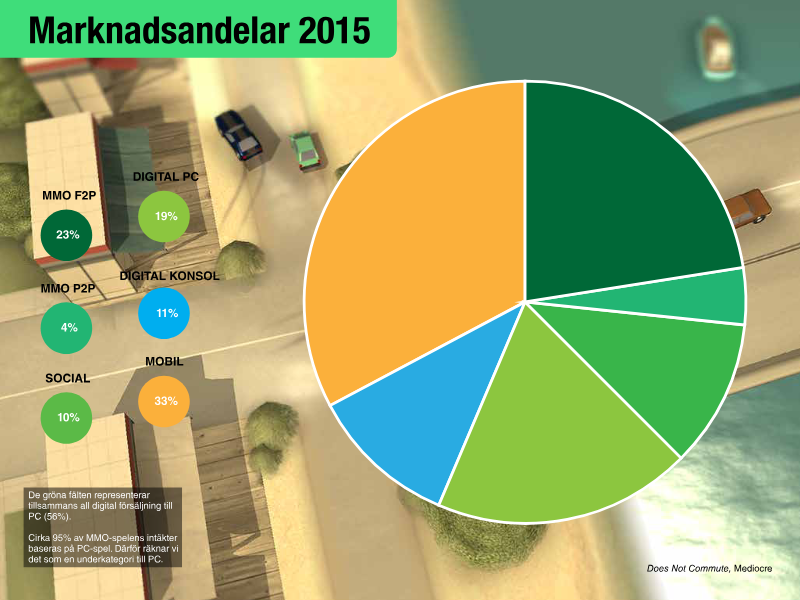
- PC gaming remains the largest market segment, accounting for over 50 percent of total revenue, followed by mobile games at one-third of the market.

Monetizer: James Bond: World of Espionage
James Bond: World of Espionage, developed by Glu Mobile, functions as a free-to-play mobile title that blends strategy, role-playing, and card-battling mechanics.
- Glu Mobile's James Bond: World of Espionage utilizes a menu-driven, resource-management structure rather than traditional action-shooter mechanics to target strategy-focused mobile players.
- The core gameplay loop is strictly gated by energy and stamina systems, limiting individual sessions to approximately two minutes before requiring resource recharge or hard currency expenditure.
- The game employs a dual-currency economy using soft currency (pounds) for standard upgrades and hard currency (gold) to bypass wait times for research, gear, and energy refills.
The 5 Factors Defining the Future of Esports
This analysis identifies five critical factors shaping the future growth of the esports economy, drawing comparisons with traditional sports while acknowledging the unique characteristics of gaming.
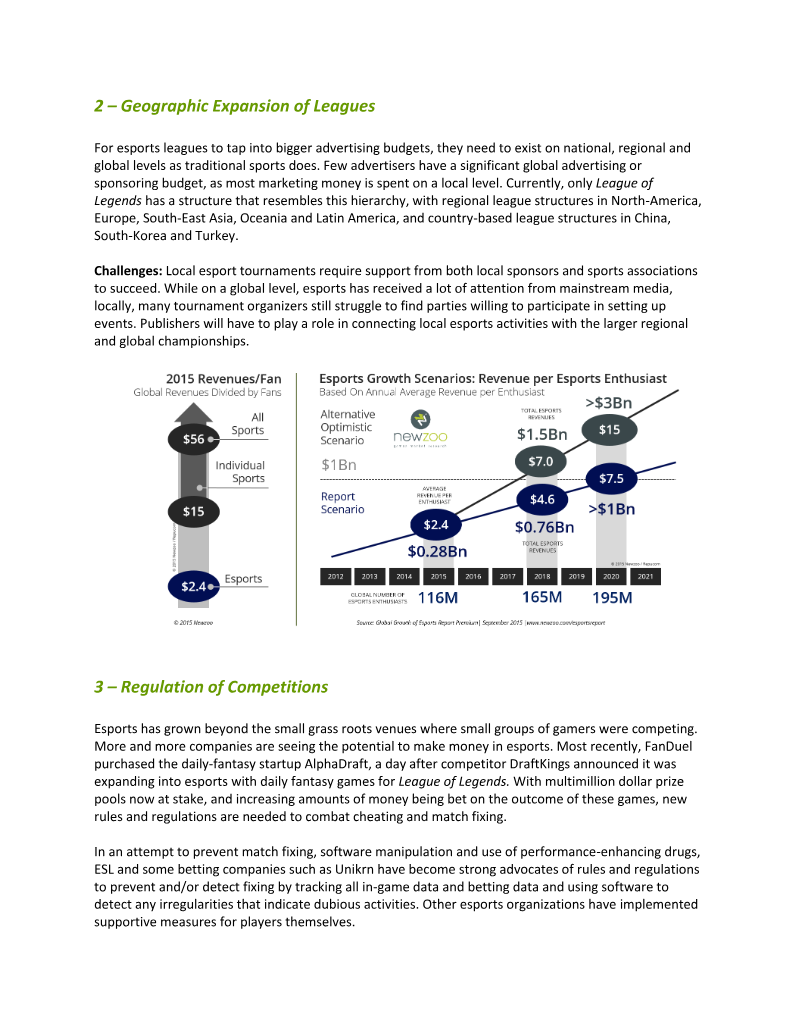
- Revenue per esports enthusiast is projected to nearly double, growing from $2.40 in 2015 to $4.63 by 2018.
- Esports operates under a unique ownership model where game publishers hold the intellectual property, necessitating a growth strategy distinct from traditional sports.
- The industry’s transition to a multibillion-dollar business is currently hindered by ambiguous media rights and a lack of standardized, globalized league hierarchies.

With 1.1 million monthly users, Unity has democratised game development
Unity Technologies has successfully transitioned from a traditional middleware provider into a comprehensive ecosystem designed to democratize game development.
- Unity supports 1.1 million monthly active users, establishing itself as a primary engine for indie and entry-level developers.
- The company replaced traditional upfront licensing fees and royalties with a diversified revenue model based on an asset marketplace, mobile advertising, and analytics services.
- Unity maintains a consistent development cycle consisting of weekly bug fixes and quarterly major feature updates to ensure engine reliability and performance.

StartApp on the power of fast-emerging mobile markets like Russia, Brazil and Saudi Arabia
The mobile advertising landscape is undergoing a significant shift as high-value users emerge in regions previously categorized as developing markets.
- High-value user segments are shifting toward emerging markets like Saudi Arabia, Brazil, Turkey, and Russia, which now feature widespread high-end device adoption and strong engagement.
- Effective mobile monetization requires a localized approach that accounts for the distinct cultural preferences and behavioral nuances of each specific territory.
- A one-size-fits-all advertising strategy is ineffective; success depends on tailoring content to specific app genres, such as distinguishing between casual games and hardcore MMORPGs.