Monetization reports and market data
Documents
Selling Out the Magic Circle: Free-to-Play Games and Developer Ethics
This study investigates the ethical implications of the free-to-play (F2P) business model in massively multiplayer online role-playing games (MMORPGs), focusing on the power dynamics between developers and players.
- The study argues that KingsRoad's developer repeatedly broke an implicit contract with players by making unannounced or vaguely announced changes to economy, rules, and difficulty, disrupting the 'magic circle' that separates play from commerce.
- The central case, the 'Doomsayer belt fiasco' of October and November 2014, placed a tournament-exclusive belt in the in-game shop for premium currency only hours before the competition ended.
- Five purposively sampled cases of community upheaval were analysed, including a gold-income nerf, a hidden attack speed cap, a doubled lockbox price, and a secret raid 'bot' system suspected of levying a hidden tax.



"We Don't Sell Blocks": Exploring Minecraft's Commissioning Market
This ethnographic study investigates a distinct commissioning market operating within Minecraft's creative community, challenging conventional understandings of user-generated content and free labor.
- Minecraft's end-user licence agreement prohibits selling in-game material, so players instead trade the time and creative labour of building custom structures, forming a commissioning market.
- The market has three actor types: clients (mostly server owners, but also YouTubers and corporations), contractors (team managers, union members, and freelancers who route orders), and builders who create the work.
- Team managers typically keep a commission of roughly 30 to 40 percent to cover overhead, with builders receiving the remainder, a hierarchy that partly prompted the emergence of unions promoting direct client relationships and "fair pay for fair work."

Why Harry Slater's GotY 2015 is Afterpulse
Afterpulse, a third-person mobile shooter developed by Digital Legends and published by Gamevil, stands out as a premier title of 2015 due to its exceptional execution of core gameplay mechanics.
- Digital Legends and publisher Gamevil successfully adapted traditional shooter mechanics for mobile in 2015 by prioritizing intuitive control schemes that mitigate the ergonomic frustrations common in touchscreen gaming.
- The game utilizes a 'Destiny-style' compulsion loop that drives player retention by rewarding combat success with incremental gear upgrades and consistent daily incentives.
- The title demonstrates high player stickiness, with users remaining engaged through at least fifteen levels of progression rather than discarding the game after initial content exhaustion.

IAP Inspector: Katy Perry Pop
Katy Perry Pop, a mobile simulation game developed by Glu Mobile, functions as a thematic successor to the studio’s highly successful Kim Kardashian: Hollywood.
- Glu Mobile’s Katy Perry Pop utilizes a narrative-driven progression system modeled after the studio’s previous title, Kim Kardashian: Hollywood.
- The game employs a three-tier currency model consisting of energy, soft currency (Katy Coins), and hard currency (Katy Gems).
- Social progression is gated by a steep paywall, with high-profile networking interactions costing up to 100 Katy Gems, a currency difficult to earn through standard play.
FTUE: Katy Perry Pop
Katy Perry Pop, a mobile title developed by Glu Mobile, serves as a case study in the evolution of celebrity-branded free-to-play games.
- Glu Mobile developed Katy Perry Pop as a strategic iteration of its previous success, Kim Kardashian: Hollywood, utilizing a similar energy-based progression system and narrative-driven gameplay.
- The core gameplay loop focuses on music career advancement through task completion, energy resource management, and extensive avatar customization.
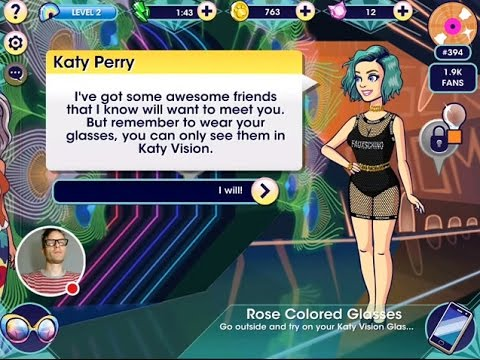
- The onboarding process utilizes a guided tutorial to introduce players to social interactions, task completion, and the integration of premium currency.
IAP Inspector: Star Wars: Galaxy of Heroes
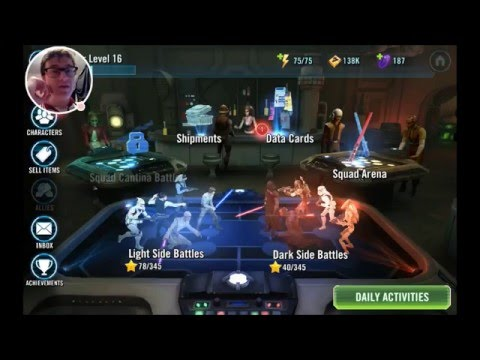
Star Wars: Galaxy of Heroes employs a monetization strategy that prioritizes long-term player retention over aggressive, immediate conversion.
- Star Wars: Galaxy of Heroes prioritizes long-term retention by delaying paid offers and starter bundles until players reach higher levels, avoiding aggressive early-game monetization.
- The game utilizes a dual-currency system where hard currency (crystals) is frequently earned through daily activities and achievements, reducing the necessity for real-money spending.
- A seven-day daily crystal booster is employed as a strategic retention tool to incentivize consistent daily logins.
How Star Wars: Galaxy of Heroes' Daily Activities boosts retention
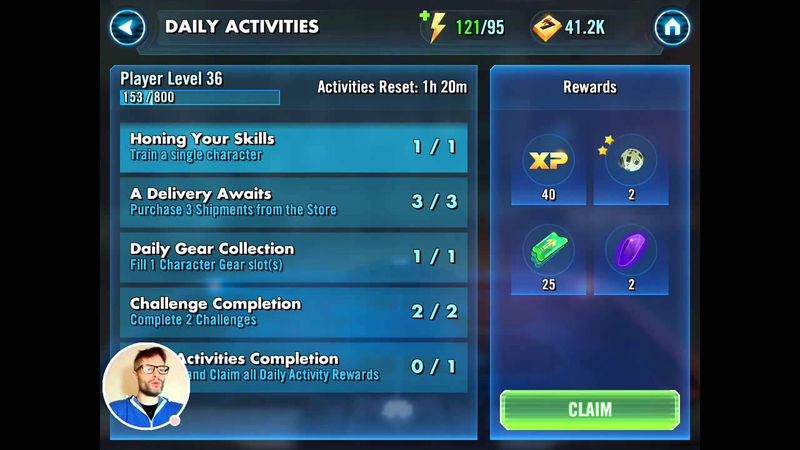
Daily activities serve as a foundational retention mechanism in free-to-play mobile RPGs, specifically within the context of Star Wars: Galaxy of Heroes.
- Daily activities in Star Wars: Galaxy of Heroes function as a foundational retention mechanism by establishing a structured, 24-hour recurring checklist that incentivizes consistent player engagement.
- The system utilizes a tiered reward structure—including experience points, soft currency, and premium gems—to create a feedback loop that encourages players to complete tasks even when they are not pursuing deeper progression.
- A final bonus awarded for completing the entire daily list acts as a psychological nudge, compelling players to return to the game to finalize their progress.

IAP Inspector: Mobile Strike
Mobile Strike, a strategy title from Machine Zone and Epic War, employs an aggressive monetization strategy centered on constant sales prompts, time-gating, and social pressure.
- Mobile Strike utilizes a social monetization model where in-app purchases trigger gifts for alliance members, creating peer pressure to spend to benefit the group.
- The game design prioritizes high-spending users over casual players by gating progress behind mandatory time delays that can only be bypassed through real-money purchases.
- The core progression loop is intentionally restrictive, providing insufficient starting currency to force a choice between immediate spending or exiting the game.
Star Wars: Galaxy of Heroes' character upgrade system
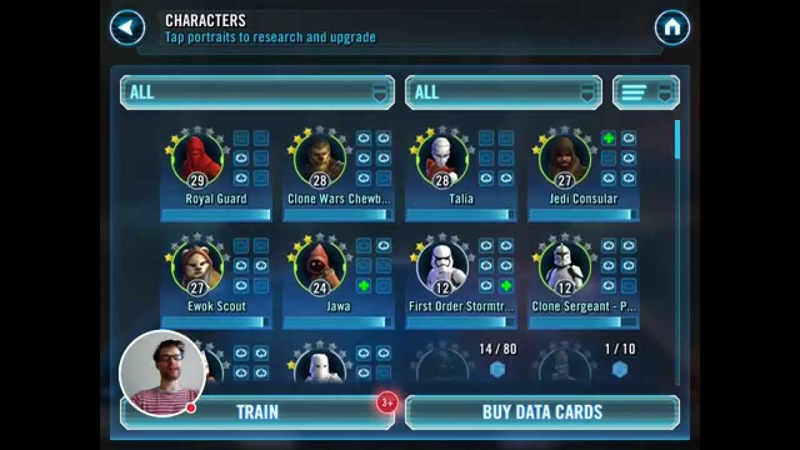
Star Wars: Galaxy of Heroes utilizes a multi-layered character progression system to drive player retention within the free-to-play mobile RPG market.
- Star Wars: Galaxy of Heroes utilizes a three-tiered progression system—gear upgrades, star-level promotions, and experience-based training—to drive long-term player retention.
- The gear upgrade system requires players to collect specific components from mission rewards to enhance base statistics and increase gear levels.
- Star-level promotions function as a primary long-term engagement goal, requiring players to accumulate character-specific shards and in-game credits to improve iconic units.
Space Ape on the power of CRM for F2P success
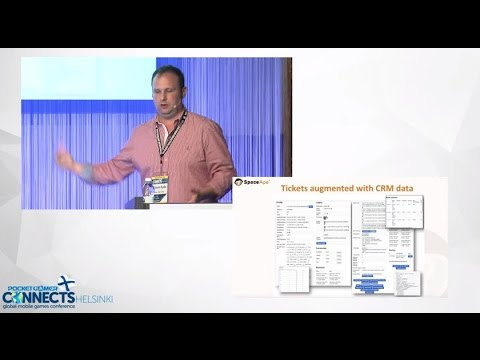
Space Ape Games emphasizes the strategic integration of customer relationship management (CRM) and data analytics to drive revenue and player retention in the free-to-play mobile gaming market.
- Space Ape Games found that 20% of total revenue was directly attributable to players who had experienced positive interactions with customer support.
- The studio prioritizes high-value users by augmenting support tickets with comprehensive player profiles that include spend history, churn propensity, and technical crash logs.
- Direct engagement with influential players via private, invite-only chat groups on platforms like LINE serves as a more effective marketing channel than traditional user acquisition.
Monetizer: Mobile Strike
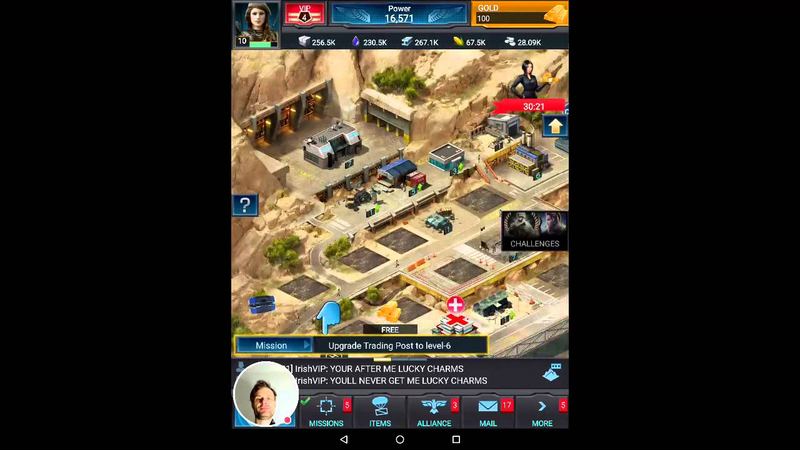
Mobile Strike, developed by Machine Zone, represents a highly aggressive and successful model of mobile game monetization.
- Machine Zone’s Mobile Strike prioritizes an aggressive, data-driven monetization model over high-fidelity graphics or skill-based gameplay to secure its position as a top-grossing title in the North American market.
- The game’s economic structure relies on time-limited retail offers, countdown-driven sales, and complex currency systems designed to incentivize monthly spending that can reach hundreds or thousands of dollars per player.
- Monetization is driven by an alliance-based social architecture where individual microtransactions provide collective benefits, effectively leveraging peer influence to increase player spending.
Monetizer: Star Wars: Galaxy of Heroes
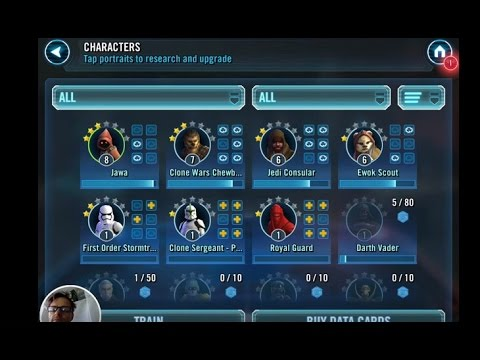
Star Wars: Galaxy of Heroes, developed by EA Mobile, utilizes a card-collection and squad-battling framework to engage a mass-market audience.
- Star Wars: Galaxy of Heroes prioritizes meta-game loops, such as resource management and character progression, over manual tactical combat to drive user retention.
- The game utilizes automated battle modes and simulation features to shift player focus toward optimizing rewards rather than active gameplay execution.
- Monetization is driven by free-to-play mechanics, including energy systems, soft and hard currencies, and randomized loot drops that allow players to bypass progression grinds.