1 free read left. Create a free account for unlimited reading + AI research.
Create free accountReport Newzoo
1 free read left. Create a free account for unlimited reading + AI research.
Create free accountReportNewzoo
The esports industry is experiencing rapid evolution.
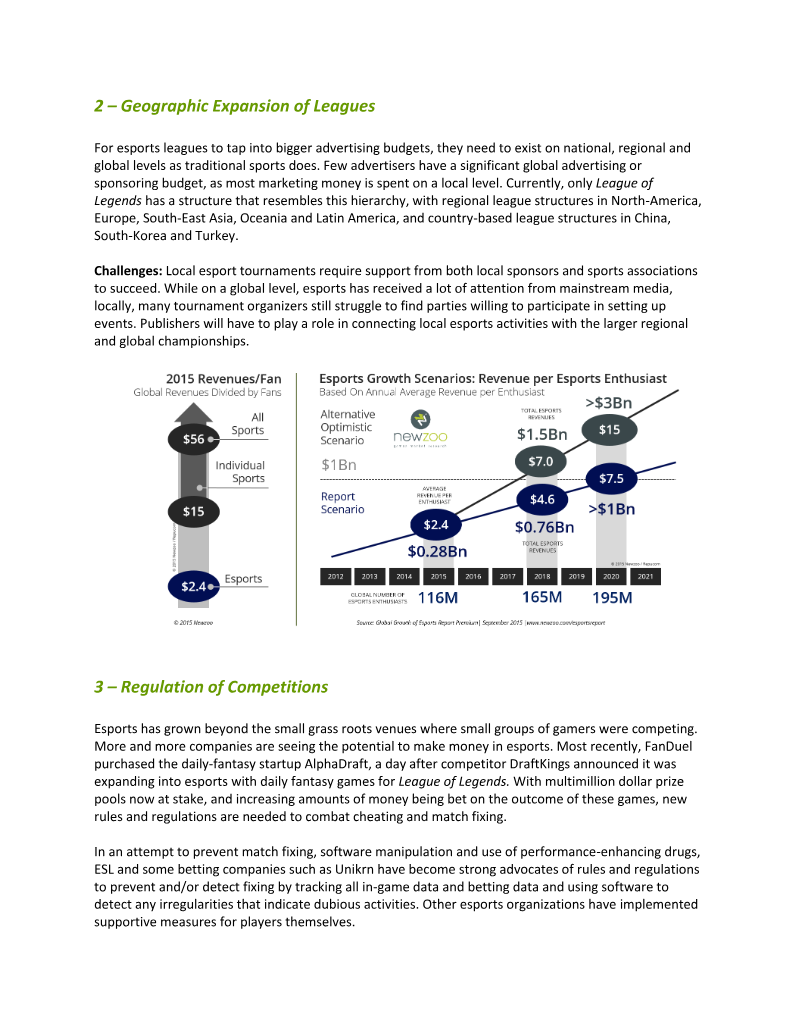
Growth Metric. Revenue per esports enthusiast is projected to nearly double, growing from $2.40 in 2015 to $4.63 by 2018.
See it on page 1The esports industry is currently undergoing a rapid evolution, with revenue per enthusiast projected to grow from $2.40 in 2015 to $4.63 by 2018. As the sector matures, its trajectory is being shaped by five critical factors: the diversification of game genres, the geographic expansion of leagues, the implementation of formal competition regulations, the clarification of media rights, and the integration of digital and traditional media. While the industry draws parallels to traditional sports, its unique structure—specifically the fact that game publishers own the intellectual property of the games themselves—creates a distinct ecosystem that requires a tailored approach to growth.
Key findings indicate that while MOBAs currently dominate the competitive landscape, the rise of first-person shooters and mobile titles is broadening the audience base. However, this growth faces structural hurdles. For instance, the lack of standardized, globalized league hierarchies limits the industry’s ability to capture local advertising budgets. Furthermore, the rapid influx of capital and betting interest necessitates robust regulatory frameworks to prevent match-fixing and ensure player welfare, a challenge complicated by the industry's nonconformist culture.
The monetization of esports is further hindered by ambiguous media rights, which contrast sharply with the established broadcasting models of traditional sports. While partnerships with networks like TBS and ESPN signal increasing mainstream legitimacy, brands remain cautious due to lingering demographic prejudices and a lack of integrated advertising technology. Ultimately, the industry’s transition into a multibillion-dollar business depends on its ability to reconcile these internal complexities with the demands of global media and advertising markets. Data for these insights is derived from the Global Esports Audience & Revenue Model, incorporating industry-wide trends and expert perspectives to provide a comprehensive outlook on the sector's future.

Newzoo · 2026



Newzoo · 2026



Newzoo · 2026

Carry1st · 2026
Newzoo · 2026
Newzoo · 2026
Newzoo · 2026
Newzoo · 2026

Deconstructor of Fun · 2026

Newzoo · 2026
Newzoo · 2026
Newzoo · 2026
GameMakers · 2022