Monetization reports and market data
Documents

Biz Daily: Will Apple TV be a viable paid game platform?
Apple TV represents a potential shift in the gaming landscape, offering a platform that may move away from the dominant free-to-play (F2P) model prevalent on mobile devices toward a more traditional paid-game ecosystem.
- Apple TV is being evaluated as a potential alternative to the mobile free-to-play model, aiming to establish a premium ecosystem for paid games priced between five and ten dollars.
- Developers face a significant technical constraint with a 200-megabyte download limit, which complicates the porting of larger, high-fidelity titles.
- The platform mandates support for the bundled motion-sensitive remote control, forcing developers to adapt their control schemes to specific hardware requirements.

The Global Games Market: Trends, Market Data and Opportunities
The global games market, as analyzed in September 2015, is characterized by significant growth across various segments, with a particular emphasis on mobile gaming and the emerging esports economy.
- Mobile gaming is the dominant global revenue driver, with the United States, China, and Japan serving as the primary engines of growth.
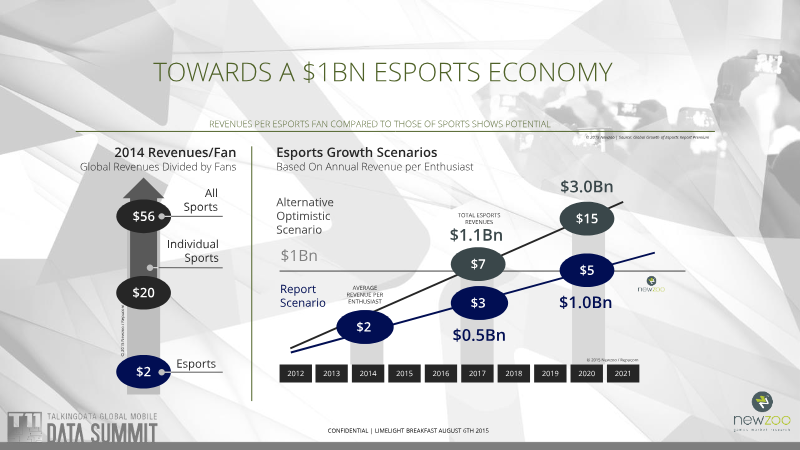
- The esports sector is projected to reach a $1 billion valuation by 2019, driven by the convergence of traditional sports and digital competitive play.
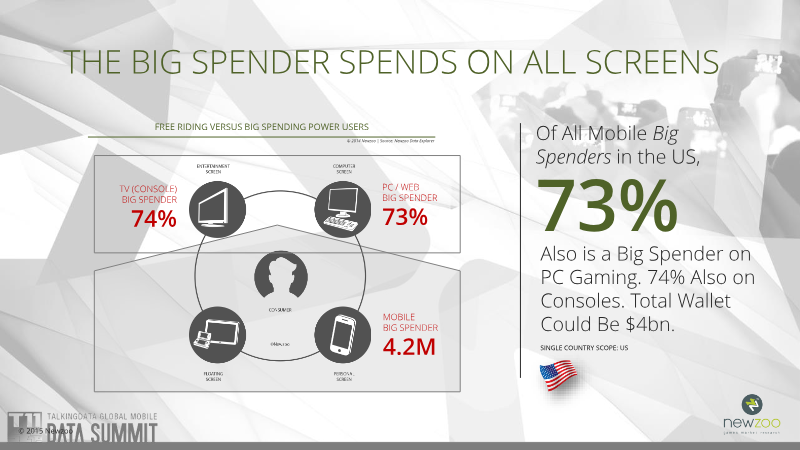
- In the United States, the most valuable consumer segment is comprised of employed, family-oriented males aged 21 to 35 who engage across multiple platforms.
Fallout Shelter - How a Casual Game Won Over Hardcore Players - Extra Credits
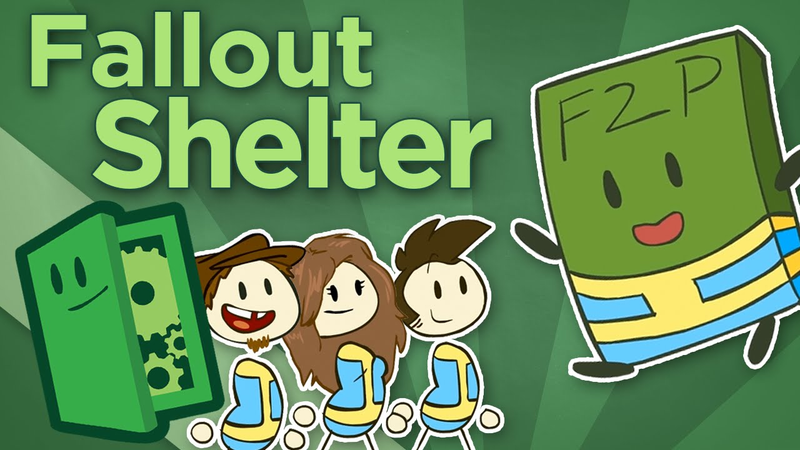
Fallout Shelter achieved unexpected commercial success, briefly surpassing top-grossing titles like Candy Crush, despite utilizing free-to-play mechanics typically rejected by the hardcore gaming demographic.
- Fallout Shelter achieved commercial success by briefly surpassing top-grossing mobile titles like Candy Crush, demonstrating that hardcore players will engage with free-to-play mechanics if implemented correctly.
- The primary driver of the game's success was the removal of player-versus-player (PvP) competition, which eliminated the pressure to compete and the fear of falling behind other players.
- Hardcore players' traditional resistance to free-to-play elements like timers and gashapon-style monetization is rooted in competitive friction rather than the mechanics themselves.

Unity on the importance of going against the grain
Unity, represented by founder David Helgason and EVP Jussi Laakkonen, emphasizes a mission-driven approach to game development, prioritizing the democratization of technology over traditional licensing models.
- Unity transitioned to a free-tier engine model to democratize technology, shifting its primary revenue streams toward the asset store and integrated advertising services.
- The mobile gaming market is increasingly stratified, with large-scale titles dominating the landscape and creating significant discovery challenges for independent developers.
- Success for small teams in the current market relies on niche-focused strategies and the ability to iterate rapidly with minimal capital investment.

PechaKucha: Mark Sorrell on LTV BS
Lifetime Value (LTV) and Lifetime Revenue (LTR) are frequently misused in the mobile gaming industry as definitive data points rather than the predictive assumptions they actually represent.
- Lifetime Value (LTV) and Lifetime Revenue (LTR) are predictive assumptions rather than definitive data points, and relying on them as facts can lead to misleading assessments of game health.
- Prioritizing speculative LTV models often incentivizes short-term revenue extraction and aggressive sales tactics that inflate premium currency supplies without regard for actual player utility.
- The true health of a virtual economy should be measured by the velocity of in-game transactions, specifically the rate at which players spend premium currency rather than how quickly they acquire it.

Biz Daily: The $10 billion mobile game franchise
The mobile gaming industry is currently evaluating the feasibility of a $10 billion franchise, a milestone that would represent a significant escalation from the current billion-dollar benchmarks established by titles such as Candy Crush Saga, Puzzle & Dragons, Clash of Clans, and Monster Strike.
- The mobile gaming industry is currently evaluating the feasibility of scaling franchises to $10 billion in lifetime revenue, a tenfold increase over current benchmarks like Candy Crush Saga, Puzzle & Dragons, Clash of Clans, and Monster Strike.
- Reaching the $10 billion threshold will likely require adopting high-efficiency monetization mechanics from the Japanese market, where revenue per paying user can reach hundreds of dollars compared to the lower-spending models common in Western markets.
- The convergence of major regional markets—North America, Europe, China, and Japan—into a more unified global landscape is a primary driver for the potential expansion of mobile game revenue.

Biz Daily: Can Amazon disrupt F2P games with its Underground move?
Amazon Underground represents a strategic shift in the mobile gaming ecosystem, functioning as an experimental platform that challenges the prevailing free-to-play (F2P) monetization model.
- Amazon Underground replaces traditional free-to-play monetization with a compensation model that pays developers $0.002 per minute of active gameplay.
- The payout structure equates to approximately $1 for every eight hours and twenty minutes of user engagement, shifting revenue reliance from microtransactions to total playtime.
- The platform aims to disrupt the mobile market by offering premium games and in-app purchases for free, removing barriers like currency grinding and wait times to drive user acquisition.

Biz Daily: EA Mobile's record $145m financial quarter
EA Mobile achieved a record-breaking financial performance for the first quarter of the 2016 fiscal year, covering the period from April to June 2015.
- EA Mobile generated a record $145 million in revenue for the first quarter of fiscal year 2016, marking a 17 percent increase over the previous quarter.
- The revenue growth was driven by a games-as-a-service model that focuses on continuous updates to existing titles rather than new game launches.
- Key titles supporting this financial performance included The Simpsons: Tapped Out, Real Racing 3, and The Sims FreePlay.

Biz Daily: Does Angry Birds 2 have a F2P problem?
The launch of Angry Birds 2 marks a significant evolution for the franchise, transitioning from the monetization models of 2009 to the contemporary free-to-play standards of 2015.
- Rovio transitioned Angry Birds 2 to a modern free-to-play model featuring an energy mechanic that limits progression, a shift intended to address the company's nine percent revenue decline from the previous year.
- Internal data from the game's soft launch phase indicated that the new monetization mechanics were well-received, leading Rovio to conclude that current user backlash represents a vocal minority.
- Rovio reports that 90 percent of players historically never spent money on the original Angry Birds, prompting a strategy shift to better balance accessibility with revenue generation.

Google on IAPs and monetization - PG Connects Bangalore 2015
Building a sustainable mobile gaming business requires a transition away from an exclusive reliance on in-app purchases toward a diversified monetization strategy.
- Developers must diversify beyond in-app purchases (IAP) because 95 to 97 percent of mobile players do not make direct purchases.
- Integrating a hybrid model of IAPs and strategic ad placements, such as native ads and video, can increase total revenue by up to 300 percent through effective network mediation.
- In markets like India with low credit card penetration, reward-based advertising—such as video ads and offer walls—is essential to monetize the non-paying majority.

Biz Daily: Did Fallout Shelter only make $5.1M?
Fallout Shelter emerged as a significant surprise in the 2015 mobile gaming landscape, achieving high rankings on Western top-grossing charts shortly after its release.
- Fallout Shelter generated approximately $5.1 million in its first two weeks following its June 2015 launch, representing a ten-fold return on development costs estimated at under $500,000.
- Despite initial success, the game experienced a rapid decline from the top 200 grossing charts in major markets including the U.S., U.K., Germany, and France.
- The game's revenue potential was structurally capped by a 200-dweller capacity limit, which effectively concluded the player experience once reached.

Biz Daily: Can Gacha, Fusion and Collection work in the west?
The global mobile gaming industry is currently at a critical juncture, with experts projecting significant growth potential by adopting mechanics that have long defined the Japanese market.
- The global mobile gaming industry could see revenue increase tenfold by adopting Japanese-centric engagement models that prioritize collection, randomization, and fusion over traditional skill-based progression.
- Western mobile development is currently in a state of pre-peak growth, lagging behind the Japanese market's superior revenue per user metrics.
- The core strategy for growth relies on three pillars: Gacha for randomized monetization, collection for inventory depth, and fusion for asset management and power progression.