1 free read left. Create a free account for unlimited reading + AI research.
Create free account
Mobile Ad Revenue 2022 | Future and 2021 Retrospective
Key insights
6 takeaways- 01The mobile advertising industry successfully adapted to the deprecation of IDFA by shifting to contextual targeting and on-device signals, avoiding the feared market collapse.
- 02Publishers are mitigating privacy-related tracking limitations by diversifying ad networks and optimizing waterfalls to accommodate varying user opt-in rates.
- 03Monetization teams have evolved into highly technical, product-focused units that manage complex attribution requirements and act as strategic intermediaries between development and ad partners.
- 04Facebook’s dominance in the iOS ecosystem significantly declined, with its revenue share dropping from 25–30% to 3–5% following privacy changes.
- 05Large publishers are increasingly pursuing vertical integration by acquiring or building proprietary ad-tech stacks to reduce dependency on closed-loop ecosystems.
- 06Industry stakeholders are increasingly treating frameworks like SKAdNetwork as opportunities for expansion rather than restrictive barriers to performance.
Ask AI about this video
Transcript
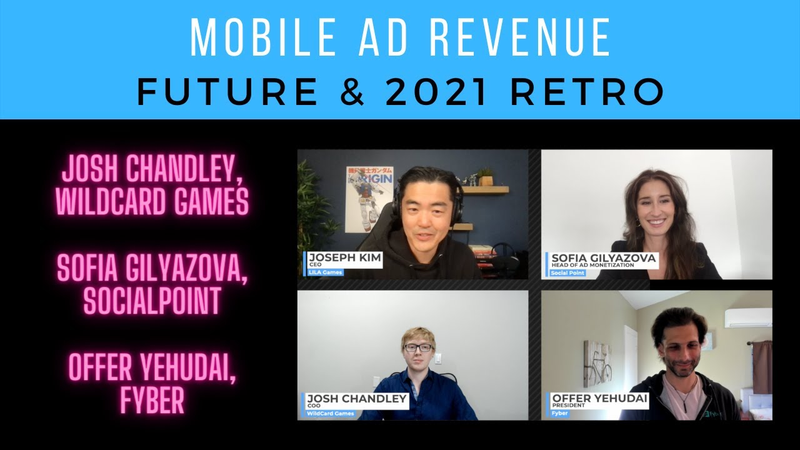
hello everyone and welcome today we'll be talking about mobile ad revenue and monetization more specifically we will discuss where is mobile ad revenue and monetization going into 2022 and then what happened in 2021 and we will specifically address the impact of idfa deprecation as well but we've been here before and in fact this same group talked about this issue back in january and so we're back now with this update and on with us today first josh chanley ceo of wildcard games a rapidly growing mobile game studio building classic card games second sophia sophia gilliazova i hope i pronounced that correctly sophia head of ad okay thank you head of ad monetization at social point the mobile games division of take two and finally offer yahoo dai president of fiber and fiber builds monetization platforms for mobile publisher and i basically take that to mean that
they're you're they're operating an ad mediation and bidding platform all right well guys i thought we could start by talking about cpms now there was a lot of predictions in terms of where cpms would would head kind of going into idfa deprecation ahead of that and there was a view that cpms would drop a lot and so in terms of what you guys have actually seen in practice can we talk about some of the predictions versus reality and then also in terms of like you know kind of counterbalancing the cpm loss versus ad revenue what are you guys seeing and maybe we can start with you josh yeah um i i think talking with sophia i think we're on the same page here and it so boring um we i think it was a very kind of spicy scary uh discussion topic uh earlier this year um i was seeing uh
deconstructed refundable dev memo talking about strong possibilities of a 50 decrease in cpms um and you know overall a very extreme impact for ad monetized games what we saw was in cpms uh between now and before idfa idfa apocalypse we were calling at the time uh we've seen uh cpms go up oh um okay very slightly uh like zero to five percent on ios and a little bit more than that on android but we we operate a primarily a casual portfolio um so that's a little bit different overall ad arc dow we saw as flat on ios and noticeably more positive on android oh so overall um we've been able to grow our business substantially right in this period
do you have any thoughts in terms of why that happened i think certainly on the android side there was a little bit of a rush over to android you know with with idfa but but even seeing that on the ios side any any theories any speculation yeah i mean it's very very difficult to really guess um i am actually really curious to hear offering sofia's feedback there i think it's a mix of a couple of things um on the the ua side kind of deviating away from admon for a second we didn't have a problem where we were rebuilding from scratch uh on the majority of ios campaigns we started with something well balanced where any well-run e-way organization kind of knows where their next dollar is going to go and where their next dollar polled will come from so just because overall measurement became at the the the app level almost in the short
term or at least the app geo level um we still kind of knew it was balanced uh and it was difficult to maintain gro to grow fast because it's very hard to measure but they're at least for most advertisers there wasn't a strong reason to make massive pullbacks and then additionally in the short term fingerprinting was very helpful [Laughter] okay so i i think we have the explanation if i'm being honest not necessarily really interesting uh things about fingerprinting um is it it's fading okay um so we're able to compare um fingerprinted app installs to mediation to media sources okay come and compare those directly to the attribution from sk ad network
so in theory if fingerprinting was perfect if we had a hundred installs to media source a okay with fingerprinting we would have a hundred coming back from sk ad network so we can actually compare in real time how efficacious or how effective um fingerprinting is okay in june what we saw was that for every essentially 100 installs we got via sk ad network yeah about 90 were caught with fingerprinting and then 10 the mmps gave up and just said organic we don't know um now um in september um fingerprinting is only catching about two-thirds of installs so about a third are coming back as organic and that seems to be pretty par for the course i've heard other numbers but nothing's hugely uh different from that point um okay so what you would expect to see if
fingerprinting was entirely causing this is the cpms would fade in line with fingerprinting fading and we haven't seen that which is really really bullish for um the ad ecosystem um over the next 12 months as it probably fades to 50 ish who knows but um that would be my expectation uh offer any thoughts well so it's it's it's really really interesting and we talk about numbers and josh you gave your experiences is is very accurate you know but we can slice it into a couple of verticals first when we talk about cpm drop we have to differentiate different game genres because we know not all games behave the same and also different ad units so like for i can tell for instance on average on ios we noticed like between 12 to 18 percent show up on cpms only a certain amount of time
but this is for all ad units aggregated if you look at banners versus interstitials and rewarded video they all behave differently and that's interesting because the buyers behind each unit differ right some performance marketers will will heavily invest in rewarded video and you may see more omni and brands are buying typical display banners and though in those audiences those those cohorts will react differently to the lack of idfa so i can share for instance again to to to my very positive surprise that cpms on rewarded video weren't affected some actually went up like you said josh because for most performance marketers they already use either contextual targeting or different signals maybe they use fingerprinting to your point i really don't know but we didn't see that effect or rewarded video i can tell you that some brand buyers typically the ones who use cookie matching and like
deeper tracking for users they have a harder time buying a banner advertising right and we've seen the shift to android by the way we did see how for the first time ever in a given month there are more days where android revenue are higher than ios which typically wasn't wasn't the case it wasn't the case before right so we have to break those numbers about also if you remember last time uh while i was still at five year joe since then we got acquired by the turbine but we talked about the opt-in rate right and we sat here and trying to guess how many people actually opt in and remember there were so many so many guests i think it doesn't matter it doesn't matter anymore right because the numbers are so low so if it's like 15 or 22 like who cares i mean we are getting we we got used really fast to just work without ideas and with different you know legit alternatives and that's
that's a big cause to us as an industry that we managed to go through this apocalypse and and at least for now survive right so you guys are doing great i i was kind of laughing listening about the opt-in rates as you guys remember there was like a massive amount of articles talking about how to optimize your att pop-up what to do with it test different colors there's different buttons different shape of the buttons and now we're there and there was like a lot of hype about it and now we're here and we agree with you offer and josh uh it doesn't matter of course we see like if we see different audience we see their reaction to att it kind of stayed the same maximum how you can actually you know increase the obtained rate it's not going to be massive it could be a five percent or maybe seven but eventually we do not see really uh a big change that can that this this uh
improvement can cause so we've tested this out we've rolled this out we've seen certain results and we kind of kept it in the games with some ideas to maybe test it later when we have more time but as you know in our industry especially with all the recent events we have we never have time um in regards sorry sorry but could could we unpack that a little bit in terms of why do lower opt-in rates not matter like i've heard of some techniques for example taking the opt-in traffic and just projecting that onto a cohort is it because of techniques that people are using or why does the opt-in rate not matter uh it does matter in general if you have an opt-in rate difference between 30 if you have one game that has 55 opt-in rate versus 20 or 17 option rate clearly there would be a certain difference but that difference would only cover facebook buying a little bit more on that app versus facebook not buying anything on the app and that's more or less it and of course
it then then when we talk about the genres you have to see how much your game is dependent on facebook on both sides right on ua and also on the monetization if it depends a lot your opt-in rates will matter for you uh if if you don't then they won't right so it's it's what offer also mentioned it's really really dependent on the genre and dependent on the on your mix on your stack on your ad networks that you're working with um so ecp unwise we've seen very different results we did not see a crazy hyped drop that we all were scared of but we've seen light declines on ios in certain games and uh stability on the other games and when we talk about ardao it actually has been quite positive for us in general while i would say ios abdo has been like a little bit stagnating in some of the games and android was in the explosive growth it's not
exactly what we discussed okay but so for you sophia you are seeing slight declines in in in cpms and maybe the difference being that the portfolio of the you know social point games is a little bit more midcore hardcore versus josh's portfolio which is a little more casual is that how you would attribute that yes that's correct joe i think that we've currently we also started working with an absolutely incredible team at dots this year and in two dots it's adding up on our genre and our expertise to see on how everything behaves and and it's actually really really great to see such a big differences and as you know we also have uh a word game studio where we can see uh also certain trends which not necessarily align with our midcourt portfolio okay got it sorry an offer you mentioned that part of the reason why things may not be so bad is contextual advertising and i
actually i think you raised this during our initial call that that you know contextual would potentially be a mitigation but could you explain for the audience that doesn't understand how contextual advertising works could you explain what what that is yeah sure i mean eventually marketers and are looking for signals that will tell them oh is this an impression i want to buy and how much should i pay for it right and ideally we'll have all the data available and but of course we want to live in we respect user privacy so by going contextual we are using signals that are on the device that are not identifying the user but they are giving the marketer enough information to say should i bid and what is a good range for for that bit so for instance what is the historical average a click-through rate on a specific placement will tell us i mean should we should we go hard on this if we're looking for a performance or if it's more about brand awareness i am less sensitive to to click-through rate for instance um a chords of a
of impressions that they already serve the specific a domain okay so if i know this audience already saw a lot of ads that are match 3 do i want to sell them yet another match 3 type of a of ad so those are examples of contextual signals that relate more to the content and less to the user and they are stored on the device in this way there is also less concern around around data links and the more we are getting better and better as an industry and this is not a proprietary or or like a secret solution for one company of the other the more we as an industry are moving from a user level or people based targeting to contextual everything looks better so i think we started as an industry we haven't finished yet and even even facebook audience network i believe i read some publications are now moving to contextual targeting and will start bidding more on non-ibfa traffic i think it's good for all of us
got it and then in our first discussion we did have uh you know a bit of discussion around programmatic advertising and since that last discussion to now what's what's kind of changed if anything at all and josh are you still seeing these crazy cpm hotspots based upon the use of programmatic or what's going on there oh definitely um yeah i mean just to be totally transparent and with uh fibers platform we've still seen really strong performance looking at those hotspots we're seeing cpms be profitable to target at you know over 300 at times in the us wow so that that is definitely still there which is a really really interesting change i'd say maybe has declined somewhat um but not by uh any massive amount and the the
the the delta in our waterfall between uh lap traffic and non-lap traffic does seem to on the whole be declining as ad networks make that transition to more contextual targeting they were already relatively speaking more contextual a lot more contextual than facebook and google uh and almost infinitely more but there's still uh there's a lot more gains to be made there i think and i think we're seeing that as the the the latin non-black cpms slowly start to converge together okay and offer would you agree with that or is are there any other updates you can offer us operating such a platform in general i try to always agree with josh i will add that we you know we still see some publishers closer to to sophia's like mid core and like in a purchase heavy publishers are still maintaining luck and non-lat waterfall
josh i'm not sure about you guys if you still do it or not uh and i think it's still a good tip for publisher if you don't do it you you may consider because there are still again pockets of audience especially especially if you if if you're gonna in a purchase and mid court maybe make will make a bit more sense but that's something i will i will recommend publishers to still to still use and try out sophia i think you guys are trying it as well right you're using it as well well this is maybe a small surprise coming here is that we've tried it but we are not really seeing a lot of uplift but there is a reason for it um our games have in general relatively high number of non-idfa users are just ideally not available due to also uh age reasons so we have age gate in our games therefore we've been let's say we had a pretty big uh chunk of traffic uh without anything we've already but what's gonna happen therefore right now when we added up a
little bit in our opt-in rates and mid-core games tend to be relatively high i would say higher than in industry we did not find yet value or like big incremental value and running two uh separate waterfalls while ours are already granular enough and uh let's say optimized enough also in terms of latency so i think that could be a reason number two why we're not actually seeing a huge uplift regardless of that i've heard from a lot of publishers also apart from george and many others that this is a really good tactic so i would actually also recommend that as long as it works for you it's just great it's a it's a good one to try out and you know i think maybe the next question i could ask is really around specific genres there was a lot of speculation including for myself where you know there was some thinking around specific genres being more impacted by idea faith than others i i think offered you had predicted that the prevailing doom and gloom around hyper casual was
overstated and actually just kind of looking at the data so i pulled some numbers for a portfolio like i created a basket of hyper you know leading hyper casual companies and kind of looked at the data for the past year and it seems like you know certain certain publishers were up in terms of revenue and others were down a little bit but overall the revenue seemed flat downloads seemed down about 15 so just wanted to like ask you guys in terms of in specific genres in terms of impact by idfa and the other theory i had and maybe you could speak to the sofia would would was that the more mid-core or hardcore uh a game is it i mean maybe this is more of a ua question but that that i felt that you know those kind of games would have a harder time maintaining their row as but i don't know maybe we could just start there in terms of maybe sophia like any differences you're seeing across different genres in particular
yeah yeah i mean look uh all the games we can even make it more simple like all the games that was dependent on facebook were suffering all the games were not dependent on facebook and user position were kind of fine and well i want to give credit to our marketing department as we've prepared a lot to this like we we went along with this hype we were very ready when everything happened we've uh decreased our dependency on certain channels as much as we can and we've also let's say pull up some mitigation metrics for it and that worked out so we did not encounter a lot of issues right but also because we do not really have super hardcore games that need specifically need uh very niche players and everything yeah i definitely use that little period of time to push admon to all these games because i said you know hey let's diversify let's not uh you know put too much on ips like we have a possibility to work with
lower tenure users and put a little bit more ads in there and it actually worked out for us but um overall i mean all is fine i'm positive i was positive and i'm still positive it all worked out at least offer i i want to say something in in a good way so help me out if i don't totally no no seriously seriously what i like so much about our industry is that we are trained to think about certain things as the only absolute truth like without idfa hyper casual will die oh my god we have to optimize att pawn because the opt-in otherwise it will go from 62 to 2. um there is only one mediation that can work and and without facebook your waterfall will collapse we are trying to think this way yeah last week we had the the funniest craziest the largest a b testing ever when unfortunately facebook
suffered like nine hours of downtime right nothing worked for facebook not even the audience network and we are great partners of facebook i like them a lot but you know i heard from publishers that you know during those nine hours it was okay meaning meaning we are trying to think about certain absolute truths and then when you put them to a test you realize okay you know hyper casual did not collapse the opt-in rate is still 12 we can change the water from the network we might even make more money so what i'm trying to tell publishers listening to us and we're trying to keep it real don't be afraid to try new stuff and test we have no idea we keep you know we keep the momentum of what we know from couple of years ago but the market is very dynamic and and that's what i like about it so much right never at that moment all right and definitely you know shout out to you offer for for being right on your call on hyper casual i was definitely a little bit more
pessimistic on hyper casual but i was actually more pessimistic not also because of idfa but i believe that apple just doesn't like the those games so i thought they were gonna just like you know what what apple wants they usually get so that was the other theory behind that but but you know use a lot of love those games and eventually definitely follow the user's heart in in most cases right and users love it josh any any other thoughts or should we move on to the next topic no i think uh offer and sophia were really right on there okay and maybe just to close the loop on on this stuff in terms of impact of idfa have you guys changed any practices at all or are there things that you're doing to mitigate i know josh you had talked before during our first call about ways in which you can optimize you know the the way you optimize ads to try and offset potential declines and cpms but does it sound like we do have those declines in cpms but is there any way in particular that you guys are changing how you operate at all
on the on our side the only major difference is that we do uh operate separate waterfalls for lat and non-lat traffic right um that has been um i'd say incrementally very helpful um and that's been it's been quite um interesting um and the other than having one more thing to manage the only other change is that on our lap waterfalls we are much more active in testing big meaningful changes um usually it's um on idfa or google inventory it's always about incrementally moving the needle whereas the the lat environment is just really interesting because there's so many quality ad networks out there and they're all making very meaningful improvements so
just where they are bidding most effectively is changing very quickly um so making sure that you have a mediation platform that allows you to a b test meaningful changes and allows you to be agile i would say is a good advantage in this environment right now okay offer or sophia any any thoughts well what i can add is less time we've discussed right like diversifying and diversifying ad networks plus um ad formats and we've followed that route we've added uh a couple of let's say contextual based networks so the networks that know how to do this right right before um 14.6 i believe was released and actually one of them was fiber and it paid off very really well because these guys uh you know they straight away they picked up the traffic left from facebook and they started slowly ramping up so that that helped a lot um and in terms of diversifying i mean
we work with a bunch of ad formats and we've put extra development effort in improving um user interaction with those and it also paid off a lot especially in one of our biggest games so not much right change more than that um last time we i think as a group we we advise publishers to always keep your sdks up to date so it's always the case it always really really helps uh i know it's hard but you know for any monetization manager listening i mean make sure you guys understand this all the sk network stuff for 14.5 and 15 i mean it's a lot it's changes dynamically but you know you should really understand what's happening there so i would definitely encourage you guys and there are amazing a slack channels and groups and blogs about the data is out there don't uh don't set it aside and lastly you know we as we move to contextual i would definitely recommend publishers big
enough and i think with the good consolidation it's now happening more and more start thinking about brand advertising brands and agencies you know they are stepping in i know every year we say that's the year for brands and it's it never really isn't true but you know it's getting better and better all the time and i feel like there is a tipping point that you we may have crossed and with the application of idfa all screens are equally dumb and and you know users are playing games so and brands understand it so if you're big enough if you have ip if you have compelling games and good chords and you don't engage with some level of brand advertising i think you should got it okay so i thought we could move to uh a controversial topic and so that is and so one of the big questions from our last conversation is a direction in which data transparency is moving and josh you in particular during that previous conversation mentioned for example access to data such as how much an ad network is paid to show a specific user
an impression sophia you mentioned you weren't able to see bids in programmatic but in just like this general topic of data transparency which way has this moved since our last talk are we moving more toward towards increasing data transparency or are we moving away from it or are we kind of at the status quo what do you guys think i'm curious to hear what sophia has to say i'll go first just so that someone does um from from my perspective um at least ad revenue and ad monetization transparency has um improved overall great um uh facebook and google and the larger walled gardens are still trying their best to withhold bid information and the rationale for that is that if everyone knows what they're bidding
for users then their user becomes their data becomes less unique and therefore less valuable in bidding situations uh i think offer is probably much more aware of that than i am um i believe the majority of mediation platforms now forward that bit information or extremely close proxies that technically do not defy the facebook terms and conditions so our ability to a b test and optimize has definitely improved and it's come in handy we now have the ability to do things like even with the ios 14.6 a b test different interstitial frequencies based on whether a user has or does not have the idfa available again because a lot with a lot with display advertising that's not opt-in like reward um unlike iap where you you leverage
your engagement for monetization with interstitials and banners you're often spending retention on monetization and if you know that you're going to be spending it and getting say 25 to 30 less back you might want to test showing fewer or you might want to test different strategies and being able to actually measure that out to day 30 60 90 180 and see what those long-term impacts are is incredibly valuable there are still some issues for instance um i think one thing that's leaving money in the table for everybody is google's insistence on using no more than three line items um i see sophie reacting a little bit there uh it's uh we have uh run tests increasing that number um to identify which three we should be going with and every time we go from
three to five three to six three to eight we see major revenue increases because google has a lot of inventory to add but because google knows that everybody can see what those line items bid at and what they're filling and who they're filling for they choose to restrict it to just three because that enables them to keep their cars close to their best i'd contrast that to show the counter hypothesis a counter strategy we on ios interstitial we're currently running 11 floors with fiber and that level of transparency is extremely valuable because it allows us to do that cpm hotspotting and find those valuables but those valuable places uh sophia what do you think well thanks for for taking the the first response right i appreciate it josh um well yes i was smiling about uh you know this uh gangster technique that
you're using with like respect josh really uh definitely encourage that but look i have a very mixed feeling because from one side yes we run in bts we have uh you know pressure level data now it'd be finally becoming a norm in in the industry so amazing some data is still missing but you know we do not expect this to change in the near future some data you know was still there so overall it's fine but if you think about everything that happens in the industry with all the acquisitions where data is just being solved and bought all the time that to me doesn't look like a healthy trend and that to me looks very worrying so if we talk about data transparency in privacy of the data from that perspective that's definitely not a good trend in my opinion i don't know for what would you what do you think
no i agree with both of you again um i think the industry moved forward and i think most decent mediation and monetization platform today offer that level of transparency and a b testing to your point josh in in a very general way it wasn't the case two years ago so definitely great but there's a theory also point on i mean data is became almost like like a tool for some for some players and you know whatever they become a too big or the um the type of assets and properties that you know they have access to data from uh it's definitely an advantage again advantage can be good it can be also bad if it's against you so it's also a matter of perspective but i agree data is something that again every marketer every publisher should be aware who has access to the data and you know what's the level of comfort that you know those those partners have access to this data and i would leave it as that because the answer would be
different for different partners and different publishers right and josh during our last conversation you had voiced a concern about potentially if you don't get enough data back you won't be able to effectively run a b test but sounds like you you are able to effectively run a b tests so just want to confirm that and the other point you raised from last time was like the um the platform providers themselves having a b testing capabilities and the potential for them to use that data so that you know maybe offer and fiber you know take that data and create super lion studios or something like that but i i don't know if you guys want to comment on on on that or what's the current status uh yeah so we can definitely run a b tests um that that's been um frankly getting better and better which is a huge relief um because the data transparency allows us to be agile in a time where things are changing pretty quickly so that's that's
hugely appreciated by uh the developers um yeah regarding the ownership of data being able to kind of see things i think that's one of the key advantages of a mediation platform is you can kind of see what everyone's bidding and see which users everybody thinks is valuable and i mean just just this morning at the time of this podcast taping or video capture whatever you want to call that uh unity announced formally that they are taking their semi-secret mediation product out into open beta so now that means that essentially all the big players except for facebook have their their own mediation platform right that should be a strong indicator for how valuable um the data you get from mediation is um and it should take into consideration when you're when you're choosing a mediation partner right
okay um so maybe just speaking of data one of the predictions i had from last year was something that i just called data wars of 2021 and basically like this it was just announced that at the app 11 sdk had been rerouting uh sk ad network postbacks to itself and so i was hoping you guys could comment on this particular news i know in terms of this behavior um maybe you guys could talk about what this actually means is it true because i know there's some some controversy there josh i know you are also kind of like the poster child of app love and so don't feel like we we want to save your status without loving i i know they're mad at me but you know they don't need to be mad at you so don't feel like you need to say anything negative about them but maybe offer and sophia could you talk about you know what what does this mean and what what is the what's your
interpretation of that specific news item um [Laughter] so look uh as we record this right now i i don't i don't know much more than what i read uh just like here in the news right so it's hard for me to say anything to add anything smart but i would i would say this for again for publishers and it goes back to the previous comment guys you have to understand what's going on with your with your app and the way you implement stuff and where data goes okay again i'm not not saying anything on a plug-in right now because i don't know but in general i mean publishers must be aware especially with scad when you when you do have the as a publisher you do have control over the end points and where data go and with 14.6 you you you do get the post that you can often make sure you understand what's happening okay uh i think that's what we should be aware because data now as whether it's important it's it's your
asset before it's anyone else's it's your asset and you have to protect and understand what's happening to that data right you can't blame anyone else if you don't understand of course we believe that you know everyone are doing things in the right way and may i know maybe people make mistakes from time to time but as publishers please please understand it's also your responsibility sophia what what is your viewers like you know like like need co-publisher that you know also have a lot of that after such a politically correct response wrong here but um yeah well as oprah said the news just now let's put it that way i just didn't have enough time to uh think about it all right now look uh well i can just you know second to offer saying yes you have to understand data and you have to also be aware of how this data can be used by
certain players right yeah these type of news and you know there were other ad networks have been you know kind of meddling with sdks and everything like we are placing software development kits in our applications so maybe it would be a good exercise to even ask your tech team to look into it and to to help you understand what type of data and what type of data it can collect and you can actually predict what type of how how this data can let's say be useful to somebody except your own company right and maybe based on that make a choice of of your partnerships but that's i guess everything i can tell so i'm going to interpret that as watch out for the app loving but josh as the poster child of app loving do you want to say a few words in their defense just because we we want to be balanced here well hey well i definitely don't want to be applauding stool pigeon here um but uh
i i think the before i can dive into it uh i think one of the things that offers said resonates with me really really strongly um it's the large players one of their best tools is to make things um very convoluted and confusing and interwound and complicated and that allows them to gain a greater competitive advantage and it's very important to understand where your data is going and what it's being used for um i remember i thought i still think this is true but one of app annie's products is it lets you basically it would compete with the app stores for data visualization and it let you pipe in all of your ad network data all of your itunes data all of your google play data
and it would visualize your downloads for you and your iap revenue really really nicely all for free the free database tool why was that because they were using it to sell it on for their algorithms um so it's important to understand and i want to say that is a bad company that's a totally fair exchange they create value but it's important to understand where your data is going [Music] so unfortunately i did actually have some time last night to investigate this apple of an issue so i guess i'm gonna kind of uh jump in um i i can confirm that they actually they did do the thing uh however what they did is very clear uncle very unclear um at least in public right now
um and it's kind of due to two reasons um first of all there's only been one article that i know of published uh the article that was published actually had a lot of misinformation in it and things that are factually not true about how sk ad network works okay um and um additionally um it kind of feels in the article like applovin was being confused accused of doing it in secret rather than aggressively publishing it and documenting it and telling developers that they're doing this um to help and that it was known beforehand that it was going to happen um so i i guess the re the reason that i i kind of called i suppose the app live of install pigeon a lot or that um shell
is because i try to take a more balanced approach um but i know there's a lot of stores so i mean i think that it's important that we get to the truth like if what applovin has done is mischaracterized then i i i think you know i mean even though app loving doesn't like me too much i would hate for them to be mischaracterized i'd hate for them to be mischaracterized for doing something that that wasn't the intention so if that's the case then you know i i think the truth should should come out yeah and i could be wrong i could i mean my understanding of what happens and this could be wrong this is still emerging but additionally these tools these are for ios 15 these tools have been out for a couple of weeks so everyone's updating and changing rapidly and frankly no one's engineering team has months of experience dealing with these new um apis
if they did i'm really impressed um but essentially on ios 14.5 with sk ad network apple started to send back postbacks to the ad networks and that was how sk ad network worked problem um that means two things one you can have bad actors aka fraud um and they can start to claim things and there's no independent way to prove them right or wrong because now the mmp can't play that role as effectively and second companies with vast data lakes like facebook can simply refuse to pass them on and a big objective of sk ad network was to damage facebook in my opinion um so that wasn't going to stand so on ios 15 which is just now rolling out in fact i don't know sophia about
your games but we're only just now preparing our ios 15 uh build because it's there's so much stuff in sk ad network and it's so confusing and there's so much new technology that has to be built that it's very challenging so in ios 15 what apple did was they in addition to sending sk ad network postbacks to the ad networks they allowed app developers to specify an endpoints to send those postbacks to for the developer as well so we can compare so if network xyz claims 50 installs and they actually had five we can now prevent the fraud additionally um if facebook refuses to give us postbacks we have no idea what's happening we now have our own source so they can't prevent us from doing that and that it's
really valuable data no one really knows how valuable yet because we've had it for like two weeks but it's definitely going to be valuable um so what the article is claiming is that for some reason apple and oh and so the endpoint for the developers is specified in the plist it's very basic and so what the the develop the article is stating is that the apple even overrode this functionality to remove from the p list the endpoints defined by um the developer and they put in their own endpoint that forwarded to applovin yeah um so um it was from my perspective it was a little um it had definitely had a an angle which was anti-app lovin which is fine but the article made
some claims about applovin essentially this was tantamount to stealing the data essentially they they were claiming that afloven isn't going to get this data and by stealing it they're going to get this data but um applovin was already getting sk ad network postbacks directly from apple so that doesn't quite make as much sense however they do get something new um and what that is is the attribution data for the other ad networks which similar to app annie that example where they're being really helpful and they're providing tools for you if you give them all your data app 11 was trying to get more data it appears to be i haven't confirmed that with them but it's definitely they are able to get net more data so were developers harmed what kind of the question is then what
is the feature that they were advertising so heavily and the feature was simple so the way s uh ski network works in ios 15 you send to this endpoint that's super cool what do you have to do with it well actually now developers have to do things like ingest that data they have to forward it to their mmp for that anti-fraud they have to actually play point guard and distribute all this data so now rather than an ios update for a new uh platform being you know make sure your your doesn't crash make sure there's no weird problems now it's oh and you have to build massive back-end we're not massive you have to build back-end infrastructure to make your stuff still work properly the advantage and the product that app loving was trying to offer which is very which is i guess kind of sneaky is essentially that service where it ingests it all for you displays it for you and acts as that forwarding service to your mmp into whatever you want to do so applovin never stole the data they
built a feature that did work for you so that they would build it once instead of the ever like the ten thousand hundred thousand app developers all building it themselves um and their value add from it for themselves is that they would be able to actually see all the attributions coming from ironforce unity google and facebook so from that perspective what they did um wasn't that bad the problem that was fundamentally in my opinion way too aggressive is the discussion is it's not is apple even stealing data it's should this product have been opt-in versus opt-out right and that's um where the wrong doing was but it's kind of a boring thing to do versus the idea that apple evan's a super evil mega corp that's stealing all your data uh so yeah i'm not necessarily saying that apple of
end is good or bad uh big or small or whatever i'm it appears to be that the facts are that they were too aggressive market trying to push this new feature um and that's a much more if i am correct and as my under this happiness was announced last night but for my investigations that appears to be the case um i could look really really dumb when we publish this if more information comes out um that that seems to be um at least what is happening even in the article there's no alleging that applovin refused to share the data it was just part of this new feature um offer sophia do you have any uh information to have here because i because i i'm totally open to being completely wrong um right or maybe offering sophia if you could speak to whether it's this issue or the the higher level general issue of
whether it's you know ad networks or platforms doing things to gain a competitive edge in some way what should people be watching out for if anything specific well i think provided an interesting point of view you went like kind of hot and cold here and there good bad um i like it i think it's actually a really good point that we maybe did not consider it is normal to rush to conclusions when we especially when we see such such articles and i think it's it's important to like what george did to dive in to try to understand what was the initial initial objective for the company um the question is if that objective is the only one or there was a few right in potentially aggressive push on the market which was kind of uh a little issue that that the company experienced could be something intentional right and that's that's what we maybe we will know in the next few days or maybe we won't
but just like with i think sort of certain pr scandal with i believe integral when we've had you know they've been also they discovered something in the sdk and such you know that there was a lot of uh confusing information coming out later after so i'm just hoping that in this case we will know for sure if this was the case or not that's more from my kind of blurred point of view on this guys by by the time we publish this i guess we'll have more information so i actually have a que i have a question for you josh and sophia um all those changes and let's put up love inside for a second but all those changes how do you look at the description of an admon in your company are admons becoming more product managers more analytics more more tax heavy like it's no longer pushing those uh just the floors right josh i mean we need to get scared and get technical understand that's decay and i mean you josh you know your business very very well but i'm safe to assume not everyone are in a zero like in the
weeds so what are we expecting from the monetization teams right yeah okay um so i get extremely pissed when people tell come to me and you know when they don't know what my team is doing and they come to me and say uh you just guys optimize waterfalls right like can you just go optimize and get those like really high cpms that is like a trigger right like i hate to hear that so for me it's been already uh key to make sure that my team and me myself with no product of course not at the level of product managers but close to it right that's that's our job we have to participate in in all key decisions just because we help to monetize and while there is a in a purchase of monetization there is ad monetization and they can be combined in an amazing way so to your question offer uh
product is key for for all other revenue related uh activities i believe such a shift started uh well when apple made an announcement i think this actually fostered the shift because you know everybody wanted to participate to understand better how with a product they can kind of mitigate the impact of idf a0 and such and such and i say it very positively i think that this is the way and and overall the teams that the ad revenue related teams they're extremely transversal teams that should work together with product and also with ua because in a lot of games you can you can see a direct impact of ltv you can try different segmentation tactics uh based on what campaign you're acquiring users from and such and such so both of these has to be uh super important for their german teams in my opinion yeah i would agree with that i'd say for small studios at least everyone is
becoming kind of closer together and that transcends just admon teams like ua teams are becoming much more integrated into development teams um even even bi teams are becoming much more part of the development team um however sophie is also right in the as you scale ad monetization is still a really complex and challenging thing that deserves specialization because it's um it's just such a challenging thing to do um however uh i think that some of the positive changes of admiration being i think more integrated is the politically correct way of saying perhaps more listened to um sofia maybe you agree with that but as we get into things like okay if we do deep a b tests to optimize
interstitial frequency if we figure out how many networks in our stack is optimal if we a b test different mediation platforms if we do all these really cool things we can generate large ltv impact for our game those those things are real and they're perhaps ignored before because product teams um and decision makers weren't as um educated or as up to speed and not listening to the ad monetization but as competitors are making these massive gains um that it's becoming proven out that they need a larger and larger seat at the table yeah and offer i think that this point that you're raising is actually a very important point because it does speak to potentially a structural transition that might need to occur because admon teams are going to become the face the interface of internal data to an external provider of some kind right and so
should the data police be sitting in admon should there be a separate function because what you what you know sophie and josh are going to have to do is they're going to have to evaluate the partners that they're working with and if they're not careful data could leak and all of a sudden you know tiger studios launches four dots you know i'm saying like and so i i do think this is definitely a challenging issue and i don't think that a lot of management and executive level folks understand that a lot of strategic function is now increasingly becoming prevalent in these you know the the kind of data oriented or data facing um functions like admon so yeah definitely a a uh maybe a hot topic we can address at another time but but certainly something that we people need to watch out for yeah i love the deal go ahead i love this point joe i think this is uh this is a very very very relevant
uh thing to say especially now and uh i think overall already mentioned right like first first the developers have to understand what type of data they own and how this data can be useful to somebody except for the company uh and then the second step is indeed to be making decisions that i know there is always especially for smaller studios revenues are extremely important for big ones too right but in this in this specific era of you know consolidation of data privacy of this data wars like what you said joe i think this is just becoming key to um to understand if you start working with certain partner if you go ahead and what will happen even though the revenue numbers can seem amazing or the promises can be amazing i think it's important just to have this uh this point in mind what you said like it's a data police but you can implement a department like that
that would be just great but we'll we'll consider that go ahead yeah i mean the data wars are real right right uh that was a great call out um that you made a long time ago before i was really thinking about it to be honest um but it's very obvious that big companies are competing for your engagement data big companies are competing for your ad revenue and other ad networks bidding data and um you know with this applovin news it's also clear that companies are already starting to compete for your sk ad network data whether that's trying to provide services to grab it or like facebook trying to keep it off of themselves so understanding the complicated value of what you have and how information flows through the cloud to create value for your organization is important right now i know we're running a little
bit long here but maybe we could talk about kind of the ecosystem before kind of rolling into final thoughts hopefully you guys are okay for time but wondering if we could now talk about the the the general kind of ad ecosystem and in terms of if you if you were to think about winners and losers if you have any comments as far as who you thought based upon what kind of transpired from our last call to today who are some of the winners and losers and uh obviously i i think one of those owners has got to be unity but i don't know if you guys have any thoughts on that uh and and also in terms of unity and sort of their performance in terms of ads i would really be interested in hearing your thoughts in terms of you know some of the thoughts around how they're able to get that additional performance probably through fingerprinting i don't know if that's you know public or not but that's sort of the word on the street but um what are your thoughts in terms of winners and losers and maybe i don't we can start with you josh i don't know i've gone first a lot
sophia okay sophia all right i'll take this one that's fine that's completely safe topic right so um right unity you said unity uh i think what we've saw what we saw in terms of winners and losers i mean i i guess we already discussed losers or loser let's say uh so if you look into winners if you look at these amazing graphs sometimes i'm doing for like a share of voice of each ad network and i prefer to do this per platform just to see the evolution of it starting let's say from january of 2021 until now um i have to say ios like makes me happy because it's just one of the most uh equally balanced amazingly distributed uh pictures that i have uh every single share of voice is just very very very small not small but like normal it makes me sleep well at night because i i'm not worried about oh what's if
tomorrow uh one of these guys i don't know deactivate our app or do something else and it just makes me think on how big of a shift of the industry just that apple created that was the only way to make this happen if you think about it to make this beautifully equal share of voice a very balanced picture we're seeing on our apps um so contextually contextual contextual networks who knew how to do it to me they're winners maybe because of what you said and i assume yes draw like that uh fingerprinting or how many names it has right now uh all of it helped helped a lot um some other networks especially facebook uh didn't manage to do anything yet we're expecting it a lot we like what offer said we expect a lot uh contextual ads from it um so but overall for us we see it positively we balance out our
share of voice on ios and we feel safer and we feel like we can actually improve uh competition and the competition is currently extremely healthy so that's our takeaway okay please joe uh well yeah i was just going to ask you offer what your thoughts were and also with respect to maybe some other players like well um maybe you could also speak to kind of like the news about unity's ad mediation product as well as you know any any thoughts on on facebook as well i will but john do you want to comment what something sophia just said i won't break the momentum yeah i was just gonna put numbers to it okay um the catastrophic loser on ios has obviously been facebook into a lesser degree google uh i think it's fair to say that most publishers were having at
least 25 to 30 percent of revenue on ios coming from fan before idfa and now that's three to five percent wow um so that's if anyone was unsure who apple was targeting if it was user privacy or facebook uh there you go uh sorry offer go ahead no no it's great look guys winners or losers first i want to say really personally about about mopab you know mohab i want to give them the highest respect we started interactive in 2007 you know it's like the beginning of mobile advertising it was admob millennial media i mean mo pub it's it's it's an era and i want to give a lot of fake credit and respect to honestly for pushing for transparency right in the early days open sourced their sdk managed to attract an amazing a talented people throughout the years
before twitter acquired them after twitter acquired them now with uploading they've done a lot to the industry and we as as as a team all of us here i think we own mopab a lot uh now put aside what will happen with the acquisition of applause it doesn't matter it's not a win or a lose for me i do think we own them a lot a marketers publishers platforms all of us so that's again mopab it's it's really an end of an era the way i look at it and i know many people who work there still work there i mean it's amazing and for all the mafia wherever you guys are i mean big kudos for you it's a i don't take it for granted right offer what do you think are the implications of the acquisition of mopa by apple and what is what impact does that have to the ecosystem or to the market so you know right now what we hear from from the market is that publishers have to make a choice it's like a trigger event for publishers to make a decision if they are basically because you can stay on on the mobile
platform it's going to be deprecated right so in a minute of three six months depending on you know different uh options but it's a trigger point now in q4 for publishers to decide are we moving to to to max are we are we choosing someone else and it's a decision not all publishers wanted to take specifically but now they have to take the decision um another implication is on the demand side mopab again to the credit it operated a a very liquid programmatic marketplace which is now to my understanding is going away there are definitely alternatives in the market but for for marketers and dsps who used to you know be plugged into the mobile marketplace they will now have to transition i don't know applause plan if they're gonna build a new problematic marketplace or not this is for them to decide but for marketplace for for buyers own marketplace it's a big change so all in all it's again it's a trigger
event for for many players to make a decision how they're going to start 2022 on both ua and monetization it's going to be interesting and josh shiny concluding thoughts on in terms of winners and losers any any other i mean you'd already talked about the impact of facebook ouch but any other thoughts on any other no i think sophia in terms of winners um uh short-term winners uh was totally spot-on with many of the sdk networks and more contextual focused advertisers um i think in the i think offer is also calling out though a short-term decision from many developers that have very long-term implications right i think that there are maybe this is too somber but i think
that the number of mediation platforms may be treading water but the the way that they make money is changing and there aren't very many open transparent mediation platforms left at scale fiber is the only one i'm really aware of and there are other platforms namely iron source and and max on for map 11 that's are less independently your data will be used a little bit more and you have to weigh potential impacts of that obviously applovin will tell you that your data is safe with them i think the proof's in the pudding iron source will not bid on um on max mediated games because they don't want apple evan to see who they think is valuable
and they kind of denied that and a lot of awkward kind of conversations like why is that oh i don't know maybe it's not performing oh no but then idfa went away and suddenly on the lat waterfall where there's no idfa so aflaven can't track suddenly iron source is bidding and they have a real share of voice but not on android and not on ios with the idfa and that kind of tells you how valuable they view your mediation data and that's the decision that you have to make between um open and transparent marketplaces and marketplaces that may provide other value as well in some way but will also take value in other ways as well and it's very very challenging decision to make during the last five minutes where do
you want us to play a little game of three predictions until then the next time we get together sure yeah any predictions trends and any like big surprises for any of you and offer since you suggested maybe we start with you this time fair so if last time we said that hyper casual will survive and mid co maybe we'll take a hit i think now it's time for midcore to make a a a rebound with direct publishers billing i'm very excited about it i really hope that it will open up a real opportunity for publishers to go with direct billing on on the on the apple platform on on ios it could be super super interesting it's not easy put separating legal from product but i think it's an amazing opportunity if played right so i'm excited about it on the ua front um creators and influencers are becoming more and more interesting and there are more and more tools for that that you know i've been following and it's really really interesting to me to see how
how big will creators and influencers you know get into our media mix of of you know launching a new title or supporting new you know new themes on your content so that's interesting and you know lastly i just recently finished reading the the no rules rules book of netflix i i enjoyed it a lot some pieces i took some i it was harder for me but all in all i like the book and i look at netflix i look at disney and i think our industry is getting to a maturity point where it's similar to disney netflix how you bring together content and platform ndua and monetization and right these are the trends that we see in the industry and it's really really interesting to see how ip comes together uh how cross promotion becomes really important as a as a driver for launching of new titles so i would i would tell us all let's look at those giants and we can see basically where we are heading as an industry so i think maybe in the next time we'll meet
we'll see even more even more examples you know getting closer to that size sofia so on surprises uh well i kind of was ready for everything to be honest like industry was was going completely uh south so i guess the surprise uh was evaluations of some companies or the exact numbers like they some of them were very unexpected um and then on the predictions i think that the big enterprises currently being like forced into the choice like what aforementioned uh will start will actually become more and more uh autonomous and by that i mean from using somebody's tag and while for example they were using mob and stuff uh and actually relying on the transparency and uh they will start shifting towards creating the tag or maybe buying or something who can do it and so let's see if that
works out but i believe that we will see more and more enterprises buying ad tech or creating their own attack and these type of rumors then the second one well there are some mmps up for grabs so let's see if next time we meet what what happens with some of them uh and then yeah i see over enjoying this one okay and the last one um i feel like that uh we will see a very interesting range of experiences in games where games are trying to adopt like certain hardcore games or mid-core games they will try to adopt um some casual patch or hidden object touch or basically combining experience within within uh one game which which was not maybe expected at all i think one of the one of one of these examples was i believe march dragons who uh started doing a little bit more of like a puzzle dynamic and such and i think oh no the
decoration actually the decoration dynamic i feel like this is super cool like i love this and who knows maybe it even happens with us that's fine josh cool um i think i only really have one prediction and it's just the expansion of the data wars um i think we're gonna learn how valuable sk ad network data actually is and it's going to become a new area to be fighting over but at a high level like i said kind of attend a parallel prediction would be that we go from the sk ad network apocalypse to the sk ad network new friends here and we we start to see it as an expansionary thing with opportunity rather than a contractionary uh force great yeah i think it's awesome to end on a positive note josh i hope you're right
and i just want to thank the three of you for jumping on having this kind of conversation this is exactly why i love to have these kinds of discussions to have really meaningful deep and you know just controversial discussions about our industry so i definitely want to thank you for that and again thank you for going over and until next time everybody catch y'all later thanks guys thanks joe all right thank you [Music] [Music] you
Summary
The mobile advertising industry has demonstrated remarkable resilience following the deprecation of the Identifier for Advertisers (IDFA), successfully navigating a transition that many initially feared would trigger a market collapse. Rather than experiencing catastrophic revenue losses, the sector has adapted to lower opt-in rates by shifting toward contextual targeting and on-device signals. This evolution has proven that user-level tracking is not the sole determinant of performance, as casual and hyper-casual titles have maintained stability by diversifying ad networks and optimizing waterfalls for varying privacy settings.
A significant structural transformation is currently underway, characterized by the decline of previously dominant platforms like Facebook, which saw its iOS revenue share plummet from 25–30% to 3–5%. In its place, smaller, contextual-focused networks have gained prominence, and publishers are increasingly prioritizing data autonomy. This shift is reflected in the evolution of monetization teams, which have transitioned into highly technical, product-focused units tasked with managing the complexities of attribution and acting as strategic intermediaries between internal development and external partners.
Looking toward the future, the industry is moving toward greater vertical integration, with large publishers actively acquiring or developing proprietary ad-tech stacks to reduce reliance on closed-loop ecosystems. This trend is accompanied by the rise of hybrid game design, where developers blend diverse mechanics to improve retention and monetization. As the industry matures, stakeholders are increasingly viewing frameworks like SKAdNetwork as opportunities for expansion rather than restrictive barriers. Ultimately, the focus has shifted toward transparency and data ownership, ensuring that publishers maintain control over their assets in an increasingly complex and privacy-conscious digital landscape.