1 free read left. Create a free account for unlimited reading + AI research.
Create free account
The Future of Apple App Store Economics
Key insights
6 takeaways- 01Industry consensus indicates that a more equitable platform fee structure would fall between 7% and 12%, significantly lower than the current standard.
- 02Developers are increasingly bypassing Apple’s 30% in-app purchase commission by shifting to direct-to-consumer web shops that utilize third-party payment processors charging approximately 5% plus transaction costs.
- 03The shift toward external monetization is a strategic response to the perception that Apple's 30% commission is increasingly difficult to justify in the current economic landscape.
- 04Despite the user friction involved in moving outside native app environments, alternative payment channels are already demonstrating strong performance and occasionally outperforming traditional store revenue.
- 05Apple is expected to transition toward tiered commission models and hybrid ecosystems—incorporating in-app advertising and value-based pricing—to mitigate the risk of government intervention.
- 06Alternative app stores face significant barriers to entry in Western markets, specifically regarding the difficulty of achieving critical user mass and managing security risks.
Ask AI about this video
Transcript
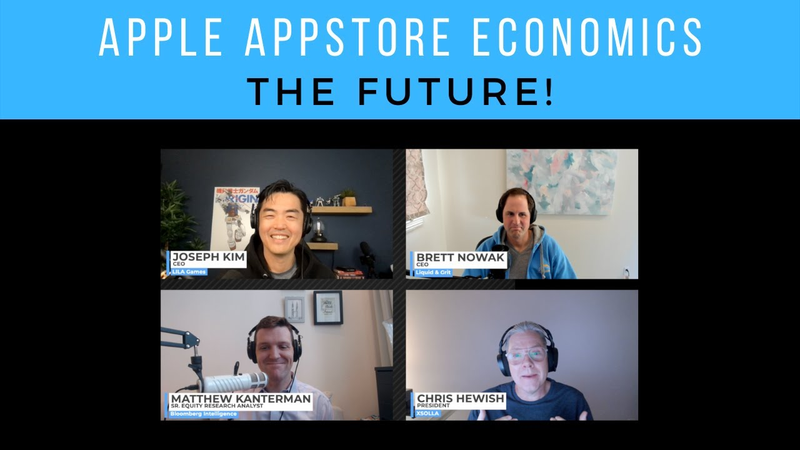
hello everyone and welcome today we are going to be talking about the potential future of the economics behind the apple app store so today there are a lot of complaints about whether a 30 apple or google app store fee is fair and even further whether there should be competition and the ability to have an open ecosystem for alternative payments or even an alternative app store so we have with us today some folks who will talk about both the current situation behind app store fees and what's permissible today from a competitive perspective and to also speculate on where this is all potentially heading as well and so joining us to discuss this topic today we have three really great speakers for you starting with chris hewish who is president of exola the alternative payments company who is in the thick of this and have solutions against alternative payments and payment solutions both on web and for pc but also increasingly with the focus on mobile
next we have matthew conterman senior equity research analyst at bloomberg at bloomberg intelligence matthew in particular has a specific focus on gaming asia mobile and increasingly on the metaverse and finally brett novak who is the ceo of leading mobile gaming market research firm liquid and grit and who coincidentally co-hosts a podcast series with me called philosophy friday please check check that out as well but without any further delay let me take you to the discussion at hand and so we discuss the future of apple app store economics coming to you right now all right guys let's get into it so chris xola provides alternative payment systems for web and potentially directly in mobile apps maybe now or even in the future but can you speak to us about your interpretation of what's legal or permissible now from an alternative
payments perspective absolutely and first legal disclaimer here you should always consult your own counsel before making any decisions that could impact your business uh having said that you know that's out of the way in my opinion what's permissible is pretty straightforward and it's pretty awesome uh with the recent changes to the app store guidelines as well as the sort of the momentum from the ruling and regulation that's coming around the globe uh we really see a great opportunity to gather contact information and data about your players directly from within your app and then you can use that information outside of the app to contact your players directly and tell them about other ways to monetize and engage with your game and what does this mean it means that it's given a green light to driving players to online web shops and top-up pages for your games you know there are some companies that had already been doing this through discord or other online channels where they would reach out to their
players and give them links right to drive them to uh web shops or our top-up pages but now everybody can do it without fear of getting booted off the app store especially with the changes uh to the developer guidelines the other week and what this means is not only can you drive players to something online but you can use data player data that you're gathering to construct better online ads and hopefully make up for the hit delivered by idfa and beyond all of that you know people are really we've heard a lot of other things where people are espousing ideas that simply aren't backed by sound legal opinion and uh and a review of the current app store guidelines so tread carefully you know if people are talking about putting buttons directly into an app or anything like that so chris just to understand so you're saying that that apps can direct players to a web store where then they can make payments
and um but in terms of so what's this issue with the button that they can't have right you can't you couldn't put like what is that button directly in your app that is encouraging people to uh pay with a different payment system or a button that they would click right so you're you're saying like in-app alternative payments within the app but you can link out where it goes to a web shop and then you buy stuff from the web shop and then it impacts you yeah well you can't at least not in our opinion like you couldn't put a button that says click here and open up like a window within your app you know that has another store but what you could do is you could say hey click here to give us your email you know or your contact information to learn about other great offers and then you can take that information and talk directly to your player and within that conversation direct them off of the app store okay and that's like the primary way that your customers are kind of approaching this today yeah
that's definitely that is definitely what we're seeing okay right and as far as like fees using this method like what do you guys typically charge relative to yeah you know well unlike you know apple which is 30 or a payment processor like stripe who who only processes payments you know over at xolo we we operate as the merchant of record uh for your game and this means that we charge a five percent fee plus whatever processing fee goes with that particular payment we have like over 700 different payment methods that we work with and as the merchant of record though what comes with our fee is we also not just manage those payments but we manage everything related to those all of the taxes the vat compliance anti-fraud custer customer support calls chargebacks and this is all stuff that you need to be thinking about you know that's part of what apple is doing uh they're charging an outsized fee for
that right um for us we do all of that at five percent plus maybe a couple more percent for processing so there's a pretty big difference um okay but it's something you have to keep in mind when you're looking once you move away from apple and start to monetize outside of the app store uh away from their ecosystem you need to think about this and have some solution for it okay so sounds sounds like in the aftermath of the apple epic trial the ground level reality of what apps are doing today sounds like it's pretty good it's an improvement but not like what we would ideally want having like direct direct button that links out or being able to have alternative payments directly in app and so maybe we could actually go back to that in terms of like the how what you guys or how you guys interpreted the court ruling in terms of apple versus epic how are you guys interpreting that and i know i have a fairly controversial opinion on like the
outcome of that but definitely want to hear from you guys so so maybe matthew or brett what do you guys think and then uh chris it'd be great to hear from you as well i can jump in i i think you know and um i'll uh i'll give a shout out to our annie trust team jennifer ree is our senior any trust analyst based in new york and you know from the onset of the case when epic sued you know she always thought it was going to be tough for epic to get a win out of this just because the burden of proof is on them right you know apple just has to defend the burden of proof was always on epic to prove all of the claims they were making and so it was always going to be tough and you know they didn't come out with a lot of what they wanted and so from the most part you could say it's a loss but you know i i think you know and i think jk this is what where your view comes is just the fact that they did this that they raised awareness of it that now it's being talked about in congress that's a win because even if they can't get it done with litigation there's legislation alternatives that can help them get what they want down the road we've seen some of this start to
percolate in congress in the us and in other jurisdictions they're either acting or have already acted like in south korea against this right and so you know there's you know even if they lose the court case in this instance against apple it can still be a win longer term just because it raises awareness amongst you know legislators who then can act and and put laws in place that that open up these platforms okay brett what do you think i think overall it was a loss for epic games i mean they only won one out of the ten counts that they were going to court to to win so i think it'd be hard to claim that it was a win i do agree with matthew that they're it's a step towards larger things i probably disagree that legislation is going to be good for epic games in general just because i mean if you open up the epic games numbers and everything there's probably something there that legislation is going to want to
take apart as well and i just generally don't feel like going to court and putting in the hands of government is a good way to solve business problems particularly when you're talking about two companies that should be on the same side in many ways um so i think it's unfortunate that it kind of came to this end and um so i think in general it was um it was not a win for epic and in some ways it probably wasn't really a win for apple either chris yeah you know if look until all the appeals are done you know i think it's basically a win for apple because it just kicks the can down the road uh and they're under no immediate legal pressure to make any changes certainly um they made a change based on on the class action suit that they settled which was the change to the developer guidelines around anti-steering which aligns with the judge's ruling uh but anything bigger you know i think for now it's kind of a win for apple obviously there's the pressures that this uh sort of
the concerns that this ignites around regulation and all of that but that's still going to take a while um you know but if i was to look at it more optimistically i would say it's kind of a mixed result you know that's that's pers truly i think it's a mixed result you know and when in in with everything i just said about apple it's still a real win for developers out there because it's a signal that the walled garden is starting to crumble and it's given it's emboldened people to really start to look at other ways that they can monetize their apps and it's given people the courage quite frankly the the air cover to go out and start to do things that they maybe would not have done before and um you know i think that's where the real win for the developer community is not so much for epic you know i know that tim sweeney has grander you know sort of visions and battles that he's fighting uh thankfully for on our behalf um but then to come back and the reason i said it's mixed is i also think the the thing for apple is it gives them plenty of time uh
because it's going to be an appeal there's going to drag out for a while and it gives them plenty of time to explore new ways to capture revenue that they may lose from any changes that come down the road whether that be new fees or new businesses i mean even potentially what they're doing with apple arcade where they're starting to shift a lot of their funding to mid core right or games with deeper engagement you know maybe they're looking to create their own sort of game system to offset these losses i don't know but one thing i do know is apple's going to figure out a way to get their their pound of flesh at the end of the day and this gives them the time to do that right yeah and so maybe i could expound a little bit in terms of my rationale for why even though this does look grim for epic and i'll tell you why it's actually even worse than people think that i still think it's a win for epic so the worst part is that when you that what the court what the court did not rule against actually is
can apple charge 30 percent on gross so meaning like even if everything went epexy and they were able to have in-app payments or whether they were able to have and you know i actually interpreted it as you could have a direct purchase link in in the app although maybe i'm wrong about that but even then like if if epic like they originally did charge 20 percent what apple could do based upon what i'm hearing is that they could still ask epic for 30 despite whatever the despite whatever the actual player pays and i think the second thing that they can do is they can create a walled garden meaning okay if you bought on web or if you pay through an alternative payment store you can use you can and this and this would only apply to games like fortnight or games like you know like gentian impact where you've got cross-platform you can't use those funds in app store so from that perspective
i would say it's even worse than people think in terms of the you know outcome as far as trial is concerned having said that i would say that i feel that you know as is matthew mentioned yes i actually agreed that the public pressure the win for smaller developers getting from 30 to 15 for subscription-based services to get to a much lower a percentage i know one of the things when i spoke to tim sweeney he cared about was just the ecosystem right like how do we have a healthy ecosystem and smaller developers are certainly part of that ecosystem and i don't want to you know i'm not an expert in terms of public policy or government but you know the open app markets act who knows whether it'll pass or not but that could be pretty significant but i would also say that if if i'm thinking as a tactician in terms of what is the impact of this court case a year from now two years from now three or four years from now i would probably say sure epic did not win
but if i'm thinking longer term and if i'm thinking well how do we actually create a much bigger like if i were epic and i was i was thinking about this i would probably follow the same playbook right because you're trying to build a much bigger business you're trying to actually go after much bigger markets and and so while you've got this asset at strength fortnight which you know is going to decline over time do you make that play or not and for me i would say the strategist in me says this was a win for epic regardless of the short-term consequences if i could also just you know because we've talked about the altruistic view which is epic is fighting for small developers and i think that's totally true but and maybe i spend too much time talking to credit people and credit investors who are always cynical but there is a cynical view yeah and the cynical view which i think you alluded to is the fact that epic wants to be the wild garden right you know it was facebook on web it was apple and google on mobile at least x china you know and and and epic wants to be the walled garden for the next platform which they
think is metaverse and that's why you see them pushing so hard there and fighting this fight now facebook is you know oh sorry meta is in the same boat now um you know they you know they want to be the next walled garden on the next platform and so there's a reason these fights are happening now and you know i i do think that they truly believe that they want to help the little guy but i also think that everything they're doing is positioning themselves to be that walled garden platform on the next platform the next tech platform the metaverse and so to get there this is all part of that fight as well yeah although i mean i guess you could make an argument that when you look at what epic is doing in terms of like a lot of the services epic online services met a human a bunch of the stuff that they have they're actually not making proprietary to unreal they're actually making it work with unity as well and at least publicly what tim sweeney has said is he wants open standards across the entire ecosystem so that's what they're publicly stating i mean i can't i can't speak to what they're secretly planning
but at least i'm encouraged by the public statements and what some of the things that they're doing with with their own products that's totally true in okay full marketing pitch on on into the metaverse a podcast brought to you by bloomberg intelligence we just published our third episode with mark petit the vice president and gm of unreal engine and epic games and he also has a podcast called the open metaverse so we talked a lot about the open standards underlying the metaverse and you can catch our podcast as well as his to learn more about that great but speaking about tim sweeney and epic though so when when you know i had a chance to talk to him and um record a podcast with him earlier this year and one of the things that he talked about was like that that 30 app store fee he suggested was mainly profit he thought that from a fees perspective he thought that the actual fees to apple were probably like five to seven percent in that if there was competition that fee should be more like in the seven to twelve percent range instead of
the 30 range and i wanted to know what you guys thought about that in terms of like if there was you know quote unquote fair fee what should that fee be what do you guys think maybe starting with you yes you know i think obviously caveatting it with um it depends what kind of service is being provided but definitely something in that seven to 12 percent range uh which would have its own built-in margin uh sounds accurate to me you know since we have a very comparable kind of business that we run we we operate as the merchant of record for our partners so we have a pretty good idea what goes into the costs around handling all of the back of house stuff right the stuff that the app store handles for you when it comes to taxi you know collecting taxes and vat and the compliance anti-fraud customer support all of that and i can assure you it's nowhere near 30 right um you know again we we charge five plus whatever the the processing
fee is so um and on top of that the app store has a much more limited range of payment options right so they're able to potentially even negotiate uh better deals on the back end uh you know with the credit card companies with the people that they're working with so um and the level of customer support is you know it's there but it's not necessarily you know people that your customers are going to be able to hop on the phone with your big spenders and you know have a have a a friendly fraud conversation with in you know within minutes of having that flagged on their account so you know the level of service is is certainly nowhere near uh 30 not even not even 10 so [Music] brett what do you think well i'm definitely pro-business so i think apple can charge whatever it wants to charge and that said i think that the 30 in the beginning made sense because apple created a
amazing platform that mobile games has benefited from and gaming as general has benefited from immensely but now i think the tables have turned where games like fortnite and others are contributing to the platform's success a lot more so to continue to have this somewhat rudimentary pricing system that doesn't take that into account i believe will be to apple's detriment and i think it would be wise for them to change it and consider the contr the contribution that mobile games are now making to to have iphones be sold for a thousand dollars 1600 i think dollars is the max max iphone now and a lot of that is because they're basically mobile game boys at this point for a lot of people and so i think having that simple pricing system is is just unwise from a business standpoint but if they want to charge that i think it's likely to their detriment because it's going to make the opportunity cost
larger for mobile games to try something out like you're seeing with epic games and other games that are testing web games out new platforms out and other things so um yeah i think they can charge whatever they want but i think they should seriously consider some more sophisticated pricing systems that benefit mobile games more matthew i i agree with both brett and chris a lot you know i i think that apple completely has the right to charge whatever they want as brett was saying but but i think you know to chris's point i think amongst game mate if you take look at it from the game maker perspective there's a clear consensus that thirty percent is not the right number is it five seven ten fifteen i think that answer depends on the developer themselves and what they're looking for from the platform you know one of the things that you know this ties into att and scad network and ios 15 and everything is you know but is apple going to make a big push into being an advertising company you know you know turning the app store into an advertising platform and if so you know can that commission fee start to account for advertising right if can you pay for
advertising directly through the app store as opposed to going through facebook and google because whether you're paying directly for that or now that becomes part of the commission structure you know that that that's a way to add value and so i really think at the end of the day it comes down to what value are you getting from that and this is the same thing we saw with pc right when epic came out and came out at 12 percent i think it was it nets to seven if you're using unreal engine because they waive the five percent commission on unreal um you know so you know they're being quite aggressive there because that was an open platform but you know basically you know on one hand they said you know we don't need this on the other hand they didn't have all the features and everything that steam had to support these smaller developers so you know i do think it depends on the developer but you know and so i think if you start to think about advertising as an opportunity for apple that's either a way for a they can cut the commission rate and recoup the revenue over time or b they just you know they lump advertising you know you get so much advertising support for new games inside of that commission rate um that's a way to
justify keeping it you know whether so whether you know however they decide to do that is is up to them but you know i think that in the current format of the app store in the 30 commission there's not enough value in there for developers to justify that anymore got it so i just speaking to when we talk about the app store i think there are a few different ways we can look at the app store as far as like more detailed nuance right and the first would be at the first level people generally think about okay what what is the platform fee and then in terms of like the level of openness with respect to the app store i think there's a lot of different levels for example we've got the level that we're currently at which seems like okay apple's going to allow you to contact your customers about an alternative payment on web somewhere you know the second level might be the ability to directly link to an
external web payment store of some kind that you know the next level the third level of openness would be the ability to have directly in app an alternative payment system of some kind and then the fourth level would be having a completely an alternative app store itself and so when you guys think about these different scenarios i'm wondering if you guys could comment on where do we eventually get to in your in your opinion in terms of these scenarios and how do you think this this plays out i i think that you know i think the holy grail is to get alternative payments directly inside of apps and i think it'll take legislation to do that because i don't think the platforms will budge voluntarily to do that um you know and they i think they would cut rates slightly from where they are already before they did that just that's just my personal view um but it does seem like you know i we we talked about the bill in congress in the us but europe might actually be further along in the in the
legislation in any trust process in terms of you know forcing these sorts of rules and forcing them to enable alternative payments inside of apps and you know that raises the question if you're apple are you going to have different rules for different regions or you just at that point is that when you just kick the bucket and open it up i i i think it'd be very complex for them and costly for developers to have to have different systems and games for different regions and so i think at that point that would be a kick in you know in the direction of opening it up to alternative payments and that's that i really think is the holy grail you know we did some analysis because at the you know the current system that chris is describing with alternative web portals there's a lot of friction in that process whereas buying inside of the app through the app store it's very frictionless in fact you could argue it's too frictionless it's way too easy to spend money in games and spend lots of money in some cases that i'm too familiar with um you know so it's uh you know you know having that extra friction involved you know especially for more casual games which you know i think a lot of the audience here is going to be western focused you know casual mid-core
games are still a large portion of the market and you're talking about items that are a dollar two dollars what are you going to discount at the 70 cents i don't think the psychology of seeing 70 cents versus a dollar is going to compensate for the friction of going through all the hoops to the alternative payments i think for now this is going to attract more whales and some of the more hardcore games and you know that by design you know not just by design but by geographic breakdown those games do much better in the in asia where i am in hong kong and in korea and china and japan there's just a larger demand for those sorts of mobile experiences and although you have seen those sorts of games take off in the west recently it's still you know not the majority of revenue and players and so just you know when i think about that you know it does you know shape the kind of how you think about it's going to shake out and chris sorry i was just going to ask you chris like based upon the legislation you're seeing in europe and south korea and clearly like in china they're gonna they're gonna make this happen right so do you guys have something ready to
go in terms of in-app and what how do you think that that that kind of um plays out yeah i mean yes we we are definitely ready to go app um you know so that's that's not an issue there you know i think regionally um you know it's it's gonna be so hard to contain right once it happens in one region it's just gonna spill over you know i really don't i see this as just not once it starts i think they'll have to make a move to adopt it globally um you know but i do want to come back though to something that has said and you know we thought initially getting into this and we've been working with some pretty big companies over the past year right doing these payments outside of the app store and uh initially all of ourselves the companies we were working with you know we thought that this would just be limited to a few whales like this driver vip you know players over to this will create a very customized kind of uh offering white glove kind of you know treatment concierge type treatment
and much to everybody's surprise it it blew up beyond that and yes there's some friction uh additional friction but what we're seeing and this is just it's absolutely shocking is we are seeing some games now that are actually making more money off the web than they are off the app store right it's just and and not just an anomaly not like oh they drove a specific you know campaign one month and they spiked right what that was and not uh oh they're making more because they have a bigger margin but they're actually legitimately generating more revenue and part of that is you know they can they can do much better advertising they can bring people in there's much more custom offers that speaks to that one segment but when you're doing this on a global scale you know a lot of people don't realize that the app store is very limited in the payment options that it provides and there's a huge i mean our estimates are at least 30 percent of your of the
audience the gaming audience out there in the world just simply can't spend on on the games that they're playing even if they wanted to brazil is a great example of that and you know now that there's an option for them to go online and spend they want to and they are spending and that's driving a lot of additional revenue that just simply is not able to get into the apple ecosystem so that's a whole there's a whole lot of interesting pieces there uh that kind of offset that friction and obviously we want the friction to be gone eventually but it's it's just interesting at this time what's happening right and brett i know you you don't think it's right for the government to kind of interfere here but do you have any thoughts on the specific scenarios that that could potentially play out yeah well first i think apple apple will change its pricing i think we're making the assumption that changing pricing will lead to a massive decrease in revenue and i think that there is actually potentially opportunities to make more revenue from a more sophisticated pricing system that scales
with revenue from the company and i mean with all the brain power they have at apple i'm sure they can think of something better than just a 30 simplistic cut of 90 of the revenue coming off their platform that would be a win-win right and so that's that's the easy one and i think they're going to do that because ios revenue is not the majority of their revenue right the majority of the revenue is hardware so one win from this epic ruling is the increased risk of additional government intervention on apple which is a much it's just a huge risk because it has so much revenue from other sources so i think that that will that will happen i think there they'll be wise to do that and they'll be in their best interest i think the second thing that will happen well we will see more a lot more revenue coming from online for mobile gaming in fact in the recent earnings call for platika it was announced that 20 of their revenue for their social casino business
was actually coming from.com and having worked in gaming myself that is because even though it's a small percentage of players those whales are really willing to jump through a ton of hoops they're not the casual player so they're you can send them a email and then ask them to click on a link and then ask them put in a credit card because they're spending so much money they're willing to do that and they're generally very sticky so you're not going to have them fall off because of that so it is going to be a win and i didn't bring this up earlier you are going to see more revenue go for that.com the third is that i do not believe that there will be different payment options on the apple platform and again coming from zynga poker and having experience with payment options it does increase it does uh create a lot of risk for the apple platform because payment payment options although there are so a lot of great ones out there there are a lot of not so great ones and when you have issues with payment options really bad things can happen for example we had 1.5 million dollars worth of
currency bought from zynga poker in a weekend uh just because it was a like a hole in one of our payments providers so i don't think apple knowing apple and how they like to control their ecosystem and they're gonna they're gonna take the fall for that payment provider i don't think they're going to allow for third-party payment options on their platform they're they're they're just not going to do that just it just creates so much product risk if something ever happens with your with your you know credit card or anything like that so those are kind of the three things that i think are going to play out right and maybe another question i can ask you guys is let's let's take the extreme case let's say that open app markets act passes or this legislation in south korea and i feel strongly that it's just going to happen in china but assume there is an alternative app store that's forced upon apple for whatever reason uh house the question i have for you guys would be how successful do you think alternative
app stores would be now obviously on the google side it is possible but it's just outside of china it's just not that prevalent right and so just want to throw it out to you guys assuming we get into that kind of scenario it's it's fully open how much market share can other competitors gain and who do you think it's going to be if anybody that can actually compete with an alternative app store maybe starting with you i would just note that in china 30 on ios is cheap because the android stores in china charge way more than that they used to charge like 70 there's been a fee war recently and it's gone down to about 50 percent and you know you've seen genshin go to alternative platforms like those like from xd net because you know they didn't want to pay 10 cent in huawei and xiaomi um you know those high fees so they've gone to platforms that offer lower commissions and not published on those popular ones and still been quite successful so just important to note that in china android is actually even worse right
and matthew in terms of the question itself you know more generally like outside of china how much market share do you think competitors get and who would be the top candidates to gain a lot of share in your opinion in the next five years i think it'll still be quite small these things just take quite a long time to happen even if there is legislation you know the time for enacting them is always very long and there has to be rule making processes once the laws are actually written and you know the government doesn't move quickly i know we've chatted in slack about crypto regulation and how you know it seems like it's a it's a iceberg moving and it you know crypto people want it to go quickly these things don't go quickly and so you know but i but i think longer term you know epic games is clearly positioned to be you know an alternative you know app store platform a company like xolo could potentially get into this but i mean we don't know they could launch their own you know distribution platform you know we've seen smaller companies do this in the past and i you know it it's tough because you you know the
fragmentation is good but at the same time you need some semblance of consolidation to have enough you know uh matt you know a critical mass of users that are going to come in actively you know to entice developers to put games on your platform so i don't think there will be hundreds and hundreds and developer you know specific launchers except for some of the largest developers um you know for smaller developers there does need to be one or two or three probably large app stores for them that just cater better to their needs right what do you think i think it's pretty unlikely i mean i think you have to just we've seen amazon come in and try to create their own platform for games and they haven't been able to do it right so if amazon can't do it which is it has all the resources and super innovative i don't really see that many other people and i'm talking about the us mostly in the major countries less china being successful in creating your own platform unless it's the next thing which which matthew is alluding to which is if
it's the metaverse then yes but if it's a direct competitor with a mobile experience or a mobile or it's on mobile i don't think that's happening yeah yeah it's a good question i mean alternative app stores on the iphone that's going to be tough i think the biggest problem is just you know how are you going to attract users into those stores right which is obviously a big problem which then by extension limits it to just a few big players you know you get xbox over onto it you know steam epic um you know maybe you get you know what i would worry about is you would get kind of a lot of crappy super apps that would get on there trying to build up their own little you know hybrid ecosystems of a little bit of everything um so you know and then and that just devalues the overall experience so um but then the piece that i haven't fully gotten my head around though is what does all of this mean for the creator community which is part of the
metaverse right and from a payment standpoint and this could potentially be a whole different conversation but when you start getting into you know uh money and money out you know around a crater economy you know and you start to get around whether nfts are not you know ownership you know how does all of that work within the app store and how does all of this impact that right because right now you can't really do that and i think that could be the type of thing you know bret to your point of the next big thing that could be the type of thing that shakes up the landscape and and creates something new that we're not really thinking about and and matthew yes you're right never know what we could do uh right now not announcing anything like that but certainly you know talk with us and we're always happy to help out with people's needs so yeah i think the tricky part i remember when when i spoke to tim sweeney he talked about even with the so-called open competition on the google side it's he's calling it
de facto monopoly because as you try to install the epic app store on google it's like you know warning warning warning when they throw 100 pop-ups at you so if something like like open apps markets act is passed it'd have to address those issues and make it a level playing field probably does have to be a strong brand and so like whether it's you know unity or disney or some of these bigger companies trying to get into this space i i think i agree with you it sounds like it'd be challenging to get significant share at least in the western markets and obviously if you're we're talking about south korea or china i mean you know there's kind of established brands and established communities there where i think it'd be a lot easier to gain a lot of and established consumer behavior too right you know right i mean if you look at line you look at cacao you look at some of these super apps they're basically copying the 10 cent strategy with wechat uh wishing
right and so you know games are becoming or could become an increasingly important revenue source for them if it opens up on the ios side it already is on the android side um and if it opens up on the ios side that would be big for them okay so maybe we could like end here with just your overall thoughts in terms of what do you guys think in terms of predictions as far as the impact to apple whether it's app store fees level of open competition you know how how do you think this this all turns out for them and maybe starting with you matthew i mean it's important to remember that you know apple services are something on the order of 70 gross margins even though it's you know not the hugest percentage of revenue it's a significant contributor to their profit right roughly a third of services maybe it's a little less now that other stuff has grown is app store commissions um you know and and so and the bulk of app store commissions as we all know is games right and so there's a lot riding on apple here in terms of their profitability and so that's why i think
you know when you tie in the legislative story plus you know just how these things happen and some of the opportunities that are still nascent that i think will come like advertising i think it'll be a slow and steady shift and i think they're going to start to grow these other opportunities like advertising uh you know in in anticipation that they're going to take a hit on the commission structure and it will be a shift from from a to b you know we talked about apple arcade as well it's kind of been a dud so far but you know maybe it goes somewhere over time um you know these sorts of things subscriptions and and advertising can start to offset some of the hit but you know it is going to be a negative for them for sure undoubtedly you know they they won't be able to you know fully recoup you know if commissions do get slashed to like twelve percent ten percent i don't think they can fully recoup that in advertising quickly enough okay brett well again uh i i think we want to be careful to hope for governmental regulation like legislation on on really
anything in gaming i mean uh i don't think we want to throw any stones in glass houses because hopefully because government uh intervention on just gaming in general i think is can be can be really dangerous uh you know um i mean if you look at the profit margins a lot of gaming companies if that's what we're arguing they could have serious slashes as well so i i definitely think we should be careful to say that i think apple's done a lot of great things with the gaming community so and i think they're they're hearing what what is being said i and again i think that if they decide to just keep it at 30 percent the one thing that's awesome about gaming is that change comes really quickly and you can just ask the facebook platform how well it worked out when they decided to keep their 30 fees and decide not to listen to games it didn't work out too well for them so if apple decides to continue on this path of not adjusting their fees again that's going to really create
opportunities for games to invest a lot in other options and it's really just a mathematical equation that's gonna show that eventually they're gonna find something right because the opportunity's gonna be there the in the ability to test is there the ability to try stuff is there the upside is there and so it'll eventually switch um so i'm i'm very optimistic that apple is going to make some some positive changes and i think that it could be good for for both apple and gaming i'm not so much like a zero-sum viewpoint on this i think there's some really like win-wins and i hope that games and apple sort of work together to create something positive for both sides okay chris yeah you know i love both of these uh the points that you guys are making um and yeah i agree i think it's going to be a long winding road uh and you know i think this is going to be a journey that along every stop apple is going to figure out a way to extract its pound of
flesh and maximize you know revenue at each stop along this journey you know but i do believe we're going to eventually arrive and obviously it's a biased belief but i do believe we're going to get to a point where there will be some form of alternative payments that are accessible to games through the app store to apps in general um you know maybe that could just be you can bring in alternative payments to capture uh additional methods that aren't covered by the app store you know versus a full complete swap out but whatever it is that happens i'm definitely convinced that apple will have uh you'll basically have approved vendors there will be strict guidelines strict hoops that you have to jump through in order to be able to be you know considered as a vendor in that in that sense you know as was mentioned earlier you know brett had talked about this from from zynga days there's a lot that can go wrong and you can't just let anybody come in uh to do payments so i think apple you know could i could see
them partnering up with preferred providers that sort of augment the existing system uh and you know at the same time bringing down that overall 30 fee shifting that to some other areas of monetization whether it's through ads or whatever it might be so i think it'll change you know i do agree kind of a win-win scenario i love that optimistic approach and um yeah but for now you know web shops and top-up pages are kind of where it's at all right guys well maybe we could end on if you have any final message to the audience and if there is a way for people who want to reach out to you how could they get in touch with you matthew as i mentioned you can catch our new podcast into the metaverse brought to you by bloomberg intelligence it's currently available on soundcloud and the bloomberg professional service and will very shortly be available on spotify and apple music now that we have our fancy new marketing logo um you can also email me mcanterman3 at bloomberg.net i'm on twitter linkedin
i'm on all the digital places so feel free to contact me wherever okay brett you can reach me on linkedin i'm i'm pretty um vocal on linkedin as well so just ping me there all right i i'll provide links to all these guys as well you know just you can come to xola.com and you can get in touch with us there if you want to reach out to me i'm active on linkedin as well uh he's easy to find me so all right great well guys thanks for your time and insights and until next time everybody catch y'all later thanks guys [Music] [Music]
you
Summary
The current landscape of mobile application economics is undergoing a significant transformation as developers increasingly circumvent traditional platform commission structures. While legal challenges against Apple have not resulted in immediate structural overhauls, they have catalyzed a shift toward external web-based monetization. By leveraging direct-to-consumer web shops, developers are successfully bypassing the standard 30% in-app purchase fee, often utilizing third-party payment processors that charge significantly lower rates, typically around 5% plus transaction costs. This transition is driven by the perception that the 30% commission is increasingly difficult to justify, with industry consensus suggesting that a more equitable fee structure would reside between 7% and 12%.
Despite the friction inherent in directing users away from native app environments, these alternative payment channels are already demonstrating strong performance, sometimes outperforming traditional store revenue. This trend is forcing a reevaluation of platform business models, as developers prioritize lower-friction financial ecosystems. While alternative app stores face significant barriers to entry in Western markets due to the challenges of achieving critical user mass and managing security risks, the pressure on Apple to modernize its fee structure remains intense.
To mitigate the risk of aggressive government intervention and protect high-margin services revenue, Apple is expected to gradually adopt more sophisticated, tiered commission models. The future of the industry points toward a hybrid ecosystem where the standard 30% fee is supplemented or replaced by a combination of in-app advertising, preferred provider partnerships, and value-based pricing. This evolution represents a strategic pivot toward a more flexible, competitive marketplace, ensuring that platform holders can maintain ecosystem stability while accommodating the growing demand for more favorable developer economics.