1 free read left. Create a free account for unlimited reading + AI research.
Create free account
Web3 Gaming Business Models & The Future of Virtual Economies - The Metacast by Naavik
Key insights
6 takeaways- 01The sector has demonstrated resilience in the face of major security failures, such as the $625 million Ronin bridge exploit, by prioritizing proactive treasury management and community-focused recovery.
- 02Web3 gaming studios are transitioning from traditional entertainment providers to digital nation-states that generate revenue primarily through marketplace trading fees, royalties, and ecosystem-wide value accrual.
- 03Blockchain transparency enables aggressive user acquisition strategies, allowing developers to identify and target competitors' player bases with specific incentives for asset migration.
- 04Future market power and liquidity are expected to concentrate within the most successful, community-driven titles as thousands of distinct digital economies begin to coexist.
- 05Long-term sustainability in Web3 gaming depends on balancing engaging gameplay with nuanced economic design rather than relying on the post-scarcity idealism of early experiments.
- 06The industry is shifting away from simplistic play-to-earn mechanics toward labor-based virtual economies that utilize friction and specialized roles to drive long-term player retention and community formation.
Ask AI about this video
Transcript
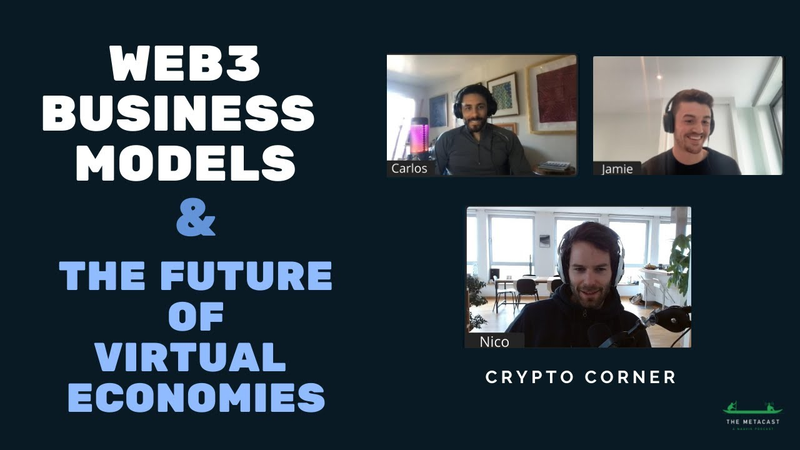
[Music] all right gm the listener and welcome to the metacast crypto corner brought to you by navic i'm your host nick lavreka or nico for short and today i'm joined by two of my colleagues we're bringing the bitcraft crypto chads on air i have carlos pereira and jamie wallace and today we're continuing our discussion on ronin hack so some new advancements there uh giving our thoughts and opinions and basically telling you what happened then we're touching upon web3 gaming business models so uh traditional business models are um you know are what disrupted their new business models that emerge when you combine blockchain with games and so we're gonna be giving our thoughts on those and then finally uh if we have find the time because some of these discussions have tended to be quite long we're gonna go into the future of web3 gaming economies before that who are we so my name is
nico i next to hosting this podcast mainly um work as an investor at bitcraft ventures on the crypto team with the two others on the podcast um carlos what about you hey everyone i'm carlos i'm part of the investments team at bitcraft most specifically focused on the crypto fund i come from a background in traditional finance growth equity and private equity and private credit uh worked at a 40 billion dollar asset manager before deployed a bunch of capital across diversified asset classes started focusing on gaming in 2018 scaled a portfolio of series seed through growth assets then spent a year in a portfolio company that was in both my portfolio and biocraft's portfolio as their head of strategy um and then coming out of that experience i really wanted to go back to be an investor and came to bitcraft initially focused on the creator economy game studios uh platform and tech things basically connected to my previous experience as an investor um quickly fell down the crypto rabbit hole and
have been spending most of my time there since last year that's great and so working with carlos has taught me that i still have a lot to learn about the whole investing spiel um so uh glad to have you on again and then we have jamie hey guys yeah so i've been uh in the in the crypto space since 2017 um really kind of got deep into it about just over a year ago started a research firm called block 49 capital with that with a buddy in the space we use that as kind of like an intro to explore learn about the space document kind of our our journey into the space um then kind of expanded to being kind of like a dj and just exploring the space for for a year kind of you know getting rugged all over the place uh playing with nfts had my own axi guild kind of explored defy everything and then eventually found my home uh at bitcraft so joined bitcraft about six months ago mainly focusing on crypto web 3 investment so it's been awesome getting to work with nico and carlos cool man welcome and um you are the
first one who calls himself a djinn on my podcast which means i'm i think i'm getting the wrong people on my show man uh we need more dj's here because uh they're the ones who truly understand you know what this technology and what it can do to games um cool so sky mavis hack who have you had bags on sky mavis yeah i still had a bunch of uh axes slp and and some ethan stuff for my uh for my when i was running my guild so uh yeah that's uh but yeah but in the end it all turned out fine were you nervous before the the news um not particularly i think um yeah just kind of having that ecosystem ready to whip up the guild eventually but uh no i think it was it wasn't a ton of money you carlos you were safe um i have no bags in it or had no bags in it i've been focused on losing my money elsewhere ah nice and smart good one so what is the news uh so skye mavis recently raised or announced that
they raised 150 million dollars led by binance with participation from andreessen horowitz dialectic and paradigm um and so those newly freshly raised funds together with the sky mavis and the axi balance sheets will be used to reimburse all of the users affected by the hack um yeah like what were your thoughts when you when you heard about that um carlos what did you think um i i thought it was interesting i thought it was to a large extent expected um given the success of axi given the excitement that has been going on recently about um ronin you know ronan went from being a proprietary product to being now a choice of chain or at least a lot of people talking about the idea of building on ronin as it becomes more possible right and so very quickly emerging as a as a viable layer for a lot of projects and so it makes sense that people would want to jump on board to save it i wish i had more perspective to do a comparative analysis between the warm whole hack and and how that was solved
right from the perspective of the investors and the axihack because it seemed like in that case the the money that was funded by the investors was very similar to the funds that were stolen versus axi being like a 650 million dollar hack and they've raised 150 million dollars and i'm still quite ignorant on how exactly everyone's getting paid back and how the structure works um but i'm assuming that that given the quality of the investors around it that if that's the number that they've chosen that there's a plan really um on under colorization and how to address it your thoughts jamie yeah i mean i think it's a strong signal similar to kind of the wormhole thing with jump stepping in i think um all these kind of you know uh great sorry sorry to interrupt you jamie maybe can you still uh quickly touch upon the wormhole thing because i think a lot of our listeners don't know what happened there yeah so basically um a couple months ago uh wormhole got exploited it was like a similar kind of scenario bridge between uh ethan solano someone managed to basically drain all
the all the eth um on solana bring it back to kind of eth main net and sell it so effectively all the ethan and usdc i believe it was on solano was effectively backed by by nothing it was just you know funny money on solana but um uh jump quickly uh quickly you know patched the the bridge and restored all the funds um and you know backed all the all the ethan stuff so it's kind of a similar scenario where ronan got exploited i think i think it just goes a testament to kind of the uh you know the promise of of ronin and kind of the ecosystem acts he's built having kind of those investors step in basically overnight and and supply the capital i think is a strong indicator of just kind of their um support for the ecosystem as a whole and um yeah i think overall um bullish hack i think um so i'm now looking at a bit of the the exact um division of funds so it's a good question that that um carlos touched upon so they raise so they lose 625 million right uh about 600
million if 25 million in usdc they raise 150 million and they raise um and they use that in combination with the balance sheet of as of sky mavis and axi to reimburse the users affected by the hack because um 5 000 56 000 eth that were essentially owned by the axi dao and so the axi dow treasury is a treasury where all of the fees accrue um so there was uh 56 000 eth in there which is a little bit less than 200 million uh us dollars those will remain under collateralized so um just to get to to map this out there was 425 million who was backed by one the freshly raised funds then the sky mavis and the axi balance sheet so these are the users funds and then the axi dow the treasury dial funds will remain under collateralized um
for the like value of 200 million u.s dollars what are your thoughts there what do you think carlos i think when you have products that have so much volatility um as is the case with much of crypto volatility creates peaks and troughs and confidence and i think you're probably going through this drop in confidence now and the question becomes um how long can you sustain it there while basically until you have to to plug the hole one way or another um so to gain the commu the trust of your community back right or to make sure that people look at you as a sound product um and not as something that's a work in progress solution that people are still waiting for the other shoe to drop on or for the solution to come for right so it strikes me as a short-term solution um but but i wouldn't expect i certainly wouldn't hope for the outcome to this of this being something that is left perpetually uncollateralized
i think it's natural that in choosing which side to to be under collateralized um or which hole they couldn't immediately plug that the hole that wasn't plugged was on the axi dao given the importance of backing the consumers or the customers that lost money in the hack first and foremost right it doesn't strike me as a long-term solution um that can go well it doesn't strike me that they can go without a long-term solution because it shouldn't be it shouldn't be under collateralized over the long term i think that when you're trying to build these ecosystems they are a function of trust the same way that fiat ecosystems are much more function of trust than the backing so there is space for you to be under collateralized in certain situations if you have high trust of the community yeah and it seems like the market agrees with you i'm i'm looking at the axi infinity chart and so actually infinity the token is essentially um you know a ownership token a
fractionalized ownership of the treasury of x infinity um and that seems to not have budged anything you know at least not in comparison to the rest of the crypto market because that's not going too hot right now um yeah uh surprising to you jamie um i mean i think i think realistically uh just judging by kind of some of the on-chain uh i did some on-chain slew thing of kind of the of like the the hacker's funds and stuff and you know he's interacted with some kyc exchanges and stuff like that so i know that process takes quite a long time but um you know it does seem like pretty likely that at least some of the funds will be will be recovered in the end so i think kind of the the way they did it to under collateralize the treasury made a lot of sense i mean uh realistically you gotta get the the consumers and the public uh their funds back as quick as possible but something like the treasury realistically they probably weren't going to deploy that um additional capital for the next kind of few years so if it kind of takes you know six to 12 months to get access to those funds
back then they're able to you know it's not a huge deal so um i think it was kind of the right move um i'm not too worried in the long term i think realistically they'll be able to recover some of the funds but we'll see but ultimately um i think that's maybe probably why the market might have not reacted as negatively as you think is is the market probably assumes like those funds realistically probably wouldn't have been touched anyways in kind of the next six to 12 months so they'll kind of be able to to hopefully recover the funds replenished and re-collateralize the the treasury so that that'd be my kind of two cents around that yeah and some what i've seen quite a lot on twitter and on linkedin and especially from people who are more from the traditional gaming space is that they they consider um the blockchain so they realize that the blockchain is not really anonymous um and you can actually trace where funds go and they think that there's no way in which the thieves the hackers can actually wash or you know make sure that they can actually use
these um the funds that they've stolen um is that true is there no way to anonymously you know use those funds jamie you wanna you wanna go into that and perhaps talk a bit about you know tornado cash and other uh solutions like that yeah i mean i think i think now it's pretty tricky just with the amount of people who actually like have their eyes on the chain and the amount of kind of solutions um that people have to be able to like track funds back we saw with uh i think i can't remember the name of the exchange that that got hacked way back in the day but that report that the that the the fed ultimately released i think it was that kind of detailed how they went about tracing um the the tr and just kind of goes to show like how i like the blockchain there's a paper trail so nothing's really hidden and if someone wants to to find it they likely they likely can um obviously there's stuff like tornado cache where basically the way it works is is you would submit a transaction into like a pool and you'd use kind of like a consistent number so something like 100 eth or something and then uh basically
you would wait a certain amount of period before that pool would kind of spit the money out to a fresh wallet so basically ideally the longer you the longer your money's kind of in the pool the basically the harder it is to kind of track when it went out when it went in um so that's kind of been a popular tool but obviously i think uh now i think people are doing a lot of ip tracking around the tornado cache and there's like a ton of other vectors where you're able to kind of like catch people so i think it's getting increasingly harder and harder and you know if someone were to pull off a heist like that you would kind of really need to have it planned and really have to have a strong exit strategy and i think i think you'd struggle to find anywhere you know with 600 million dollars to be able to exit so obviously you can uh you can keep all your riches on chain but eventually realistically how far does that get you um so yeah i think it's uh it's pretty tough now i'd say to be able to to pull off these exploits we've seen kind of the majority of them uh end up getting reimbursed or the hacker just returns the funds because uh you know they have
um they have them trapped yeah let's keep our fingers crossed then um i think the dominant strategy is for for hacking and things like this is to just go from black hat to white hat return the money and pick up the bounty right like even like i don't know how much you could get offered on 600 mil but i assume you could offer 10 of that right and it's like that's 10 clean money that you walk away with no issue right and so um yeah it just seems like trying to actually steal and launder and all that stuff um is uh as a negative ep versus just returning it and picking up a fat bounty yeah i agree um yeah let's see what the hacker does but um i think you know walking away with a free and clean 60 million seems like pretty decent deal um yeah so uh let's see what happens um and in other news in the same um you know discussion um [Music] sky mavis seems to have learned a bit of a lesson in in the previous episode we
discussed and we said that they had nine validator nodes of which five were compromised um and they now are planning to increase their validator node node count to 21 which would mean that it's it's harder to hack um with a few new additions we have delphi our friends there and the moca brands will also become a validator then we have dialectic who participated in the round and dialectic by the way is i've looked it up a swiss like a very modern family office um that is investing strongly in in the digital asset space and then um nunsen who is the you know the the uh the on chain uh data solution and then stable node who uh so who does validator nodes for bitcoin already so they're also a new validator again i guess to be expected right um to be expected um although it seems like less than the um the issue of being nine versus 21 validators it was the fact that five of
them were under their control and um you know they said it was a a social engineering hack right um so it seems like even if if you had those same nine but it was two or three with them or even the same five and and i guess better security around however it was a social engineering thing that happened right um so yeah good more the more decentralized the better right of course following the blockchain trilemma um but it looks like there's also just a simpler um step here which would have been even the same number um have uh have them more distributed yeah i agree um and finally another news origin got live in either today or yesterday or something so the new um new game free to play completely um is live in early access um i mean i haven't tried it i don't think you guys have tried it or seen anything gameplay um first feedback looked okay but um in a few weeks i'll have philip la on who's uh the new game lead at sky mavis and
then i can i can dive into that um so let's uh let's talk about our second topic which is the web 3 gaming business models so essentially um i sat down and you know often i've talked to quite a lot of gaming companies that pitched and i've thought about the new monetization ways that blockchain allows for um and i've made like a little little distinction um so yeah let's go through it and then i'd love to have your take on this if you guys agree so the first way that these new web 3 games will monetize uh first way is through direct sales um this is you know similar as was before um in non blockchain games so first one is through traditional in-app purchases so in these games you'll be able to purchase items these could be on-chain items off-chain items booster packs these kind of things um so that's that's um you know that's one way of direct sales and then the next direct sales revenue model is through nfts um and so these you know these is what we
see through um initial releases of a lot of gaming projects where they sell a bunch of nfts before beforehand um pixelmon comes to mind you know and that's a heap of trash uh burning heap of trash um so that's you know that's the first way that these companies make money next way is uh what we see more and more and it is uh trading fees um and actually there's three types of trading fees that i think we'll see moving forward with these you know blockchain games first one is direct training phase trading fees through the marketplace so that's for example what's happening within uh with the on ronin in within the sky mavis um ecosystem so if you trade axes you pay and i believe it is 4.25 percent um of the sales price gets extracted and goes towards the dxe treasury um so that's the direct trading fees they also have indirect trading fields fees through royalties and so um let's say you want to trade um an nft you don't want to trade it in the marketplace of the game but you want to trade it somewhere else on openc for example usually nfts have a
kind of royalty attached to them um where you still pay a certain percentage fee of the trading cost to the um initial creator of the assets um and then finally and jamie i'd like your thoughts on this as well is um and actually in our discussion that we had yesterday or two days ago um you you brought this to my mind which is um blockchains owning their own um well no sorry gaming companies owning their own blockchains and everything that happens within their ecosystem um they would get you know revenues from um you know every single thing that happens on chain and i think the best example of this uh fitting with our first uh topic that we discussed is ronin right sky mavis decided to launch ronin their own blockchain um and they owned the the token or the coin of that chain which means that in the future for every transaction that happens on the ronin blockchain sky mavis would actually make some money um and i thought because we don't expect um at least i don't expect
every blockchain gaming company to launch their own blockchain but there is a concept called subnets on avalanche which actually provides for this functionality jamie you want to elaborate a bit on that yeah basically at like a high level basically these subnets kind of allow you to stay stay within the standards of the kind of underlying ecosystem obviously have your own security validator set but be able to kind of have that easy um trustless bridge and composability with kind of the regular be able to tap into the liquidity from the main net but also be able to you know have your you know your game token as your kind of validator token so all transactions you know you require that token so adds kind of like like a key sync to the entire ecosystem which i think is important um and also lets you kind of fine-tune parameters and stuff of the chain so depending on kind of what your game needs you're able to kind of uh go for for shorter block times longer block
times whatever we've seen this kind of be the same with with adam uh with cosmos and that ecosystem with kind of you know all these all these kind of sub chains um being popped up and you know we've seen uh defy kingdoms and i think ragnarok as well will be kind of deploying on those subnets so that'll be a kind of interesting case study but i think something to keep an eye on for for games uh as they launched because it could be an interesting uh way to have that kind of control that games want with uh with kind of staying somewhat within that public blockchain uh and and you know adhering to those kind of open standards which leading into like the interoperability and composability which kind of make these games so special yeah i am a few weeks or a few months by now ago we had people from crobata on the podcast that's doing the subnet yeah yeah um and they were very excited about that um a subnet on avalanche where you can you know mess around with crabs um if if that's your thing um i was curious to
see them like what kind of animals they bring up now um and then finally the uh the third way and i think the most innovative way in which i see gaming web 3 gaming companies innovate is going to be through um value accrual of their token so um you know if you design a game in such a way that's through an increase in player base and an increase in engagement the utility and the need for the token and the demand for the token actually increase you can actually build a business on top of a you know increase in in the value of your token where you know over time you can say okay every month maybe we sell a certain supply of our tokens and that will then provide you know enough cash flow um in fiat terms to you know pay the bills um pay salaries etc um but where there's no necessarily fees taken anywhere um obviously this is all you know all of these different business models are um not exclusive like um
what is the term i'm looking for uh cumulative cumulatively exclusive so they they can overlap obviously and i think the most successful blockchain games or the ones with the highest revenue will take a combination of these three um but um it's it's something interesting to think about in my opinion at least because it throws away all of the traditional measures of um you know how much how much cash flow you have how much money is coming in when you're trying to make money on or just try to maximize the value of of your token um carlos with your in traditional financial background what do you think about this um i'm gonna try reorganizing some of your definitions um please do and see if i can if i can run a model of it i think at a first level you're either going to sell assets or services in games today we live in primarily a asset driven digital asset but an asset driven model we have some attempts at services
although those services are generally done outside of the game for example paying a professional to um to carry you on a match or something like that right so there is a services ecosystem and there is an asset ecosystem that asset ecosystem can be paid for with cash um fiat whatever right um and in crypto they're traditionally be or they're more and more being paid with tokens right and so it's the swap of your c20s for your c721s generally speaking or you know if you're out in a non-evm system something else so the fact that so if we if you just to go into the next layer right let's focus on asset sales um when you are selling an asset with a token then that opens another opportunity or another um place to look at revenue right so on the transaction who is processing that transaction and who is enabling the ecosystem through in which those transactions are happening um so that opens up the opportunity for paying a fee to whoever
is operating that ecosystem and paying a fee to asset creators especially to the extent that we're talking about secondary markets and reselling assets right so it's either a primary payment to the creator of the asset or a primary payment to the or like a direct payment to the next holder of the asset plus a secondary royalty to the original creator of the asset to the extent that you're paying those with tokens you create positive buy pressure on the tokens or you reduce cell pressure on the tokens either way right people need to use the tokens to pay for the game or to pay for the asset and to the extent that the games are holding a lot of tokens in their own treasuries their own tokens and their own treasuries you receive investment income or balance sheet accrual from the fact that your tokens are going up in value right and so that leads into the third place that you touched ultimately i think that the model of a good game is to be less a game and more a government meaning that you are enabling an
ecosystem an economical ecosystem and facilitating the velocity of capital through different transactions and different uses for your currency and then taxing those currencies both with explicit fees that relate to your reward for setting up that ecosystem and making sure that you're paying whoever has to get paid and you're also getting paid as an early stage investor in the formulation of the ecosystem because you're the main holder of the currency especially early on before these things are fully decentralized as the main holder of the currency as your currency gains more and more adoption and you have an influx the influx of capital into your system uh creates a creation of token prices and and again right like goes to the balance sheet right so for me it's assets or services then you look at how those asset services are being paid for you're ideally getting them paid for via tokens and then the tokens monetize or the tokens accrue to the balance sheet plus the explicit fees that should be charged in order to enable that economic ecosystem it's probably how i try to
break it down i don't know if that makes sense did you follow that jamie yeah so i think i think i think carlos did a good job touching on kind of the way i see it too i think fundamentally like what the blockchain ultimately allows is for us to like digitally enforce scarcity and ownership which i think has kind of been something you know for the history of the internet for whatever we haven't been able to like you're not able to like enforce you know how scarce something is you're not able to enforce if someone like truly owns something so now that we kind of have those two like primitives it allows us to really form the foundation of like how we would have economies work in the real world but like digitally and then i think you know uh with that with gaming so you have kind of these ecosystems like carlos said it's kind of like it's different from web 2 gaming in the sense that you know it's not like uh you know uh the the game studio kind of extracting from the player it's you know the game studio facilitating transactions between you know different aspects different player types and i think kind of the the fundamental flaw i
think with there's a i guess common misconception of blockchain um gaming is that it's like a super positive some game you know when effectively the way i see kind of traditional game is like um like from a financial perspective not necessarily from like a fun however you want to value that but a relatively kind of negative sum game where you know the players put money in um and they're not really getting anything back um whereas kind of the way i see blockchain gaming is like a slightly negative sum game and that's because kind of the the developers let the players uh take a lot more of the upside and actually enjoy kind of the benefits of the economy so you know rather than you know a player for example a whale who they just want to put money into the game they don't want to take any money out they just want to play the game instead of you know paying money to the dev studio for items resources whatever they might pay it to a player who's you know spent time going through the game and stuff like that and in turn kind of the developer benefits by kind of benefiting almost like a tax like transaction fees on those networks so really the goal of the developer is to
be able to create these um economies that that almost resemble kind of the real world economy where you know people are interacting transacting there's kind of different stakeholders there's people who they want to put money into the system and not necessarily and they want to take like fun out not necessarily like actual dollars and then there's people who might you know they want to put a lot of time in and want to actually like take money out and being able to kind of create a game an ecosystem where both those sides are balanced and obviously kind of the the dev studio is able to um almost act as like the government as carlos puts it and effectively tax it in a way and tax those transactions and i think we always talk about this nico it's like it's a fundamental shift where it might not appear from like a you know from like a an early look like it might be a better business model for the game studios but i think the thing that people often consider is like it's a way better player experience and i think once kind of high quality games that that kind of satisfy the fun aspect of players uh like the fun that players have playing games once these kind of
come into these blockchain games i think players will just realize that it's just a far better experience for them as a player like they're not being extracted as much they're able to create value they're able to like just be like a bigger ownership of the network in the game and i think it'll be really tough for kind of web 2 games to compete just with the web 3 business model because it's so much more player friendly and and that kind of turns into it because like the players own more more of the network they're more incentivized to be part of the network i think there's like a stronger willingness to kind of pay and we've kind of seen this with just like the propensity to spend per user is like a lot higher in blockchain based games and like we always talk about nico it's like because you let everyone kind of have a piece of the pie in these games and networks like the pie just gets way bigger and you know we've seen stuff like axi where only two million dius and you know it got to you know did like a billion dollars in revenue and i think that's a large part of like the power of these these web 3 networks um you know and i think ultimately like as the game quality gets there i think the
players will get there too it's just like it's a far better player experience and just the whole ethos of it is kind of like what i think will be the ultimate driver and web 2 games might be able to compete with with arguably like better business models but the just the player experience like they won't be able to compete with um so that's kind of the way i see it ultimately uh that's awesome and it made me think of something so one of the um comments that i often get from traditional game developers when when we're talking about open economies and allowing people to um you know just use cold hard cash to get an advantage within a game um one example that they often bring up is the diablo 3 auction house the real money auction house where that essentially killed the game and that they had to get out of the game quite fast um and so you know my art so what i think is that um the reason that failed is because the game was not designed with an open economy in mind and you know part of
that game and of the core game loop was about grinding to get better gear and you know if you could immediately buy the better gear then you know the grinding wasn't there and so the the core game loop wasn't there and so um i think that you know i think many games um you know all else being equal will benefit from blockchain integration as you say jamie um you know players that have the choice between one game and the other if they're similar in fun where one in one they actually own and they feel like they have any ownership or any type of ownership within the game um they'll always choose that one over the one where it's you know in traditional web two sense um where everything is still owned by the the game developer or the studio itself um but i also think that um you know what what blockchain technology does it it it allows for you know real value transfer over the internet right and so what i'm trying to say is that i think that some games like diablo 3 actually might not benefit from being fully open
and so i think you know open economies work well when it's designed for an open economy but i can also see some games actually benefiting from remaining uh closed um just by the way the way of their design um that's go ahead gene okay um making successful countries is hard right like i mean how many successful open globalized economic even globalization in a broader sense is a is a trend that's coming under increased pressure openness is difficult to create um you know as you guys know um we tend to to have a skew in our portfolio towards teams that come from gaming um because we think that creating a successful game successful fun loop um is harder than necessarily creating a token right like a lot of what's fun and crazy and awesome about crypto is how easy it is actually to create tokens right um however um we don't simply invest in things
where someone says hey i have a great game that i've been developing for three years and i decided to put a token on and let me slap a token on it because the the consequences of running a design an open economy design and telling your players that they can make money and spend money in in a much more expansive way those are design constraints that have to be factored in to how you design the game right like an openness of economy is a design constraint to the game loop um and so for that reason we tend to demand that teams know both the crypto and the gaming side a lot it's just that it will skew a little bit call it 70 30 probably something like that to the crypto side um so i don't even know if i believe that that most games will benefit from an open economy i think that in a world where these economies are open network effects are going to matter even more the strength of your tokenomics the ability of you using your token to incentivize a more complex labor market that creates
a different different job opportunities in your slice of the metaverse i think all of those things are hard and what we'll likely see is actually a higher fail rate of game studios and of games um in an increase in the power laws that accrue to the best games that make it in crypto right and so um i certainly expect the world forward to be one where the most successful games are the ones that are there that are most rewarding to the players into the community and in a way that is even more concentrated than we have today in web 2 insofar as talking about open open world economies our open economy virtual worlds are concerned great thanks jamie yeah i i i fully agree with carlos there i think ultimately in terms of like that the fun aspect you have to look at these things like like i said earlier like these aren't like insanely positive some you know games or ecosystems like you're not just going to be able to come in extract a bunch of money like ultimately like that money's
gonna have to come from somewhere like where does it come from it comes from other players who want to put value into the game how and take fun out and not necessarily take the financial measures so i think kind of like as we look at games that's one of the most um you know the biggest perspectives uh and and i agree with you i don't think all all these blockchain games are going to be open economies i think that obviously adds like a certain degree of complexity that a lot of games just i just don't think have the depth to be able to handle um and like you know so i think kind of like the mmos and stuff we'll have a much easier time kind of designing like these open economies that kind of interact i also think it'll be important to for game designers to be able to try and separate as uh you know kind of the the game economy from the open economy and be able to kind of like separate those loops and have players that just want to engage with either and kind of not really uh if i just want to play the game the open economy aspect shouldn't like fundamentally interrupt my game process and then with that i kind of think i agree with carlos i just think with the with the financial incentive and alignment that these games
create being able to own your assets i think the switching costs for games are going to be a lot higher and you're going to see a lot of players who are significantly like way more invested in games because in a lot of times you know they're going to own assets they're going to feel like they own the game they can actually there's like there's like this aura about nfts i think that you know just like it just feels a lot different than like you know traditional kind of like in-game assets like you just feel that it's weird to explain to someone who probably uh doesn't know what nfts are but like when you actually like have been able to trade these things and and put them on marketplaces and you kind of like you get that like sense of ownership it's really quite special and i think um like carla said i think for a lot of genres like they might only have a couple games that are kind of you know have have sufficient economies and player depth just because if i'm a player i've invested thousands of dollars or i've like you know earned thousands of dollars of items through playing the game like i'm not i'm just not gonna switch to the new game just like that right i'm like invested in these games whereas i think on like mobile games it's really easy for me to download a game not really like it um and then just quickly switch
to the next one right so i think we will see kind of value and liquidity um kind of aggregate to kind of the top games in the space and i think um because of that we'll see like a lot less i think the dispersion in terms of like i think player liquidity will be a bit more concentrated compared to to web 2 per se um so yeah interesting i think i agree with that um but i can also imagine a future and i think i mean these will coexist um and i think this what i'm going to talk about will definitely exist over time it is you know let's say you're playing one game and you so you have within that game universe you have you know yours your gear your characters all nfts um maybe like a horse and and a lot of fungible tokens resources etc um and then you can you know you're gonna go to another game another game universe you're going to sign it with your wallet and the game is going to say look if you just ditch all of the assets that you've accrued within this other game you just click one button and we give you you know 70 000 of our fungible tokens and you'll be able to do whatever you want and you know on top of that we'll give
you one land plot for free so you can start building your farm you know two completely different types of games but because if we're because we're talking on blockchain everything is open everything is visible um i can definitely see something like that exist where although i agree that through the you know the the emotional bond you create with the assets that are truly yours and something you might have grinded for um but because everything is so open and so easily uh interchangeable and sellable etc um it might just also be easier to start a new game i think um i think someone should propose a concept of a game that's called um vampire attack and uh it's uh it's a middle-aged mmo humans versus vampires and the way that the game boots traps liquidity is just by vampire attacking all the assets and every other game and just uh doing it that way it all if you're building this carlos at bitcraft.pc center [ __ ] yeah send us pictures from vampire attack the mmo
it'll be yeah it'll be interesting actually because you know now with kind of all this blockchain tech and the fact that everything's built on these open standards like you'd be able to actually see you know if you wanted to say you're building a competitor game to let's say uh you know you're building like a competitor mmo game you know you could easily just go and be like okay we're just gonna airdrop you know every person like who has significant assets in this competitor game we're just gonna be able to airdrop them like the starting items they need and then you know they're gonna come into their wallet one day oh what's this you know and then they'll be like oh maybe if you come in burn your other nf burn the energies from this other game or sell you'll we'll buy them from you and we'll issue you tokens it'll be really interesting and i think kind of the meta the meta uh the meta game play around how these games use kind of these open primitives to uh for user acquisition it will be pretty well pretty pretty interesting we see some cool stuff going on in in d5 and nft marketplaces and i think uh eventually i think gaming lags those primitives a bit so i think we'll
eventually see that kind of come in with i wouldn't be surprised this year if there's a a game that ends up air dropping a ton of assets to an existing game so for every axe you own you get a pixel money yeah boom exactly one of the one of the really ugly ones which pretty much yeah oh man it's going to be so interesting i've i've i've made the case um so some people have asked me like you know where do you think is is a big opportunity within this new blockchain gaming space and i just think that's you know on like there's so much data on the chain that i think like you can you can build an insane ua strategy just based on analyzing who like who bought what nft is at what point right are they people that are just there for the mint or are they aping in when things go up um et cetera and i think um yeah if you build a strong um analytics like on-chain analytics engine um and and infrastructure i think um yeah the the insights you can get
from there are going to be insane i feel like the um ua implications of uh web 3 tech are underappreciated by a lot of people i feel like a lot of the expectation of growth in web 3 that people are skeptical of growth like i look the the growth rates that are baked into prices today are like insane and they're certainly off in a lot of cases um but in like on average right across the whole set i would say the difference between what skeptics think the growth rate is and what the growth rate will turn out to be will be off by more than an order of magnitude simply because of a a lack of understanding on the nuances of web3 distribution yeah i agree um all right and then um yeah so the last topic that i want to discuss and and i just i like this back and forth and we touched upon a bunch of things that i didn't plan on touching on um and that's how i like it um is going to be the the future of web 3 gaming
economies uh carlos you already use the words countries or nations when talking about you know the the size of these games um and like i i wonder like i'd like to get your guys's thoughts on you know the magnitude of these things um axia already talks about the axi nation i think uh they're calling it um and so you know right now we have about what is it 200 ish countries um and i think you know each with or many of them which with their own currency um and i think we are quickly moving towards a world where we'll not have 200 countries but we'll have 200 you know traditional physical countries um but also a few thousand digital economies each with their own token their own currency their own planning central planning and this could be decided by people this could be decided by algorithms um do you agree with this view is this something you see as well um
i don't know if the number is thousands because of the power loss point that we touched on earlier but when i think about the um major geopolitical trends that i'm personally focused on over the next call a decade um i think one of them is us versus china versus crypto um and in so far as crypto um is concerned i i really think about the notion of these digital states right and there's a lot of people talking about this like sovereign individual book i mean bellagio's talking about this stuff all the time um i think that the more time that we spend in digital environments technology is improving the quality of those digital environments like even for example being able to enforce scarcity and be able to own things and then vr and ar and all these things you know or even like just better hardware but basically the the the our existence in the virtual world keeps getting better and better um while the existence in a physical world
for a lot of people um keeps getting worse or at best at staying flat right and i think that there's a natural push especially for younger generations that are more comfortable with the concept of living digital lives to be spending more and more time in these worlds as these worlds grow more complex i think that they develop a more robust labor market that allows for a broader range of individuals to be employed in the metaverse and with that i think we start questioning um the difference between our physical states and what they're doing for us in our lives right like what we're paying taxes for and how much of our lives we're living digitally right and that causes friction between digital states or or digital worlds and in physical worlds because we're spending most of our time digitally in these borderless states and still paying taxes in a very geographic way right and and the dichotomy between like where we physically live but like
where we actually mentally live right like where are our friends where are we spending our time where are we spending our money um and so i certainly believe that um in the broader crypto nations theme and i think that the most organic place for those nations to emerge out of are successful games in particular good mmo rpgs i think the closest examples that we have of things like these are games like eve even second life right certainly not for me personally as a consumer but for a lot of people who tried building colleges and made a life building homes and items and all of that like that game for a while there especially had a very robust economy with um a lot of different uh labor roles right um and so um it when we study the the true phenomenon of play to earn gaming right like not not what we started calling it crypto last year but but the fact that people have made money playing games for 10 20 years now and it has tended to emerge out of complex mmos or at least like we
can define complex in different ways but out of deep mmos and i think that the deeper that we allow those mmos to become from the technological standpoint and the more powerful we allow them to become from the economic standpoint with things like crypto attack the more and more those places will aggregate significant not just a significant amount of people but a significant amount of people that are deeply invested in those economies and feel more attached to them than to the physical ones um and so all this to say like yes i am i am a fan of the the games as government's thesis um i think it will accrue to a very small number of of places just given the network effects of governments right like the same way that you know europe unified from a bunch of kingdoms into a handful of countries and generally countries consolidate i think that virtual economies will consolidate and we won't have a thousand of them but i think we'll have a few of them i like how um carlos basically says exactly the same thing i do but then slightly more eloquent and well thought out so um thanks for agreeing with me
jamie what are your thoughts yeah i think just going back to my earlier point like i think that the one thing digital economies have been missing from from like uh for the past kind of like 10 20 30 years has been like like the actual ability to like enforce scarcity and ownership um so i think now that kind of like blockchain allows us kind of those those key primitives allows us to ultimately um have the foundation like layered to be able to actually create economies that are you know pretty much identical to real-world economies in terms of you know being able to exchange goods transfer value and i think with that gaming will be an interesting component of that because like carlos said with these complex deep mmos you will have them get to sizes where you'll have people who exclusively work and live and interact in these mmos and i know i know that sounds pretty grim but it's like just the reality is like um a lot of people like there's a lot of stuff in the real world that just like isn't good people are not happy like people deal with a lot of things
like i think the the cool thing about like the metaverse and everything is like you know you don't get to pick how you like look or or where you're born or kind of like how you grow up or like you know the privilege you're you're given but you know in in the metaverse you're kind of given like infinite possibilities like you know you could be you you could be super tall if you're if you're born super short or you could be super big and strong if you're like weak and flimsy like it allows you so much and as these kind of experiences get more and more real and the tech kind of catches up with with uh you know the real world i think we'll see kind of these interesting like vr and just digital experiences where people are able to um live the lives they want to live but like you know digitally and um i think a lot of people especially as a generation like like mine that grew up in the digital world we grew up like after school hanging out with our friends in minecraft and call of duty versus you know maybe at the park i think it'll resonate with them a lot more and you'll see a lot more people willing to engage and spend the most the most of their
time in these in these worlds um and i think ultimately like you said you'll have these big game worlds kind of effectively emerge as like you know these giant nation states that are like driven by like a rich and diverse economic activity i also think blockchain kind of gives people the coordination tools to be able to like uh you know get together and coordinate and allocate capital and like permissionless and like trustless ways so like i can get together with a group of people or like a community you know we can all like put together we don't put money into a dow it could be run by like a multi-sig of people we trust and like you know or you're able to engage with like smart contracts and stuff where all you have to do is trust the code you don't have to trust counterparties so i see for me like in a more macro perspective i actually see like um in the long term maybe like maybe like on a 50 plus year horizon kind of like the dissolution of nation states into like smaller kind of um i just think like you know i think people will realize that they govern more effective
as like smaller entities um just like similarities are similar and i think kind of um blockchain allows the tools to you know not have to like trust kind of like big governments people are gonna realize that they can coordinate and govern them govern themselves uh in their own ways uh so it'll be pretty interesting to kind of see how that evolves but completely agree on the uh emergence of like kind of these big nation states and like it'll be pretty interesting i i can't imagine uh one day you go to the currency exchange and like one of the currencies is like you know uh eve's like in-game currency or something it'll be pretty uh be pretty interesting to see how that all emerges but um yeah love that and then you know just to just keep within the trend of me spitting out ridiculous things not very well formed and you guys you know explaining my own thoughts or maybe some corrections better explained um i think um so fully agree with you guys i think blockchain enables the emergence of um very deep
and open economies um and so um quite a lot um when i've when i've talked about um you know played earn play and earn the whole concept of earning money while you're playing games um gotten a lot of feedback uh from mostly traditional gaming people saying that you know the moment you start earning you're not having fun so you can't play to earn it doesn't work that way um and so i think um the way i see this evolve in the future is that um one the only place where where you will be earning a significant amount will be very deep economies with um and this is one of my getting becoming one of my favorite terms asymmetric gameplay so there will be different be different gameplay gameplay loops within the same game but these could also be uh different gameplay loops each within their own game within the same um universe if that makes sense right where within one universe with shared resources and assets um you know your
gameplay from one game which could be like a mining you know match three game will be um so the resources gathered there will then be able to be used within uh a pvp medieval combat style game or whatever right and so the case i want to make here is that i believe that the ways or the game loops that you'll be able or players will be able to use to actually make money in will not be fun so you will either be able to make money or you will be able to have fun but not both or there will be a trade-off right the more fun a potentially revenue generating activity becomes the less you will be able to earn and the less fun it becomes the more grindy it is the more you will be able to earn obviously there are some people who you know like stuff that others don't right so there will be edge cases but i think this is in general the trend that we'll see um but would like love to hear your take or you know questions if if i didn't explain myself well um yeah what do you think carlos all right jamie go ahead yeah no i can i
completely agree um i think ultimately like there's aspects of like these mmos that like all of us played and grinded and ultimately like we didn't enjoy to a degree like i remember just spending like hours on a weekend just fishing in runescape or chopping down wood and ultimately it was like you know i grinded that thing because it was it was good to to get that item that i could then go out and have that fun gameplay experience and i think what we'll see is you know there'll be a portion of the of the of the game population um that kind of recognize hey there's people who want all this wood and want all these resources but like you know they don't want to they just want to have fun they don't want to spend the time to to go and acquire them um so i'm just going to go acquire them and then and then sell them and that's going to be the primary primary primary driver of economic activity within these games is kind of you know that imbalance of people who you know they're there to have fun maybe they have got like you know lives in the physical world they've got good jobs stuff they've got money coming in from other areas where they're able to go
into these games you know they hop on after a day of work they're like i don't want to spend eight hours getting the wood to be able to go on this raid with my friends i'm just gonna you know pay 50 bucks get the resources and go in the same way people would go play like 50 bucks for a game of golf or something with their friends right and then you're gonna have this other side of the equation where it's like okay people might be really good at this game or perhaps like job opportunities in their location aren't as aren't as like um available and perhaps this is just a better opportunity and they're gonna be like you know for me this is way better than washing cars for eight hours you know i go in i'm chopping wood i'm in this digital economy i've got a really efficient process my character's leveled up i can do it i can i've got a competitive advantage compared to other players in a way um and you're able to kind of like leverage that and i think ultimately like these mmos like you can look at them as games but effectively they're just like economies and like i said i think i think the common misconception is like there'll be an earning component to every game i still think a lot of games uh
don't have the depth to really facilitate those economies and and you know like i said i think i think those games you know can benefit from blockchain with like the nfts and ownership and and scarcity and stuff like that but i think it's kind of like a shift away from like understanding as a game like you don't necessarily have to have a an earning element to it um and kind of you know being able to to leverage the the primitives of blockchain to kind of like benefit your game style rather than kind of the current meta which is like you know we're building a game of blockchain it has to have an earning component i think there's a lot of other avenues games can explore that that might not as explicitly involve kind of a an earning component to kind of the primary loop of the game and potentially those can effectively become secondary loops which then can then be further incorporated but i think kind of um realistically only a small subset of the games are really going to be able to support these kind of like huge economies and huge kind of like sustainable earning loops so i think once the game the game kind of like shifts away from kind of like
the need for everything to have an earning earning loop um i think will be kind of like a good step in the right direction for blockchain games your thoughts carlos um i think that a lot of how we look at the merit of play to earn right now is informed by the games that are currently gathering the most attention and when i think about the labor loop or the earning loop that exists in these games it's a very simple loop and so it's natural for us to be skeptical of it i think it's fine early on for games to have excessive earning on tasks that probably shouldn't be earned as a way of bootstrapping player liquidity but ideally ultimately like earning is about at you know things that you're delivering value to the game um those things can still be boring activities if they have value um
and i think that they can also be fun activities to the extent right like work like i love my job it's still a job right like there's times that i wish i was on a beach and i'm i'm at work right but like just because something is work doesn't mean that it can't be fun and in truth like these things tend to be a lot more balanced and to the extent that you have skills and and sort of goals you're ideally always trying to find a job that's like the closest to fun and work like having fun and earning as you can and that comes as these experiences get more complex and so right now it feels like in gaming um especially in you know like a big trend that we had in traditional games for the last couple of years um starting when uh andreessen at the big round into roblox whatever it was two two two and a half years ago um was people started talking a lot about ugc right and and today i think a lot of people especially people in traditional games people that are adverse into crypto or to crypto um will still talk a lot about ugc and i
think it's funny how two of the main themes that we have in gaming right now or on one side user generated content and on the other side it's crypto when in fact like that's the perfect example of people that are making money from doing things in games that you could better compensate and coordinate that activity with the token and so when we think about um the potential for complex economies it is for the people that are currently building on roadblocks to instead to build it on an open ecosystem that will monetize them more fairly or or just monetize them more or more liquid whatever it may be right um and so as these games grow more complex you have the opportunity for people to do jobs that we don't judge as much versus right now i feel like a lot of the labor that exists in the um in the play to earn ecosystem is basically the we're at the call center phase right so it's like you can't look at call centers as a division or as a segment of labor and say the telephone technology sucks um right like we have a technology that has a lot of good things with it and it also has a labor or a labor layer that
is like not the funnest for us sitting in in sort of you know big democracies with nice white-collar jobs but like for a lot of people like they left something like way worse for that or even like that is like not the most fun thing but it puts food in the table and so like you have to look at these things i think with a more realistic eye towards like what the real world economy is and acknowledging that there's always like there are always jobs that are not fun um and so yeah i mean i think i think i think there is an opportunity to play and make money without having fun i think that more complex experiences will create the opportunity for you to play or like make money with things that are more fun to you because you feel engaged in their actual challenges and whatever it is and then you can always just like pay or pay to play right or you know just you're playing and you're spending money into the ecosystem but all this to sort of bring back to the theme that i think we've been touching a lot here today which is the deeper these experiences get the
more real world like they get and i think like we have to look at them with the eyes of people that are that are cognizant of the failures of any labor economy which is there are jobs that have to be done that a lot of people don't want to do them and they sort of go towards the people who have the least options and the more options you have the more you can do other jobs and make more money and that's just the nature of capitalistic societies now we can have a disagreement around whether the internet should be a post-scarcity world and whether we should allow those jobs to exist in the internet why shouldn't we just have the developer air drop goal to everyone instead of creating an opportunity for people to mine that gold and i'd say it in in two ways like one um actually i'll just focus on on one argument from a developer's point of view um friction is a very important place of creating social bonding right like friction creates bonding having the miner that has to mine something that gives it to someone like like eve right the people who are mining the asteroids that are giving to the transporters that are going into the ships
then right like everyone is part of this economy and everyone has a role and that friction that the game developer introduces in that ecosystem is what is is where guilds emerge out of right of trying to um to consolidate resources and extract efficiencies out of an inefficient system which translates into uh more longevity in the game it translates into more um to more engagement it translates into people that find a role that works for their level of skill or their time commitment and in sort of build communities around it and so like there is a legitimate role for friction um but also friction creates opportunities for modernization and like all this stuff is actually quite nuanced um but the real world is also very very nuanced and i don't i don't know that we should expect anything different um my whole thesis for this gaming stuff is expect it to be more like the real world not less fully agree these are great conversations guys thank you thank you for your insights and so if you're building something like this you know where to be [ __ ] at bitcraft.cc hook us up um we'll gladly
meet with you and uh here we hear your story hear your building and uh please you know get us excited there's some keywords asymmetric gameplays one um more like the real world not less is what carl carlos likes so there you go you have some some tips there um yeah with that um i really enjoyed this guys carlos jamie thanks for joining and then listener if you enjoyed this as well if i should have these dudes on more often please let me know um i'm hanging out in the navic discord so you can you can ping me there um yeah with that um this was the metacast by navik we hope you enjoyed it and we look forward to speaking to you in the next episode cheers [Music]
you
Summary
Web3 gaming is undergoing a fundamental transformation, shifting from traditional entertainment products toward the creation of complex, player-owned digital economies. By leveraging blockchain primitives such as enforced scarcity, ownership, and transparent transaction ledgers, developers are evolving into economic facilitators. These studios increasingly function like digital nation-states, generating revenue through marketplace trading fees, royalties, and ecosystem-wide value accrual rather than relying solely on conventional in-app purchases. This model aligns incentives between developers and players, fostering environments where capital velocity and treasury appreciation drive long-term sustainability.
The industry is moving away from simplistic play-to-earn mechanics toward sophisticated, labor-based virtual economies that mirror real-world structures. While critics often dismiss repetitive tasks as mere labor, these activities create necessary friction that fosters community, guild formation, and specialized roles. High-quality titles that successfully integrate these deep economic loops are better positioned to retain users, as players are incentivized to treat these platforms as spaces to live, work, and socialize. Furthermore, the inherent transparency of blockchain data allows for aggressive user acquisition strategies, such as targeting competitors' player bases through asset migration incentives.
Despite significant challenges, such as the $625 million Ronin bridge exploit, the sector demonstrates resilience through proactive treasury management and community-focused recovery efforts. The long-term viability of these virtual economies depends on the ability of developers to balance engaging gameplay with nuanced economic design. As thousands of digital economies begin to coexist, power and liquidity are likely to concentrate within the most successful, community-driven titles. Ultimately, the future of the industry lies in creating realistic, depth-oriented ecosystems that prioritize social bonding and functional economic utility over the post-scarcity idealism that characterized early Web3 gaming experiments.