1 free read left. Create a free account for unlimited reading + AI research.
Create free account
Panel: The Evolution of Game Economies: What is the Next Stage in the Progression?
Key insights
7 takeaways- 01Game economies are shifting from speculative play-to-earn models toward sustainable, gameplay-first experiences where blockchain serves as invisible infrastructure rather than a primary marketing hook.
- 02Long-term viability requires balancing economic systems to prevent market dominance by speculative traders while ensuring strict compliance with securities laws.
- 03Developers are adopting free-to-play best practices, such as custodial wallets and seamless credit card integration, to eliminate the friction that previously hindered mainstream adoption.
- 04The next stage of development focuses on integrating blockchain features into mainstream console and mobile app store ecosystems, keeping financial incentives secondary to core entertainment value.
- 05Projects are increasingly avoiding arbitrary tokens in favor of stablecoins or governance structures that function more like equity to ensure economic stability.
- 06The industry is moving toward bi-directional value transfer, prioritizing legitimate asset ownership and trading capabilities over predatory tokenomics.
- 07Successful projects are trending toward user-friendly, centralized experiences that utilize decentralized backends only when they provide clear, tangible utility to the player.
Ask AI about this video
Transcript
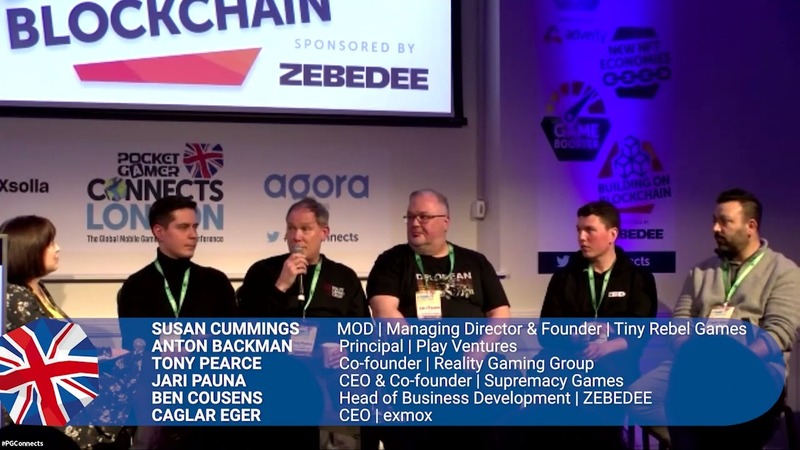
[Music] [Music] right so uh we have a panel talk now so who have we got panelists you can come up to see susan there who's moderating it the panel is entitled the evolution of game economies so um as tends to happen in blockchain game conferences we talk quite a lot about sort of axe infinity and we sort of uh rightly or wrongly portray the whole blockchain game sector as axe infinity and that's had a lot of uh interest and a lot of changes in its economy so i'm sure that will be covered in the in the panel but there are economies and games beyond x infinity so i hope you'll be covering those as well thanks for coming my name is uh susan cummings i'm ceo of tiny rebel games and pedoverse
network and we have an awesome group of british guys as the american woman here um to talk to you and a finish right yeah everyone else is british yeah oh god all right i take that back entirely um to talk to you about player economy and blockchain and uh i'm really excited that we're doing this i think gdc doesn't have any discussions that i can see about blockchain so i'm really excited that um so much of that's going on here at pocketgamer can everyone do like a quick intro like a 60 second 90 seconds sort of who you are hey everyone um i'm anthon i'm from i'm principal at playventures we're in early stage bce been up and running for the past three years mostly investing in free-to-play uh mobile studios a bit on the pc side as well as as well as associated tech and infra in the game industry um i initially joined the firm in 2019 to focus on the first blockchain gaming investments we only did one at the time but now we have a dedicated fund called the play future fund that is fully focused on investing in the studios
and and tech providers within this budding space and um currently i'm running that fund for play ventures and i'm excited to to talk about this topic today awesome tony hi good afternoon i'm tony um i've been in the games industry now for 25 years to go back sagan nintendo playstation 1 mobile gaming facebook gaming and then got into blockchain games back in 2017 started a company called reality gaming group looked at tokenizing in-game items for an augmented reality game we were doing before the word nfts even existed just playing around with blockchain really believed that this would be a game changer for players and since then we built platforms we launched nft games without doing one with doctor who um we're about to announce a generative art drop with a very big brand um we were doing something with worms and team 17 until a
few weeks ago and uh and i'm just so passionate about this whole industry awesome hello everyone i'm jaripan i'm the ceo of supremacy games from finland i've been in games and media for 25 plus years i was once the editor-in-chief of official playstation magazine and pc camera until i saw the light and came to this side for the last six seven years i've been in mobile games and recently working on blockchain games as well and our idea for blockchain is that we're marrying it with well-known ips because we think that's where the business is heading thank you hi i'm ben cousins i i'm head of business development for zebedee we're a company that provides payments infrastructure using bitcoin to video games i've got a background in games development originally and then later in finance and vc hi everyone i'm charlotte i'm the ceo of
xmox it's a hamburg based ua agency and right now we don't do anything directly in in in the crypto space but i used to work quite some time like 10 years at goodgame studios as a well-known game developer based in hamburg and i'm personally in in the crypto space since 2017 and i'm i'm supporting advising a lot of projects that the recent one i'm supporting advising is it's a company based in holland it's cryptopolis so yeah quick intro thanks everyone um so not knowing everyone who's in the audience let's start by talking about what play to earn is and axi and games like that talk to me about what it is and how it works and and um give a quick primer to people in the audience who might not be familiar tony do you want to start sir jerry okay um i wasn't expecting this because i actually haven't played actually infinite that's certainly one of the most famous uh games uh in the world because of such a huge following
uh it's a it's a bit of like a pokemon in cryptocurrency you buy three axes and then you breathe them and then you battle with them and hopefully you earn something from them there are very good cases when people in some of the poorer countries have earned a very good living and in some cases apparently drop their doctoral studies which i do not recommend and uh if well if anyone has anything else to add to that please i think plato and gaming is fundamentally about bi-directional value transfer it's about the fact that money can come out of the game as much as it can go in and i really think it's that simple we hear a lot about platon and ben i know you were in the investment community and anton you are what else are you seeing what other trends out there that aren't necessarily about play to earn what other interesting use cases are you starting to see for blockchain from game developers um so i think it's um
if you look at player and i think there's been a lot of there's too much of this play to earn play to mint play to play and earners i think they all fall under the same umbrella of utilizing utilizing on chain elements in your game economy or basically not having i mean the games are still running on the company's own servers etc and i don't see that being decentralized in the in the near or the medium term uh at least but um but really kind of i think we're still having quite a micro look into what this actually enables currently i mean the first uses the first ways to interact with this is that we have we have nft marketplaces and it is generally more more acceptable to to do trading between players of mss i mean that not that is not inherently a new thing but um maybe the new thing here is that now there's a possibility of for these assets to be on the on the same canvas as all of the other assets as well and they're more not interoperable in a sense that
hopefully bringing i think we all agree from in the game industry that it's it's it's it's a bit of a meme when when people say that i will be bringing this sword from game one to game two i mean someone has to to to render them the three 3d model for the for the other game as well but um maybe the patreon picture i'm trying to paint here is is sort of what happens when game econ when we build game economies in a way that they're built under the same canvases all of the other financial products we're using as consumers across the board so maybe the wild picture i'm painting here over the next next five years is that if we have a health a typically a typical game the healthy economy healthy player base good retention numbers people spend money on it people take money in and out from the game and let's say actually would become a mass market game and a portfolio of axes would be de facto very liquid investment for you also also also as an individual
um i don't think it's impossible that these people can for example utilize a lending protocol built on on ethereum and actually deposit those game assets and take out a loan take out a mortgage anything else and i think that's where we kind of kind of with the step function improvement in unlocking the value that is being created in games is going to happen tony what do you think about this and interoperability generally in games well so it's all about getting the players invested into the game i mean this is so different that the whole economy on blockchain games and nfts is so different to free to play or any traditional game and i think that's the the learning curve and the difficulty and the education that i think developers need to go through before they just go oh my god it's killing the world don't do it you know it's when you actually start to play these games and you enjoy the mechanics and get through the friction which the the guy before showed a fantastic slide of that friction and
make it easier once you're in and you're invested and you're inside that community it's such fun and and the fact that you're in theory earning money to to invest time and play is the way this whole market is going to go but let's let's talk about that gamers hate it right we've seen ubisoft take a complete u-turn and they don't no gamers the press and certain game developers and certain haters hate it it's it's back to education it's back to understanding that the biggest negativity that comes out from the press is either it's killing the planet well it's not you know nfts aren't bitcoins nfts 99 of them now are minted on a side chain they use less energy than a visa transaction you know they are not killing the planet and and people need to start stop saying that you know it's just so irritating and the press that came out
from you know team 17 was i mean i've never seen anything like it and 99 of the comments were completely wrong and and and misinformed and just yeah i mean just there's a big problem here kagler what do you think in terms of how we how we get the gaming audience or even or is it the audience we want yet are we trying to jump in too quickly to get to hardcore this is exactly the question um are these people who are joining a play to earn game are these these people are gamers or they just come to earn money so i think this is the first question we have to answer so and right now the most of the people there are traders you know they are in this space they did a lot of icos etc and that's why they are the first ones who are minting the projects and then willing to make money out of it and then some of these guys they even don't mind if there's a game coming out or not and then of course the next thing is like
okay let's say the game is out on the ethereum chain right i mean the gas fees are so high how are you going to balance it then it's going to be on chain and off chain which part is on chain which part is off chain to make it at the end a blockchain game if you do everything on chain the gas fees are going to be so high if you know the choosing blockchain um project the chain price is high like the one from ethereum then it's again not affordable well then don't use ethereum you know go to a polygon or go to solana or do it on a side chain yeah of course this is this is where people are looking at at the moment polygon like you said it's quite cheap and it makes sense but again how deep are the pockets of these guys to find the project you know the guys who are owning a polygon so it's like it's a it's a it's there are some questions that need to be answered until we can say where this will go and and beside that i mean friends of mine they had a quite interesting project and it really went well but the problem
was when they balanced the game so they didn't consider giving out less power to the user so the some of the users became such whales they own so much of the tokens so that they were telling them what to do in the game if not we will crush the price we'll kill the game so it's a really hard to um you know to balance such a game i heard the other day that axi is going to go free to play or allow people to to get in for frida um because of that that high threshold actually was quite funny on the axis so you need three characters to start playing axi and those characters are expensive now because their token went up they're about 200 each you need three of them so that's 600 just to start playing so there's now companies that are renting axes out so you literally buy them for a tenner and you pay i mean this is interesting sorry but this is exactly what i mean people are there to earn money with this so they are not there to play the game and
enjoy the game no i look i get i totally get that i mean axe is very heavy on the play to earn um not necessarily on the gameplay but there are some incredible games coming through and i think people learn right so people have you know you have when you're coming into a brand new market and you're inventing something new there's always going to be difficulty and and you learn from that and you build better and and i think in the next 12 months you're going to see some really good gameplay that's well balanced and that and balancing is an issue and and token economics is incredibly difficult and you need to you need to have mathematicians to work some of this stuff out but there are companies that have that and and if they get it right it's great fun well let's talk about free to play though back in the day which all of us were in the industry back then back in the day last year um and i'm sure we all remember back then how much everyone hated free-to-play i remember the first gdc where candy crush showed up and it was like all the old timers were like it's the end of our industry like the candy crush people and
and they've taken over and um and so it kind of feels a little bit reminiscent of that what can we learn from how free to play ultimately got adopted by the masses in terms of what content you saw early on versus what content you saw later on ben i think i think the main thing is that frida flay found a business model that worked and then it could scale i think developers need to ask themselves are they are they gamifying cryptography or are they building a game and those are very different things and if your whole gamification is to try and solve the friction process of getting onto a crypto rail you're not really building a game you're focused on building a market and building a market is a very different thing i don't think all games developers want to do that i believe that um why games players are reacting so negatively towards nfts is because a lot of it is uh quite manifestly and shamelessly a cash grab that's not to paint everything all with one brush but some of it quite clearly is and it also borders on selling unlicensed securities to
teenagers effectively uh and i did securities law so i i do know when something is a security when something isn't um i think what games developers need to think about is take your game it can be an existing game if it's well balanced great and think about where the value transfer needs to come in and does that value transfer need to be inherent to the game itself i does the game need to be decentralized i built on a blockchain whether or not that blockchain is decentralized subject to debate or do they just want to have payments flowing through the game i really think the keep it simple stupid principle is something that a lot more games developers should think about like you jerry what do you think uh i have to say that i totally agree with ben uh on on those things uh i think we are on the verge of like a second wave of crypto games where the major players are gonna to be experienced game developers and we will see much better games than previously and
also about the hate from some of the players like pc players i think they might feel themselves as a little bit of threatened because i see comments like i i really don't want our games to be changed into crypto well no no one's doing this so i i believe that there's pc and console gaming and mobile gaming and a third thing which is crypto gaming or nft gaming and they have somewhat separate audiences but some people will play all of them like i do do you think that it's in going back to my original question is it an uphill battle that the game industry isn't ready for that we're trying to hit hit the hardcore too quickly i don't think it's a it's going to be a battle i'm i mean this uh this has already gone out i guess i mean to say in free to play it took a long time to get to call of duty on mobile we started with candy crush then we got to mid core and eventually we got to call of duty yeah i think um when we talk about free to play and as you said like candy crush it
took quite some time to go to call of duty i mean the main thing is like all these um casual games what they're very easy to enter and easy to play with the tutorials explaining everything that path the way to games like call of duty so people who were non-gamers you know they were gamers because it was so easy to become a gamer you just open your app store you download the game there you go now you're a gamer but if you want to play like a play to earn game on the blockchain good luck with it you have to watch like i don't know several youtube tutorials try error you need to have you know polygon um coins or whatever ethereum to just enter just to try out the game and then you have to buy the xe or whatever so you have to mint so it's a that needs this barrier needs to be gone until we can say that this is something going to become very big at the moment it's a it's a game for the community who
are already in the blockchain space i would say but this is also why i think that free-to-play developers haven't actually have an inherent advantage here uh because they are used to you know optimizing for retention optimizing for conversion getting those things in place and actually have a player at some point so vested into the game that they actually want to start spending spending on the game and i think people have been a bit too hesitant in thinking that okay there needs to be an upfront purchase if if i will make a blockchain game it can start out it's a free-to-play game but what if we would instead again utilize the best practices from free to play a very similar onboarding experience starting to to play with the game and the assets and we might look at the player minting the assets that they earn from the game as a new kind of a conversion event and that's how we get invested into the play during part of those games but i think that hybrid model will become a lot more common this year and if it's if there's going to be a way to bring more mainstream use in the market i think it's going to be through that kind of
education so mainly through mainly to the games being super accessible but obviously then also education about for education towards bested players to actually make that jump and convert themselves to nfd owners or or token holders now with that there's also the jump that developers have to make from being game developers to being sort of crypto literate and to really thinking about how how they're going to mint how they're going to handle player wallets what blockchain they're going to use how do we begin to make it an easier jump for developers to go that direction as opposed to crypto developers who are trying to learn how to make games like what's the key to making it less friction and what sorts of tools and technologies especially developers here have you seen that that you've liked and that have kind of sort of smoothing the way tony i'm not a developer we've always been um focused on the user and and therefore our developers are trying to make stuff that
is super easy for them to do so i'm going to give you an example so the doctor who trading card game that we've got coming out it's like hearthstone or magic the gathering we don't even mention the word nft on the website we don't even mention blockchain we say come onto the website buy these cards and you own them and guess what you can trade them and you can buy these cards with a credit card and with paypal and if you've got crypto you can click on this and buy with crypto it's it the so the developers behind the scenes because it's on a side chain actually don't need that much blockchain experience we are we're hybrid so it's not a true web 3 blockchain game but that doesn't matter you can still you can do everything on the side chain it's owned it goes in your when you sign up you put in your email address and your your name and we create you an ethereum wallet without you even knowing that's that's now your account you buy the entities with a credit card they go into your account if you want to take them to open c or take them to an external wallet that's the point where you need from the
user's point of view maybe some crypto knowledge because you have a drop down that says do you want to use binance smart chain ethereum mainnet polygon solana you choose the chain depending on the gas fees and go withdraw and off it goes to an external wallet it's super easy and that's what we want to do and and and it didn't take huge amount of blockchain skill to do that i think jerry sorry sorry from a developer point of view i think the new thing for us would be to thinking about the tokenomics and the whole economy we have similar problems like for example central banks might have there an inflation uh in the game and what happens if if someone amasses a huge fortune in the middle ages the king just went there and killed them all but we can't do that for the players and and uh also
that kind of things uh that we haven't actually experienced in mobile games for us are you trying to um skill up in-house at that with people who come from games or are you trying to hire people who've actually created player economies actually blockchain i guess actually both it's very hot there aren't many of them out there i think games developers in reality won't really need to interact with blockchains when they work at scale it's like plumbing for the internet it's infrastructure and if you look at like public key cryptography which is what underpins most uh blockchains that's existed since the early 90s if not before and it never went mainstream why because it's a total pain to use no one wants to do it so in reality i believe most services will be custodial games developers will that means that someone else is looking after the assets for on behalf of the developer and i think this is critical to understand because in these things have financial value and if you're custodying something of value on behalf of a gamer you're like a bank you need to be regulated there are licenses associated with that i don't think games
developers want to become you know registered payment services providers i believe they will lean on custodians so that's all a bit of a shill for zebedee apologies but i i really do think that games developers don't want to do that and they won't touch the blockchain and maybe there's also one other thing if the game is on blockchain on chain the whole game every time you make an update you have to tell the users to swap to a new wallet you know so it's also like so you already almost need a complete complete game so it's not in free to play you can iterate you can change things balance add new content constantly because every time you do it then they have to you know it's a hustle on the side of the players correct me if i'm wrong so how do we encourage community in an industry built around sort of speculation and selling how do we how do we get people to stick around and become a vibrant community like we've traditionally had in video games when part of the business is built around secondary sales and reselling
your stuff wants to take that answer i'm gonna throw a guess here but um how i would look at it is is um obviously look at the core kind of the core cohort of users that you have i think if you want to create anything sustainable that experience has to be tailored to those people the speculators may come and go a bit depending on on how your how your token is doing on crypto twitter and how much is being it's being talked about but um but there again i think the ones that will find sustainable communities and not discords filled with bots and and endless copies of telegram groups when when there's a new token sale up up and coming uh is that you can actually attract the players to the discord most of these are from the aforementioned category i would say currently when i've been taking a closer look at the amount of members versus the activity but then again i think that will normalize and it's i mean it's back to
first principles from that perspective anyone else haven't done no i think just trust fun and entertainment that's games that's what games are when there's a financial component you need to you need the players trust so abuse of that trust is not going to build a community if uh if what you're marketing to your users is just give us your money that's that's not fun no one wants that that's that's not entertainment you're asking you're asking that for them to actually transact with you so build something fun and entertaining and then the value will come as all the community so two sides to blockchain right owning your stuff never having to rent your stuff again um super interesting and then there's the tokenomics how important do you think it is to figure out for a game developer tokenomics early on or is it wiser to wait to build a community first how do you feel about sort of what's been going on in terms of these early tokenomics plays where
they're launching a token before they have any content yeah i would say that the community properly expects that you have a pretty good idea of the tokenomics or what why would they compare in the first place it's very important that you have a roadmap the the big difference between blockchain gamers and traditional gamers is that the blockchain gamers are a very loud community within the discord channels that you run for those games and trust is so important you're absolutely right if you if you if something goes wrong or there isn't a road map or you you divert you can kill that community overnight everyone will just leave and and that's what i found really fascinating about the difference between traditional games and and blockchain games is is it's the passion that comes with some of these but you do need to
you know you need to show when it comes to token economics or just having a token at the beginning it's for me it's not really about is the token going to rise i mean there will be speculators there will be people that will look at that and maybe it's it's just a bet on the token it's about the journey and and if it's fun and there's liquidity and people are using that token within the game and there's a roadmap of stuff going on that will continue then it will it will go up in its own accord what do you think ends on how important is tokenomics early on in the life of a blockchain game it is early but i would still kind of keep stick to the free-to-play mindset of iterating and and changing if needed um i don't think it's i don't think it's an either or not i don't think it's uh either talk and talk and design first or game first i think it's uh obviously it should be symbiotic i guess it should make the token design should make sense for the game and the the game should make sense for the uh for the token design if i would have to guess uh which
one if we look at them like two two different categories if i would have to guess which one's gonna get commoditized faster is it the ability uh and the talent to create fun and engaging core loops uh and and metagames for a game or is it kind of creating a cookie cutter token design my guess would be that the latter will be commoditized first uh and uh but then again we don't know but again trying to just emphasize that i think here again is from a first principle a principles approach that the game needs to be fun uh it doesn't it's irrelevant to think that it's the game fun on its own without the token design because the token design is inherent part of that game as well but as a package it needs to be so yes it is important but but again it has to make sense with the game it cannot just only make sense of its own i mean you can probably attract a lot of crypto only investors they tend to just make sure that the may or the token design makes sense but um
if we're looking to build sustainable games and sustainable game economies they go hand in hand what do you think ben especially going back to your securities background and the sort of risks of a game developer launching tokens i'd ask a question the other way around uh if you can do it with a stablecoin why wouldn't you are we rushing into launching tokens when there are other options yeah yeah and i've i've yet to hear a good answer for that beyond number go up so let's talk about dows because that's gotten very popular uh what role do you think dao is playing in in game communities within blockchain and how relevant is it to game developers to be looking at how to well first what's a dao somebody and how do we use that to encourage sort of community within games who wants to explain taos and song i'll i'll i'll i'll give him my take because i have a very strong opinion on this um but um so everybody's heard decentralized autonomous organization it doesn't mean much but um
at the end of the day i i think they're just the next evolution of a typical limited company or any other kind of typical corporate structure a limited companies at the end of the day just i'm getting a bit philosophical here but but a limited company at the end of the day is also just a set of contracts it's a shareholders agreement between the shareholders it's employment agreements with your with their employees and just partnership agreements with their clients it's essentially only a construct of agreements now a dao is also a construct of smart contracts if i have if i put if i have a certain if i make a certain input to that set of smart contracts i get a certain reward based on the rules of those contracts and essentially the same thing i would view daos as let's say if i have a llc here in i don't know what the typical limited company structure in england is but it's let's say it's it's registered in the register of england and wales but a dao how i would look at that it's an internet native company that is registered in ethereum which is a jurisdiction of its own but it's untouched by sort of physical
jurisdictions but again it's a way for it's a new way for people to coordinate mainly around economic or activity that has an economic component how i would look at it but essentially we're looking at the next phase of what companies are going to look like and how relevant do you guys think that is for game developers to be looking at in terms of where they're going with their communities and decentralization well if i continue i think it's a way to let's say we put if we put our game economy on chain and uh we introduce a governance token to govern that set of smart contracts uh then again that that's the same thing as when we're talking about treasuries for these games they're essentially dows that if decided by the smart contracts and the game developer they get a small fee of the revenue that is being generated by the game or the secondary market activity and then it's a way for again we're coming back to to my comparison to companies but there again and i agree with with ben on the point that that sort of i don't
think you should be doing arbitrary tokens to act as medium of exchange in your game because it just adds unnecessary friction and it's it's more of a number go up play uh whereas um why wouldn't you just use a stable coin i do think that well-designed tokens and if we look at the many of the decentralized finance protocols and ethereum and how those tokens are starting to take shape is that they act more as shares in those protocols you have and but now we go to the risky waters that hey if it walks like a duck if it talks like a duck it's probably a duck and the same the same goes for securities as well but but going back to games and running on chain treasuries and having a treasury token to those is more about again giving giving voting power to what what to be doing with those now in the beginning i don't think there's a lot of stuff these dows can be enforcing on on chain so they're very dependent on for example if you have players voting for what the next live event in your game is you're still reliant on that game developer who initially launched that treasury to actually sort of execute that so we're a
long way still from actual on-chain governance within games but all in all it's it should be a way for a more tangible way for players to interact with with the game that they enjoy tony yary have you guys looked at that for your communities at all no i mean have you been looking at it at all as a company is that something of interest um yes i mean i i think dow's are fantastic i mean it's taki it's what it's taking centralized to decentralized you know it's not having a shareholder it's perfectly put you know having your users as shareholders yeah well it but it's a collection of people agreeing on something you know there's not one person going you're gonna get this you know it's it's the it's the community all agree so no i think it's a fantastic way the risk is can you know can we manage by community and you know most of the dows are saying it's hard to get more than five percent of people to vote um so it certainly feels there's a real challenge in taking that from you know the idealism something where
things function this is again something where i think we're again going to make a full full u-turn again or kind of a full 360 is that again now we've gone into proof-of-stake models where it's intended that if you're a token holder you're going to participate in voting etc but for most people just don't care and some of these layer ones or layer twos have already introduced delegated proof of stake where similar to a democracy you give your voting rights to someone else who is more active in that system so again we're just taking a full turn with with a lot of objection with terms but we're just mimicking previous activity in a much more efficient way on the long term so let's switch here and talk a bit about apple and the consoles and you know there are a lot of these games are on the web like actually you know partly because no one's quite sure how apple's gonna react to this stuff yet and um sony i think has one game in development that they've announced um i haven't seen anything from nintendo or microsoft yet what are thoughts on what it's going to take to get more of these platforms as viable
places for blockchain games more users for apps outside of platforms uh and become big enough for them to ignore you i'm gonna let someone else talk as well because otherwise you can get these games on the app store it's about what your mechanics are so all every game on our platform is available in the app store apple problem with uh bitcoin because it's regulated with us because we're regulated like that's that's part of it the one of the questions they have and we speak to them is that the concerns are around like who's buying these and who are you selling to is this kids and you know you need to have answers to those questions you can't just wave it away and i think that becomes even more important with things like governance tokens where you know these these are companies and uh the sec just fined block fi uh yesterday 100 million dollars for issuing securities without a license with their lending product and i think games developers need to think about this as they're launching their products can you really handle a 50 million dollar fine from the sec even if you had the best intentions like i don't
think that's ground that developers want to walk into so just have a conversation with the app store the guidelines are pretty clear and work within the framework and you can release on these on these platforms you looked at the consoles as well or just uh just apple our technology will work with consoles but we're not gonna uh rub microsoft or sony the wrong way we'll we'll come to that when we're at the right scale do you think it's gonna take um you know publishers we talked about this earlier are very timid and pulling back every time they announce it just seems to be another step back um do you think that the industry sort of at large needs to have more of a position on this and take more of a sort of a direct role in how we think about these things and talking to apple and talking to console companies what are your thoughts on how is an industry we can move forward it's going to be the gamers you know it's going to be those gamers wanting to play a game where they own the assets why go here and lose spend all my money and the game goes bust and i've lost everything well i can go here and spend money take the
stuff out sell it trade it i'm gonna go here and it will be the gamers that that will start to make the game's developers and publishers having have to move should we take some questions anyone should we open it up hello hello uh thanks this was really insightful chat excuse me appreciate the conversation i kind of want to come back to something that was talked about um about halfway through where you were talking about kind of custodial and non-custodial and this idea of i guess more centralization and the end result of a lot of that is that we also get like marketplace fracturization and i think for a lot of people the idea of nfts has a sense of ubiquity to it and the more we go down to kind of centralization providers such as venli and forte and that kind of
thing the more fractured that economy becomes and actually the idea of what it means to own an nft is less ubiquitous so i'm kind of curious as to how you see those philosophies playing odds with each other and where you think the future might be in the next few years yeah my favorite expression at the moment is i'm web 3 until i'm not and i'm seeing a lot about that out there from people who are supposedly decentralized so um yeah let's let's let's talk about that um if you have a particular person but who who would like to address i mean one yeah one comment i'd make is i think that like privacy on the internet the truth is is that a lot of users just don't care and you've got to decide where decentralization is important uh i don't think if you're running a company that you need to be too concerned about decentralization i think if you're very ideologically aligned with that then you should go pursue it and free open source software exists to get hold of it um but most you know this audience and most of us are just building games and those you know don't necessarily need to be a completely 100 measurably decentralized
i mean ultimately you're a company trying to make money and your users are just trying to have fun playing games but yeah i guess the internet was meant to be kind of decentralized and email people were meant to run their own email servers but in order to reduce the friction we ended up with isps and gmail do you think there is a danger of the same thing having to the so-called decentralized blockchain gaming or like does it matter like how decentralized do these things need to be but maybe you already answered that with the with the previous well if if um everything happens according to ben's wishes we'll be all doing our bitcoin transactions through zebedee but bitcoin itself will still be decentralized that's the critical piece i guess just to expand on that a little
bit not quite the same question but what about interoperability um because lots of people are building on lots of different blockchains and their new ones all the time um how important is it that we think about bringing things between blockchains you know be bridging or otherwise um how important do you think that is oh sorry i think it's important to unlock the full potential that as i said all products we're going to use are more or less going to be on the same canvas hopefully or for everything that it makes sense uh and um in an ideal world it reduces friction when moving from product to product cool i think we've overrun sorry about that thanks everybody i hope that was insightful [Music]
[Music] you
Summary
Game economies are currently undergoing a critical transition, moving away from the volatile, speculative play-to-earn models that defined early blockchain gaming toward a more sustainable framework centered on high-quality, gameplay-first experiences. This evolution prioritizes the integration of blockchain technology as invisible infrastructure rather than a primary marketing hook. By adopting established free-to-play best practices—such as intuitive onboarding, custodial wallets, and seamless credit card integration—developers are working to reduce the friction that has historically alienated mainstream audiences and hindered long-term player retention.
The industry is shifting toward a model of bi-directional value transfer, where legitimate asset ownership and trading capabilities enhance the player experience without relying on predatory tokenomics. To achieve this, developers are increasingly cautioned against launching arbitrary tokens, favoring instead stablecoins or governance structures that function more like equity. While decentralized autonomous organizations offer a theoretical framework for community-led management, practical implementation remains in its infancy, with most successful projects trending toward user-friendly, centralized experiences that leverage decentralized backends only where they provide clear, tangible utility to the user.
Long-term viability in this sector depends on balancing economic systems to prevent market dominance by speculative traders and ensuring regulatory compliance, particularly regarding securities laws. As the industry matures, the focus is narrowing on building trust and community engagement, drawing parallels to the early resistance faced by the free-to-play model. Ultimately, the next stage of game economies will be defined by the ability to integrate blockchain features into mainstream platforms like consoles and mobile app stores, ensuring that financial incentives remain secondary to the core objective of delivering engaging, accessible, and sustainable digital entertainment.