Mobile reports and market data
Documents
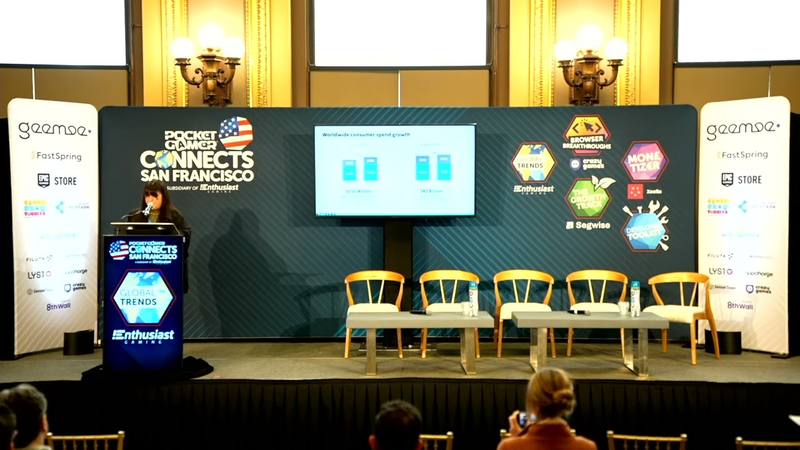
Session: State Of Gaming - Alyssa Paramo, Sensor Tower
The global mobile gaming market experienced a return to growth in 2024 following a period of contraction in 2022 and 2023.
- The mobile gaming market is increasingly top-heavy, with revenue growth driven by evergreen titles over five years old—such as Candy Crush, which saw its largest year ever—making it significantly harder for new entrants to gain market share.
- While total gaming downloads declined by approximately 6.6% year-over-year on iOS and Google Play, overall in-app purchase revenue grew, indicating that publishers are successfully focusing on better monetizing existing user bases through live ops.
- Hybrid-casual games emerged as a high-growth segment, recording a 37% increase in revenue, even though they still represent a small portion of the total market at 3% to 4% share.
AppLovin Max Mediation: Top Tips and Best Practices
AppLovin Max functions as a critical mediation platform designed to maximize effective cost per mille (eCPM) through extensive network reach and integrated user acquisition tools.
- For emerging studios, maximize performance by configuring three to four primary networks—specifically Google, Meta, and Unity—with only one ad unit per format to ensure clear tracking.
- Publishers must integrate network APIs directly into the AppLovin Max dashboard to enable real-time discrepancy tracking between reported revenue and actual payouts.
- Maintain an accurate app-ads.txt file, increasing update frequency from quarterly to bi-weekly as revenue scales to ensure full demand partner participation.
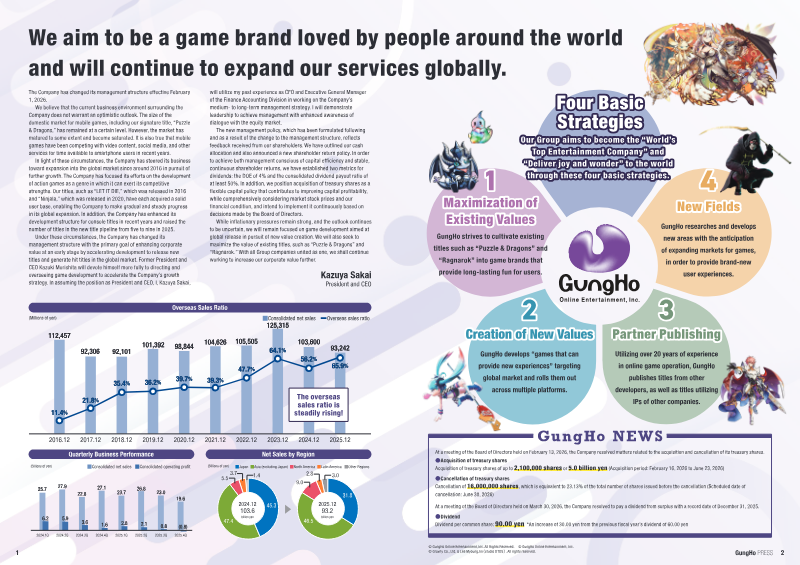


GungHo Business Report: Vol. 43
The GungHo Business Report Vol. 43 outlines the company's strategic shift towards global expansion and enhanced shareholder returns amidst a maturing domestic mobile game market.
- GungHo is pivoting from a saturated domestic mobile market toward global expansion and console development, increasing its active console pipeline from five to nine titles as of 2025.
- The company has adopted a new capital allocation policy effective February 2026, targeting a 4% dividend on equity (DOE) and a minimum 50% consolidated payout ratio.
- Fiscal year 2025 financial results showed consolidated net sales of 93.2 billion yen and an operating profit of 5.1 billion yen, supported by a strong capital-to-asset ratio of 71.9%.
The Renaissance Is Back — Here's What Game Devs Have to Say About It
The mobile gaming industry is transitioning from a period of stagnation into a creative renaissance characterized by a shift toward experimentation, niche audience targeting, and technological innovation.
- The mobile games industry is shifting from a period of 'doom and gloom' toward a creative renaissance characterized by increased experimentation and innovation among developers.
- Metaplay surveyed 150 Unity developers and C-level executives, finding that new technologies and tools are enabling game concepts that were previously unfeasible or lacked an accessible audience.
- Developers are increasingly prioritizing niche audiences over mainstream popularity, utilizing cross-platform gameplay to aggregate smaller, dedicated player bases into viable, large-scale communities.

Growing in a Mature Market with Josh Wilson, CEO of SciPlay
The mobile gaming industry currently faces a period of stagnation, necessitating a strategic shift from aggressive user acquisition toward operational efficiency and long-term retention.
- Developers should establish proprietary web shops to bypass platform fees, increase profit margins, and regain control over customer relationships in a mature market.
- The period between late November and mid-February, known as Q5, is a critical window for growth due to higher consumer leisure time and lower user acquisition costs.
- Sustainable profitability requires shifting from aggressive, high-churn monetization to building interconnected game networks that prioritize long-term player retention and cross-pollination.

Screwdom 3D Is PRINTING MONEY! 💸 Vietnam’s Game Devs Just Raised the Bar
Screwdom 3D represents a significant evolution in the hybrid-casual gaming landscape, demonstrating how Vietnamese developers are successfully scaling sophisticated puzzle titles.
- Screwdom 3D is a hybrid-casual title generating approximately $3.6 million in monthly revenue, split roughly 40% from in-app purchases (IAP) and 60% from ad revenue.
- The game utilizes a physics-based core mechanic where players must manipulate and 'wiggle' 3D objects to clear levels, drawing design inspiration from titles like Screw Jam and Pinout Master.
- Despite being in a scaling phase with limited penetration in the US market, the game is achieving significant traction in Tier 2, 3, and 4 countries, with daily IAP revenue reaching approximately $200,000.

Week in Mobile Games E47 - GDC 2025 final thoughts
GDC 2025 served as a barometer for a gaming industry currently navigating a period of significant transition and structural contraction.
- The gaming industry is shifting away from high-risk, ballooning AAA budgets toward sustainable 'triple-I' projects to mitigate the market dominance of established 'forever games'.
- GDC 2025 exhibited a reduced physical footprint with fewer corporate booths and sparser show floors, reflecting ongoing industry-wide layoffs and constrained travel budgets.
- Industry sentiment has moved toward cautious optimism, with publishers beginning to resume project investments while maintaining a skeptical approach to venture capital funding.

DC Dark Legion - Lets Play
DC Dark Legion, a mobile 4X strategy title developed by FunPlus, represents a high-stakes attempt to integrate the DC Universe intellectual property into a genre currently dominated by titles like State of Survival and those from competitors like Century Games.
- FunPlus has seen its mobile strategy market share drop from a 15% peak in 2020–2021 to approximately 5% as competitors successfully pivoted to more accessible, casual-friendly monetization models.
- DC Dark Legion is experiencing a rapid post-launch revenue decline, mirroring the performance trajectory of other recent strategy titles like Age of Empires.
- The game suffers from a disjointed design that fails to integrate its Fallout Shelter-style base building, squad-based RPG mechanics, and 4X exploration into a cohesive experience.
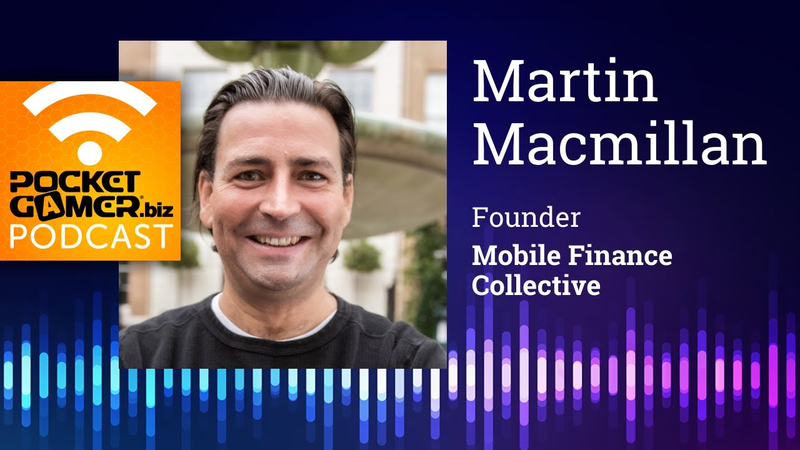
Inside the Mobile Finance Collective
The Mobile Finance Collective (MFC) serves as a specialized community and support network for finance professionals—including CFOs, VPs of Finance, and COOs—operating within the mobile gaming and app industry.
- The Mobile Finance Collective (MFC) provides a vetted peer-support network for mobile gaming finance executives, including CFOs and COOs, to mitigate the professional isolation common in the sector.
- The collective focuses on standardizing industry-wide financial metrics, specifically addressing inconsistencies in attribution windows and install definitions across different organizations.
- Members collaborate on complex operational challenges such as resolving cross-departmental data discrepancies, managing remote HR structures, and navigating international regulatory compliance.

Netflix games strategy evokes the spirit of Nintendo Wii
Netflix is actively refining its gaming strategy to prioritize accessibility and broad audience engagement, drawing parallels to the philosophy of the Nintendo Wii.
- Netflix is targeting a broad, casual audience by prioritizing accessibility and frictionless play, mirroring the strategy used by the Nintendo Wii.
- The company is leveraging its existing user base of approximately 700 million people to bypass traditional console hardware barriers and subscription friction.
- Under leadership from Alain Tascan, the gaming strategy is built on four pillars: narrative-driven experiences, transmedia projects, family-oriented gaming, and party games using mobile devices as controllers.
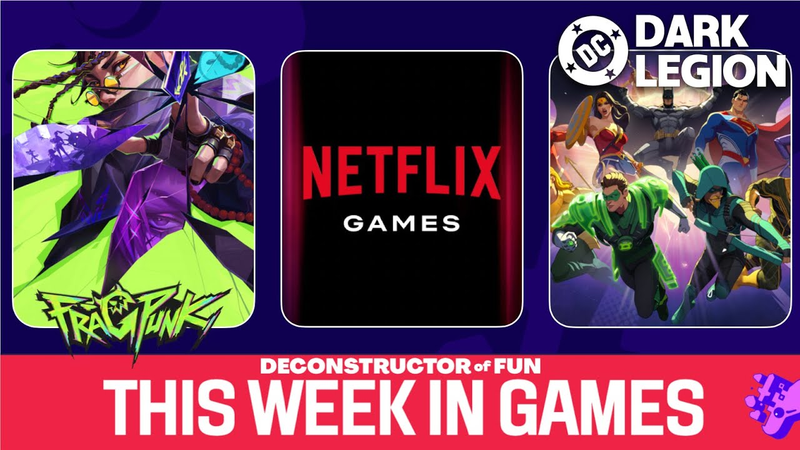
TWIG #324: Netflix Games Build Back Better Plan, Launch of DC Dark Legion and Death of Fragpunk
The gaming industry is currently undergoing a period of structural recalibration, characterized by a cooling of venture capital interest and a shift away from high-budget console ambitions toward more sustainable, platform-integrated models.
- Venture capital interest in gaming is cooling as major investors like a16z pivot toward broader artificial intelligence applications, ending the era of aggressive gaming-specific funding cycles.
- Netflix is abandoning high-budget AAA console ambitions to focus on narrative, party, and family-oriented gaming, though it faces internal challenges reconciling film-centric corporate culture with interactive development.
- The mobile strategy market is moving away from dated 4X structures, causing titles like DC Dark Legion to falter while competitors like Century Games succeed by prioritizing accessible gameplay mechanics.
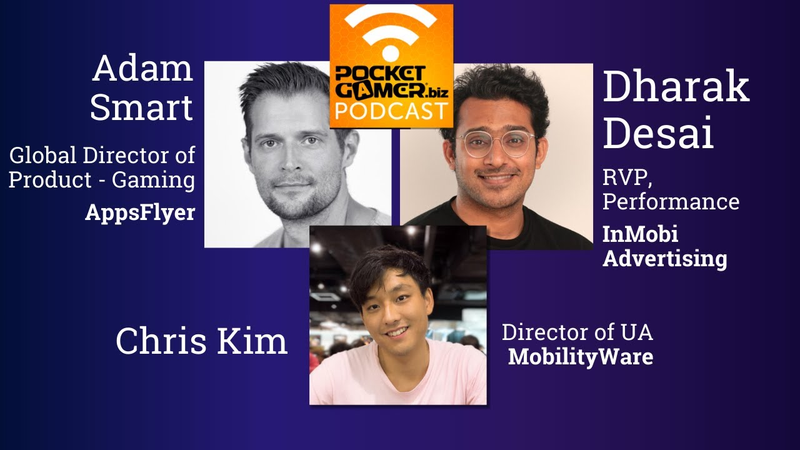
How Mobile Gaming’s Solitaire Giant Shuffled Its Strategy and Won Post-ATT
MobilityWare’s strategic evolution serves as a blueprint for mobile gaming studios navigating the restrictive post-App Tracking Transparency (ATT) landscape.
- MobilityWare achieved a 21% increase in click-through rates and 38% growth in its US-based iOS user base by shifting from granular user acquisition to a privacy-centric framework post-ATT.
- Studios should adopt 'cost weighted by retention' as a primary performance metric to balance the need for scale with long-term player value in a privacy-restricted environment.
- Successful measurement in a fragmented landscape requires a Single Source of Truth (SSOT) model that synthesizes probabilistic data with Apple’s SKAdNetwork to overcome measurement delays.