VideoDeconstructor of Fun
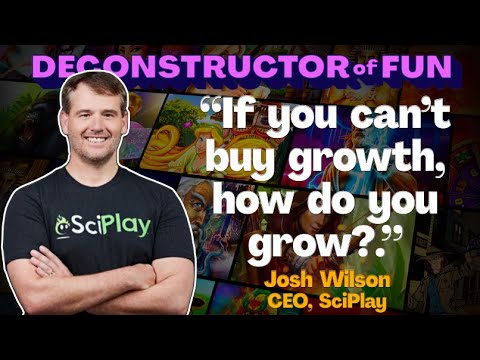
Growing in a Mature Market with Josh Wilson, CEO of SciPlay
31 Mar 202572 min video
Transcript
[Music] Uh Josh Wilson, CEO of Side Play. Welcome back to the podcast. Oh, thank you so much. I'm excited to be here. I think we just said this is the third one. So, um it seems like they're flying by, but I always enjoy myself and I love our conversations, so I'm excited. Yeah. So talking about our previous podcast in 2022, you came in, you talked about the secrets of uh secret sauce of scaling successfully, that was the uh the title that I came up with, but it was very interesting topic because you were an independent company back then and you were growing despite other companies not being able to scale like this is right when the privacy hit the market. In 2024, last year, you came in and we kind of dove deeper of what allowed you to grow. But at that time you were already acquired by light and wonder. It was the topic was six operative changes that kept site play growing. So it was very
interesting. And now 2025 I want you to have you on because there's few things in the market that are happening. We got stalled growth environment something you as a social casino OG know really well about. So it' be interesting to get your perspective. We got AI all the hype all the uh you know all the focus for investments and you know everything in it guys it can fix anything everything but it hasn't really done much meaningful yet so interesting to talk about that and then final part was the hybrid casualization of the market so inapp revenues ad revenue sounds weird to a social casino company but then again you've acquired a Turkish studio you are focus focusing on hybrid casualization. So, those would be the three topics. How did that sound? That sounds amazing. Let's dive in. All right. Um, before we dive in, that's an interesting t-shirt. We're filming this right at the uh at the time of the ceasefire between Israel and Hamas. So,
I assume this has something to do with that. Yeah, it's uh you know, we woke up in the US. We woke up this morning to amazing news. A ceasefire happened. Um, I know that there are people all over the world have been trying to get this over the line for so long now and it didn't matter which side of it you stood on. Everyone wanted peace at the end of the day. Uh, so to wake up such good news. Um, we have a studio that is in Israel. So, you know, I spend somewhere between four to six months a year in Israel every year and it's become almost a second home to me. So, knowing that, you know, people that I become really great friends with, not just co-workers, but great friends, uh, get the relief and that feeling of not only bringing their brothers, sisters, cousins home, but also just a little bit
of a like, hey, what's going to happen tomorrow? what's going to happen tomorrow gets to calm down a little bit. So I I think as humans we should just celebrate this. Um and now you know now let's focus on Ukraine, Russia and make sure uh we get the same thing because it's obviously just as bad there. But today we can celebrate and uh at least stand in unison for a while. Yeah, I think there's uh I think everybody can agree that one thing you can celebrate is peace. So, um, yeah, no matter what side of the fence you are, but let's talk about gaming. We're not, this is not our area of expertise by any means. Uh, but what is is gaming. And I want to start off with with asking you this question like how was your Q5? Because I understood just recently having TikTok on the podcast that Q5 is is a thing. And we were talking about what we want to discuss. You said, hey, like December is going to be busy. We got Q5 going on. So Q5 is a thing for side play, right?
Yeah. Q Q5 is a massive thing and probably depending on the company, what the definition of Q5 is is probably different. So um when you're in the world of the marketing side, so which we are um we spend a significant amount of our revenues in bringing in new users. Q5 basically starts midday on the 25th and on that day uh what happens is so many gifts are given to people where they get new devices, new tablets, new laptops, new blah blah blah and the reach or number of people just I don't want to say exponentially expands but the amount of downloads all of a sudden will double and it's not like a like slow double. It's and then for a while CPIs go down
so you can dump more because the average revenue per install stays the same. And you just you try to take advantage of this moment as much as you possibly can. And it's a weird one because it's like every everywhere. It's whether or not you're buying just ads on mobile devices, whether or not you're on TV, whether or not um you're doing uh like uh instant reward type everywhere and it's it's a crazy moment. Um but that's really in the new install area. At the same time, what I call 25 for games starts about a week before Thanksgiving and runs all the way until the weekend after New Year's. Oh, wow. And it's logical when you think about it, but it is probably the most condensed area where professionals take time
off. And majority of our co customers are prof professionals. They're teachers, they're nurses, doctors, there's lawyers, they're sales. like this area because of how holidays people take extra days off and when people take days off for me that's like another Saturday. Yeah. And so you have to ramp up your game significantly because you have 24 hours of engagement where you're used to having five or six on a given day. And it just becomes so it's like Q5 to me has two totally different meanings depending on the individual I'm talking to, but they're both as as important as could be because they're the most important quarter of the year. you can't replace it or create it anywhere else no matter what happens. So it's a it's an exciting exhausting bags under eyes uh
you know five six weeks no matter how you want to do it. So from Thanksgiving till New Year's the engagement goes up and then first part it's like focusing everything on the product side making sure there's enough content making sure there the events are you know supercharged and then towards the end of the year right after Christmas you're basically just shooting on on the marketing channels and getting wow which also means you spend a lot of time getting the product ready for new users on the 25th because it's not like just spend it's like hey do we have the perfect fatoule do we have the perfect features launching. Do you have the right content, the right level tracks? Da da because you only get, you know, and that lasts for us until about midFebruary. So, it's another six weeks of in heightened installs. So, if you don't have the best game, you missed out. If you didn't drive it correctly on the other side, you missed out because there's just no making up for it the rest of the year. And the are the CPIs
higher during the Q5 or the same or so depends which one. So the first one they're absolutely higher. Uh because we start we start competing with large brands. So you know Pepsis of the worlds, the Walmarts of the worlds, the Targets of the world, they start doing TV. They start doing branding on uh any place they can because they want you to buy stuff from them for Christmas. They drive up CPRs. December 25th, they go away because they don't have the same branding anymore. They don't they're not driving you the same way. So now CPIs just plummet and then they'll slowly build up as you get into Q1 and people start increasing their spend. Uh most likely getting into like the March, April area, but they'll slowly come up. But yes, I mean they will I mean probably go down 20 to 40%
depending on the medium all at at the same time as as players and consumers have been getting new devices. They've been getting, you know, bonuses, this and that. They have disposable income. Uh they're in a holiday mood and most importantly they have time. Yeah. And that's that's when you Interesting. Correct. And and how how long has this been going on? I think forever we we understood the game side of it probably 2014 where Christmas landed like Christmas and New Year's landed on like a Tuesday or something like that and it was like huh man the 26 things didn't go back to normal. the 27th they didn't and then it was like and you just started putting it together and you look out in your office it's like oh three quarter
of the office took this week off wait a minute schools were closed during this time a lot of businesses shut down during this and it just became like that natural thought it's like holy cow and then I would say Q5 was always there on the the pure UA marketing side of it, but it became if you don't take advantage of it, you'll fail after Apple changes. And you know, the rest of the year was so hard that you needed this to help carry the rest of the year. So, I think it's why you've heard way more people start talking about it in the last couple years because these returns may carry the entire year for some companies. Game devs, we know that great gameplay is what players love. But integrating metagame features like challenges, progression, rewards is crucial for
retention and monetization. However, coding them is a tedious and timeconuming process. That's why top studios have turned to Hero. Hero provides a complete suite of battle tested metagame features that are quick to implement, letting you spend more time on the core gameplay experience. Ready to ship fully featured, engaging games? Check out Hero today by clicking the link below. Wow. Yeah, definitely. I would say on a podcasting side of business, I noticed last year uh we kind like that the uh the engagement drops significantly in December and it kind of starts picking up in January. It starts already declining in November. So, so you guys are just taking everybody putting them into into the uh into the games and they don't even listen to podcasts. You know what? I'm sorry. No, it's probably it's probably the commuting and everything kind of changes because of that free time and so your routines are off and you can see it in podcasting like quite
clearly the listens just drop and then they start kind of like picking up now towards the uh towards February. For sure. Interesting. That's what I said. It's like we see it dwindling down normally around Valentine's Day. That's kind of interesting. Okay. Well, let's move on to uh to to other topics. So, Q5 um impromptu. We should we weren't supposed to cover it, but let's that's that was interesting. I'm interesting to talk about um the current market environment uh the stalled growth, but kind of like even before that jumping in is not being relied on app stores. So this is something that we've discussed in our previous uh conversations with the web shops and the platform that you've been building, but it seems to be kind of like the the push that not only from from the from from from the legal side with the DMA and other companies kind of taking ownership of their their customers, but the new app stores and everything. It's kind of like how do you own your customer relationship? And that
has been the bread and butter of social casino. So has your business model changed significantly post IDFA when it comes to uh not being relied to app stores or is it the same? Um what I'd say is it's it's somewhat shifted and continue to shift um at at the present moment and for probably for the foreseeable future. We're all going to be somewhat reliant on the app stores because, you know, the device is where we get majority of our new users. And so until there's a a way of getting new users at scale outside of, you know, really the only the only outlier to that is maybe Facebook at this point because, you know, Facebook used to be a platform. Yes. It not really anymore. I mean, it is for a
small, but they're even treating the business like it isn't. They don't care about games anymore. They don't really want to be in it. They've done everything they can to kind of pivot away from it. I think at one point they had a division of hundreds of people supporting games and now it's like 10 people. But it it just isn't their focus unless it's something they've invested in and it's their games or unless it has to do with the other company they bought that gives us that immersive gaming experience. Um it's just not the same freetoplay haven that it once was. So, I almost just don't think about it as a platform anymore, which now gives us, let's say, there's two, there's there's Google and Apple at this point that have the two. Um, what's interesting is for both of them, gaming revenue really isn't important. Yeah. Despite being so significant for us, like our number is a drop in the
bucket for them. So, it's like, you know, Yeah. I I remember looking AirPods is like a 20 billion dollar business like at the end you're like uh and so you've always got to have in the back of your mind is like well what if like what if they decide you know what we don't care that much about the business of taking 30%. We care about the marketing business because you know that's 50ome billion dollars uh with math with like 55% IBIDA for Google. It's like, hey, I care about that. But the other thing that's doing four or five billion and it's not as eid of like, do we care? And you could see them coming back and going, you know what? If we don't take this 30%, I bet you the 55 gross
because every business has more net revenue. Therefore, we'll spend more back in marketing. They're one of the largest go. Um I don't know that they will do this, but you have to have in your mind what if they do and they say we're no longer going to process your stuff. To me, this is where my first inclination of like, hey, I've got to have a store. I mean, look at what happened to Facebook. Mhm. Now that's it. It's not impossible that happens to the other two. And then at the same time it became okay financially can I make 20 more cents out of every dollar by doing this and if I can make 20 more cents one I can dump more of it into growth and two I can dump more into new new ideas investments
R&D da da so now becomes the game of they still want you to be reliant. So they have put a book of rules in place trying to make it impossible for you to do things but not impossible because they don't want to get sued. And now it's trying to like think through how can you play on their platform getting the best out of them but still long-term making a destination for your customers. Yeah. That they become attached to you as a platform and not just a game. Um the store side was the easy side. that that was not difficult. Um, and I think that will evolve and keep going forward and it'll keep the other one is
going to be the kind of like Mecca over time that if someone can figure out that type of combination. Um, it will it will make change. Um because at the end of it like just releasing a game on mobile web and it it doesn't work because you lose the ability that you gain from installs coming from the app source. Yeah. So it's it's creating this just perfect partnership that fits in the rules of the parent saying this is all you can do. I think you'll see innovation here in the next few years. Um, and including us, we we're gonna evolve it to make sure like at the end if if Google went away, our our most valuable, loyal customers, we didn't lose. We just lost
Google and therefore we lost the install service. What's your take on these um stores? I mean a store inside of a how how do you put it like the Microsoft store that is coming, the Epic Store, the Samsung store that we've had forever. Um is that some like Yeah. What's your take on them? If someone takes the idea of building the store but takes a different revenue model for it, I think what it'll do is it'll eliminate definitely the smaller people thinking they've got to go build their own uh web stores and stuff like that. Most companies that are building the web stores are doing it for eBay. They're not they're not doing it for a platform. They're not doing it. They're doing it because got to give Apple 30%. Yeah. Well, if I can only give someone 10%. We are just a more profitable
company over time and takes less to, you know, pay for the bills, so on so on. But when you're a small company, that that's a lot of money in a small period of time. So, I think these new stores are amazing. Like I think they're the best idea ever because they're going to challenge this old archaic idea that oh just because I own the software I get to charge you 30% for something that cost me 1.75% to do like that's what's worse than credit card markups like but you have no choice because they are the monopoly of installs. So until someone can do that at scale, um hopefully the government changes it over time and says, "Hey, it's, you know, a monopoly to not allow that." But to be honest, large companies won't care about the other stores. We'll put our own stores in our own games. Yeah. And actually ne
have people never leave our games. Yeah. Yeah. So, so you're seeing perhaps in the future that we will have even more stores like currently on on almost any Android device you have two app stores. You have the manufacturers app store and then you have the platform app store. And so in the future you will have one for Epic, one for Microsoft, one for Yeah. whoever is is there. I think it's a large enough company they're going to do it. Like I wouldn't be surprised if there's a Facebook store. I wouldn't be a surprise like just thinking through different ways that they can own the monetization of their customers is what it really comes down to. Interesting. Um talking about the uh the current market environment kind of jumping on the next topic and that is the the the stalled growth. So when when I would put in the the metrics, you kind of see that there's almost 20% keer, so
compound annual growth that goes in all the way up till the privacy really kicks in. And then you have a massive drop and you know couple of u down quarters, but then we're back on the growth path, but the growth path is not nearly as significant as it was before. So we're talking about singledigit growth which is you know minus inflation is technically not growth. Um looking at social casino social casino has been in this stage for a very long time. It's a very competitive um genre or cate category of games and very not concentrated which makes it really interesting. There's so many different like so many different games and at the same time they kind of look the same like so many slot machines and you've been in this in this environment where there's no massive growth. There's a very um heat like heated competition amongst the rivals because everybody kind of has similar products. And so the
way I see it, it's the it's the game of margins. Like you have to perfect your user acquisition, you have to perfect your customer support, you have to perfect everything. And if you win, somebody else loses. Yes. So can you can you talk about this? Like what have you learned by being in this highly competitive market environment rather than the the mobile developers that have like most of us that have just used to, you know, taking a piece and and watching it grow as the as the pie grows? Yeah. Uh, honestly, it's been a crazy crazy journey. No matter how you want to look at it, no matter like and for me to kind of speak of today, I guess I got to go backwards a just a tad. So, you know, we when Scy Play went public in 19, everyone cared about growing revenue as fast as you can and just sustaining a margin. Like, they
didn't care if you grew your margin. They didn't care if you became more profitable. They just didn't want you to become less profitable unless you could prove you were investing in something. If you could approve you were investing in something then they still were like hey go like this drove value of companies out of out of the roof. And you know I sure you remember like think about like all these companies getting evaluated for 20 20 22x being bought over and over again 19 20 21. Um it just kept going and then you know then the privacy hits in 21. Um, also in the back half of 21, the economic landscape changed dramatically. And the world went
from we're going to celebrate revenue growth to celebrate ethnic growth. Yes. Overnight. Overnight. And it was just like sitting there one day and it was just like grow, grow, grow. And then I sit into a room of in uh uh investors and shareholders and d and every one of them looks at us goes are you going to grow margin? I'm like the first time you asked me that question in three years. What's and it was just literally an overnight thing. And unfortunately the games world was slow to that. They kept dumping marketing money into Q2 3 of 21, Q4 of 21, um, into Q1 of 22. And it really wasn't until Q2, Q3 of 22 where you saw like marketing dollars significantly get yanked out of the market
because they had everyone had to figure out how to bring margins to a point that made sense. Also, they were spending money that had zero chance of ever going ROI positive. Yes. but it was popping up at least their revenue two or three points to help it look like they were going to continue growing. Well, this is around the time that our company just shifted. We we said we were going to do everything much much different and that was in Yeah, that was in Q3 of 21. We cut our marketing budget in half. um when our you know when the head of our uh growth team or our our CMO at the time looked and said we're not going to go ROI positive here. I I'm doing the best we possibly can, but if we spend this dollar it's gone. And it caused us to stop and go,
well, if we can't buy growth, how do you grow? And we got everyone together. We started we started brainstorming. We started thinking we started going and everything just it became obvious which is the only way to grow in this world is to not ever lose a customer you owe and we became a customer retention company. We tried to think how do we make everything more enjoyable for you? how do we make you uh how do we make you want to use us as your time uh when you have leisure time? And it just it was for us born a player first focused company and it just changed the mentality and we literally went game by game and put this mentality in. And so like if you go back to all Aunt Annie and stuff and you just kind of see it's like one year Quick It takes off, then
the next year Jackpot Party takes off, then the next year Goldfish takes off, then the next year 88. And it was just going to take this method of thinking and behaving different from game to game to game. Um, one of my horrible faults and superpower, I never pay attention to the market because I don't care. I don't care what the person next to me is doing. The only thing that I do care what they are doing is like I if they're doing amazing growth, it means I can't. But I can't only take that philosophy because that means when they shrink, all I can do is shrink. Yeah. Like I I've never paid attention to what's happening in them in their world and therefore the collective. I've only ever paid attention to what our opportunity is like. What can we do better? What can we do different? How can we be a company that serves our customer therefore grow? And it's been
for that reason different for us. Um we haven't relied on a singular game like most companies are. Like even when you get outside of uh out of casino, you know, the casual is barely growing now. last year. I don't think it did. I think this year they're predicting like a percent growth, but it's basically stalled out. Most major companies have one large game and that large game is carrying them through. And um we said, "Well, let's have five. Why Why can we only grow one? If we have the right game, the right method, the right process, we should be able to grow five and then why not six?" And then at the same time taking the shots which I'll talk a little bit about the hybrid casual and stuff here where we take shots into worlds that we don't know but we believe like we belong and we can play there. Um and even that's been a huge learning but we'll get into that
here in a few minutes. So I think like ultimately why have we been able to do it? We don't follow what anyone else is doing. We literally question everything, rebuild from scratch, start all over, fail, start all over again, fail. And eventually through failing, you find small successes. And the small successes turn into large successes. And good news is when you're the first, everyone else follows. So while they're following trying to get to you, as long as you're thinking about what to do next, by the time they get to you, you've already pivoted. And this has already happened at least two times during this period. Step into the future of game monetization with Exola, the premier partner for game developers seeking to expand their reach and revenue. Exola provides a robust suite of tools designed to enhance user acquisition,
manage subscriptions, and streamline payment solutions worldwide. Unlock new markets and maximize profitability through their customized, secure payment architecture and dedicated support team. Exola powering game developers to achieve global success. [Music] This is fascinating. I mean like like you started with the premise if you can't buy growth how do you grow and the whole notion of customer retention company kind of brings me back to like old business school days where I remember like everything changed. We had this um I don't remember it was customer success course or whatever it was but we did calculations on different business models and out of all of them it like this is no secret in business it's like the companies that retain their customers better always win because it's so much cheaper to retain a customer than to acquire a new one and like this is no secret but nevertheless the model
very much focuses on CPI and how do you monetize before the user turns correct and in our world it's even and I mean ours the social casino world exponential on top of that because one of the downsides that happened is bunch of people who ran casinos came into social casino and the whole purpose in a casino is to get as much money as you can out a short period of time from a customer because they're only in there for 3 days, four days and then they're gone again for six months, three more. Well, they took the same approach. How can I get 200 instead of 100, 300 instead of 200, so on, so on. So, but the thing is, they're in your game seven days a week, 365 days a year. Yeah. You don't have to do that. If you give them enjoyment, they will spend what they're comfortable spending, and that is way more money than what people think, but
they'll do it for years. And it's like, hey, you've got to have the mindset of the excitement of win or loss, but you don't have to have the urgency of time of they only have two two-day trip, so they got to spend as much as they possibly can. No, that's a casino philosophy that doesn't come over. But unfortunately, it came over because a bunch of gamers were like, "We don't understand slots. We don't understand the mindset. So, let's let's hire people from Caesars, MGM, let's and they came in and said, "Here's how we trade our VIPs." Well, it it kind of backfired for a lot of people. They ended up with these massive arc Dows and mass, but then Dowo that did this. Mhm. It's instant gratification because like for for the PMs like even if you I mean if you've ever been on a live game even running a sale is an instant gratification because you're like look at our last weekend like we crushed it
and it's like okay but look at your next week. You'll be in the in the gutter. Yep. Exactly what it is. It's uh pulling it's a it's a game's version of pulling revenue forward. Yeah. But unfortunately, you create a quitting spot for the customer. Yeah. This So your notion of don't follow the market, follow the opportunity, and we don't follow what anyone else is doing. How have you had it since the beginning or is this something that that kind of cultivated over time? Uh it's cultivated over time. I think if you would have asked me in you know the 20145 um I wanted to be zinga like hey this datadriven every decision is made on data everything you do PMs run the world everyone else follows them um and then probably a couple years after that became the rise of playa and
monetization monitor monetization, monetization. You run your game at furious pace and you just squeeze every customer all the time and you get maximum value. And as as we grew up and we saw our games do this over time, like it worked, it worked at work. Oh, wait. No longer works. Now, what do we do? Work and work and work. No longer works. What do we do? It became it's like there are good thoughts in both of those approaches. There were learnings like no tomorrow but both of them on their own is not super sustainable for a one a company. The zinga PM approach is not sustainable for a company and the monetization approach is not sustainable for a customer. So instead of following them, I learn and I take what I believe is the good. Um it's
still one of the practices that we do today when we hire someone that comes from a different company. Uh very first thing I try to do is like bring them in a room and here's what we do and how we do it. They come in and say this is how I would do it. Then we talk where are we better, where are we worse and we try to think how do we learn and we try to just put the two together but always at the goal of player first focus not drive revenue. Yeah. Revenue. Yeah. Revenue is a result of engagement not engagement as a result of revenue. Yes. And that's that and and because you have this we are a customer retention company this sort of a pillar then it's easier for you to evolve around the learnings coming in from outside because you're still grounding yourself against this this most important thing for you which is keeping your customers and you're able to either accept or or reject um
certain best practices just because they don't sit with the main pillar rather than like we're taking the best out of everything which is a typical approach. Let's learn what everybody does well and just put it together. 100% 100%. It's just it's all a philosophy that everyone has to buy in in or it doesn't work. And you know, I'd say the other secret sauce of it that it just um as I've grown and as I've matured, uh wasn't always this mature. Um, I have learned the most important thing is to have people who can challenge me around me all the time and challenge the status quo, challenge and just ask these questions and it just it just creates innovation. And so I I'm lucky um we've done really really well in that
case. But as much as it says like it's all about the fact is tomorrow I'm willing to admit I was wrong today and let's do something different. And it's the people around me that help us understand where we improve. Yeah. Yeah. This is um this it's fascinating. It's always fascinating when when um companies and leadership matures to a point where they can kind of summarize everything to that one, two, three core elements and not like I don't mean values or whatever you workshopped but more like this is the essence of our business or like these are the four things we have to focus to make our business growth and the most reassuring part about that is it doesn't come automatically like it took you probably a decade to get there before understanding like these are really what matters. Uh so so nobody who's like you know just starting you don't have to know it. You it will come to you if you just grind it out. Exactly. Exactly.
It's uh as long as if if you're humble enough to understand that there's always a better way. Like the limits but it does start with being humble. Like at the end of you have to be humble to admit you're wrong. I remember this this one thing I I forgot who who this who said this but it was it was basically some of the founders but he was saying that it's okay to quit but not to give up meaning that it's fine to go to a certain direction and be like you know what this doesn't work I'm not going to break everything just to try to make this work but just don't give up on on the original goal and that kind of is the same thing like that doesn't mean you have to stop trying uh it's just you know yeah move forward and doesn't But talking about doing things that are new and that's the hybrid casual part. So hybrid casual to me feels like um the absolute um you know if we put different games on a on a continuum or on a graph
like hybrid casual is on the opposite side of social casino. And by the way you mentioned that meta is not supporting remember uh gaming. They work with us on a hybrid casual playbook. So, so they do, but yes, it's not a platform anymore. This podcast is brought to you by Appsflyer. In today's digital world, understanding your app's journey from discovery to download is more than just insightful. It's essential. Enter Appslier, the leader in mobile attribution and marketing analytics that allows you to measure the full potential of your marketing efforts, making every ad dollar work smarter. With Apps Fllier, that's your new reality. Dive deep into datadriven insights that reveal exactly where your users come from and how they'll interact with your app. Appslier, where your app's potential meets performance. But talking about hybrid casual, it's like how did you like like why why would you move into something that is so far
away from the core and that is not actually based on long-term retention? Correct. the the the lifetime value is much slower. The monetization is much more upfront like seems to be counter to your core business and thesises. Yeah. The the original thesis behind it was and we got into hyper casual. Uh this is what we got into. Now the market blew up five months after acquisition. So yay. But this got into uh and the thesis behind it was, man, they're driving 40 million installs a day. If I can parse through these 40 million installs and find 5% of them that are relevant for the rest of my business and they do 20% profit already. I can create an install
stream through a profitable business. And and this was my original theory behind why to do it. And you know, and I mean, literally that if that worked, it would almost be as many installs as we drive today. Yeah. From something already making 20% profit. Like it wasn't as much just like, hey, we believe we could make these games better. We can believe we believe that that company was the best in the world at making those games. They were growing amazing. The talent is still crazy good there. Um but IDFA killed that market like that that market was probably demolished the worst because of what you said is you know it's like 60% of the the ROI comes on day one. Yeah. And by day seven they're down to less than a percent of uh retention. So they don't
didn't have historic customers to really monetize to make up for the fact new people couldn't come in. And so it just hammered that business. So it did make us to start thinking and this is probably where we had the advantage over most is um since I already had a theory of what I wanted out of this business, we actually started thinking about how do we get into this business uh by creating a network of games that connect with each other that actually become another games meta. and therefore a cycle for people to be able to play between with the idea that we'd be able to retain them longer but then still be able to find the ones that would be better long-term LTV in
one of our other you know higher games. Um and then we started working and started working on that over and over and it was very much ad monetization focused or well then there's a very interesting thing about ad monetization that we learned through this entire process which is there's basically a LTV cap on what someone can be worth in ad monetization remarkably different than AP because month two they can spend a h 100red bucks, month three they can spend a h 100red bucks. Well, the way ad monetization works is at the very beginning when a customer comes in, they're worth their max value and over time people are willing to pay less and less and less for that person in that game because the odds that they will install go down. Mhm. So you start at $300 ECPMs, you get 30 days in, you
might be getting $20 eCPM, which means that person's got to watch 15x more videos to get what one video is worth here. Now all of a sudden growing that average revenue per install becomes significantly harder which means it becomes more difficult for the game to be able to sustain itself without AP. Now the fun part about AP when you mix with ad monetization is in my opinion so I'm going to say this is Josh Wilson's opinion. I'm not saying there isn't someone who did it different and succeeded is the only way to be successful and continue growing at the rate that IAA could is the monetization has to be going towards different currencies
inside the game. AP needs to be dedicated on whatever drives the simple core loop. So in my case, coins in a slot m uh admon needs to be there for momentary sticking points or shortterm incentive because this lasts for 10 minutes, it goes away. It lasts for 10 minutes, it goes away. It gives you a one-time something goes away. And when they share the same currency of the simple core loop, what you get is nonmaximized of either because they'll buy to the max value of buying and then supplement to the max version of the ad. And what you'll end up with is 1 plus 1 is less than
two. And so it becomes a much more difficult way of doing it. And it if you look at a lot of the casual games that have parts of IAA in it, IAA is a very small part of the revenue of those games. Yes. 10% 15%. D because once again, it's just it's almost just additive revenue that you can't really sell through AP anyways. So you might as well take advantage of it do it in IAA but it is the economies of trying to do both is my guess is where majority of companies will fail and knock on wood I hope it's where we do well but this is now where we're really starting to kind of head towards um with our elect studio. So, you know, I think you you kind of said is like I you probably could consider social casino. It's not hardcore because the the amount of brain power it takes
to do it isn't massive, but the time investment is very similar to time investment wise. Um, it's not a whole lot of five minute sessions, six minute five, it's a lot of 30 minute sessions and it's two or three times a day. Um, but the simple core loop is as simple as any simple core loop in the world. Push a button, get a result. Push a button, get a result. Um, inside of this world, which is now match three or uh games of that sort, there's a little bit of skill that doesn't exist, and there's also more than a 3second simple cord loop. So, this to me is where they differ dramatically. As soon as you and that from where they differ, I believe they're remarkably the same. I believe they both lead to progression in something. That progression in something is the reason I
do this. I don't do this because it's what I want to do. I do this because I want to do that. And it's the progression or the meta can tell a story through multiple features. You can engage the user. Um, you can also use segmentation the way the social casino is probably the best out there on segmenting users, making sure that users have the experience they want, they need based on how their time play. Um, the only difference is now I get to do a segmentation on how good you are. Yeah, in slots there is no how good you are. Everyone uses the same math model. in this, how good are you? And depending on how good you are, the difficulty of the level needs to change. Um, the time it takes needs to change. It isn't one game for everyone. So, I I believe we deserve to play there. The thing that I'd say is we're not the masters in building that simple core loop. And that's where we
needed outside um expertise because level designers of that stuff are about as unicorn as like literal slot designers. Yeah. Like I got told the other day like there's 20 good slot designers in the world. 20. I honestly believe that's about the same thing for level designers because as much as you want to say it's an analytical XYZ, every level has a story to it. Every level has the perfect stack to it. Every level has that certain amount of I'm so close to winning and it it it's something that we don't have that expertise on. So we had to find it and we had to believe in the individual our individuals now and have them help us build what that simple core fund would look like. So it was a lot to get into as far as hyper uh hyper casual
goes or not hyper casual casual hyper or however hybrid casual however we're going to call it now. Um I do think it's the wave though. I think it will casual be will become a little bit less there'll always be midcore and there'll always be hardcore because those type of players are just so much different um because it's more of competition or story and everything else but I think casual will even as itself will continue to evolve more this way too. Attention app and game developers. Are you ready to unlock the secrets behind the world's top performing apps and games? With Sensor Tower, you get the ultimate competitive edge, whether it's breaking into new markets, fine-tuning your UA strategies, or boosting monetization. Dive into data like never before. Track global trends across app stores. Analyze market leading inapp purchase and inapp ad
strategies. And benchmark your performance with realtime insight. The best part, Sensor Tower doesn't just deliver data. It helps you turn it into action with intuitive tools and expert analysis. It's everything you need to make smarter, faster decisions. Thousands of app and game studios, from indie creators to global giants, trust Sensor Tower to help them win. So why not you? Start your free trial today at sensortowwer.com. That is sensortowcow.com. Yeah. So, so if I take something out of it, like not some, there's plenty to take out of it. Uh, so your site play turkey started off as almost like this IDFV/contentfortress play. Uh, let's get basically you acquired users, that's it. and and yeah, even though you know most
of them would not fit, but it's still a way to grow your existing portfolio with with this acquisition, but things changed. Exactly. Which profitably point thing is like at the end of the day, they were already making 20% profit on those people. Yeah. So, it was like, hey, this is potentially the best of both worlds. Exactly. Exactly. But things changed five five months later. um the whole business model dies and then you go into this different approach. So trying to figure out what do we do? So network of games which increases retention that's the that's the goal. I believe match hotel was released by Turkey. Yes. Yeah. So match hotel right now is our first game. It's I mean still it's live but it's let's call it in betaish. We're not we're not scaled. Yeah. We're optimizing engagement um right now. We're trying to make sure that we have a game that once again everyone wants to play and then from there you go into the monetization
side and then from there we go into the marketing side but no it's live today anyone can go play it. Yeah. And and you brought this really interesting point that is that makes the the business models fundamentally different and it's not just that the the one has ad monetization as a bigger focus or sometimes even 60% of the revenue or more. And it's not just the retention because social casino is years, hybrid casual is usually months, but it's the fact that app monetization has actually an LTV cap as you mentioned. And that means that um if you push hard on retention, which is the pillar of your business, then that will not increase the revenue of these games because ad monetization doesn't scale with retention. And so you have to figure out how to transition these players from ad monetization to inapp purchases and essentially make them payers and not watchers. Correct. 100%. That's exactly the way to think
about it. And that's what the most healthy combined LT LTV would look like. H very interesting. Okay. Well, we'll see how that plays out. Super interesting. And and match hotel. interesting to to to uh to play that game. If you haven't download it, check it out. Um yeah, let's talk about the uh the last and the most weirdest topic that I that I have to ask you. And that is the AI. And and AI like the way I've seen it and you know in the beginning when not beginning it's just we've been in this cycle for like two years now. So it's not not that not that old. But it felt that this is the answer like this is going to totally revolutionize how we make games. until date again we're talking about a couple of years only but it kind of fizzled out like there's a lot of hype a lot of money raised not only inside you know AI generically but in in gaming as
well with different tools but there hasn't been that sort of a you know thing that came out and I think a lot of people even using chatbt or perplexity or you name it in their lives yes it's helpful but yes you have to be like like it's not that great. Like there are some some some issues that are, you know, that I'm that I'm at least seeing every day where where it's uh I have to like have a pretty much a quality control on it to uh not to make tons of mistakes using using chat. Anyways, like what's what's what's the cycle you're seeing? Like I know you guys use a lot of uh AI to optimize your games. Um but but what's the uh what's the tangible out this? Is it incremental or revolutionary at this point? It's not revolutionary yet, but I do believe it will change. Um, honestly, I think it's going to change humanity in different ways. So, I think everyone needs to be on board with
understanding what it will and will not do and then I'll kind of get into how we are using it today and like and then from there, how do we think we can use it and go? So let's first what is AI great at? Getting the most popular things that sit across everywhere and presenting them as good answers. Uh data analysts so goes through and reads trends better than most people's eyes. Doing the same thing over and over again. Uh identifying what things look like or things being off. Um and then to your point, answering questions that people ask. So, it's always fun to me like when I have an interview with someone and I ask them a question, they give an answer and I type the question into chat DP, do they answer the same way? Because let's be honest, like today it's giving answers. Um, and this is why I think the change is going to come and
it's going to be interesting because what does it not do still? still doesn't do emotional intelligence. So, how to deal with people, how to work with them, how to how to make people feel part of a process, a team, whatnot. Still doesn't do creativity or innovation. Not saying it won't get there. I'm saying today it doesn't doesn't really solve problems. It doesn't really do um you know, things that are outside of the box that you're like, what do we do? And then there's just the pure ethical like it still doesn't really know right from wrong. But put that one as a side boundary to it. It's rendering education irrelevant. Yeah. like today and like perfect example like something that just happened in my head today but like you know I have a
16-year-old the 17-year-old daughter you know she's working on her algebra 2 and she's like hey can you help and I'm like huh well I haven't looked at algebra 2 in about 25 years let me see show me how to do it I could now explain to her how to do it Like why do I need to go through a year of class when I can just type in what is this? It can give me it. I now know how to do it and now I can go do it for the one instance I need to do it. Like how often do I use radicals and radicans in my daily life? I don't. I hadn't probably done it in 25 years. So why memorize it? And it's gonna continue this way. Education's got to go from memorizing things that I can learn by just typing it in or get a quick answer to solve
problems. Period. Solve problems. Give people puzzles to try to put together and have to think it through. Um, it's going to make mathematicians a little less important. Now, two different types. the creative mathematicians that are coming out with new ways to solve things, we need those because AI is not going to do it. But the ones who are, you know, I build a I want to build an economy and someone's taking that and putting it into Excel and do AI is eventually going to do that. So it's going to change this as people come in and come in. How is that going to affect when I start looking at work? Like one and to this podcast, we no longer take notes. Every meeting we have, there's AI listening. It bullets all the topics that we're talking about
and puts all the to-dos at the end and emails it to everyone. How much time did that save from someone who used to always have to do that? um art. I have these five things. I want a mixture of it. Does it in moments. Yeah. It used to take someone day and a half to be inspired by these things that do it. So what I would say and this is side by side but what I would also say to people is become more of the person who can think outside of the box to do that will become exponentially more valuable to companies because AI will do the thing that average people do over and over again as well as you can at 1 1,000th of
the speed. So unless you could go and so for this you have unit testing in QA eventually that will go away and just become AI all the time. The idea of this you know Zuckerberg the other day made a comment that in the next few years my midlevel engineers won't be here anymore because their mid-level engineers aren't solving problems. their midlevel engineers are being given a spec and saying write me the code for this spec. Why can't AI read that spec and write the code for it? That's probably going to go away. But creating a system out of nowhere in order to make decisions differently, AI is not going to do that. And so for me today, AI is 100% about where can it be efficient? Where can it take someone's time, give it back to them so they can invest it in where it needs to go so we
can continue in innovating faster. This is where I focus on it all the time. Anytime I've tried to give it creative decision making abilities, it's lost to a human. H yeah, there's I mean ton of to unpack there, but I would say there there's kind of like you mentioned problem solving multiple times and I feel like AI is pretty good at problem solving and then that creative thinking it's not and it's more like using AI to support your creative thinking to overcome the problem in a different way than the AI would give you the sort of a template answer. So here's where I go and this is how I define the difference. There are two basic balls. The person who can solve a problem because they've seen the problem multiple times and get it done. AI can do that better. Yeah. The person that
can look at a problem and go, we've been doing that wrong. We need to do it differently than we've been doing. AI this person is harder to find and more valuable than this person. And so that's where I say solving a problem like AI will solve a math problem better than everyone else will. But it won't be the next Isaac Newton. Yeah. So I understand that. That's that to me is the difference between a person who's valuable because of experience compared to the person who's valuable because they don't look at the thing and say here's how we'll do it. They look at the saying and say why are we doing it that way? Yeah. Oh, analytical thinking, right? Yes. Yeah. That that's that's super important because if you don't have that, then you're just kind of taking everything like that's uh that's what
I've noticed. If I see a lot of chat GPT answers and so forth, it's just somebody's not even thinking about it or not going uh two levels deeper, but just kind of taking it out of that. What do you think about skill sets like working together like teamwork, social influence, empathy, active listening? Are those going to be more important or less? I think it'll actually be more important um mainly because I think the size of the teams will get smaller over time. So therefore, the unison of individuals, you're going to have less 10 engineers go sit over here and work and 10 artists over here work and this and you're going to get more of a team working together in unison. If you're the thumbtack in that, you're going to struggle. That team will struggle. Therefore, I think it'll become more because there'll be less solo time. Interesting. So you're seeing it that way because I was more seeing that
because of the support from AI individual top creators are being a like are able to create more uh without the help of others because they have the tools and so through that they need to work less with others but eventually they have to hand it to someone to take. Yeah. Yeah. So even at that point um I just think it's going to be harder to hide being emotionally distant or being like less likable. Uh we old mentor of mine used to make this comment is like you never want to be the person on the far side of the ranch because no one ever wants to go to talk to that person even though they're on the ranch no matter who you are because that person won't get invited to anything. That person won't be asked to have a meeting. every time they see that person, everyone goes eventually that person's just left
there and then they're left out of what goes forward. So, I think it's just going to now probably not forever, but once again, when you have a hundred people, most people don't know each other. When you have 20, most people know each other pretty well intimately. Last question. Attention to detail. Do you think this is an important skill? Because like I'm thinking about what what usually is in the job descriptions and these typically were there. Attention to detail is always very high, but in the post AI like do you need it that much? Um, and I don't know that I'm the best person to ask for this one. I'm going to give you my answer. I don't even read resumes anymore. Um, I actually only read a resume to see were you loyal to the place you worked at least. Did you stay there for a couple years? If I see a resume that's year
switch, year switch, year switch, year switch. I look at the person and go, they're not going to be a long-term foundation for me. So that's it. I don't look where they worked. I don't look what their job descriptions were. I I have a 45 minute interview that at the end of it I go this person will help us build the company or this person will not. Um I don't give you take-home tests. I don't nothing. I and I basically I think the attention to detail is once again what AI is going to do better because it will miss things but it will make critical thinking sense of urgency and like individuals like passion to win become even more important as people because our partners will be AI. Well, interesting future. Scary in in
some senses. Uh but in some senses, I mean, everybody uses AI right now and and there's um you know, it enables a lot of things. So, um Josh, I want to thank you for hopping on the uh the podcast. We talked about Q5, we talked about app stores, stalled growth environments, hybrid casualization, AI. Always a pleasure and thank you so much for sharing your knowledge and insights. Um it's very rare that that you have CEOs of of large companies being so open, so frank uh and willing to give an opinion. So thank you so much. Well, uh thank you for having me. I always enjoy our conversations. So and as people know like podcasts are amazing. Like to me it's just an open conversation with only thing that is talked about is what where are we going to go? But from here, I don't know the question you're going to ask and I don't know the answer until I think about it. So, it works out fun.
Well, you don't have to tell me about it. I do two a week and it feels like I get a master class like to tw the other one, the twe is not a master class, but once a week I get a master class with somebody who's infinitely smarter than myself. So, it's been a it's always a pleasure. So, thank you. Thank you. You're very very welcome, Ben. Thank you. And I'm always welcome to come back. It's always great. You will. Um for everybody CYPlay as always you have very interesting jobs open around the world US, Turkey, Israel, Ukraine you know hopefully one you know sooner we'll be open as well um and um yeah check out Cyply and become part of the ride. It's fun. On that note, thank you everybody for listening. Um till next time. Yeah. Bye everyone. Bye-bye. You did it. You made it to the end of the episode. As a fan of the show, it would help us out if
you'd subscribe and leave us a review on the podcast service of your choice. Those stars and likes, while a small action on your part, mean a lot to us and help to grow the show. More importantly, are you a member of the Deconstructor of Fun Slack Group? If you have 5 years or more of gamesindustry experience, go to deconstructorofund.com/slack and apply to join. Join the games industry best professional community filled with peers always willing to lend a hand or subscribe to our newsletter to get all the latest insights from the deconstructor of fun content creators. Thanks for listening. [Music]
Auto-generated captions from YouTube — names and numbers may be misheard.

















Comments