Mobile reports and market data
Documents

(Live Case Study) AdMon for Beginners: Full Setup Walkthrough by Matej & Felix
Setting up ad monetization (AdMon) is a critical, albeit labor-intensive, process for mobile app developers.
- Implement an app-ads.txt file on the developer's official website to comply with IAB anti-fraud standards and verify all integrated ad networks.
- Integrate ad networks—including Google AdMob, AppLovin, IronSource, Unity, Meta, and Mintegral—into a centralized mediation platform like MAX to enable payout reconciliation and fraud protection.
- Maintain a centralized documentation system to track unique publisher IDs and ad unit configurations, as each network utilizes distinct protocols and administrative portals.
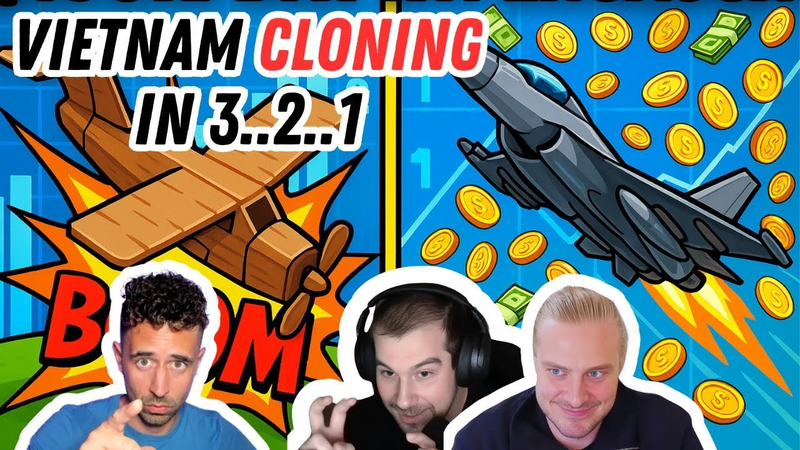
✈️ Epic Plane Evolution: The $150K/day Hypercasual comeback
Epic Plane Evolution demonstrates a resurgence in the hypercasual market, currently generating approximately $150,000 in daily revenue and securing over 100,000 daily downloads.
- Epic Plane Evolution is generating approximately $150,000 per day in revenue with over 100,000 daily downloads, primarily driven by a hypercasual model.
- Revenue is heavily skewed toward iOS (80–85% of total earnings) due to the inclusion of VIP subscriptions and gem bundles that are entirely absent from the Android version.
- The game utilizes a 'convert or die' monetization strategy, relying on aggressive rewarded ad placements and interstitial spam to drive an average playtime of 13 minutes per day.
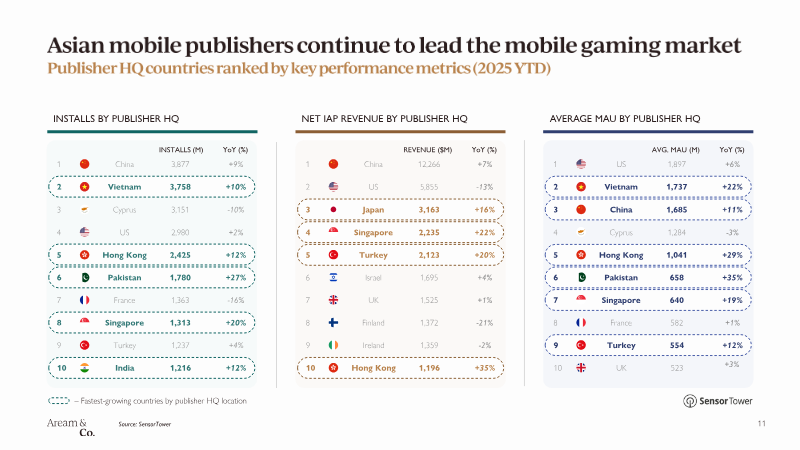
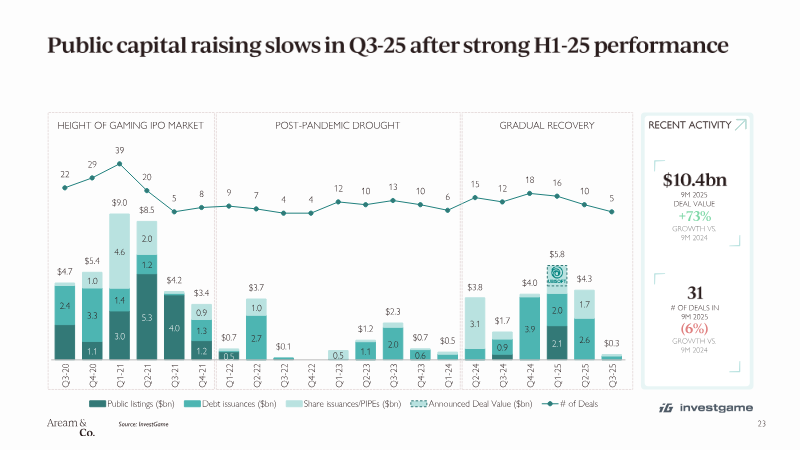

Video Game Market Update: Q3 2025
Aream & Co.'s Q3 2025 gaming market update describes a market that is healthy in its operating fundamentals but uneven in its capital flows.
- The $55 billion public takeover of Electronic Arts highlights a strategic shift toward large-scale consolidation as the primary driver of industry growth in Q3 2025.
- The launch of the Nintendo Switch 2 acted as a major catalyst for console sector strength, reinforcing the market value of established intellectual property.
- The global video game industry saw a Q3 2025 resurgence fueled by a rebound in mobile in-app purchases and strong performance across PC and console platforms.
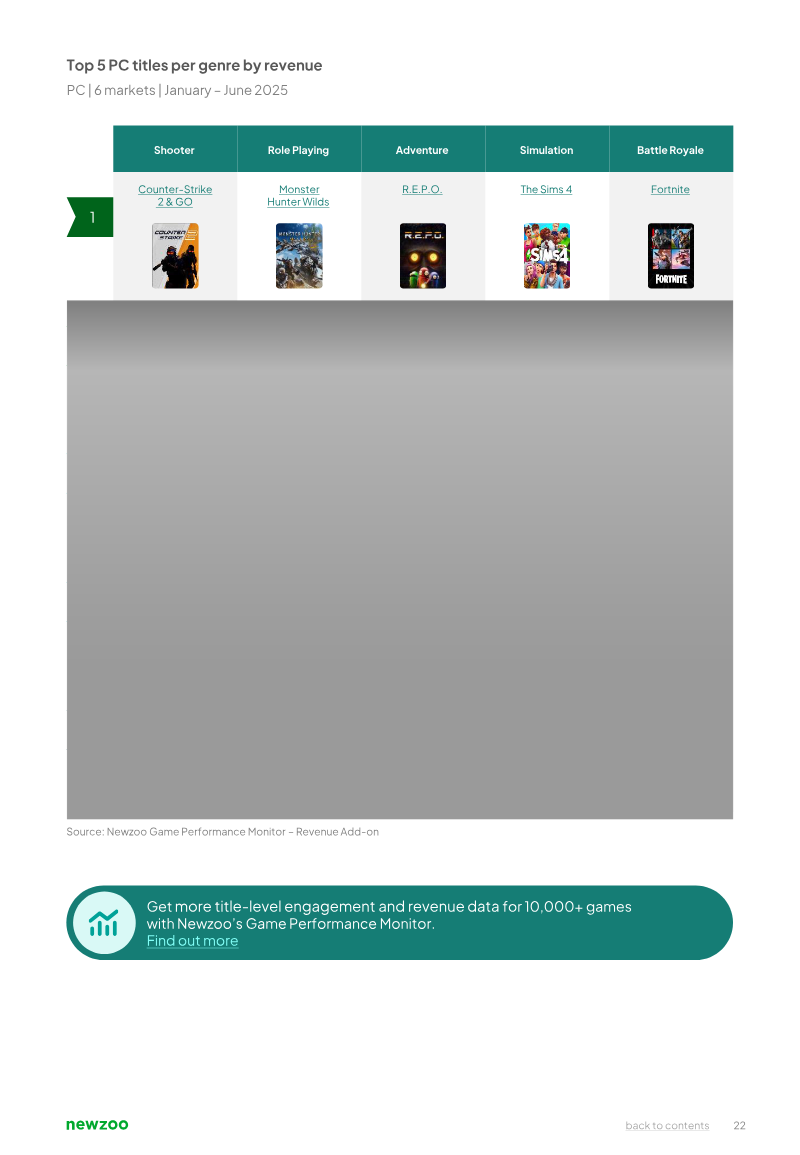
2025 Global Games Market Report
Newzoo's 2025 Global Games Market Report describes a maturing industry with moderate growth, and pairs its market forecasts with tactical analysis of launch strategy.
- The global games market is projected to reach $188.8 billion in 2025, a 3.4% year-over-year increase, driven by a player base that has expanded to 3.6 billion people.
- Mobile gaming remains the industry leader with $103.0 billion in revenue (55% of the total), while console gaming is expected to see the highest growth rate at 5.5%, reaching $45.9 billion.
- Average spend per player is declining, forcing a strategic shift toward long-tail engagement and retention rather than aggressive monetization in saturated markets.
Week in Mobile Games E65: Gamescom insights and India's shock real-money gaming ban
The mobile gaming industry is currently undergoing a structural transformation driven by regulatory pressures, shifting monetization models, and the globalization of high-budget Asian titles.
- India’s ban on real-money gaming has disrupted a sector that previously accounted for approximately 85.7 percent of the country's 3.7 billion dollar gaming industry.
- Publishers are increasingly adopting direct-to-consumer strategies to bypass traditional app store platform fees and constraints.
- The European Union’s Digital Markets Act has led Google to implement a two-tiered fee structure that developers claim complicates revenue optimization and hinders discoverability.
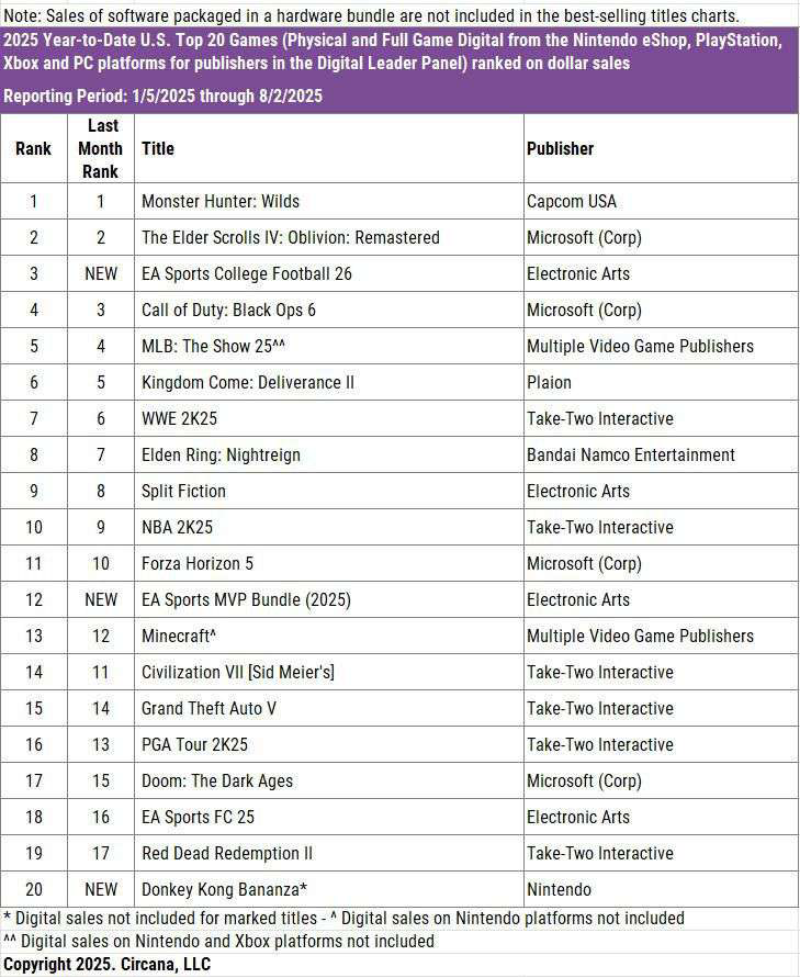
U.S. Video Game Market Highlights: July 2025
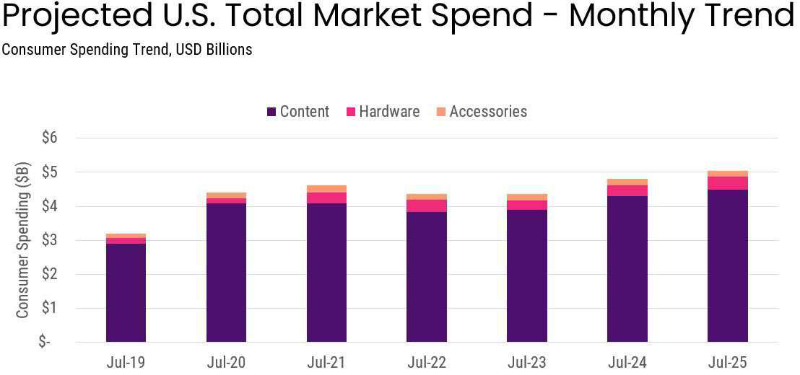
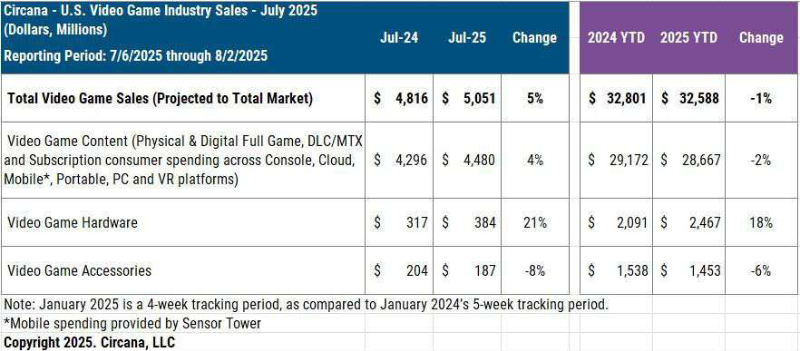
The United States video game market experienced a modest recovery in July 2025, with total consumer spending reaching $5.051 billion.
- Total U.S. video game consumer spending reached $5.051 billion in July 2025, marking a 5% increase compared to July 2024.
- Hardware sales were the primary growth driver, surging 21% to $384 million, while video game content spending rose 4% to $4.480 billion.
- Despite the positive monthly performance, total year-to-date market spending remains 1% behind the figures recorded during the same period in 2024.

TWIG #346: EU Wants to Ban Free-to-Play as Supercell Introduces a New Boss
The global gaming industry is currently navigating a period of intense regulatory and structural transformation.
- Proposed EU consumer protection regulations, including mandatory real-world currency displays and transaction warnings, threaten the free-to-play business model with potential revenue losses of up to 25% for major publishers.
- Industry leaders are actively mobilizing legal and lobbying efforts to counter the economic impact of these impending European regulatory changes on the market and its labor force.
- Gamescom 2024 highlighted a significant decline in venture capital for large-scale PC and console projects, signaling a shift toward more cautious spending and fiscal discipline.
🤯 Creative trends July 2025: Jonas Brothers, LEGO + Gucci in Mobile Ads? Yes, Really.
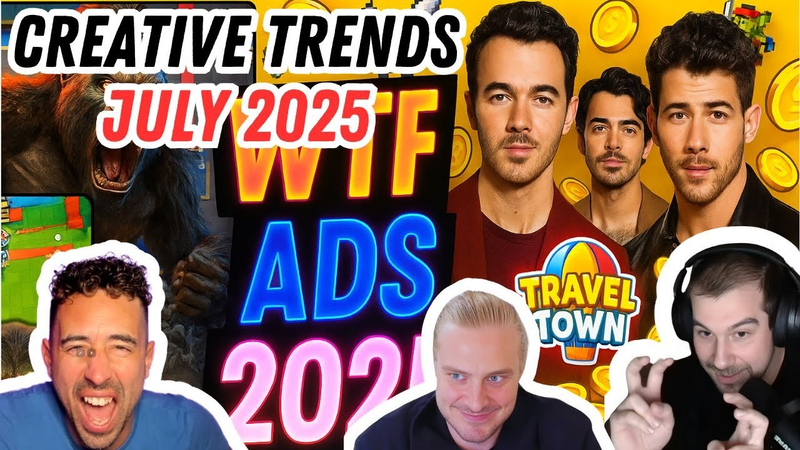
The mobile gaming industry in July 2025 is defined by a hyper-aggressive, scale-at-all-costs approach to user acquisition.
- Major publishers like iKame are achieving annual run rates exceeding $200 million by prioritizing high-volume, AI-driven creative experimentation over traditional production standards.
- The mobile gaming industry is shifting toward a model where success is defined by the ability to scale aggressive, high-frequency ad formats rather than original intellectual property or technical polish.
- Publishers are increasingly utilizing controversial and bizarre hooks—such as 'childhood trauma' tests, bait-and-switch tactics, and ASMR puzzles—to maximize immediate user engagement.
Vietnam’s Rise Is the most inspiring story in Gaming by Felix Braberg
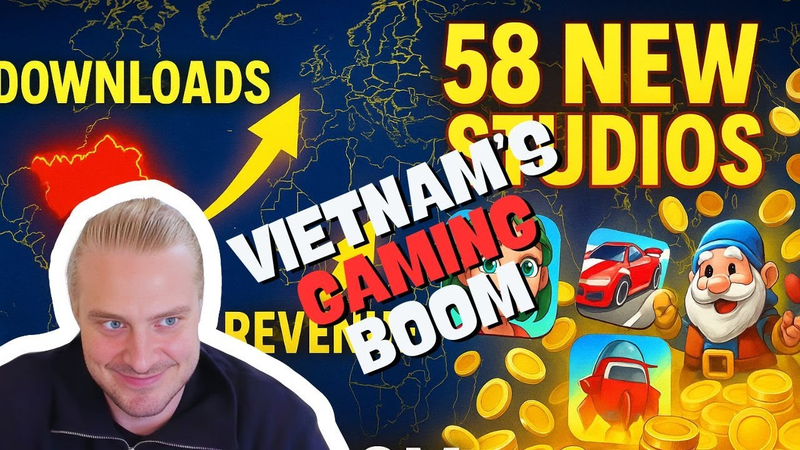
Vietnam has emerged as a significant force in the global mobile gaming industry, characterized by a rapid expansion in both the number of active studios and their collective revenue generation.
- Vietnam has established itself as a global mobile gaming powerhouse, with OneSoft currently ranking as the third-largest publisher worldwide by download volume.
- The local ecosystem is expanding rapidly, with the number of Vietnamese studios achieving over one million monthly downloads increasing by 64%—from 44 to 72—in just five months.
- Vietnamese studios are successfully pivoting from ad-supported hypercasual models to more sustainable in-app purchase (IAP) revenue streams.
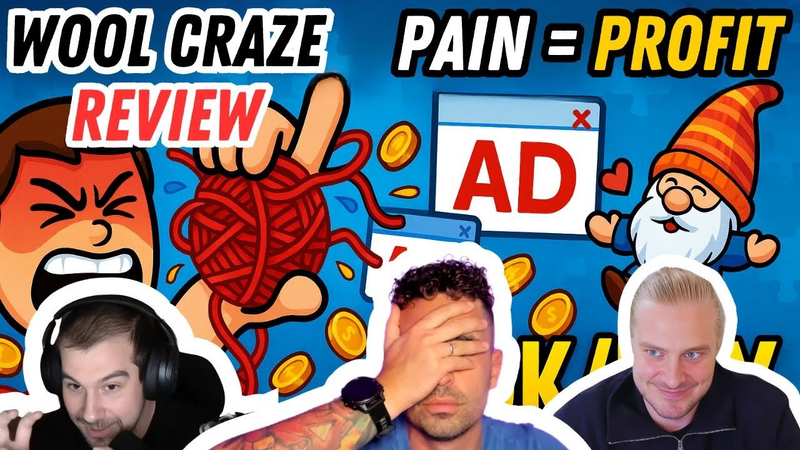
Wool Craze Story: The most annoying yet money printing game of 2025
Wool Craze represents a highly profitable evolution in the mobile puzzle market, demonstrating how aggressive monetization strategies can yield significant financial returns despite a polarizing user experience.
- Wool Craze is generating approximately $100,000–$120,000 in daily revenue from a daily active user (DAU) base of roughly 140,000.
- The revenue split is estimated at $60,000/day from in-app purchases (IAP) and $30,000–$40,000/day from aggressive ad placements, including up to eight rewarded ads and three interstitials per level.
- The game’s monetization strategy relies on 'Fail Packs' and a grind-heavy design that leverages sunk-cost fallacy, forcing players to endure long 20–30 minute levels.

Duolingo, Tinder, DraftKings: How Top Apps Got Gamified
Leading non-gaming applications are increasingly adopting core game design principles to transform utility-based platforms into habit-forming, interactive ecosystems.
- Non-gaming apps like Duolingo, Tinder, and DraftKings are adopting core game design mechanics—such as streaks, experience points, and live operations—to transform utility-based platforms into habit-forming, interactive ecosystems.
- The primary strategic objective of integrating gamification is to increase daily active usage and long-term retention by moving away from static interfaces toward dynamic, social environments.
- Platforms are diversifying their engagement tactics: Duolingo uses AI-driven role-playing for language acquisition, while DraftKings and Crypto.com utilize mission systems and social betting groups to turn solitary transactions into community-driven experiences.

TWIG #345 Clash Royale’s BIG Comeback and LEGO’s Digital Gamble
The global gaming industry is currently navigating a period of strategic recalibration, characterized by aggressive live-ops experimentation, the expansion of digital-first initiatives by legacy brands, and a critical focus on player retention mechanics.
- Clash Royale achieved a 39% year-to-date revenue increase in 2025 by integrating features from canceled projects and implementing more assertive monetization strategies.
- LEGO is internalizing digital development by establishing a dedicated London-based entity, reflecting a broader trend of legacy entertainment brands shifting toward first-party digital play.
- Modern engagement mechanics like daily streaks and loss aversion are effective for retention, but developers must manage the risk of player churn caused by the negative psychological impact of streak breakage.