Mobile reports and market data
Documents
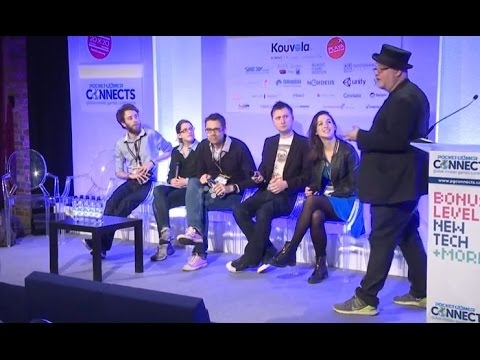
What's the point of the games media anyhow?
The role of games media in the modern digital landscape is defined by a shift from traditional gatekeeping to a diverse ecosystem of cultural analysis, community building, and specialized information sharing.
- Games media has evolved from a traditional gatekeeping role into a diverse ecosystem where professional journalism provides critical depth and authorial context that complements personality-driven influencer content.
- The media landscape is now segmented by audience demographics, with younger users favoring immediate, gameplay-focused video content while older, more engaged audiences prioritize the in-depth industry and cultural analysis found in established outlets.
- A multi-channel communication strategy is now essential for developers, utilizing social media for discovery, YouTube for community engagement, and traditional outlets for authoritative analysis.

Implications of Supercell's $1.7 billion 2014 revenue
Supercell’s 2014 financial performance serves as a primary indicator of the current state of the mobile gaming industry, characterized by extreme market concentration and high barriers to entry.
- Supercell generated $1.7 billion in 2014 revenue with $580 million in profit, marking a threefold increase over their 2013 performance.
- The mobile gaming market is characterized by extreme concentration, where a small group of elite firms including Supercell, King, Machine Zone, and Gung-Ho dominate the top of the charts.
- Top-tier developers maintain their market position by reinvesting 20% to 30% of their revenue into aggressive user acquisition and high-profile marketing campaigns.
Monetizer: World Zombination
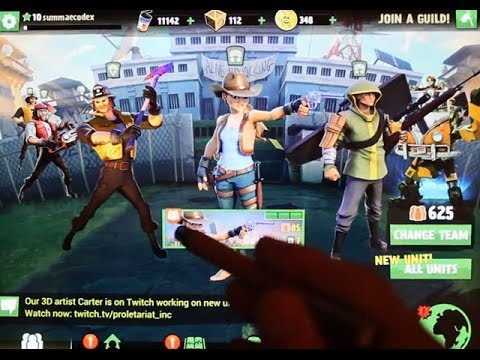
World Zombination, a tower defense title developed by Proletarian Inc., utilizes a traditional free-to-play mobile monetization model centered on unit collection and time-gated progression.
- World Zombination by Proletarian Inc. utilizes a traditional free-to-play model centered on unit collection and time-gated progression.
- The game features a three-tier currency system: two soft currencies (supplies and food) for upgrades and one hard currency (coins) for accelerating timers and purchasing unit packs.
- Core monetization is driven by players spending hard currency to bypass time-based bottlenecks in unit training and base construction.
Top tips for great game PR
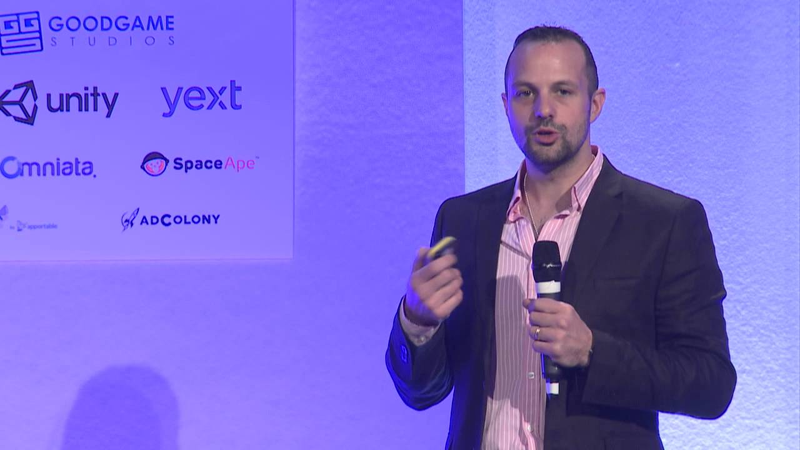
Securing effective media coverage for mobile game launches requires a strategic approach that prioritizes relationship building and professional preparation over mass-market solicitation.
- Cultivate long-term, non-transactional relationships with journalists to build trust and recognition well before a major game release.
- Provide media with early access to the game at least one week before the official launch to ensure sufficient time for review and coverage.
- Research and target specific journalists, platforms, and genres that align with the game's profile to avoid irrelevant pitches and maximize efficiency.
10 top legal tips if you're making a F2P game
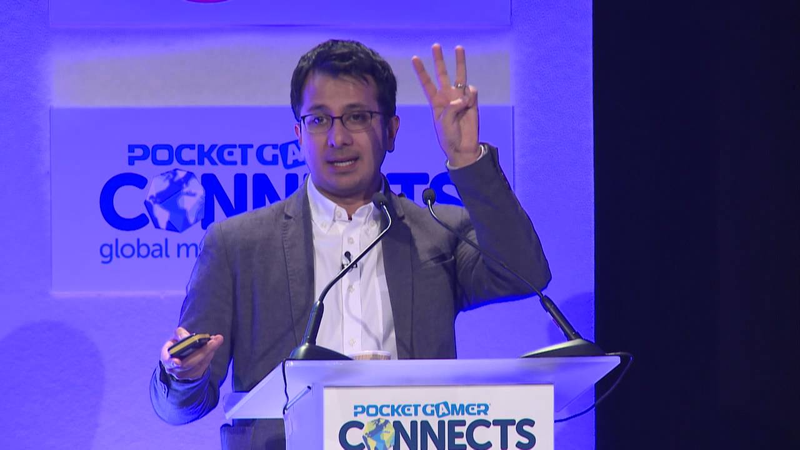
The free-to-play (F2P) gaming sector faces increasing legal scrutiny as regulators in the European Union and the United Kingdom prioritize consumer protection, particularly regarding children and the transparency of in-game monetization.
- Regulators in the UK and EU are shifting from general consumer protection laws to specific enforcement actions targeting F2P monetization mechanics and game design transparency.
- Marketing a game as 'free' is increasingly viewed by regulators as inherently misleading if the title contains in-app purchases.
- Developers must separate transaction flows from core gameplay and provide clear, non-aggressive options for users to decline in-app purchases.

Why KLM is publishing mobile games
KLM Royal Dutch Airlines utilizes mobile gaming as a strategic tool for brand engagement and customer acquisition, moving beyond traditional marketing to foster long-term relationships with a global audience.
- KLM uses mobile gaming as a strategic tool to increase brand awareness in key international markets like the United States and China, where traditional advertising is less effective.
- The airline’s flagship simulation game, Aviation Empire, has achieved 700,000 downloads and maintains user engagement through 20-minute average session lengths.
- The gaming strategy bridges online and offline experiences by using GPS check-ins to allow real-world passengers to integrate their actual travel activities into the digital game environment.

Why Nordeus is opening an office in London
Nordeus, the developer behind the successful football management title Top Eleven, has established a new studio in London to expand its global footprint and tap into a broader talent pool.
- Nordeus has established a new, autonomous studio in London to access a broader talent pool and expand its operations beyond its Belgrade headquarters.
- The London studio is tasked with defining its own creative direction and exploring new genres, with a goal to launch at least one new title within the year.
- Nordeus is currently scaling the London office by hiring for key roles, including game designers, developers, and artists.
Very Big Indie Pitch 2015 winner - Joel Nystrom from Ludosity
The Swedish developer Ludosity, established in 2008, emphasizes the growing importance of physical, social, and unconventional gameplay in the current indie market.
- Ludosity, established in 2008, identifies a market shift toward physical and social gameplay, exemplified by their collaborative title 'Progress' which uses shared physical discomfort as a core mechanic.
- Success in the volatile mobile gaming market requires developers to maintain strict product focus and avoid the common pitfall of over-committing to excessive feature sets.
- The mobile industry is currently defined by a 'gold rush' mentality, characterized by high competition and the prevalence of low-effort app flipping and re-skinning.
Why Vlambeer's Rami Ismail is against the current implementation of F2P
Rami Ismail, co-founder of the independent studio Vlambeer, argues that the current implementation of the free-to-play (F2P) business model is fundamentally exploitative and creatively bankrupt.
- Vlambeer co-founder Rami Ismail argues that current free-to-play (F2P) models are exploitative because they often involve intentionally degrading a game's design to sell back the intended experience.
- The prevailing F2P reliance on 'pay-to-win' or 'pay-to-skip' mechanics shifts the player's goal from engaging with gameplay to paying to avoid it.
- Console and handheld platforms currently hinder developers with archaic, slow certification processes that contrast with the rapid, iterative update capabilities available on PC.
Alistair Aitcheson on why you should be always pitching
The practice of pitching serves as a critical tool for indie developers, functioning not only as a promotional strategy but as a fundamental exercise in game design refinement.
- Pitching serves as a diagnostic tool that forces developers to identify and prioritize the most engaging mechanics by articulating the game's core value proposition to others.
- Developers should prioritize immediate accessibility and intuitive rules, allowing the game's core loop to demonstrate its own merit without requiring extensive explanation.
- Treating every interaction as a pitch helps developers bridge the gap between their intended design and the actual player experience.
LabLike's Olaf Morelewski on making a game based on Mozart's Magic Flute
Magic Flute by Mozart represents a unique intersection between traditional performing arts and mobile gaming.
- LabLike, a Warsaw-based studio, developed the mobile game 'Magic Flute' by translating their professional expertise in theatrical video set design into a cubic, sliding-puzzle format.
- The development process prioritized iterative gameplay mechanics over purely aesthetic fidelity to ensure the title functioned as an engaging game rather than just a visual showcase.
- The studio utilized industry networking events, such as the Big Indie Pitch, to gather critical peer and judge feedback that directly informed the final product's refinement.

Top 50 Developers of 2015: #2 GungHo Online
GungHo Online Entertainment secured the number two position on the 2015 Top Developers list, primarily driven by the sustained dominance of its flagship title, Puzzle & Dragons.
- GungHo Online Entertainment’s 2015 market position was anchored by Puzzle & Dragons, which at its peak accounted for 50% of all consumer spending in the Japanese mobile gaming sector.
- The company is actively diversifying its revenue streams by using cash flow from Puzzle & Dragons to acquire console developers, including Grasshopper Manufacture, and investing in brand extensions like theme parks.
- GungHo is expanding its global footprint through strategic partnerships with Tencent and equity stakes in Chinese developers such as Chukong to penetrate the Chinese market.