1 free read left. Create a free account for unlimited reading + AI research.
Create free account
Why Vlambeer's Rami Ismail is against the current implementation of F2P
Key insights
6 takeaways- 01Vlambeer co-founder Rami Ismail argues that current free-to-play (F2P) models are exploitative because they often involve intentionally degrading a game's design to sell back the intended experience.
- 02The prevailing F2P reliance on 'pay-to-win' or 'pay-to-skip' mechanics shifts the player's goal from engaging with gameplay to paying to avoid it.
- 03Console and handheld platforms currently hinder developers with archaic, slow certification processes that contrast with the rapid, iterative update capabilities available on PC.
- 04Ismail advocates for more flexible update systems on handheld ecosystems to better support the development cycles required for modern titles like Nuclear Throne.
- 05The independent game sector is currently fragmenting into diverse subcultures, ranging from small-scale experimental projects to larger, mid-tier productions.
- 06Toxic industry discourse and hostility toward the diversification of game perspectives threaten to discourage creators and undermine the development of safe, inclusive environments.
Ask AI about this video
Transcript
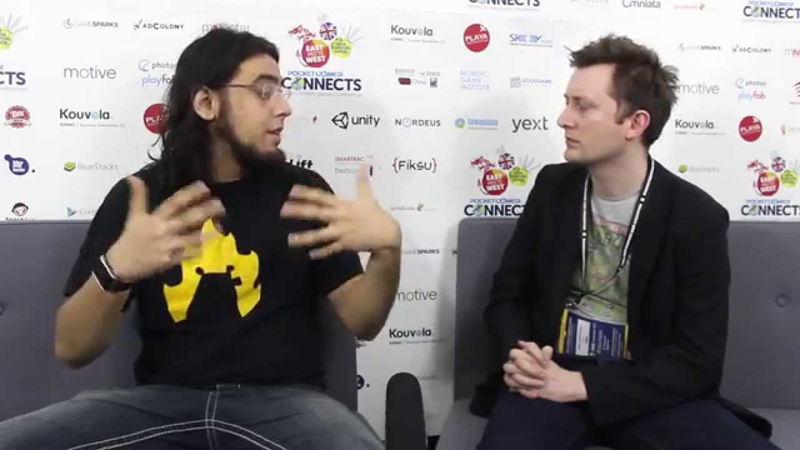
[Applause] yeah I'm Ramy is I'm one off of Dutch independent stud of lambir we're best known for games like Super Crate Box ridic fishing Lu trousers and we're currently working on Nuclear Throne Nuclear Throne it's coming to Vita yes when is it coming to Vita um so the way it works is it is currently in Early Access on PC Mac and Linux and we update the game weekly um it's really hard to do something like that on uh console or handheld platforms due to certification and brocy stuff like that um so the way it's going to work is when the game hits version 1.0 when it's ready for release uh we'll also um try to rapidly have it out on Playstation feder okay and so is the PlayStation beta version going to be constantly updated as well so that's kind of the the problem that we we have
is on handheld it that's an almost impossible thing to do uh a again very often speak stays in uh certification or review for two or 3 weeks so weekly reviews is just not a possibility so we want to get the game to the point where we don't have to update with that frequency and instead the updates can focus on either larger things or buck fixes and we just do those in time when we have the opportunity to instead of having a really strict schedule like we do now okay so um for those that haven't heard of Nuclear Throne what's the game about so Nuclear Throne is a top down Rogue like about mutants in a post-apocalyptic World um and that might be the most Indie you can do right now uh it's a game we've been working on for a while and um it's basically it's a it's mostly a very fast action game if you really like action games if you like top down Shooters that's effectively what it is but it mixes in a lot of ideas from Rogue like so it's
procedurally generated um you don't really know what you have to deal with so instead of you know memorizing levels instead of memorizing strategies you have to adapt to you know the cards you get dealt and then figure out how to play with that um it's really really fast it's brutal it's not a simple game we've people that have played for over 300 hours that still haven't even seen the final boss yet so um there's there's quite a bit of content but mostly like earning that content had to feel worthwhile we really wanted that to be uh an achievement so it's just really hard so when I think of um vamir games I kind of I kind of see you guys as the modern arcade game makers thank you um I I I sort of see your games as I I almost feel like you're a developer out of like 30 years out of time I feel like you should be making games from Midway in in the so is this is this kind of a what are the influence of it is there Aon in
here or no not really like we we I mean there is obviously there's there's things from our past in that game but we really tried to make games without using other games as inspiration so Nuclear Throne is more inspired by really bad science fiction books from the 70s you know and obviously like arcade is sort of what we do um JW my colleague is exceptional and getting like a game to feel thiso and like powerful um we've we've learned and like gotten better at creating really tight feedback loops so that you know when you die you just go back in and go again and you know when you shoot something it feels nice when you uh pick a mutation it feels significant like that sort of stuff is sort of what we do and that is very much inspired by the ideals of arcade games just without you know arcade games had to be hard because they needed you to throw in more coins so they needed you to die we don't necessarily need to do that but the interesting thing about Arcade is that it also meant that your achievement if
you could do it on like the further you could get on a single coin the more impressive it was so there was like a sense of achievement that we feel it's kind of last so I mean talking about talking about platforms and talking about constantly feeding a game money uh mobile clearly is a space where that happens and yet there's no uh version so far coming to mobile of nuclear threat so um and yet there the the sort of the the the free-to-play model itself is very much that that coin feeding mentality and obviously you with Ridiculous Fishing you very clearly went away from the freeto play stuff and there were critics who said maybe there should have been that are you kind of staunchly anti-free to play so the the question isn't necessarily whether I'm freeto play I think uh because I'm not anti freeo play I'm not against freeo play I'm against the current implementations of free to play I think the way free to play is done in in a lot of games on mobile now is
um exploitative it's like not not a not a word that I think is overreaching I think I think a lot of it also goes against what I believe are the fundamentals of video games like the idea that you know you could pay to skip certain things just makes me feel like we're making games so that people can play them not so that they can pay money not to have to play them like there's there's just something that fundamentally differs between making that sort of game and making the kind of game we do so what do you feel as a Creator is going to change that model for the better is it going to take more exciting freeto play creators or I think so I think what you're seeing right now is a lot of people are experimenting with uh business models not because they see an opportunity to make lots of money but because they see an opportunity to just like play around with how that works like there are arguments that you could make for free to play like a lot of people ask like what isn't it fair to let people at least try before they pay and it's like
that sounds really fair yeah sure um so what we usually do is we have an old version of the game available that people can play and if they like that then you know you can buy the game and play it um so there there's Arguments for freet to play that are absolutely correct it's just that the way people do it now is like pay to not play or pay to win or pay and it's like that's that's the opposite of what I would like it yeah it's it's kind of boring I I suppose like it's almost feels like uh creatively bankrupt to to make a game about making like that is essentially just to make the money yeah no I the way I always think of it is that the best the best design and this is not just appli to video games this apply to everything is not when you can't add more to it it's when you can't cut away things anymore right you want to be the best version of the game possible now to do something like free to play what you need to do is you need to make the best version of your game possible and then make it worse so people can pay to make it that version again right so people are aware that what they are giving people isn't the optimal version of the
game and that's a necessity for a model like that but that for us having a lot of people play a sub optimal version of our game feels like betraying what we're doing right so to to come back to that point then like talking about a a slightly suboptimal version of a game obviously you talk about Nuclear Throne being a game that's constantly updated it has all of those things and yet with major console platforms there isn't that opportunity to uh have all of those updates do you see the console perhaps even the V version as a not the version of Nuclear Throne so I think when we get there when we get to the 1.0 it will be that version because we're not releasing on those platforms unless we have that version right but I do really think that there's a huge opportunity for console there and you know something like Early Access has shown that you can't just entrust every developer with the um responsibility of putting a game on a platform that isn't done and then expecting them to finish it like we've seen that over and over that developers um abandon game that people have paid
for that people uh deliver broken like actually broken bills like Early Access should not be a platform where people pay to be a beta tester right like beta testing is a paid profession in our industry that's not something you you don't pay for the honor of beta testing like for Nuclear Throne it's honestly that we think the game is solid and that it's good but that it can be better and we need different eyes on the game to do that like recently we we realized that our community is just too good at the game so we actually we actually ended up uh doing a big uh promotion where everybody that had bought the game got a free copy of the game to give to a friend that they thought would give good feedback we just literally asked our community like can you do that and things like that things that feel very much 2014 2015 um just aren't possible on consoles yet like something like Early Access like consoles obviously have a stricter version of quality control than um a lot of other platforms
do so for example on VA it would be really good to have a similar system where people can push updates um rapidly right like that shouldn't be a process that takes 3 weeks especially not with um Android and iOS on Android your updates being instantly on iOS like going through in a week and in PlayStation VA you receiving a booklet that's about this thick with rules yeah of what your game has to app is that frustrating to you as a career I mean it is frustrating I get it like these companies are huge huge companies that are in many ways very archaic and um I know they're working on it like we're talking to them about Nuclear Throne about you know our frustrations with certain parts of the development process but on the one hand you get an environment that is slower that's more archaic on the other hand it's also a platform that doesn't have a lot of the issues that you'll get on iOS or Android sure um so they have benefits you know there's advantages and disadvantages is it's just at this point I think that
there are opportunities that um that would improve experiences on VA on 3DS just on the handheld Market that would just be a minor update of how things work now yeah so um let's talk a little bit about uh let's talk a little bit about the current state of games and and and the future you on a very bigy pitch uh panel you were judging some of the uh some of the entrance um I guess first of all did you see anything there that was particularly mind-blowing and second of all was it a good representation of where you sort of see indie games at the moment or is it much more of yes and no yes and no I so the interesting thing is Indie is a strange in a very strange place at the moment like it's it's very hard to still say Indie um because one of the interesting things that has happened over the past 5 to like eight years is that the industry has grown so much has become so broad includes so
many experiences perspectives ideas motivations that you can feel it fragment like it's fragmenting almost violently like all these different pockets of the games industry start to exist and Indie is very much one of those pockets that's fragmenting like some independent developers are moving to like sort of a double a location people like um Mike ble working on something like volume or cppy Barrow working on below you know those are not the same Indies that we talk about when we talk about um Michael bro working on like 868 hack or zaga or um you know smaller smaller people smaller developers working on uh twine games that you know are fascinating but they're just not the same thing you can't really you can't really say they're the same thing either course so the Indie pitch was interesting I saw a bunch of really really good stuff there was a game called uh progress that actually ended up winning that I was um extremely impressed by it was such a good use of um the the games context like on the iPad and like basically
using all the functionality on the iPad without feeling like it was shoehorned in you know it was another game called um Magic Flute Magic Flute y Magic Flute I was very impressed by um because the visual style was very very striking they used very bright blues and pinks um but the game is actually inspired by a Oprah play uh a Mozart Opera play um and they basically translated the set from the Opera into a game and it's a very Progressive set it's a sort of a grit Cube but making that into an actual video game uh is very interesting and like it's a game that has tremendous potential and I'd love to you know see that work out so I'm going to keep my eyes on that one okay and um and and finally um you were talking about the Indie Community sort of fracturing and splintering off yeah obviously late 2014 early 2015 still um there is a lot of fracturing going on within the game Space at the moment
you're a very vocal um well you're a very sort of vocal personality on Twitter and other social media and in the space itself about sort of about the culture of games I suppose um would you say there's there's a specific thing at the moment going on within the games community at large that really needs to be addressed at the moment is I mean obviously like the fracturing takes has good things it has bad things like good things are for example the um the twine space like growing to have its own Heroes its own thought leaders its own methods of reaching out of of getting the people that want to play those games to play those games like it's it's creating its own Subspace its own subculture is very much a part of games but also has its own way of of growing independently of the industry and that's a good example a bad example is for example something like um gamergate the controversy that has been sort of ravaging through the industry where um a part of the industry a group
of Gamers that has very specific views of the industry just basically kind of don't want the other views involved in what they see as right and you see certain you know you see the allegations of of certain you know um media like shift like otaku is is something that tries to cover all of games um and that just means that they obviously have to include stuff that their uh former audiences don't necessarily enjoy and the violent response to that is obviously a negative is obviously a bad thing so there are there are challenges and I think a lot of these will go away over time like these are things that will uh eventually this will just be the new status quo it's just that while these things are happening it's something we need to be really aware of and like keep talking about and keep calling out when something terrible happens because uh it would be terrible to see so many good game developers game designers just be afraid of making video games like we should not be in a space
where game developers are afraid of of making games or players are afraid of playing games like this should be a safe space thank you
Summary
Rami Ismail, co-founder of the independent studio Vlambeer, argues that the current implementation of the free-to-play (F2P) business model is fundamentally exploitative and creatively bankrupt. He posits that the model often forces developers to create an optimal version of a game and then intentionally degrade it, requiring players to pay to restore the intended experience. By prioritizing monetization over gameplay, he suggests that many F2P titles shift the focus from playing games to paying to avoid playing them. While he acknowledges that F2P can offer a fair "try-before-you-buy" experience, he maintains that the industry’s prevailing reliance on "pay-to-win" or "pay-to-skip" mechanics contradicts the core values of game design.
The discussion also highlights the challenges of modern game development, particularly regarding platform updates and the evolving definition of independent games. Ismail notes that while platforms like PC allow for rapid, iterative updates—essential for titles like Nuclear Throne—console and handheld ecosystems remain constrained by archaic, slow certification processes. He advocates for more flexible update systems on handheld devices to better support developers. Furthermore, he observes that the independent sector is fragmenting into diverse subcultures, ranging from small-scale experimental projects to larger, mid-tier productions.
Finally, Ismail addresses the broader cultural climate within the gaming industry, noting that while the diversification of game perspectives is a positive development, it has been met with resistance and hostility from certain segments of the community. He emphasizes the necessity of fostering a safe environment for both developers and players, warning that toxic industry discourse threatens to discourage creators from pursuing their work. These insights reflect a broader call for the industry to prioritize sustainable, player-centric design and inclusive community standards.













Comments