Mobile reports and market data
Documents
Zombies, Run! CEO on the challenges of smartwatch gaming
The wearable gaming market, specifically regarding smartwatches, presents a significant but challenging frontier for developers.
- Smartwatches should not be treated as smartphone replacements, but rather as niche tools for fitness and movement where sensor accuracy and body positioning provide unique advantages.
- Developers must avoid complex visual interfaces on smartwatches, as forcing users to look at small screens while moving is inherently flawed and unsafe; instead, use extreme simplicity like color-coded notifications.
- The wearable gaming market is currently constrained by high hardware costs, limited battery life, and insufficient consumer demand, making it a secondary platform rather than a mass-market powerhouse.
Nordic Game 2015 Diary: Day 2
The Nordic Game 2015 conference served as a focal point for the international mobile gaming industry, highlighting the maturity of the Nordic region as a global leader in game development.
- Journalists receive an average of 50 pitches daily, totaling 13,000 per year, necessitating highly concise outreach strategies to secure media coverage.
- Developers can improve media engagement by embedding visual assets directly into emails, providing immediate access to playable builds, and including gameplay trailers.
- Blending three-lane auto-runner mechanics with RPG elements offers a strategic opportunity to bridge the gap between casual players and dedicated RPG audiences in a saturated market.
Turn virtual items into real cash with FabZat
FabZat provides a turnkey in-app merchandising solution that allows mobile and web game developers to convert virtual assets into physical products.
- FabZat provides a turnkey SDK for mobile and web games that enables in-app purchasing of physical merchandise like 3D-printed figurines and apparel.
- The platform operates on a revenue-sharing model where publishers retain 70 percent of profits with no entry or recurring subscription fees.
- The service handles the entire logistics chain, including payment processing, production, and global shipping to over 200 destinations.

DICE and Massive founders on Nordic gaming scene
The Nordic gaming industry has evolved from a nascent collection of hobbyist projects into a robust, global epicenter of game development.
- The Nordic gaming industry evolved from a 1990s hobbyist demo scene into a global development hub, catalyzed by the mid-1990s success of titles like Battlefield.
- The industry has transitioned from a landscape of isolated studios to a diverse ecosystem anchored by major companies and a dense network of spin-off developers.
- The democratization of development tools, specifically Unity and Unreal Engine, has significantly lowered entry barriers and reduced reliance on traditional publisher-led models.

How to win at networking
The Nordic region maintains a reputation as a global powerhouse for mobile game development, exemplified by the success of titles like Angry Birds.
- Building a robust professional network is the primary driver for long-term success in the mobile gaming ecosystem, often outweighing technical skill alone.
- Effective networking requires proactive engagement, such as initiating conversations with strangers rather than staying within established social circles.
- Strategic preparation, including pre-arranging meetings before events and using recognizable branding like company apparel or recent titles, significantly increases professional visibility.

Why messaging company Palringo acquired Tribe Studios
The acquisition of Helsinki-based Tribe Studios by the mobile gaming network Palringo represents a strategic effort to advance in-game chat technology and social gaming integration.
- Palringo acquired Helsinki-based Tribe Studios to pivot from a communication utility into a developer of proprietary, social-centric mobile games.
- The acquisition aims to integrate Tribe Studios’ expertise in asymmetric multiplayer mechanics into Palringo’s existing platform, which supports simultaneous group communication for up to 2,500 users.
- Palringo is developing an open software development kit (SDK) to provide external developers with access to its social infrastructure, including leaderboards, gifting, and group management tools.
King vs Zynga
This analysis examines the financial performance of major mobile gaming companies as of the first quarter of 2015, specifically contrasting the profitability of King and Tencent against the ongoing losses at Zynga.
- As of Q1 2015, King maintains strong profitability with $164 million in profit on $570 million in revenue, while Zynga reports a $47 million loss on $183 million in revenue.
- King is prioritizing shareholder value to combat a stagnant share price, utilizing $303 million in cash reserves for dividends and share buybacks.
- Zynga is undergoing a 18% workforce reduction, cutting 364 employees as it attempts to pivot from a legacy social-gaming model to mobile-centric operations.
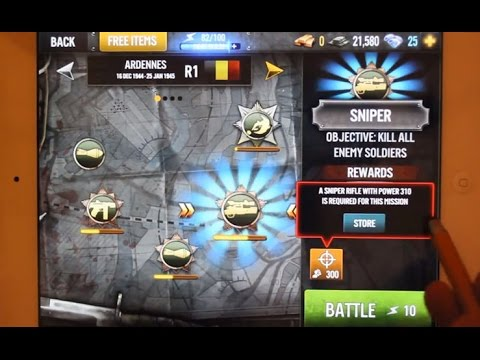
Monetizer: Frontline Commando WWII
Frontline Commando WWII serves as a primary case study for aggressive monetization strategies within the free-to-play mobile gaming sector.
- Glu Mobile utilizes a rigid gating system in Frontline Commando WWII that forces players to meet specific equipment power thresholds to progress, effectively mandating financial investment.
- The game intentionally restricts the acquisition of hard currency through standard gameplay loops to create artificial scarcity and drive direct conversion.
- The user interface is designed as a high-pressure retail environment, featuring persistent prompts for VIP events, special offers, and incentivized ad walls that prioritize monetization over gameplay.
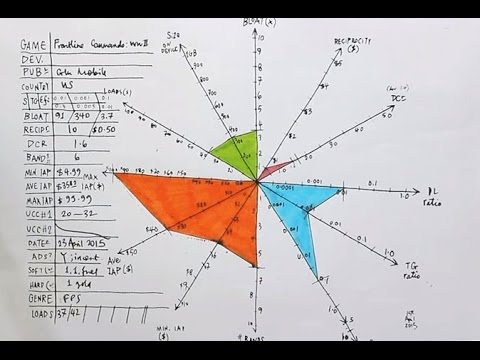
A visual representation of F2P mobile game economics
A multi-axis graphical framework provides a standardized method for visualizing and comparing the economic and technical performance of free-to-play (F2P) mobile games.
- A multi-axis graphical framework allows for the standardized comparison of F2P mobile games by plotting technical performance, monetization structures, and market success onto a single visual diagnostic.
- The framework evaluates games across four specific dimensions: technical efficiency (load times and install size), reciprocity (currency grants and discount ratios), commercial success (app store rankings), and IAP structure (price band variety).
- Technical efficiency metrics focus on barriers to user retention by measuring load times and the discrepancy between advertised and actual installation sizes.

Monetizer: Empires & Allies
Empires & Allies, a mobile strategy title developed by Zynga, represents a strategic evolution of the established Clash of Clans template.
- Zynga’s Empires & Allies differentiates itself from the Clash of Clans template by incorporating tactical elements from PC real-time strategy games, such as stealth units, reinforcement drops, and active battlefield power-ups.
- The game utilizes a monetization bottleneck by restricting players to a single engineer, which forces spending on hard currency to accelerate construction times.
- The hard currency, gold, is sold in five price tiers ranging from $5 to $100, with a 1.4x discount ratio applied to the highest $100 purchase.
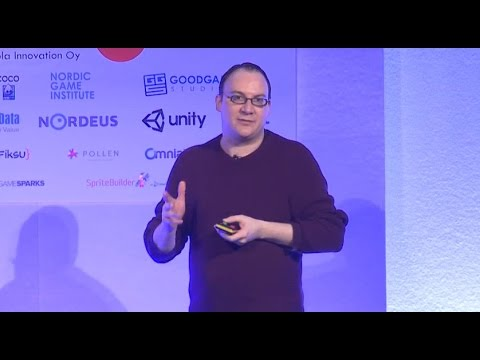
The mobile F2P social casino market explained in 15 minutes
The social casino industry, defined as free-to-play games rather than real-money gambling, represents a significant and maturing sector of the global gaming market.
- The social casino market is highly consolidated, with the top five companies—including Caesars, IGT, and Big Fish—controlling over 50% of total industry revenue.
- Entering the market requires significant capital, with successful titles now demanding at least $2 million in production budgets and over $10 million in marketing spend.
- The industry is experiencing a major structural shift from Facebook canvas to mobile and tablet platforms, as Facebook revenue growth has plateaued.

Glu Mobile vs Gameloft
The mobile gaming industry is currently defined by a stark divide between legacy publishers struggling to adapt to the free-to-play (F2P) model and agile developers achieving rapid growth through breakout hits.
- Glu Mobile achieved 56% year-over-year revenue growth in Q1 2015, reaching $69.5 million, by successfully pivoting to a high-monetization free-to-play model.
- Gameloft reported $71 million in Q1 2015 revenue, representing a 17% year-over-year increase, but continues to struggle with sustaining long-term hits in Western markets.
- Glu Mobile’s revenue is heavily concentrated, with the 'Kim Kardashian: Hollywood' title accounting for one-third of the company's total quarterly earnings.