1 free read left. Create a free account for unlimited reading + AI research.
Create free account
Alistair Aitcheson on why you should be always pitching
Key insights
5 takeaways- 01Participating in structured forums like the Big Indie Pitch facilitates networking with journalists and industry leaders, regardless of the competitive outcome.
- 02Developers should prioritize immediate accessibility and intuitive rules, allowing the game's core loop to demonstrate its own merit without requiring extensive explanation.
- 03Pitching serves as a diagnostic tool that forces developers to identify and prioritize the most engaging mechanics by articulating the game's core value proposition to others.
- 04Treating every interaction as a pitch helps developers bridge the gap between their intended design and the actual player experience.
- 05The iterative process of pitching clarifies a game's identity, enabling developers to focus their resources on the features that provide the highest impact on user experience.
Ask AI about this video
Transcript
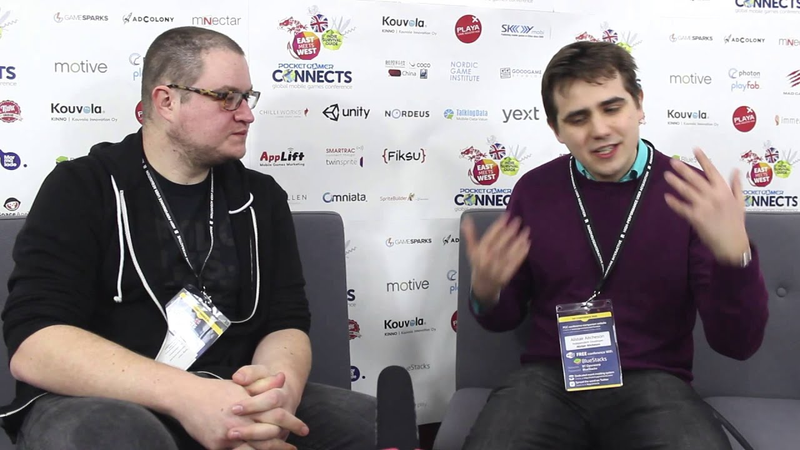
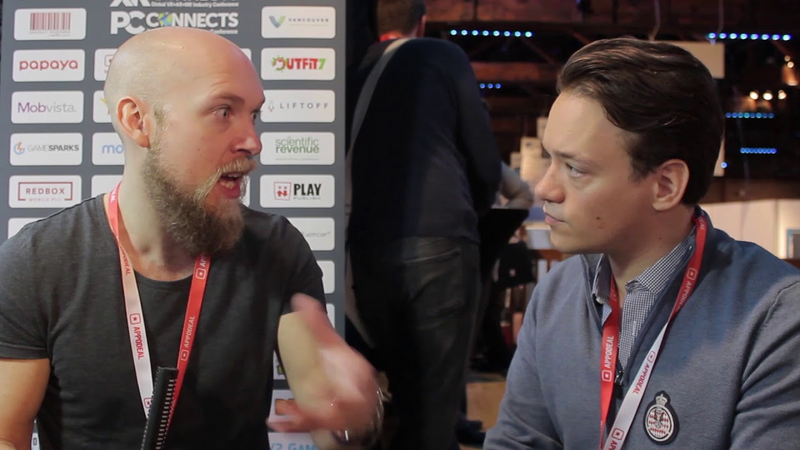
[Applause] har from Pocket game here I'm with Alis hon uh who won the big Indie pitch at Pocket Gamer connects last year so um how's how how's your year been since yeah it's been a pretty good year um like 2014 was really exciting um Tap Happy sabotage um went on to release on the Windows 8 store I've taken it like to all kinds of different events had it out at Gamescom had it in Berlin for the local multiplayer conference out there um I've taken it to develop conference and had it played at one of the parties there which um you know really good fun and uh uh egx it was in the left field collection there and I it's just been fantastic like the way people respond to it as a game um the game is kind of multiplayer game to be played on a big
touch screen um so the one I usually take to events is 27 in um but I have played on bigger ones um I got invited to the Microsoft HQ and reading to play it on their 70in touch screen and that was pretty amazing um the game supports as many as 52 players on one screen and um so when you get a big crowd of people around and you're encouraging them to get into each other's personal space grabit each other's arms you know putting them in situations where they're bound to cheat accidentally and once they've cheated accidentally they're going to start doing it intentionally I mean it's yeah people have latched on to it really well and it's just you know become a real spectacle you know when when I take it around placees and it's really nice to know feel like yeah I made that yeah um so like how did the big Indie pitch go for you mean what did you take away from that I guess I think I mean my process of pitching cuz obviously I couldn't take the
I had have the screen with me at the event and demoing it on a stand during the day but to do the pitching I had to take this tiny little 10in tablet up and try and you know show the experience and you know hope that it would be match the the big screen experience um but also um you know trying to describe it in a short period of time and and I think I mean obviously I don't know what worked for me but I feel went right was that I just put the game in front of the table um and and told them you know be like okay here's how you start start a game for them Press Start and then because the game so instant to work out what you what you're supposed to do they immediately started playing and so I didn't I mean I did do talking I did talk about what it was all about but the game spoke for itself um and I mean that's one of the things about the design of the game is that the rules are
incredibly simple to pick up um and as a player you know you're just looking for a picture you're looking everyone's got a different picture you're looking for your picture you tap your picture before anyone else Taps theirs you get a point it's a really simple rule so everyone feels like they've mastered it quickly um and when you feel like you've mastered it you feel bad when you don't win so you get competitive and in that short space of time that sort of vibe of the game seemed to come across with the judges and I was a little worried at the time because some I thought are they actually listening to me and then I realized no if they're not listening to me it's because they're playing my game and so something must be going right and I think that being able to latch on to what it is work that works about the game instantaneously is I mean I feel like it worked well for me in the pitch but I also think it's an important part of any game design if you want to get people hyped about it they need to get get it quickly that's what work with
Flappy Birds yeah absolutely so I mean would that be a recommendation for others who are thinking about pitching to to you know get the game into the judge's hands and make you know as clear as possible from the Geto clear as possible the closest you can get to as soon as you give it to them they're enjoying the best bit of the game yeah that's I think that's the best way to do it as far as I can understand so you know would you recommend other people to to you know come to the big pitch and give it a try and definitely I think I mean regardless of regardless of whether you win or not you have an opportunity to make a connection with lots of people you know games journalists prominent people in the industry um and these are really useful connections to make and you know they will pay dividends as time goes on and um it's ni it's a nice sort of comfortable easy way to make that first connection without having to worry about oh I don't want to approach someone if they're having a conversation
with someone and so it's nice you know you can introduce yourself but that process of pitching I mean I find I do it you all the time whenever I I'm trying to explain my game to my friends um or trying to explain it to to journalists or to other game designers I'm practicing my pitch and it's not an intentional thing it's just it's just what you're kind of automatically doing um and practicing your pitch is not just about trying to get something out the end of it when you try to describe your game you verbalizing what your game is about and why people should be interested in it focuses your mind on what's actually important for you to be working on and what are the most important bits of your game that your game needs to highlight so say if your game has some really exciting mechanic that whenever you talk about it people get really excited about it and then you look at your game design you go well they only get to use that mechanic in the you know in the third
level why don't I put that mechanic in right from the minute you turn it on and the title treatment should have a picture of that mechanic in it and the title should refer to that mechanic because that's what people get excited about and so I mean the whole pitching process is really informative for game design that's my take on it that's great that's great thank you very much for your time yeah cheers thanks very much
Summary
The practice of pitching serves as a critical tool for indie developers, functioning not only as a promotional strategy but as a fundamental exercise in game design refinement. By consistently articulating a game’s core value proposition to journalists, peers, and potential players, developers are forced to identify and prioritize the most engaging elements of their projects. This iterative process helps clarify which mechanics resonate most strongly with an audience, allowing developers to shift those high-impact features to the forefront of the user experience.
Effective pitching relies on immediate accessibility and the ability to let the game speak for itself. When a game’s rules are intuitive and the core loop is instantly graspable, it removes the need for extensive explanation and allows the product to demonstrate its own merit. For developers, the goal is to place the game into the hands of the audience as quickly as possible, ensuring that the most enjoyable aspects are experienced immediately. This approach mirrors the success of viral titles that prioritize simplicity and instant engagement.
Participating in industry events like the Big Indie Pitch provides significant professional value, regardless of the competitive outcome. These forums offer a structured environment to build lasting connections with journalists and industry leaders, facilitating networking that might otherwise be intimidating or difficult to initiate. Furthermore, the act of verbalizing a game’s concept acts as a diagnostic tool, highlighting discrepancies between a developer’s intended design and the actual player experience. By treating every interaction as a pitch, developers gain the clarity needed to focus their development efforts on the features that truly define their game’s identity and appeal.
















Comments