Mobile reports and market data
Documents
Ramblings on the Apple Watch
The March 2015 announcement of the Apple Watch marked a significant shift in Apple’s product launch strategy, emphasizing a personalized, high-touch consumer experience over the traditional rollout models used for the iPhone and iPad.
- Apple shifted its launch strategy for the March 2015 Apple Watch by prioritizing a high-touch, personalized retail experience with specialized in-store displays rather than the traditional rollout models used for the iPhone and iPad.
- Market analysts provide a wide range of first-year sales projections for the Apple Watch, spanning from a conservative 5–10 million units to an aggressive 40 million units based on a potential 10% adoption rate among the 400–450 million active iPhone users.
- The Apple Watch is positioned across a broad price spectrum, ranging from a $350 entry-level aluminum model to a luxury gold edition priced between $10,000 and $17,000.
Some trends from GDC 2015
The 2015 Game Developers Conference (GDC) in San Francisco served as a primary venue for major engine providers to refine their market strategies and for industry leaders to re-evaluate player engagement terminology.
- Epic Games transitioned Unreal Engine 4 to a free-to-access model, shifting its monetization to a 5% royalty fee on live product revenue.
- Unity Technologies introduced a tiered pricing structure, offering a free Personal Edition alongside a professional subscription service priced at $75 per seat per month.
- Major engine providers are aggressively targeting mobile developers by lowering barriers to entry and increasing the accessibility of high-performance development tools.
Top 50 Developers of 2015: #1 Supercell
Supercell secures the top position in the 2015 list of mobile developers, marking a return to the number one spot it previously held in 2013.
- Supercell reclaimed the number one spot in the 2015 mobile developer rankings, driven by the sustained financial performance of its core portfolio.
- Clash of Clans remains the studio's primary revenue driver, generating an estimated $1.8 billion in 2014.
- The company successfully expanded its market reach with Boom Beach by positioning it as a less competitive companion to Clash of Clans, avoiding user base cannibalization.
Tencent buys Miniclip and Sega invests in Space Ape
The gaming industry in early 2015 is characterized by a surge in mergers and acquisitions, as highly profitable companies leverage their cash reserves to secure strategic assets.
- Tencent acquired a significant majority stake in Miniclip to leverage shared expertise in transitioning web-based portals to mobile free-to-play ecosystems.
- Sega Networks expanded its mobile footprint by acquiring Demiurge Studios and investing in Reignited Artists and London-based Space Ape Games to facilitate entry into the Japanese market.
- Playtech acquired YoYo Games for $16.4 million to integrate the Game Maker software into its gambling-focused business model.

Behind the numbers at King, Gamevil and Com2uS
The financial performance of King, Gamevil, and Com2uS during the 2014 fiscal year highlights critical shifts in mobile gaming monetization, regional expansion, and portfolio management.
- King reported $2.4 billion in 2014 annual sales, but year-on-year Q4 bookings declined 7% as the Candy Crush Saga franchise entered a mature phase.
- King is successfully diversifying its revenue, with non-Candy Crush Saga bookings reaching $324 million in Q4 2014, a 23% increase quarter-on-quarter.
- While King’s total number of unique paying players is declining, the company is offsetting this by increasing the average revenue per player through refined monetization mechanics.

Were Super Bowl ads worth it, and Glu's Katy Perry lift
The mobile gaming industry is currently undergoing a strategic shift toward high-profile brand advertising, exemplified by the significant investments made during the 2015 Super Bowl.
- Mobile gaming companies, including Supercell and Machine Zone, spent approximately $15 million on 2015 Super Bowl television spots to shift from performance-based digital marketing toward high-visibility brand advertising.
- Glu Mobile’s stock price increased by 30 percent in a single day following the announcement of a five-year partnership with Katy Perry, building on the success of their celebrity-driven simulation model.
- The mobile gaming market is characterized by a 'winner-takes-all' dynamic where a single breakout hit, such as Kim Kardashian: Hollywood, can stabilize a company's finances after years of losses.
Perfect World CEO on a strategy for global F2P success
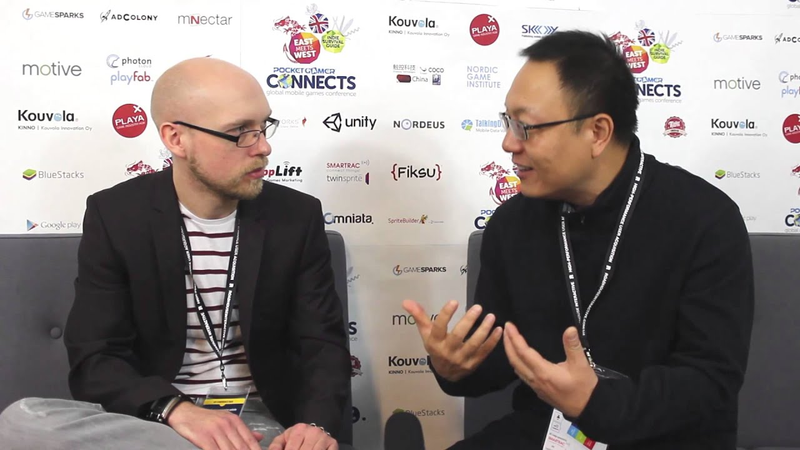
Perfect World maintains a global growth strategy centered on the free-to-play model across PC, console, and mobile platforms.
- Perfect World operates a cross-platform strategy, developing and publishing free-to-play titles across PC, console, and mobile, with a current pipeline of approximately 20 mobile games.
- The company successfully launched three top-10 mobile games in China in 2014 and is expanding its portfolio to include more casual and strategic genres to capture non-traditional mobile gamers.
- Perfect World is diversifying its development footprint, with roughly one-third of its current mobile pipeline projects being developed by studios outside of China.

Why Kabam is toning down its F2P monetisation
The mobile gaming industry is currently navigating a shift toward long-term player retention and sustainable monetization strategies, as evidenced by the financial performance and strategic pivots of major players like Electronic Arts and Kabam.
- Kabam shifted its strategy from aggressive, short-term monetization to a 'less is more' approach after missing its 2014 revenue target of $550–600 million, reporting only $400 million.
- To improve long-term lifetime value, Kabam is reducing its game release frequency and easing monetization mechanics, such as gifting players small amounts of hard currency to foster better sentiment.
- Mobile game developers are increasingly utilizing 'extreme user acquisition,' evidenced by companies like Supercell and uCool investing millions in high-profile traditional media, including Super Bowl advertising.
How Goodgame Studios bought Empire: Four Kingdoms to China
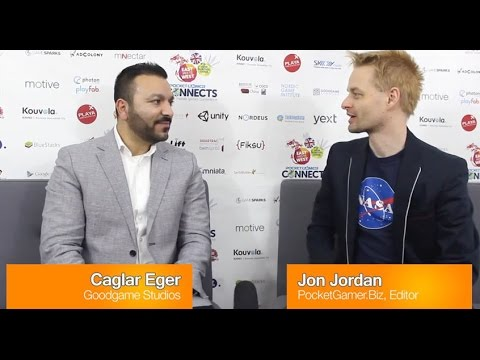
Goodgame Studios, a German developer, has pursued a strategic expansion into the Chinese mobile gaming market to leverage its global success in the free-to-play strategy genre.
- Goodgame Studios entered the Chinese market with a low-risk, iterative strategy for 'Empire: Four Kingdoms,' beginning with a localized iOS launch in October 2014 to test viability before committing to infrastructure changes.
- The studio identified the fragmented Chinese Android ecosystem as a primary challenge, noting that low-end device prevalence complicates monetization compared to the iOS segment.
- To scale distribution, the company is actively collaborating with local publishers and third-party Android app stores, specifically targeting platforms like 360, Xiaomi, and 91.

How video is impacting the mobile games biz
The mobile gaming industry is undergoing a significant shift as video content becomes a primary driver for both monetization and user acquisition.
- As of late 2014, approximately one-third of all mobile games have integrated video advertising, marking a significant shift away from traditional banner ads.
- Incentivized video models, where players watch ads for in-game rewards, have proven highly effective for monetization, as demonstrated by Crossy Road generating $1 million through Unity’s video advertising system.
- Developers are increasingly shifting user acquisition budgets from traditional performance-based advertising to influencer marketing on YouTube to achieve lower-cost download spikes.
Ex-King Game Guru Tommy Palm on Stugan games accelerator
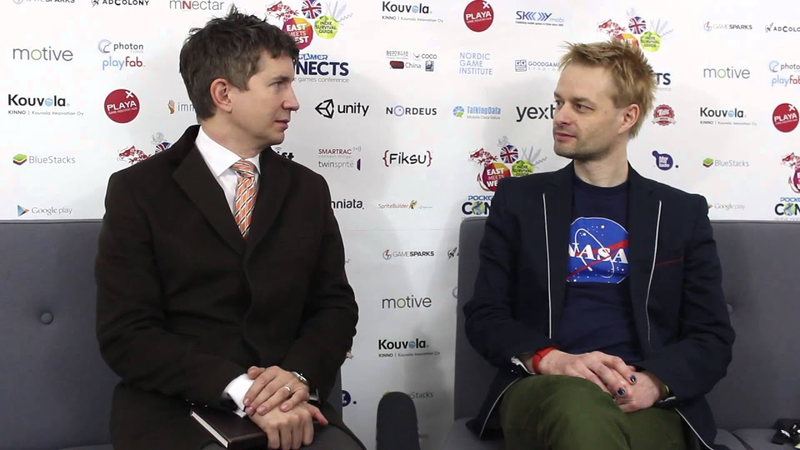
Stugan functions as a non-profit game accelerator designed to foster innovation within the global independent development community.
- Stugan is a non-profit game accelerator that hosts approximately 20 international developers for an all-expenses-paid summer residency in a remote Swedish forest.
- The program is funded entirely by private individuals from successful Swedish gaming companies, including King and DICE, to prioritize market-oriented growth over government-backed initiatives.
- The accelerator focuses on both the creation of new prototypes and the refinement of existing projects while helping developers build initial fan bases and community interest.

10 key trends shaking up the mobile games market in 2015
The mobile gaming industry in 2015 is defined by a complex interplay between established market dominance and emerging creative shifts.
- High user acquisition costs have created a significant barrier to entry, allowing well-funded companies like Supercell and King to dominate top-grossing charts through massive advertising and television campaigns.
- Smaller developers are increasingly pivoting toward paid game models to avoid the resource-heavy update requirements of the games-as-a-service model.
- Free-to-play developers face mounting pressure from international regulators regarding aggressive monetization practices and the protection of minors.