Mobile reports and market data
Documents
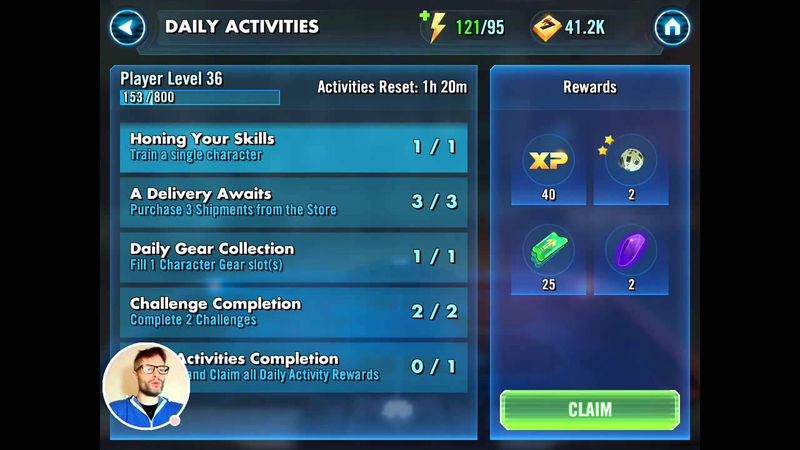
How Star Wars: Galaxy of Heroes' Daily Activities boosts retention
Daily activities serve as a foundational retention mechanism in free-to-play mobile RPGs, specifically within the context of Star Wars: Galaxy of Heroes.
- Daily activities in Star Wars: Galaxy of Heroes function as a foundational retention mechanism by establishing a structured, 24-hour recurring checklist that incentivizes consistent player engagement.
- The system utilizes a tiered reward structure—including experience points, soft currency, and premium gems—to create a feedback loop that encourages players to complete tasks even when they are not pursuing deeper progression.
- A final bonus awarded for completing the entire daily list acts as a psychological nudge, compelling players to return to the game to finalize their progress.

IAP Inspector: Mobile Strike
Mobile Strike, a strategy title from Machine Zone and Epic War, employs an aggressive monetization strategy centered on constant sales prompts, time-gating, and social pressure.
- Mobile Strike utilizes a social monetization model where in-app purchases trigger gifts for alliance members, creating peer pressure to spend to benefit the group.
- The game design prioritizes high-spending users over casual players by gating progress behind mandatory time delays that can only be bypassed through real-money purchases.
- The core progression loop is intentionally restrictive, providing insufficient starting currency to force a choice between immediate spending or exiting the game.
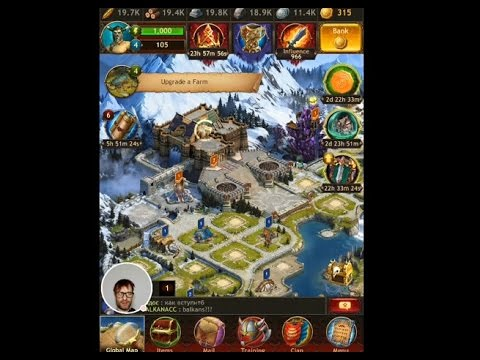
FTUE: Vikings: War of Clans
Vikings: War of Clans serves as a prime example of the resource-management strategy genre, heavily influenced by established titles like Game of War and Mobile Strike.
- Vikings: War of Clans utilizes a structured, menu-heavy loop focused on base building, military expansion, and the management of five distinct resource types.
- The onboarding process relies on a high-volume, guided tutorial that uses immediate build completions and resource gifts to maintain early-stage player momentum.
- The game employs a familiar, industry-standard mechanic set modeled after titles like Game of War and Mobile Strike to target a hardcore demographic already accustomed to mobile strategy systems.
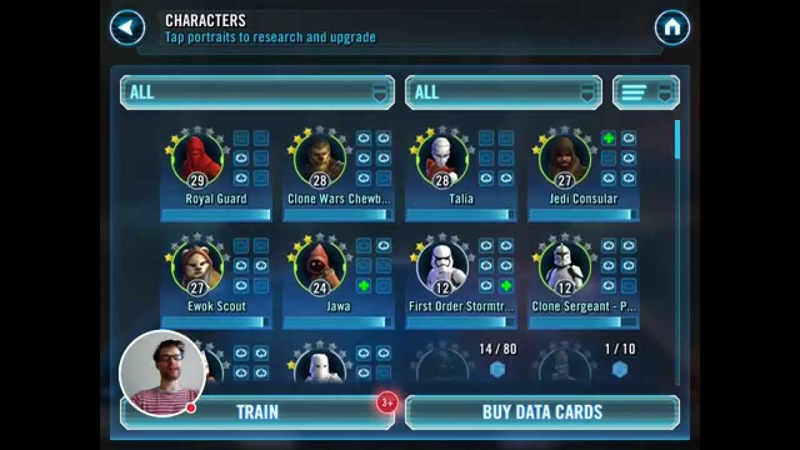
Star Wars: Galaxy of Heroes' character upgrade system
Star Wars: Galaxy of Heroes utilizes a multi-layered character progression system to drive player retention within the free-to-play mobile RPG market.
- Star Wars: Galaxy of Heroes utilizes a three-tiered progression system—gear upgrades, star-level promotions, and experience-based training—to drive long-term player retention.
- The gear upgrade system requires players to collect specific components from mission rewards to enhance base statistics and increase gear levels.
- Star-level promotions function as a primary long-term engagement goal, requiring players to accumulate character-specific shards and in-game credits to improve iconic units.
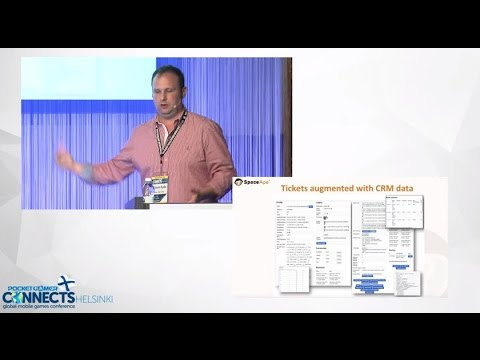
Space Ape on the power of CRM for F2P success
Space Ape Games emphasizes the strategic integration of customer relationship management (CRM) and data analytics to drive revenue and player retention in the free-to-play mobile gaming market.
- Space Ape Games found that 20% of total revenue was directly attributable to players who had experienced positive interactions with customer support.
- The studio prioritizes high-value users by augmenting support tickets with comprehensive player profiles that include spend history, churn propensity, and technical crash logs.
- Direct engagement with influential players via private, invite-only chat groups on platforms like LINE serves as a more effective marketing channel than traditional user acquisition.

Monetizer: Mobile Strike
Mobile Strike, developed by Machine Zone, represents a highly aggressive and successful model of mobile game monetization.
- Machine Zone’s Mobile Strike prioritizes an aggressive, data-driven monetization model over high-fidelity graphics or skill-based gameplay to secure its position as a top-grossing title in the North American market.
- The game’s economic structure relies on time-limited retail offers, countdown-driven sales, and complex currency systems designed to incentivize monthly spending that can reach hundreds or thousands of dollars per player.
- Monetization is driven by an alliance-based social architecture where individual microtransactions provide collective benefits, effectively leveraging peer influence to increase player spending.
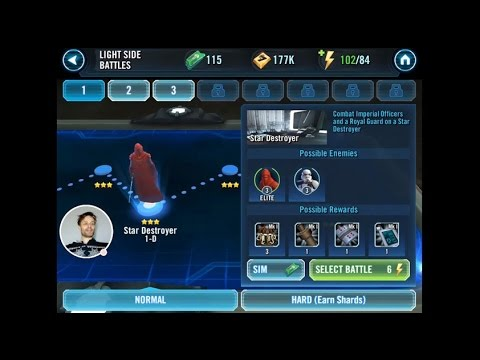
The 3 gameplay modes of Star Wars: Galaxy of Heroes
Star Wars: Galaxy of Heroes utilizes a three-tiered gameplay structure—manual, automatic, and simulated—to prioritize long-term character progression over individual mission engagement.
- Star Wars: Galaxy of Heroes prioritizes long-term character progression and resource management over tactical combat engagement.
- The game utilizes a three-tiered structure—manual, automatic, and simulated—to allow players to bypass repetitive combat and efficiently farm upgrade materials.
- The simulation mode is a critical retention mechanic that provides immediate access to rewards once a mission is cleared, supporting the game's grind-heavy progression loops.
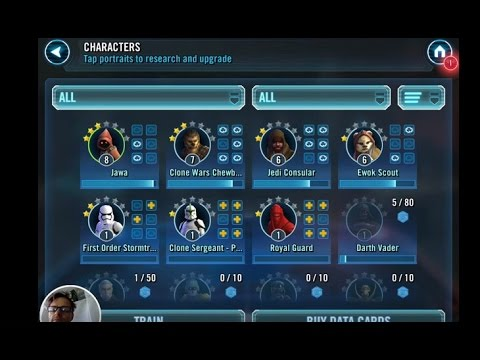
Monetizer: Star Wars: Galaxy of Heroes
Star Wars: Galaxy of Heroes, developed by EA Mobile, utilizes a card-collection and squad-battling framework to engage a mass-market audience.
- Star Wars: Galaxy of Heroes prioritizes meta-game loops, such as resource management and character progression, over manual tactical combat to drive user retention.
- The game utilizes automated battle modes and simulation features to shift player focus toward optimizing rewards rather than active gameplay execution.
- Monetization is driven by free-to-play mechanics, including energy systems, soft and hard currencies, and randomized loot drops that allow players to bypass progression grinds.
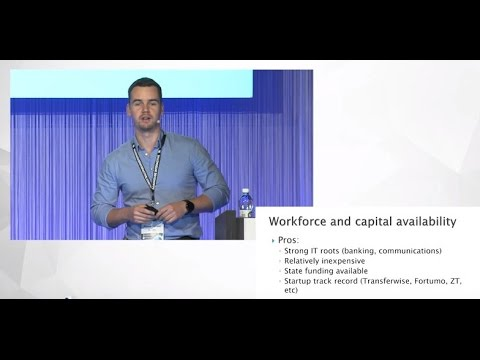
Why Estonia is a great place for your startup
Estonia offers a compelling environment for technology startups, particularly within the mobile gaming sector, due to its highly digitized infrastructure, strong programming talent pool, and supportive business climate.
- Estonia’s highly digitized infrastructure supports a streamlined business environment, featuring comprehensive online public services such as tax filing, voting, and an e-residency program for international entrepreneurs.
- The local labor market offers a competitive advantage with a high-quality pool of software developers, where senior talent salary expectations range from 2,000 to 4,000 euros per month.
- Estonia serves as a strategic geographic bridge between Nordic, Russian, and Central European markets, supported by strong transportation links and a legal framework fully aligned with European Union standards.

Why Nintendo going mobile is the big news of 2015
Nintendo’s 2015 strategic pivot toward mobile gaming represents a fundamental shift for one of the industry’s most historically insular publishers.
- In 2015, Nintendo initiated a strategic pivot away from its historically closed-ecosystem model by partnering with DeNA to enter the mobile gaming market.
- The partnership with DeNA is designed to leverage external expertise in mobile monetization and infrastructure to support Nintendo's transition to mobile platforms.
- Nintendo is prioritizing the stability of its network infrastructure and digital systems, such as Miiverse, before releasing flagship intellectual properties like Mario on mobile.

Why Nintendo's NX unified vision is the big news of 2015
The emergence of the Nintendo NX represents a pivotal shift in the gaming industry by attempting to bridge the long-standing divide between dedicated console hardware and the mobile gaming sector.
- The Nintendo NX aims to unify the gaming industry by bridging the divide between dedicated home consoles and mobile hardware.
- The core strategic objective is to create a fluid ecosystem where game states and user progress are synchronized across different device form factors.
- By enabling seamless transitions between mobile commuting and home-based play, Nintendo intends to eliminate platform friction for the end user.
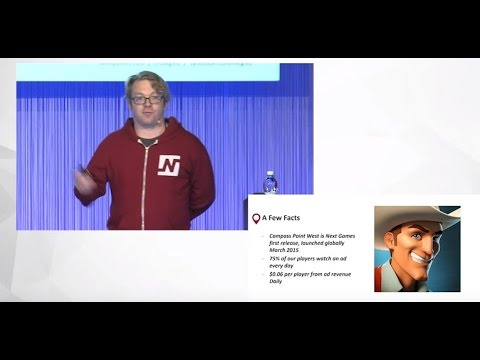
Next Games' top tips for making money from incentivised video ads
Next Games’ strategy for monetizing the mobile title Compass Point: West centers on the effective integration of incentivized video advertisements.
- Integrating incentivized video ads as a core game feature in 'Compass Point: West' resulted in 75% of daily active users watching at least one ad, generating $0.06 in ARPDAU from ad inventory alone.
- A/B testing revealed that players exposed to incentivized ads showed a 20% increase in repeat purchases and a 15% higher conversion rate compared to non-exposed players.
- Next Games successfully incentivized non-paying users by offering rewards valued at approximately $0.30 in exchange for 15 seconds of engagement.