Mobile reports and market data
Documents
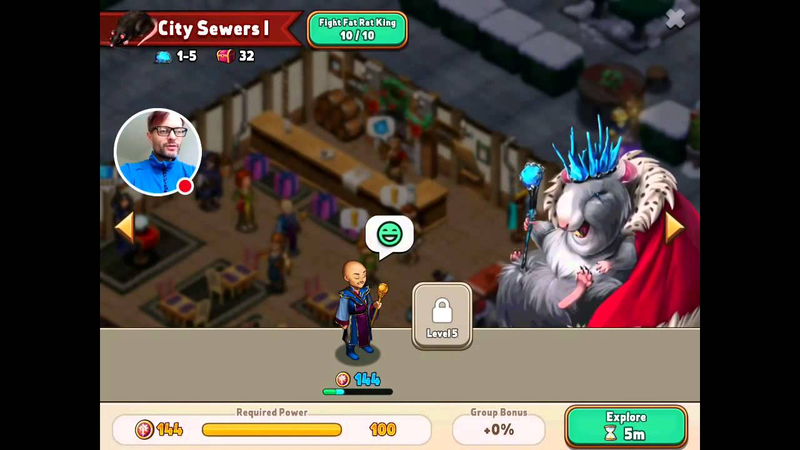
Integrating crafting, questing and city-building, is Shop Heroes too complex?
Shop Heroes functions as a complex free-to-play mobile title that integrates crafting, resource management, questing, and city-building mechanics.
- Shop Heroes utilizes a multi-layered design that integrates crafting, resource management, questing, and city-building to drive long-term player retention.
- The game’s progression is gated by level and resource requirements, necessitating consistent daily play to unlock advanced blueprints and high-level quests.
- Communal town building and investment systems serve as the primary social drivers for player engagement and community development.

FTUE: Ark Wars
Ark Wars functions as a classic, menu-driven mobile strategy game that utilizes a sci-fi aesthetic to differentiate itself within a crowded market of management-heavy titles.
- Ark Wars utilizes a traditional, menu-driven mobile strategy framework that mirrors the core mechanics and resource management loops of established genre leaders like Game of War and Mobile Strike.
- The game relies on a highly guided, task-based tutorial that focuses on facility upgrades, soldier training, and hex-based combat to onboard new players.
- Monetization is integrated early into the user experience through time-dependent sales, premium currency, and speed-up items designed to accelerate construction and training.

Winning battles in Star Wars: Galaxy of Heroes
Star Wars: Galaxy of Heroes is a card-based mobile strategy game centered on character collection, squad management, and tactical combat.
- Success in Star Wars: Galaxy of Heroes is primarily driven by tactical execution and strategic squad management rather than resource expenditure alone.
- Combat effectiveness relies on target prioritization, specifically neutralizing high-value enemy units like healers to prevent them from sustaining the opposing team.
- Squad longevity is maintained by utilizing tanks to absorb damage through taunt mechanics while balancing offensive maneuvers with defensive support skills.

Why Harry Slater's GotY 2015 is Afterpulse
Afterpulse, a third-person mobile shooter developed by Digital Legends and published by Gamevil, stands out as a premier title of 2015 due to its exceptional execution of core gameplay mechanics.
- Digital Legends and publisher Gamevil successfully adapted traditional shooter mechanics for mobile in 2015 by prioritizing intuitive control schemes that mitigate the ergonomic frustrations common in touchscreen gaming.
- The game utilizes a 'Destiny-style' compulsion loop that drives player retention by rewarding combat success with incremental gear upgrades and consistent daily incentives.
- The title demonstrates high player stickiness, with users remaining engaged through at least fifteen levels of progression rather than discarding the game after initial content exhaustion.

The most significant mobile gaming events in 2015
The mobile gaming landscape in 2015 was defined by significant industry consolidation, the rise of Eastern markets, and the strategic pivot of traditional console giants toward mobile platforms.
- Activision acquired King for $5.9 billion in 2015, signaling a major strategic shift by triple-A publishers to capture broader demographics and secure mobile gaming as a primary revenue stream.
- The global mobile gaming market saw a significant geographic shift as China, Korea, and Japan secured three of the top five global market positions, with Southeast Asia also showing rapid growth.
- Monetization models in 2015 matured by moving away from aggressive hard-currency tactics toward more balanced systems that integrate soft currency and advertisements.
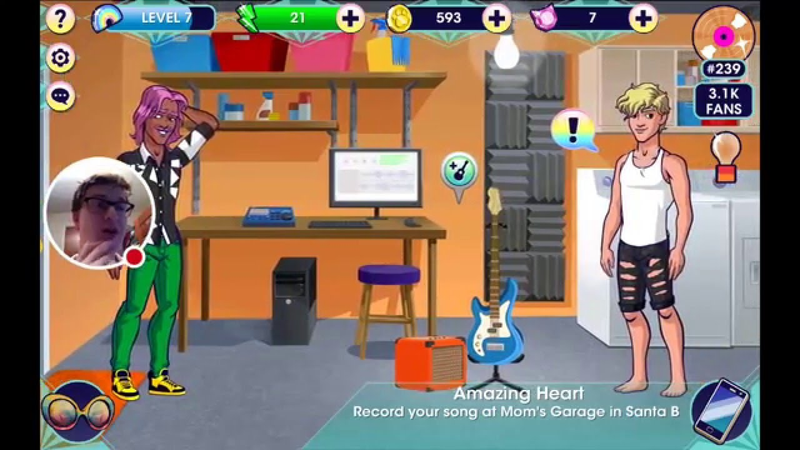
IAP Inspector: Katy Perry Pop
Katy Perry Pop, a mobile simulation game developed by Glu Mobile, functions as a thematic successor to the studio’s highly successful Kim Kardashian: Hollywood.
- Glu Mobile’s Katy Perry Pop utilizes a narrative-driven progression system modeled after the studio’s previous title, Kim Kardashian: Hollywood.
- The game employs a three-tier currency model consisting of energy, soft currency (Katy Coins), and hard currency (Katy Gems).
- Social progression is gated by a steep paywall, with high-profile networking interactions costing up to 100 Katy Gems, a currency difficult to earn through standard play.
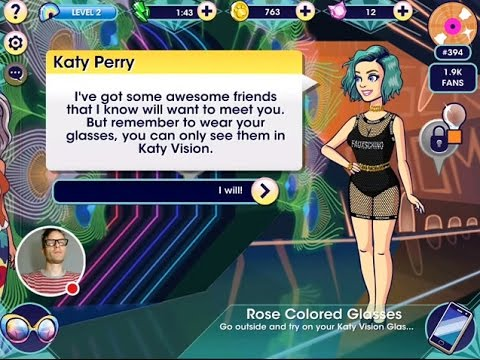
FTUE: Katy Perry Pop
Katy Perry Pop, a mobile title developed by Glu Mobile, serves as a case study in the evolution of celebrity-branded free-to-play games.
- Glu Mobile developed Katy Perry Pop as a strategic iteration of its previous success, Kim Kardashian: Hollywood, utilizing a similar energy-based progression system and narrative-driven gameplay.
- The core gameplay loop focuses on music career advancement through task completion, energy resource management, and extensive avatar customization.
- The onboarding process utilizes a guided tutorial to introduce players to social interactions, task completion, and the integration of premium currency.

PlayRaven CEO: We don't make clones
PlayRaven operates on the core thesis that the mobile gaming market is saturated with long-standing titles, necessitating a commitment to original, innovative free-to-play experiences rather than clones.
- PlayRaven maintains a lean, 23-person team structure to foster agility and cross-pollination of ideas across multiple small, simultaneous development projects.
- The studio enforces a 'burn the boats' policy that mandates exclusive focus on original free-to-play content, prohibiting the development of clones to force mastery of the business model.
- Innovation is driven by a culture of extreme transparency, utilizing open meetings, public beta programs, and external feedback to accelerate the company's learning cycle.

FTUE: Mighty Crew: Millennium Legend
Mighty Crew: Millennium Legend, an RPG developed by AminiLab, serves as a case study for onboarding mechanics within the free-to-play mobile market.
- AminiLab’s 'Mighty Crew: Millennium Legend' utilizes a strictly guided tutorial that restricts player movement to specific interactive elements for the first ten minutes to prevent user confusion and early-stage abandonment.
- The game employs a standard mobile RPG economic model featuring a dual-currency system (gold and gems) and an energy-based progression mechanic.
- Core engagement loops are built around Asian market design trends, specifically card-based hero collection, daily login rewards, and mission-based progression.
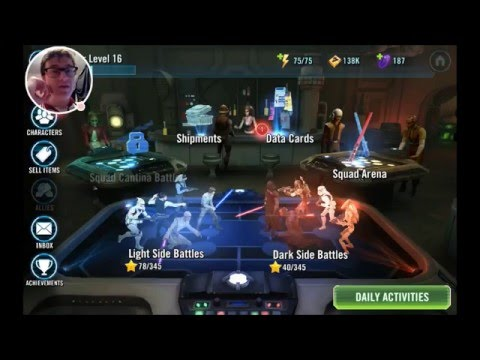
IAP Inspector: Star Wars: Galaxy of Heroes
Star Wars: Galaxy of Heroes employs a monetization strategy that prioritizes long-term player retention over aggressive, immediate conversion.
- Star Wars: Galaxy of Heroes prioritizes long-term retention by delaying paid offers and starter bundles until players reach higher levels, avoiding aggressive early-game monetization.
- The game utilizes a dual-currency system where hard currency (crystals) is frequently earned through daily activities and achievements, reducing the necessity for real-money spending.
- A seven-day daily crystal booster is employed as a strategic retention tool to incentivize consistent daily logins.
FTUE: Shop Heroes
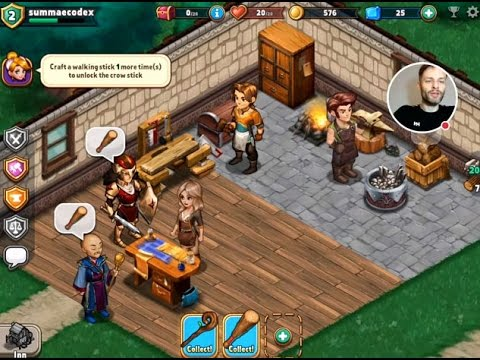
Shop Heroes, a free-to-play mobile crafting RPG developed by the Canadian studio Cloudcade, utilizes a tutorial-heavy onboarding process to introduce players to its core loop of resource management and shop simulation.
- Cloudcade’s Shop Heroes utilizes a tutorial-heavy onboarding process that restricts player agency during the first ten minutes to ensure mastery of the core economic loop.
- The game’s primary retention strategy relies on social integration, specifically facilitating player-to-player resource sharing to encourage long-term engagement.
- The gameplay loop transitions from basic crafting of items like bone knives and short swords to complex systems involving questing, character equipment management, and shop logistics.
Get discovered on the Galaxy Apps store
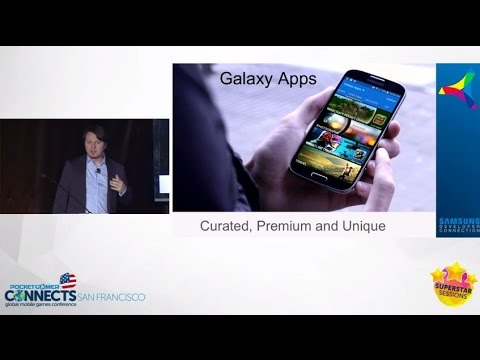
Samsung’s Emerging Platforms division focuses on fostering developer partnerships to revitalize the Galaxy Apps store and expand the company’s presence across mobile, tablet, television, wearable, and virtual reality (VR) ecosystems.
- Samsung is transitioning the Galaxy Apps store into a curated, premium storefront to address app discovery challenges by prioritizing quality over volume through expert-led selection.
- Samsung devices currently generate approximately 65 percent of all revenue within the Android ecosystem, a market share the company aims to increase through exclusive, high-quality content.
- The wearables market is projected to reach over 120 million units shipped annually by 2018, maintaining a 35 percent year-over-year growth rate.