Mobile reports and market data
Documents
The evolution (past, present and future) of mobile apps and the App Store
The evolution of mobile application distribution centers on the critical challenge of managing consumer trust and attention in a market defined by an abundance of choice.
- Reducing application package (APK) size is a critical driver of conversion, with Google Play Store data showing that every 10-megabyte reduction leads to a 1.5% increase in conversion rates.
- Implementing 'instant' app experiences, such as Google Play Instant, allows users to access core gameplay in seconds, which can boost new user acquisitions by up to 19%.
- Instant trials significantly improve long-term engagement, with case studies demonstrating up to a 30% increase in both day-one and day-seven user retention.
The staggering rise of mobile app gaming – 2018 insights
The mobile gaming industry has reached a pivotal milestone, with mobile platforms now commanding the majority share of the global $137 billion gaming market.
- Mobile platforms now hold the majority share of the $137 billion global gaming market, driven by the widespread availability of high-performance mobile hardware.
- Mid-core and strategy titles dominate the market, accounting for 52% of all non-organic installs, while hyper-casual games experienced a 300% growth surge in a single quarter.
- Organic growth multipliers have diminished, forcing developers to rely on paid acquisition strategies despite rising costs-per-install (CPI), which remain consistently higher on iOS than on Android.
King and App Annie – The importance of data for successful mobile marketing and strategy
The mobile gaming industry has transitioned from a reliance on gut feeling and focus groups to a highly sophisticated, data-driven environment.
- Mobile gaming strategy has shifted from intuition-based decision-making to a data-centric model driven by machine learning, rigorous A/B testing, and granular performance metrics.
- Market trends, including ad network efficacy, creative formats, and genre popularity, shift rapidly, necessitating constant strategic adaptation at least every six months.
- Success in the current market requires synthesizing cross-app usage data, demographic insights, and internal KPIs like retention and monetization to maintain top-grossing positions.
Do players find your games?
App Store Optimization (ASO) serves as a critical strategy for mobile game developers to increase organic visibility and drive sustainable downloads without relying solely on paid user acquisition.
- App Store Optimization (ASO) provides a sustainable, automated growth mechanism for organic visibility that persists independently of paid user acquisition budgets.
- Effective ASO requires prioritizing descriptive app names and subtitles containing relevant keywords over brand-only titles to capture high-intent search traffic.
- Keyword strategy should focus on terms where a game can realistically achieve a top-five ranking by balancing search popularity with achievability.
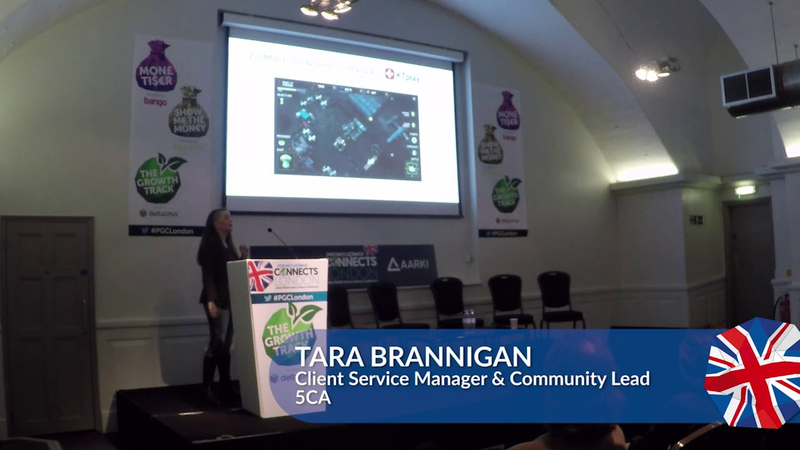
The power of integrated community engagement
Integrated community engagement serves as a critical strategy for mobile game developers to improve player retention and maximize return on investment.
- Integrated in-game community hubs drive significantly higher engagement than external platforms, achieving a 40% to 60% participation rate compared to less than 1% for traditional forums.
- There is a strong correlation between in-game hub activity and monetization, with 60% to 80% of monthly revenue often linked to players who engage with these integrated features.
- Embedding community hubs directly into the game interface increases player retention by bypassing third-party algorithms and maintaining a seamless, controlled ecosystem.
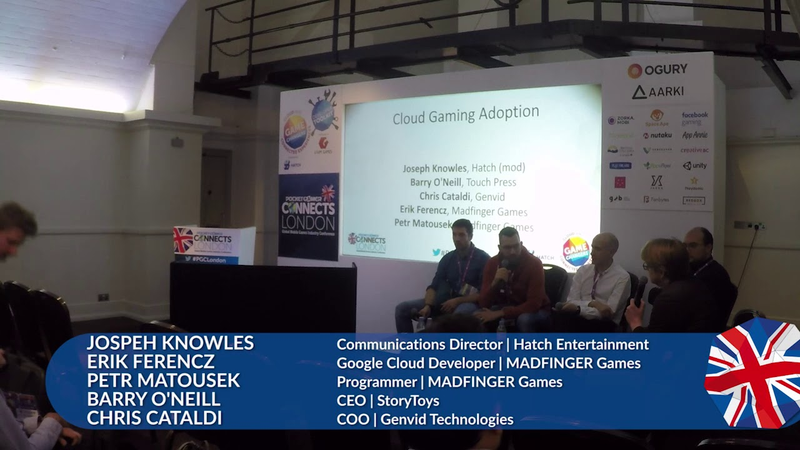
Cloud gaming adoption – The new norm?
Cloud gaming is emerging as a transformative force in the mobile sector, positioning itself as a viable delivery mechanism for high-fidelity experiences that bypass traditional hardware limitations.
- Cloud gaming removes hardware barriers and storage requirements for high-fidelity mobile experiences, while simultaneously protecting intellectual property by keeping binaries centralized on remote servers to prevent hacking and decompilation.
- The industry is moving toward a standard revenue model where developers retain 70 percent of revenue, with cloud hosting expenses capped at approximately five percent of net revenue.
- Centralized backend infrastructure allows smaller studios to deploy complex multiplayer titles without the high costs of building independent server architectures.
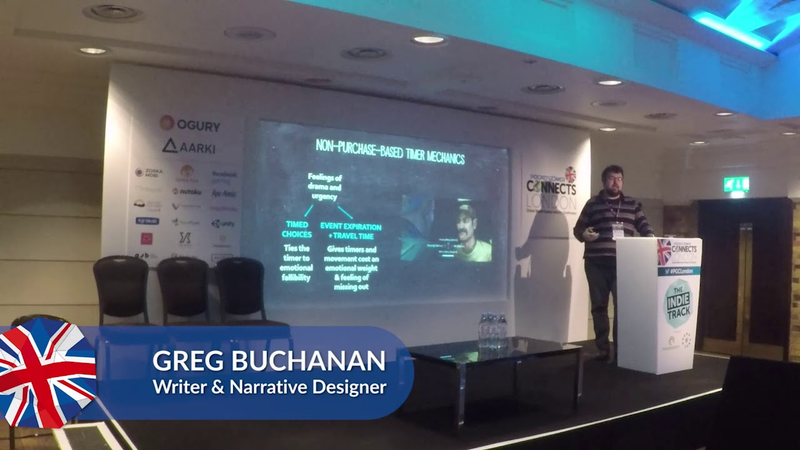
Exploiting timer mechanics as a narrative tool
Timer mechanics in mobile gaming are frequently viewed as a necessary evil, primarily serving as tools for monetization and retention by imposing artificial delays on gameplay.
- Developers should pivot from using timers as purely economic monetization tools to integrating them as core narrative features that drive world-building and player engagement.
- Timer mechanics can be transformed into dramatic elements by implementing persistent world states that evolve while the player is offline, creating a sense of a living, breathing environment.
- To reduce player friction, designers should align timer constraints with the natural rhythm of short, frequent mobile play sessions rather than using them as arbitrary barriers.
Building branded games without getting burnt
Developing branded games offers significant strategic advantages for mobile studios, primarily by providing access to established fanbases, which can lower user acquisition costs and mitigate the challenges of app store discovery.
- Branded games reduce user acquisition costs and improve app store discovery by leveraging established fanbases and existing intellectual property.
- External bureaucracy is the primary operational risk, as approval cycles can extend from a few days for internal projects to several weeks when involving multiple corporate stakeholders.
- Studios must mandate a single technical point of contact within the partner organization to funnel requests and eliminate communication bottlenecks.
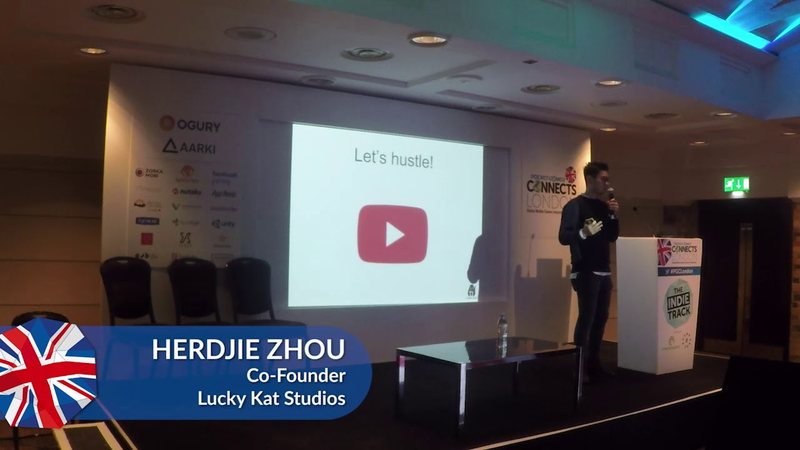
Mobile indie is dead – Long live mobile indie!
The mobile indie game sector faces significant challenges due to increased competition, rising user acquisition costs, and the necessity for developers to manage their own marketing efforts.
- Mobile indie developers must transition from pure creators to hybrid roles that integrate game design with rigorous, audience-centric marketing strategies.
- Leveraging revenue-share partnerships with influencers and internet celebrities allows studios to generate millions of impressions and downloads without upfront advertising costs.
- Community-building platforms like YouTube and Discord are essential, cost-effective alternatives to traditional, high-budget user acquisition models.
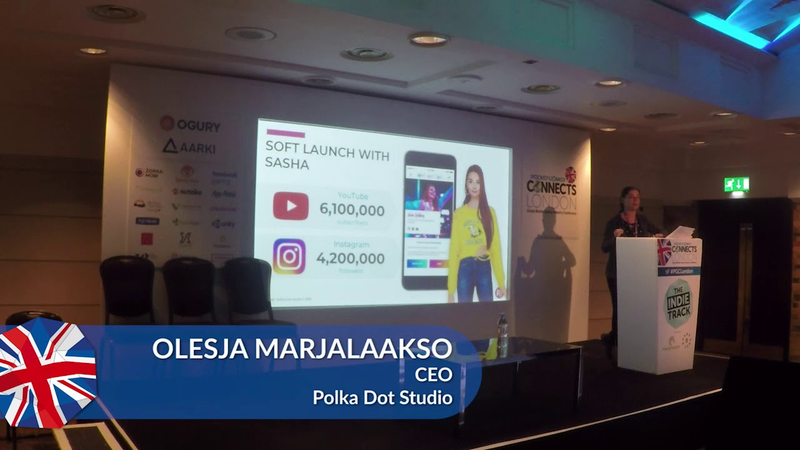
Polka Dot CEO on betting the studio future on one influencer
Polka Dot Studio, a Helsinki-based mobile game developer founded in 2017, utilized a high-stakes influencer partnership to secure the future of its debut title, Trendy Stylist.
- Polka Dot Studio achieved 100,000 downloads and a top-10 ranking in Russia by centering its debut title, Trendy Stylist, around a single influencer partnership.
- The influencer-led campaign yielded an 11% conversion rate from video views to game installs, validating the viability of integrating real-world fashion and e-commerce into mobile gaming.
- The studio faced a critical technical failure when reliance on Firebase server quotas nearly corrupted player data, highlighting the danger of lacking contingency plans for third-party infrastructure.

Bendi game – Designing for kids
Designing digital experiences for children requires a nuanced approach that moves beyond treating them as a monolithic group.
- Effective design for children requires segmenting development into two-year increments to match specific cognitive, motor, and aesthetic capabilities.
- For the two-to-four-year-old cohort, prioritize visual communication over text and avoid complex animations or surprise elements that cause cognitive overload.
- Children aged four to six require simple, attainable goals and character-led guidance to maintain engagement, as they are highly prone to distraction.
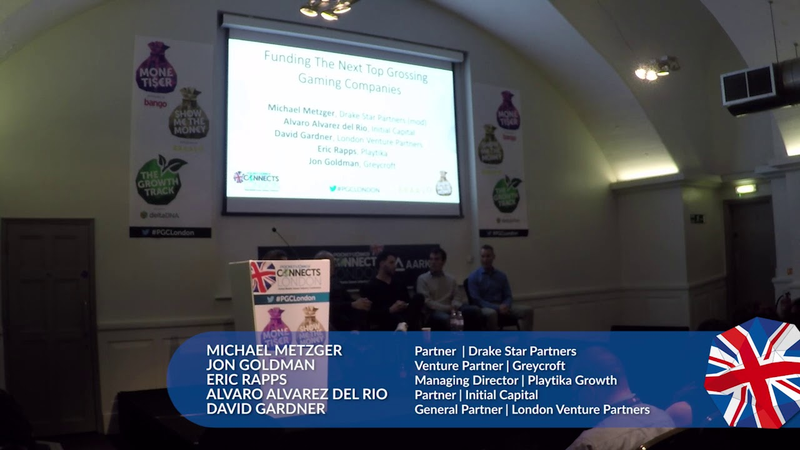
Funding the next top grossing games companies
Securing venture capital in the modern gaming landscape requires a rigorous balance between creative vision and operational discipline.
- Investors now prioritize teams that demonstrate operational discipline and a sophisticated grasp of monetization and user acquisition over those driven solely by creative passion.
- Founders must present a clear, data-driven business hypothesis to secure funding, as the current market environment is increasingly unforgiving to studios lacking professionalized scaling strategies.
- Strategic partnerships require caution, as accepting inflated valuations or excessive investor control can limit future exit flexibility and price companies out of subsequent funding rounds.