1 free read left. Create a free account for unlimited reading + AI research.
Create free account
Building branded games without getting burnt
Key insights
6 takeaways- 01Branded games reduce user acquisition costs and improve app store discovery by leveraging established fanbases and existing intellectual property.
- 02External bureaucracy is the primary operational risk, as approval cycles can extend from a few days for internal projects to several weeks when involving multiple corporate stakeholders.
- 03Studios must mandate a single technical point of contact within the partner organization to funnel requests and eliminate communication bottlenecks.
- 04Contracts must explicitly define reasonable approval timeframes, asset delivery schedules, and protocols for budget adjustments or scope reductions when IP holders mandate feature changes.
- 05Maintaining a shared, transparent prioritization document is essential to manage conflicting demands from marketing, legal, and creative departments and prevent scope creep.
- 06Success depends on cultural fit; projects treated as cash grabs rather than products of genuine developer passion risk damaging both the studio's reputation and the franchise's integrity.
Ask AI about this video
Transcript
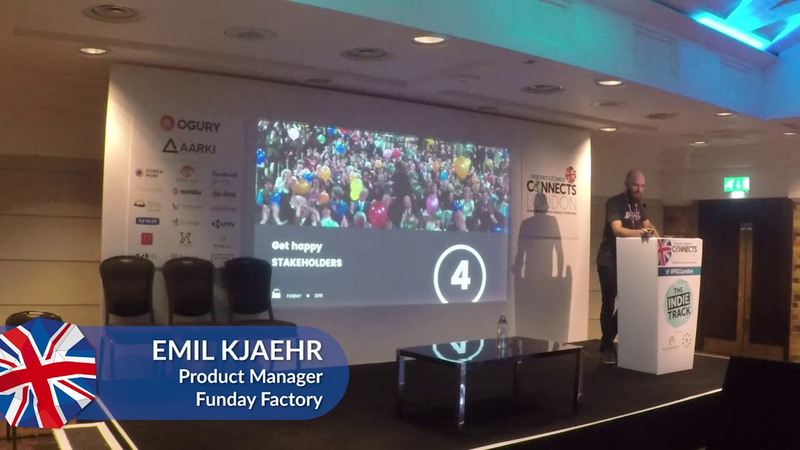
[Music] hi everyone I'm Emil I'm from not from fun factory they make adult toys we're from funding factory offering company sorry that's fine so I'm here to talk to cutting branded games without getting burnt know about me I'm product manager at fund a factory and this talk will be drawing on the experiences that we've made with our studio building branded games for about six years major corporations some of them are still unannounced titles based on TV IPS others are Lego titles and cross-products co-productions with other studios one of the games we've made and
it's a good case study here and is lego starwars microfighters this is an ad working that we did for lego where we feature the lego starwars microfighters products so here's some of us we've done a bunch and this is what will be the basis of the talk in terms of drawing experiences from so you might be wondering why even do IPs and why buy a branded games even a good so let me tell you first off we need to have a shared definition and I've chosen to go with a fairly broad one that is IPS that are outside team ownership and or something that's moved beyond the original platformer space difference in the game that went from consoles will have the original developer and development team or marketing team assigned so it won't be developed by your core team so if you're building something for mobile that came from another space that's going to be complicated so if that's
sort of that broad definition here so first off the power of France is really strong I looked through the reviews for Creighton Cruz which is one of the games of we're really proud to have worked on and if you look for ads the most common fret there is that they say this is a game without ads and if you look at the app icon you can sort of get a sense of what the game is trying to sell you but because this the app the the brand is so strong people don't see it as an ad which is really fun and that's also one of the strengths the benefits working with with our piece and Brent's but I dug into some stored data and these are from January 18th on Iowa's top-grossing so ask yourself if your studio will be able to compete with fun plus play Rick's peak games King supercell invest the combined Metin jock-or-not of Las Vegas casino games because they they are the ones
that you'll be competing against the remaining games I'm the majority of the remaining games of Brandon games here fortnight and roblox are interesting case studies because they breathe beyond their original platform and I've actually started some merchandise like monopoly for fortnight and roblox wax is selling physical choice that since its outgrown its original starting point we also have Dragon Ball see Game of Thrones and Final Fantasy among others so this is sort of a really interesting look into how the App Store Grove sharps is looking right now in conclusion app discoveries 100% broken but if you have an IP or brand you get to maybe not care that much which is really nice another reason there's a bunch of other good reasons I've listed my for here so another reason is that you get fence which can't translate into you a a lower CPI SIF is a premium so free-to-play game you also get a world to build on so you might get assets or stuff to work
with and of course you also get two turbines with one of the most powerful shoes which is nostalgia was this really powerful tool for you to leverage so you know no downsides end of the talk good good unfortunate we can't stop here there's there's bad things too and I'm here to warn you about them so one of the first things I'm gonna say is that you should factor in approval time if you're a small studio and you know you have a development team and they're student management if you come across a problem or an issue with your production you can get stuff approved within a day you can just go over to your CEOs office and say hey running into this problem what do we do and then you get it resolved nice then if you have an external partner or studio things get a little bit more complicated because then you need to pass information upwards and it's rarely the development team itself that gets to that information along and that the studio or the development team takes it onto the management team which then takes that onto the external partner and then that travels downwards but it's still okay so decent you have approved approval time of about one to two weeks
to find gate since yet risk things start to get hairy if you introduce an IP holder because then we're looking around for weeks and the IP holder decision impacts the entire funnel down down the line and your feedback will always travel upwards through the usual gateway through your management team and then all the way up to to the external partner and then maybe to the IP holder a licensure but there's no guarantee that that information will be you'll be able to communicate directly upwards so often you'll get the conclusions or the decisions being made and the team has to go wait no that's not what we meant we meant this but then you can start over again so then it's another four weeks of approval time so keep that in mind in factoring approval times in your production schedule a good example was a game that we did fee studio a TV network in Denmark where we made a game for the TV network we at some point in development were getting ready to wrap up on some voice I was overacting we had
the original a TV show in heading into the studio to do the divorcement recordings 24 hours before they came into the studio the scriptwriter we received an angry email and a call from the scriptwriter of the original IP and he was very upset and approved the script for the voice-over actors which is a reasonable thing to approve the problem was the TV network and the IP holder didn't know that that was a term in his contract so everyone was sort of caught by surprise and we worked we managed to get him to review the the scripts within the 24 hour time frame it cost money but we could get the TV network to pay that because they were supposed to keep track of this but that just goes to show that approval times can also come in with sudden you know scriptwriter appears and you have to deal with that so to further this point in terms of complexity I think it's interesting to look at the Walking Dead The Walking Dead had two games coming
out one was from next games and the other was from Skokie and if you look at the relief that they're less than a month apart that's really interesting from the point of view that one of these is from the comic book IP holder and the other is from the TV show and their hope by Skybound results to the rights for the comic MC who will host the rights for the TV show so even for large publishers this is a space that's hard to navigate and they didn't my take on this is that they didn't know about each other because it's pretty crazy to launch two fairly defined it--with with such short span of time in between them so the next thing I'm gonna talk about is how to get heavy developers or you know happier it's there's a baseline and you got to deal with that so the first advice was to ask for a single point of contacts if you have an external partner you might think great there's a games team and there's an IP team and I deal with the IP team and I talk to the producer and sometimes the creative lead has input but the reality is often that
sometimes you need to talk with the terms of getting finances or getting paid you need to talk to legal to sign contracts and while you're in production maybe four months away from launch suddenly the social media and product print people want stuff from you and there's an SDK that you need to integrate Elbrus in a completely different department and suddenly you went from having one email in your inbox to having 20 every day for months this is not funny it's horrible but there's a way around it and and what I would recommend this technical point of contact generally if you can find someone who understands games your life will be easier for it but it's okay to find someone in other departments of the external studio that who you're working with in this example we've picked the creative lead as the single point of contact and person's responsibility to funnel in all the requests coming in from the different departments and he will or he or she will help set out a plan that will make that work within the time frame and the schedule that your
production has so this is basically the inbox zero of a management and it's really smart you should do it there's also the point that you might have something that needs to be escalated so there needs to be an open channel of communication between studio management the IP holder management and the team so if they're live in production that needs to be flagged you need to be able to escalate that and it preferably fairly quickly outside of the six weeks approval time or forward its approval time another good advices when you're at events like this turn to the person next to you in the room and ask if they've with and specific IP if you're looking to get involved with the specific publisher IP or brand talk to someone that's worked with them before and ask how their experience was what would they have done differently if they'd known what they now know and and just ask for advice it's a really good idea of course don't bring in das but talk there's a really smart thing to do here's a bunch of things that I finished that to your
contract you need reasonable approval times no longer than a specific set and that depends on whether you're dealing with Disney and Lucasfilm or you know if you're dealing with DC it's gonna be different it's kind of vary tremendously if it's sky bound or AMC that's also different right another thing is that you need assets delivered within a specific time to request it you need to be agree upon the platform's that you need to support and the hardware specifications and if you change features outside the original scope that should be something that you can open up by either party but if point one and two are incurred then that results in long words that should either increase your budget or reduce your scope make sure to get that in the contract so great now let's talk about how to get heavy stakeholders so one tip one would be to get a very parent development and process process transparency so here's an example of a game that's totally made up where some of the things that the IPO
the wants is that the hero shouldn't stand so close to that special 3d element and there's social media Department also is asking for Instagram and Facebook videos in three different ratios which require to do screen recording in three different passes but the creative lead on your team would like to get more characters and really prefer the previous chicken walk and then you have an external QA Studio banging the doors saying they need the built by Friday in to start being ready for submission the really nice thing is when you get a ton of input you just send that over to you one kind of contact that you have remember and together you will align on the backlog and then you can call the list of requirements and incoming things to what you agree is important and if it's really important for the IP holders to get those Facebook videos and it's more important than to miss the deadline then that's a sheathing that you make so have a shared prioritization document and keep that as a decision lock moving forward because you'll always be able to backtrack so use your email to send those things out the other thing is to
control the message and in general with IPS there's you rarely get sustained in the room in on the east coast of the US when it's pretty percent and in this case to one-up others to do so so one thing that we've learned is to cut up videos pause the video and highlight what we need we need feedback on this controls the delivery of what you need feedback on so the feedback doesn't go beyond the scope of what you need need to hear back on in terms of approvals but if it's possible always go there and if it's gonna cost you some money the potential downside of getting every diction which will then need to go for a new approval process can often be outweighed by actually going there in person also think ahead in generally if you can be one to two months in advance in your production plan you're in a good place so this is the set of features that your game have you might have a core you might have a set of features
and then more features and at the top you might have a bunch of very unlikely features because if you need to door and features there's not time to do more features but if you send something to the to an IP holder in the approval think and they take out half of your core and 50% II 5% of your features then there's more features which is nice so submit all the things always so basically yep three steps to heavy stakeholders you have a transparent process you control the message that you send and you always send your stuff ahead of time so in summary should you do I peace yes or no well the first question you need to ask yourself is does this fit your studio culture it's gonna vary a lot depending on your studio whether you want to do a game from shell or if you want to do again for Greenpeace so make sure that the IP or brand that you're finding is something that fits the culture that you have in your studio and it doesn't turn your happy developers and so unhappy
developers just because they don't really like the kind of brand or game that you're working on the other thing is to be open and honest the people sending on the side of the licensor are people there are also human beings and they also understand that you're human beings don't burn yourself because you feel like you need to deliver on a specific deadline if you feel like a deadline is Freddy open and communicate that to the IP hole or licensure or external partner otherwise you can end up burning yourself and just reducing the sense of joy and making games finally make sure that what you're doing is something you're passionate and and and feel like is for me making games for Lego has been an amazing journey I have three kids and seeing them play games that I've made it has meant way more to me than seeing the millions of talents that we have because it's my kids playing those games so make sure that when you set the team on your end in terms of doing development that it's people who are passionate about making games if it's making games for Lego find that scene that's heavy about making games for kids that's it thank you for
listening thank you rope though does they only have a quick question I mean I think it's interesting to think about you know when you think about brands and IP I mean obviously it's the like you said earlier it's this ability for that you to be able to compete in a level playing field you're spending quite a large amounts of money on you a but is it more than that is it about affinity and kind of a spirit of what you want to sort of communicate I mean you're gonna kind of live and breathe the soul of that brand are you yeah on that it's it's definitely also double-edged swords so if you're making a game that feels like a cash grab to the fence that can also be detrimental not just to you but also to the to the franchise I mean look at what Bob Iger did with reaching out to EA asking to turn down on the micro transaction to that's that's a case of the IP holding getting very upset with the actions of a developer where the fans are getting upset to a level where sea level people
needs to get involved so that's obviously a balancing thing that you need to work out so yeah that just goes back to you need to be passionate about the brand and can't just go in asking to make a game in the Transformers franchise without having seen at least a bunch of Transformers consumers and movies right so you need to understand what makes the fans tick because if you don't it's gonna be with me make your game yeah make them happy for playing your game my favorite story about terrible games for brands goes back to the old Java days someone did Lord of the Rings bowling yep and the bowling balls were the heads of the hobbits I kid you not all right thank you very much thank you [Music]
Summary
Developing branded games offers significant strategic advantages for mobile studios, primarily by providing access to established fanbases, which can lower user acquisition costs and mitigate the challenges of app store discovery. By leveraging intellectual property (IP), studios can tap into existing nostalgia and utilize pre-existing assets to build immersive experiences. However, these benefits are balanced by substantial operational risks, including complex stakeholder management, rigid approval processes, and the potential for brand misalignment if the development team lacks genuine passion for the source material.
The primary challenge in branded development is the introduction of external layers of bureaucracy. Approval cycles can extend from a few days for internal projects to several weeks when IP holders and multiple corporate departments are involved. To navigate this, studios should mandate a single technical point of contact within the partner organization to funnel requests and prevent communication bottlenecks. Establishing a shared, transparent prioritization document is essential for managing conflicting demands from marketing, legal, and creative departments, ensuring that the development team remains focused on core deliverables without being overwhelmed by scope creep.
Contractual safeguards are critical to protecting the studio’s resources and morale. Agreements should explicitly define reasonable approval timeframes, clear delivery schedules for assets, and protocols for handling scope changes. If an IP holder mandates features that deviate from the original plan, the contract must allow for budget adjustments or scope reductions to prevent burnout. Ultimately, success in this sector requires a cultural fit between the studio and the brand. When developers are genuinely passionate about the IP, the resulting product is more likely to resonate with fans, whereas treating a project as a mere cash grab risks damaging both the studio’s reputation and the integrity of the franchise.












Comments