Mobile reports and market data
Documents

How Leiting Supports the Developers Interested in the Chinese Market
Leiting, a publisher founded in 2004 with a focus on the Chinese market, specializes in the global distribution of survival-themed mobile games.
- Leiting specializes in scaling single-player survival mobile games by implementing phased monetization strategies that transition from low-friction systems during beta to more robust models as the player base matures.
- The publisher achieved significant market penetration with 'Dungeon Survivor' exceeding 1.2 million users and 'Fairy Survivor' surpassing 2 million downloads shortly after release.
- Leiting maintains high user engagement with retention rates reaching 50 percent by utilizing continuous content updates and data-driven gameplay loop refinements.

Marketing Agencies, Their Value and How to Work With Them
This presentation outlines the strategic value of marketing agencies for mobile app developers and provides a framework for successful client-agency partnerships.
- Agencies provide value by offering access to specialized marketing technology, scaling acquisition efforts without the overhead of internal team building, and delivering performance-driven results like ROI and ROAS.
- When vetting an agency, clients should perform due diligence by requesting relevant case studies, checking references within their specific vertical, and obtaining at least three quotes to establish a cost benchmark.
- Successful long-term agency-client relationships rely on setting clear expectations, ensuring the client recognizes the agency's value, and maintaining profitability for both parties.
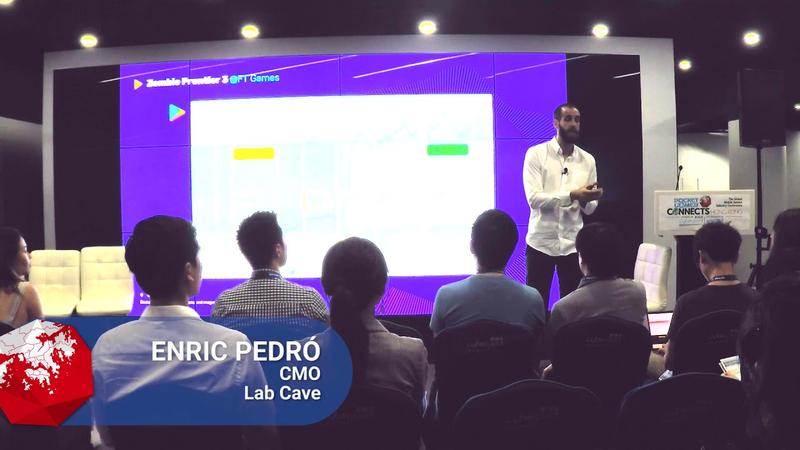
ASO (App Store Optimization) and How it Can Help Developers to Improve Their Profitability
App Store Optimization (ASO) serves as a critical strategy for mobile developers to maximize organic installs and improve overall profitability.
- App Store Optimization (ASO) is critical for conversion, as Lab Cave observed a 20% increase in store page visits after updating a game icon to better reflect realistic gameplay and boss-fight features.
- While Apple reports that 65% of iOS installs originate from search, Lab Cave's analysis of 37 apps found that 60% of Google Play installs actually stem from 'explore' traffic, highlighting the importance of visual assets over metadata.
- Conversion rate optimization must be prioritized before pursuing featuring or Editor's Choice awards, as high traffic volume yields minimal install growth if the store page assets are not optimized to convert visitors.
Culturalisation & Context in Designing and Publishing Mobile Games
Culturalisation serves as a critical strategy for mobile game developers and publishers seeking to penetrate international markets beyond their home territories.
- Culturalisation is a comprehensive strategy that goes beyond translation to include redesigning UI, character models, and monetization models to align with specific regional demographics.
- High-growth target markets for mobile gaming expansion include the Middle East (Saudi Arabia, UAE, Qatar), Latin America, South Asia, and major European economies like Germany and France.
- Successful culturalisation often requires deep structural changes, such as replacing character models or integrating local landmarks and seasonal events to improve user retention and revenue.

31Billion $ by 2020, Growing Your Games in China
The Chinese mobile gaming market represents a significant growth opportunity for international developers, characterized by its massive scale and unique operational requirements.
- China represents the world's largest mobile gaming market, accounting for 25% of global game spending in 2018.
- Mobile gaming's share of the Chinese market has grown from 12% in 2012 and is projected to reach 75% by 2020.
- Successful entry into the Chinese market requires replacing Western login and payment systems (such as Facebook, Google, and PayPal) with local alternatives like WeChat, QQ, Weibo, Alipay, and UnionPay.

Deconstruction of Chinese Mobile Game Monetization
The monetization strategy of the Chinese mobile game market is exemplified by the performance of Contra Returns, which has generated an average of $40 million monthly in China since its 2017 launch.
- Contra Returns has maintained an average monthly revenue of $40 million in the Chinese market since its launch in 2017.
- Top-tier Chinese mobile games prioritize meta-game depth, aggressive social integration, and multi-layered monetization frameworks over traditional Western focuses like graphics and gameplay fluidity.
- The monetization model utilizes a tiered resource system where paying users receive resource yields at a three-to-one ratio compared to non-paying players.
The Importance of Data-Driven Design in F2P
Data-driven design serves as the foundational roadmap for successful free-to-play (F2P) game development, particularly during the post-launch phase of live operations.
- Players who engage for seven consecutive days are significantly less likely to churn and exhibit double the daily spend of players who engage for only six days.
- Prioritizing retention mechanisms that foster daily habits is more effective for long-term success than relying exclusively on new content releases.
- Teams should identify a 'North Star' metric, such as retention or LTV, and break it into constituent parts to inform feature design and optimize specific game modes.

Future of Apple Arcade? | Expert Analysis
Apple Arcade currently occupies a precarious position within the global gaming market, functioning primarily as a strategic brand-building tool rather than a primary revenue driver.
- Apple Arcade generates approximately $540 million in annual revenue, relying on a 1% market penetration rate and auto-renewal mechanics rather than broad consumer adoption.
- The platform currently functions as a brand-building tool and a work-for-hire financial lifeline for indie developers, rather than a primary revenue driver for Apple.
- Apple Arcade struggles to compete with the mass-market dominance of free-to-play titles like Roblox and PUBG, largely due to its high-volume curation strategy that fails to justify long-term subscriptions.
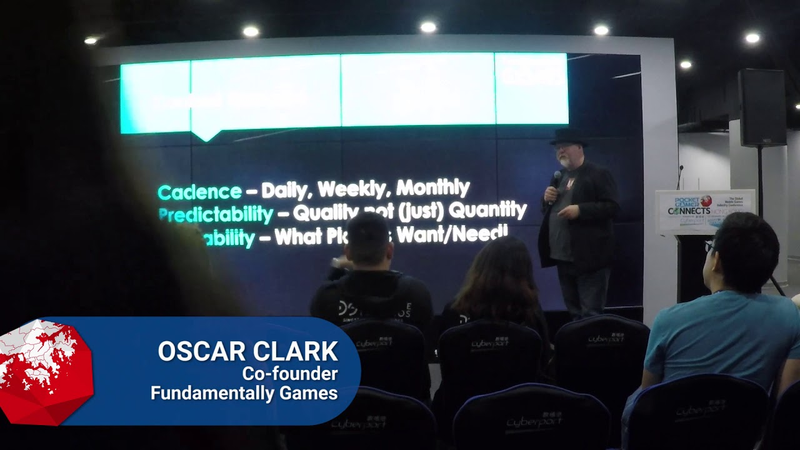
Putting players first in Live Ops
Live operations (LiveOps) in the gaming industry function as a service-oriented model designed to prioritize the player experience through continuous engagement and content delivery.
- LiveOps transforms games into service-oriented models that replace the traditional post-launch revenue decline with a virtuous cycle of continuous engagement and gradual growth.
- Successful LiveOps pipelines require a balanced resource allocation strategy divided into three core areas: new feature development, retention-focused improvements, and the systematic reduction of technical debt.
- Developers should implement a predictable cadence of daily, weekly, and monthly content updates to maintain game freshness while carefully managing player fatigue.
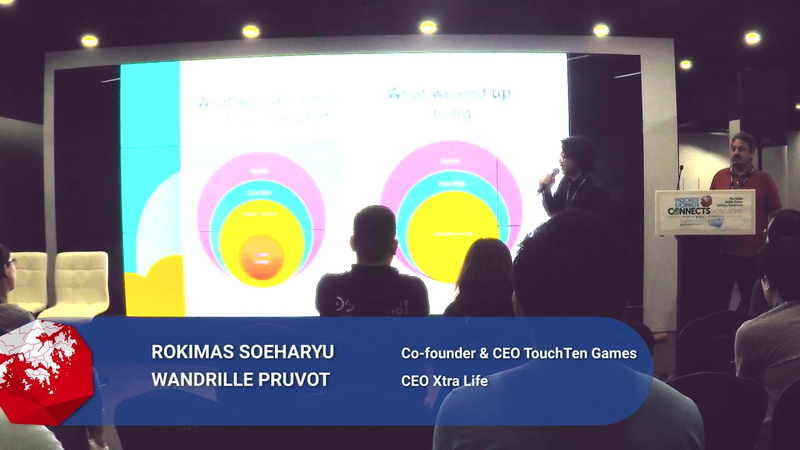
TouchTen: How we Doubled Iteration Speed Using SaaS Back End
The mobile game developer TouchTen, in partnership with the backend-as-a-service provider XtraLife, demonstrates that leveraging external infrastructure solutions significantly accelerates iteration cycles and improves competitive outcomes in the mobile gaming market.
- TouchTen reduced overall development time by approximately 25% by offloading backend infrastructure to the service provider XtraLife.
- Leveraging a Backend-as-a-Service (BaaS) model allowed TouchTen to maintain a bi-weekly sprint cycle, facilitating rapid concept validation and market responsiveness.
- XtraLife supports over 200 live games and processes 500 million API calls monthly, providing the necessary scale to handle growth from 10,000 to 500,000 daily active users.
GameClub overview
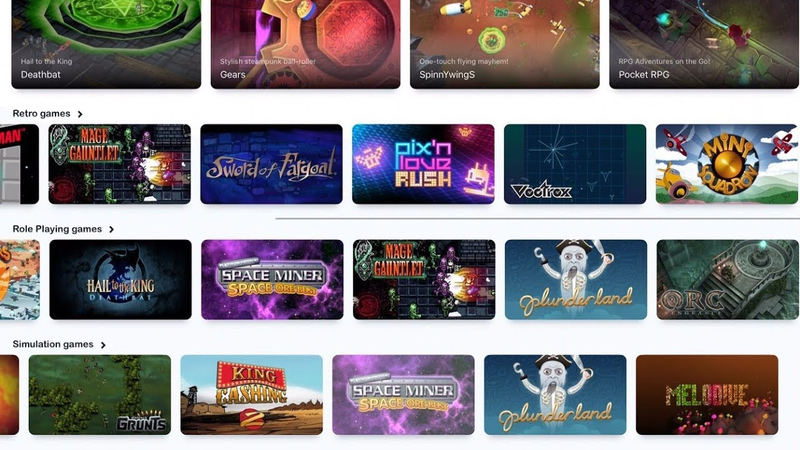
GameClub operates as a subscription-based service dedicated to the preservation and distribution of classic mobile games, specifically targeting the early iPhone era.
- GameClub is a subscription service focused on preserving and updating mobile games from the 2010–2012 era that were abandoned due to 64-bit architecture and display resolution requirements.
- The service operates as an app-within-an-app, offering a library of over 100 titles with weekly additions for a monthly subscription fee of $5.
- To maintain consumer goodwill, the platform allows users who originally purchased these legacy titles to access them for free using their existing account credentials.

Gondola Acquisition by Tilting Point | With CEO Niklas Herriger
The acquisition of Gondola by mobile publisher Tilting Point marks a strategic shift toward integrating advanced machine learning infrastructure into the broader mobile gaming ecosystem.
- Tilting Point acquired Gondola to integrate automated machine learning infrastructure into its mobile publishing ecosystem, shifting focus from aggressive user acquisition to maximizing player lifetime value and retention.
- The merger aims to replace manual, static A/B testing with dynamic, automated systems to overcome industry-wide SDK fatigue and streamline product management workflows.
- Gondola, originally founded in 2013 as an indie studio, transitioned into a B2B provider before the acquisition, highlighting the difficulty of scaling independent B2B infrastructure due to long sales cycles and constant product validation requirements.