Marketing reports and market data
Documents
Superstar Session: What to Expect in ASO in 2022
The mobile app industry is undergoing a significant transformation as App Store Optimization (ASO) evolves from a siloed marketing function into a cross-departmental strategy.
- App Store Optimization (ASO) is increasingly resilient to privacy-driven tracking limitations because it does not rely on user behavior tracking, unlike other paid user acquisition channels affected by iOS 14.5 and App Tracking Transparency.
- Apple's iOS 15 introduced critical ASO features including In-App Events, Product Page Optimization (PPO), and Custom Product Pages (CPP), though current A/B testing on iOS remains limited because tests are automatically interrupted whenever a new app version is released.
- Custom Product Pages on iOS currently face integration challenges, as only two networks—IronSource and Apple Search Ads—are fully compatible with tracking performance post-install.
In Conversation: Growth Hacking 2022
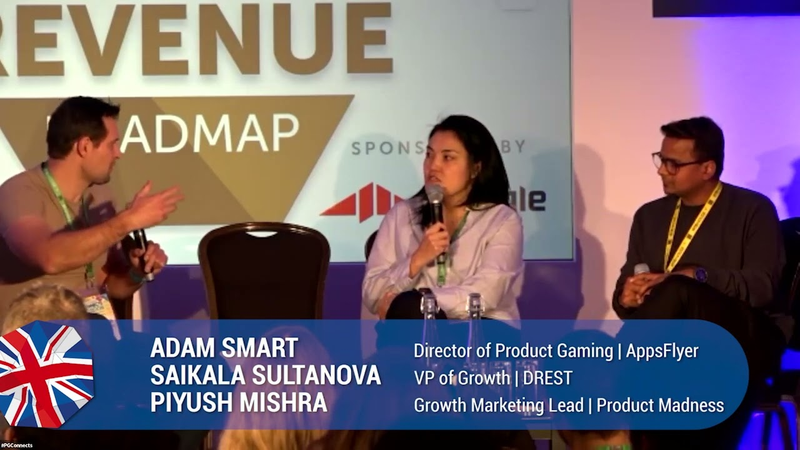
This discussion explores the evolving landscape of user acquisition (UA) and growth marketing within the mobile gaming industry as of early 2022.
- The mobile gaming industry is shifting from granular, user-level data tracking to contextual targeting and creative-led strategies due to privacy-centric changes on iOS and Android.
- Traditional metrics like cost-per-install (CPI) have become unreliable, forcing a transition toward 'cost-per-player' as a more accurate indicator of campaign performance.
- Marketers must move away from platform-provided targeting and instead utilize internal audience insights and impression-level data to execute smart, contextual campaigns.

Why audio advertising is the new frontier with Wilfrid Obeng from AudioMob
Audio advertising represents an emerging frontier in mobile gaming, offering a non-intrusive alternative to traditional visual formats.
- Audio advertising in mobile games has demonstrated a 2,000 percent increase in engagement compared to standard banner ads.
- AudioMob’s technology integrates ads into game environments by monitoring device volume thresholds and offering in-game rewards to users who unmute.
- The platform is currently utilized by over 50 game development studios, scaling from indie projects to titles with 50,000 to 100,000 daily active users.
How to Break Through the Noise: Reasons You Really Need to Start Automating Today!
The mobile gaming industry has experienced significant growth over the last 15 years, reaching a valuation of approximately $165 billion by 2020.
- The mobile gaming market is projected to grow from a $165 billion valuation in 2020 to $220 billion by 2023.
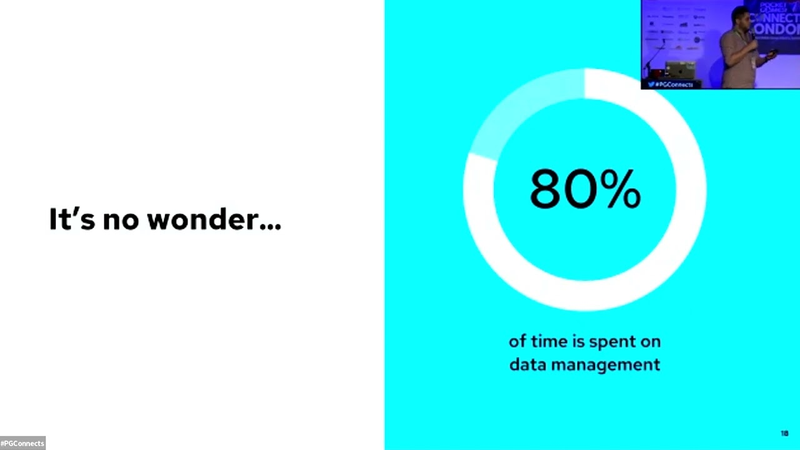
- Marketing professionals currently spend 80% of their time on manual data management, which prevents strategic optimization and leads to paralyzed decision-making.
- Automation platforms address data fragmentation by centralizing metrics across advertising partners, enabling real-time optimization of creative testing, budget allocation, bidding, and audience targeting.
Scale for Success: A Developer's Guide on UA Strategy & DSP Partnerships
Effective user acquisition (UA) at scale requires a strategic, collaborative partnership between mobile developers and demand-side platforms (DSPs).
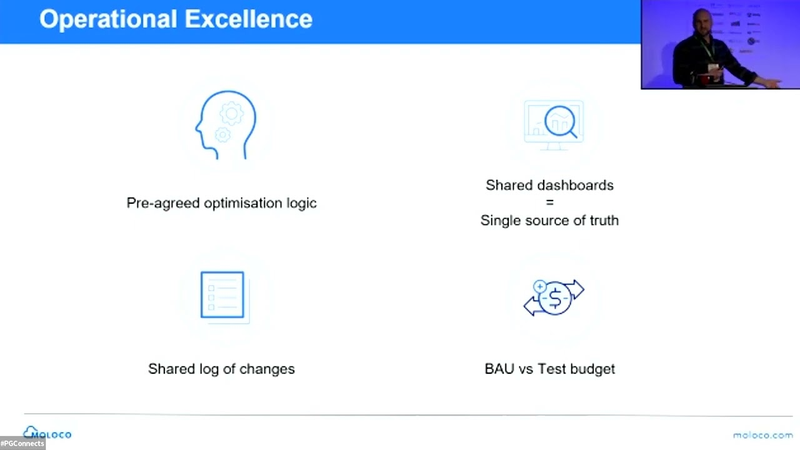
- Successful UA scaling requires a unified 'source of truth' for data, as discrepancies between internal business intelligence and mobile measurement partners (MMPs) prevent effective ML optimization.
- DSP machine learning models require a four-to-six-week stabilization period to learn effectively, necessitating the separation of 'business as usual' budgets from experimental test budgets.
- DSPs are essential for capturing the 63% of ad impressions that exist outside of major 'walled garden' ecosystems.
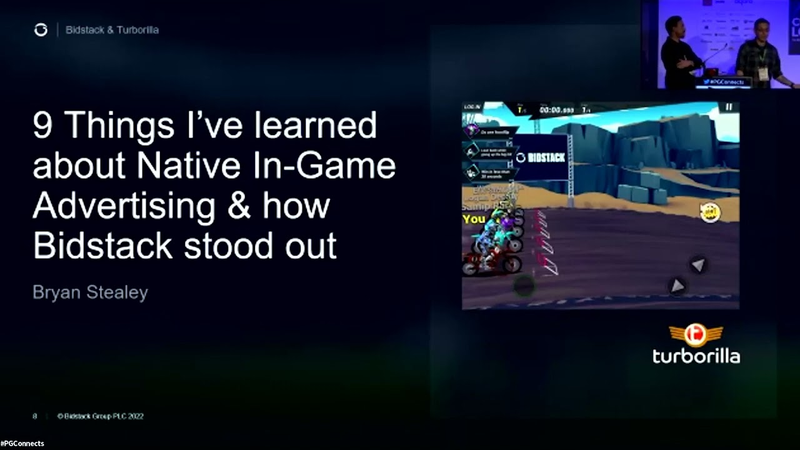
Superstar Session: Bidstack x MadSkills Motocross 3: Tech Drives Effective In-game Advertising
The session explores the integration of native in-game advertising as a sustainable, non-intrusive revenue stream for game developers.
- Native in-game advertising can serve as a significant revenue driver, with a partnership between Bidstack and Turborilla demonstrating that these placements accounted for 30% of the studio's monthly revenue.
- Integrating ads as native environmental elements, such as trackside billboards or branded gear, enhances player immersion and realism rather than disrupting the user experience.
- Developers must avoid generic programmatic backfill to prevent contextually irrelevant or poorly cropped ads that degrade game quality.
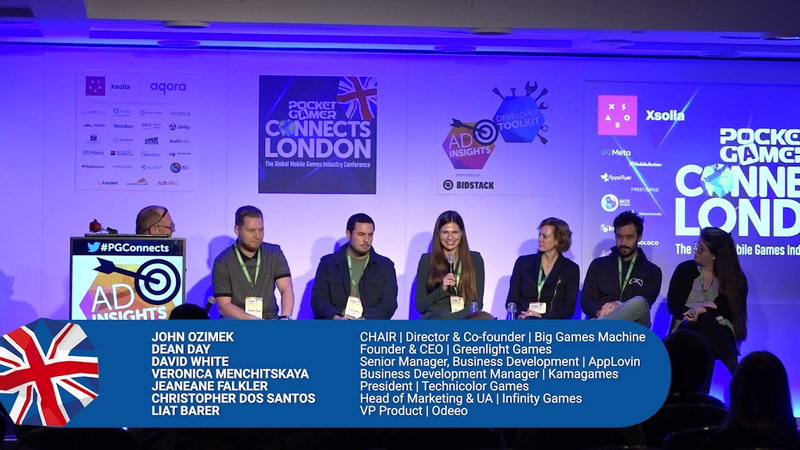
Panel: How Can We Create Authentic & Engaging Ads?
Mobile gaming advertising is undergoing a critical transition away from deceptive, high-frequency tactics toward strategies rooted in authenticity and user-centric design.
- Mobile gaming advertising is shifting away from deceptive clickbait toward authentic creative content that accurately reflects the actual gameplay experience to improve long-term retention.
- Developers are increasingly prioritizing opt-in engagement formats, such as interactive playables and rewarded videos, to replace forced, intrusive ad interruptions.
- Synthetic audio ads and sonic branding are emerging as effective, non-disruptive alternatives that maintain the game's atmosphere while ensuring high brand memorability.
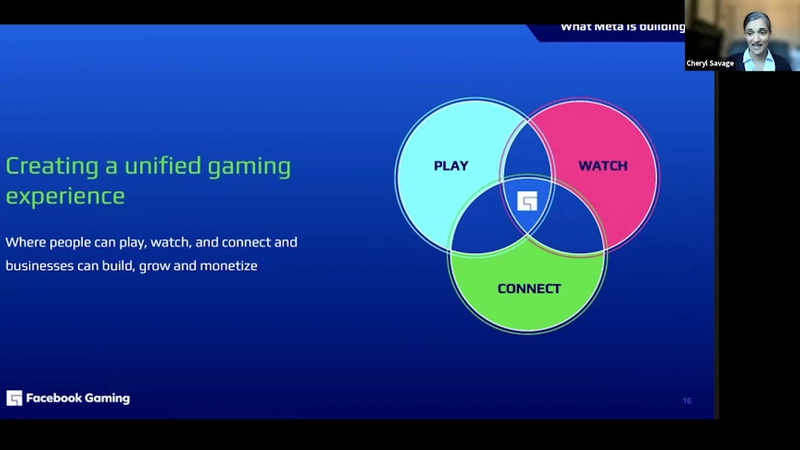
Reimagining Games Advertising
The gaming industry is currently navigating a significant inflection point driven by evolving privacy regulations, shifting consumer data expectations, and a changing advertising ecosystem.
- The gaming industry must pivot away from third-party data reliance due to stricter privacy regulations, such as Apple's tracking permissions and the phasing out of browser cookies.
- Meta is mitigating attribution and reporting challenges by deploying the Conversions API, which establishes a direct, secure link between first-party marketing data and its systems.
- To maintain performance optimization, Meta is investing in privacy-enhancing technologies including secure multi-party computation, on-device learning, and data de-identification.
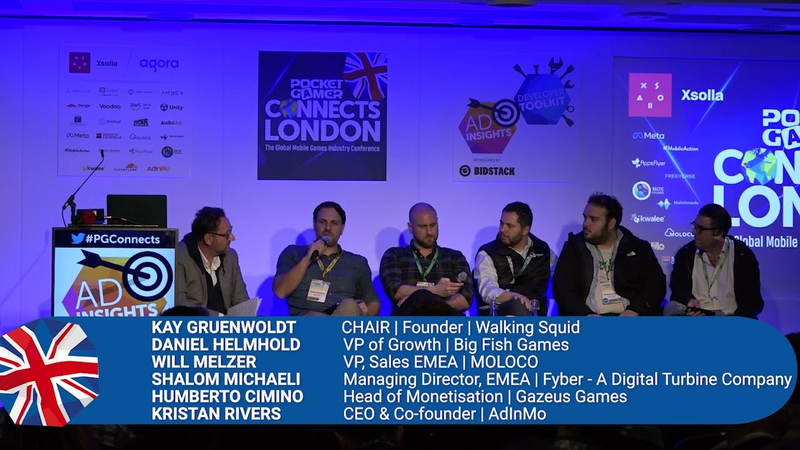
Panel: What is the Future of Mobile Advertising?
The mobile gaming industry is undergoing a fundamental transition, moving away from intrusive, performance-only advertising toward a hybrid model that prioritizes brand integration and user retention.
- Mobile gaming is shifting from intrusive performance-only advertising to a hybrid model that integrates monetization into the initial game design phase to protect user retention.
- Rising user acquisition costs and stricter privacy regulations are forcing a move away from traditional waterfall models toward header bidding and seller-defined audiences.
- Ad formats are evolving from standard video toward high-fidelity playable ads and immersive, avatar-based brand experiences within virtual environments.

Structured Mobile Marketing | The Ad Concept Model (Zynga + Consumer Acquisition)
The mobile user acquisition landscape has undergone a fundamental transformation following the deprecation of IDFA and the subsequent decline of lookalike audience efficacy.
- The deprecation of IDFA and the decline of lookalike audiences have caused a 30 percent margin compression across the mobile gaming industry.
- Success now requires a high-volume testing model where 20 to 50 new creative concepts must be evaluated to identify a single winning asset.
- Studios should transition from generic advertising to a granular strategy that maps a game’s core value propositions to specific player archetypes.

Smarter in-game ad integration with Tony Deane from AppLovin
Mobile marketing platforms play a critical role in the gaming industry by enabling developers to scale user acquisition while simultaneously maximizing revenue through efficient ad monetization.
- Machine learning tools like AppLovin’s Axon platform, launched in 2020, have driven significant industry growth, including a reported 400 percent increase in platform performance over the past year.
- Developers are increasingly leveraging first-party data from internal game development to maintain effective, privacy-compliant targeting in response to tightening global data protection regulations.
- The primary objective for mobile game developers remains achieving profitability by optimizing return on ad spend (ROAS) through advanced user behavior prediction and campaign matching.

After ONE YEAR of game dev, $140,000! (Conversation with Chris Stair)
The development and crowdfunding success of the metroidvania title Bō: Path of the Teal Lotus demonstrates that significant financial backing is achievable for independent creators through disciplined community building and high-quality visual presentation.
- The metroidvania title Bō: Path of the Teal Lotus secured over $140,000 in Kickstarter funding after two years of development.
- Success was driven by a year-long, full-time commitment to organic social media engagement rather than paid advertising.
- Developers should prioritize high-quality key art and professional graphic design to establish immediate credibility and trust with potential backers.