Marketing reports and market data
Documents

True data insight on mobile trends with Taha Karsli from MobileAction
Mobile growth and user acquisition strategies have evolved significantly in response to increased consumer reliance on mobile applications and the growing complexity of digital advertising.
- Prioritize intent-based advertising platforms like Apple Search Ads and Google Universal App Campaigns, as they capture users actively searching for solutions and consistently deliver higher conversion rates than traditional ad networks.
- Maintain compliance with evolving privacy regulations by utilizing proprietary intelligence tools that aggregate public-facing ad data rather than relying on third-party data providers.
- Shift mobile growth strategy from tracking raw metrics to extracting actionable insights that facilitate rapid iteration and experimentation.

two & a half gamers session #10 - How to save $ with marketability test? Fake Ads going nowhere rant
The mobile gaming industry currently faces a critical tension between creative integrity and the harsh economic realities of user acquisition.
- Marketability testing should be used to validate concepts before full-scale production to prevent feature creep and ensure alignment with consumer demand.
- Developers must treat marketability test results as directional indicators rather than guarantees, as real-world acquisition costs often exceed initial test data by two to three times.
- Misleading advertising remains prevalent because it is a highly effective, algorithm-favored mechanism for lowering cost-per-install and driving conversion.
Panel: In-play Ads: Tips & tricks for Creating a Seamless Experience
In-game advertising is shifting toward native, immersive integration strategies designed to monetize gaming environments without disrupting the player experience.
- Native in-game advertising generates an incremental revenue lift of 4% to 10% without negatively impacting player engagement.
- Monetization strategies are shifting toward utilizing existing 'dead space'—such as billboards and arena perimeters—to integrate branded content that feels like a natural part of the virtual environment.
- The industry is prioritizing the development of standardized, drag-and-drop integration tools to reduce technical barriers and development friction for smaller studios.
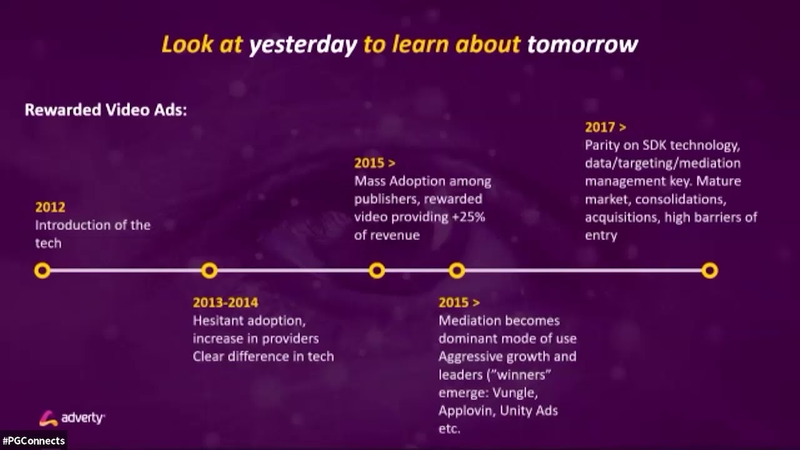
Superstar Session: In-play Ad Monetisation - Past, Present & Future
In-play advertising is currently undergoing a critical transition from experimental adoption to widespread industry integration.
- In-play advertising provides developers with an incremental revenue increase of 5% to 15% by embedding brand placements directly into game environments.
- Programmatic eCPMs for in-play ads are currently stabilizing around $1, while direct brand campaigns command significant premiums above that baseline.
- The sector is transitioning from experimental adoption to widespread industry integration, supported by the emergence of standardized SDK technology and sophisticated mediation solutions.
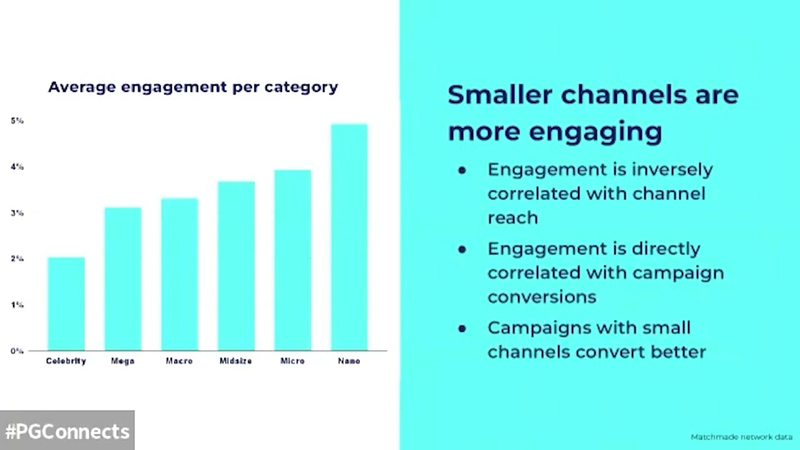
Keynote: Why Influencer Marketing is a Bad Idea as a User Acquisition Channel
Influencer marketing, when treated as a traditional celebrity-driven channel, is an inefficient and unpredictable user acquisition strategy.
- Shift from mega-influencer partnerships to a high-volume strategy involving mid-size and micro-creators to transform influencer marketing into a predictable, scalable performance channel.
- Mid-size creators outperform mega-influencers by more than two-to-one in total monthly views, offering superior reach and more stable performance.
- Smaller creator channels consistently deliver higher audience engagement, which directly correlates to improved conversion rates for user acquisition.
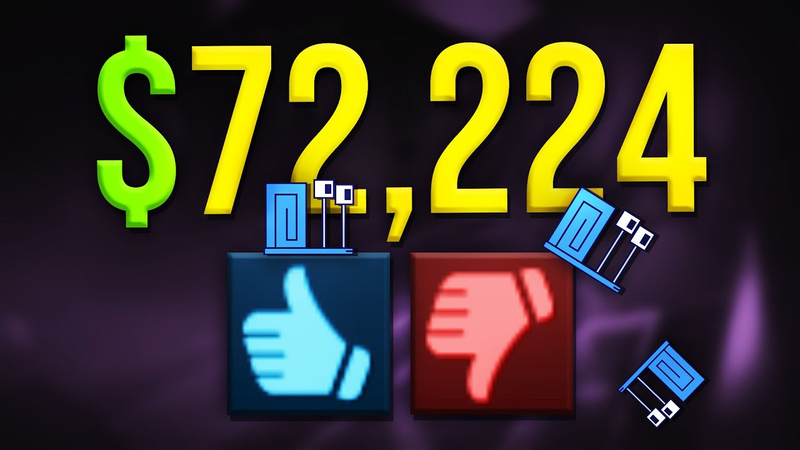
How my Game Launch Went on Steam
The launch of the indie game Will You Snail? on Steam provides a case study in the financial and operational realities of independent game development.
- The game generated $72,000 in gross revenue from 7,500 units in its first week, resulting in approximately $25,000 in net earnings after Steam fees and taxes.
- With total development and marketing costs between $30,000 and $40,000, the project reached near break-even status immediately following the launch window.
- The developer anticipates that future console ports will generate only 30% to 40% of the total revenue volume achieved on the Steam platform.

Marketing Analysis: Garena Free Fire Max and PUBG New State! Ft. Matej Lancaric & Nebo Radovic
The mobile shooter landscape is defined by a strategic divide between high-fidelity, brand-driven titles and performance-optimized games targeting emerging markets.
- Garena Free Fire Max significantly outperformed PUBG: New State in late 2021, generating $37.2 million in revenue over two months compared to $6 million for its competitor.
- Prioritizing device accessibility and performance on lower-end hardware serves as a viable blue ocean strategy for capturing market share in emerging regions.
- PUBG: New State struggled with internal cannibalization from its predecessor and a monetization model that failed to align with its Android-heavy user base, despite achieving higher total download volume than Free Fire Max.

New AREA by Autodesk! Gives exposure to all artists everywhere
The redesigned AREA platform serves as a centralized digital hub for 3D professionals across the film, television, game development, and visualization industries.
- Autodesk has redesigned the AREA platform as a centralized digital hub to facilitate cross-industry collaboration between film, television, game development, and visualization professionals.
- The platform now features dedicated iOS and Android applications to support mobile accessibility and remote engagement for students, artists, and studio leadership.
- The ecosystem is built on three core pillars: an inspiration section for portfolios, a learning hub for technical skill development, and community groups for direct peer and expert interaction.
Superstar Panel: The Art of Making Data Driven Creative Decisions in Gaming
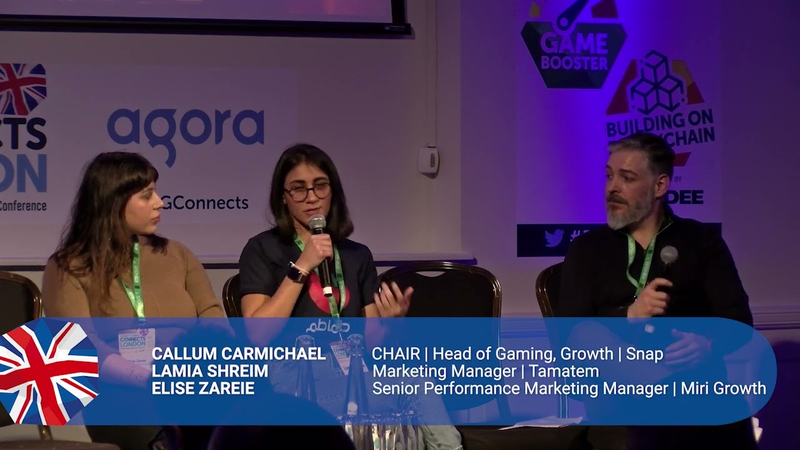
The current landscape of mobile game user acquisition has undergone a fundamental shift, moving away from granular, cohort-level tracking toward a creative-first strategy.
- The mobile gaming industry has shifted from granular, cohort-level tracking to a creative-first acquisition strategy following the implementation of App Tracking Transparency.
- Growth now relies on internal predictive modeling and structured testing cycles to compensate for the loss of traditional user targeting capabilities.
- Effective acquisition requires platform-specific content, such as human-centric aesthetics for TikTok, rather than one-size-fits-all messaging.
Building a Winning Creative Strategy for Games in 2022
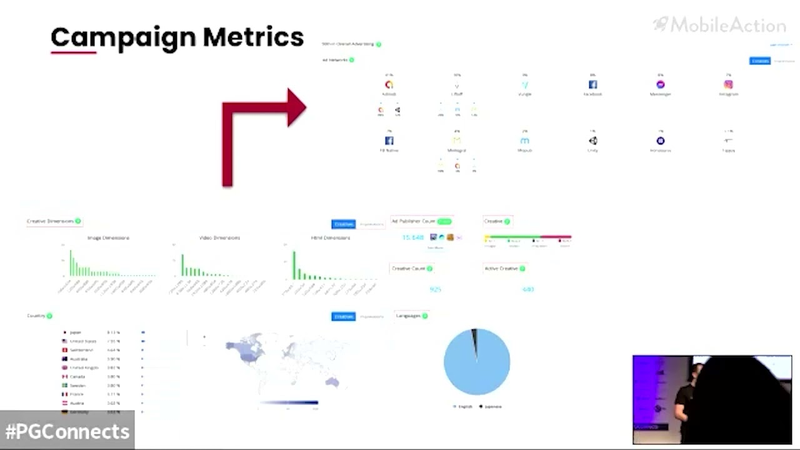
Building a winning creative strategy in the mobile gaming industry requires a data-driven approach to competitor analysis, specifically focusing on user acquisition (UA) and creative performance.
- Competitive intelligence platforms now track over 44 million mobile gaming creatives, with approximately 2 million new assets added to the database each month.
- Developers can optimize ad spend and reduce waste by benchmarking their creative performance and messaging strategies against top-performing industry competitors.
- Effective creative strategy requires tracking specific metrics including impression share, creative longevity, and the distribution of ad formats across various networks.
Keynote: Thriving in the App-ocalypse
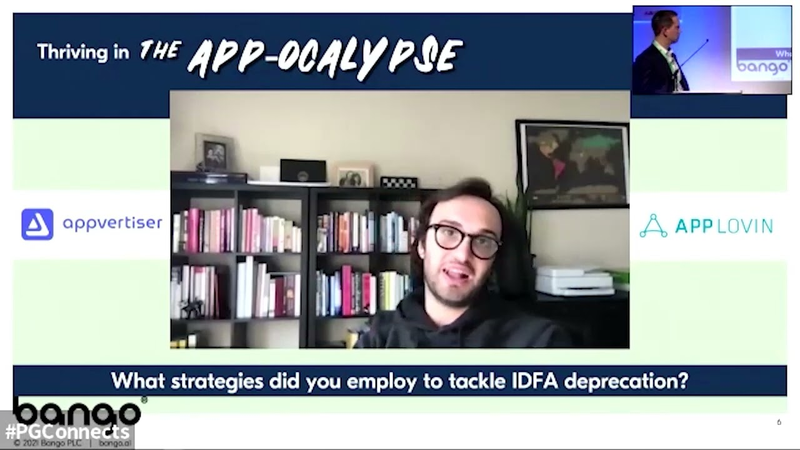
The mobile app marketing landscape has undergone a significant transformation due to privacy-centric changes, most notably the deprecation of the Identifier for Advertisers (IDFA) and the implementation of Apple’s App Tracking Transparency (ATT) framework.
- Approximately 80% of mobile users now opt out of tracking following the implementation of Apple’s App Tracking Transparency (ATT) framework and the deprecation of the Identifier for Advertisers (IDFA).
- Developers can maintain profitable growth by shifting from deterministic, IDFA-reliant tracking to probabilistic modeling and alternative data signals.
- Purchase behavior targeting, which identifies high-value users based on transaction history rather than device identifiers, is a highly effective method for improving return on ad spend (ROAS) and reducing acquisition costs.
Scaling Blockchain Games: The Fundamentals
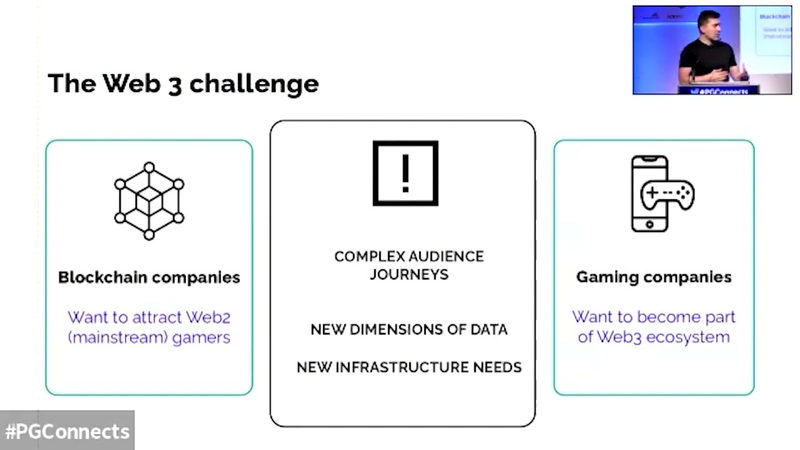
Scaling blockchain games requires a shift from relying on organic hype to implementing performance-driven growth strategies similar to those used in the mobile free-to-play market.
- Sustainable growth in blockchain gaming requires shifting from speculative hype to performance-driven strategies modeled after the mobile free-to-play market.
- The sector has demonstrated significant momentum, evidenced by a 100x year-over-year increase in active wallets and a high concentration of total blockchain transactions originating from gaming.
- Developers must integrate traditional gaming audiences with crypto-native users by creating high-quality, accessible products that prioritize genuine utility over speculative asset models.