Marketing reports and market data
Documents
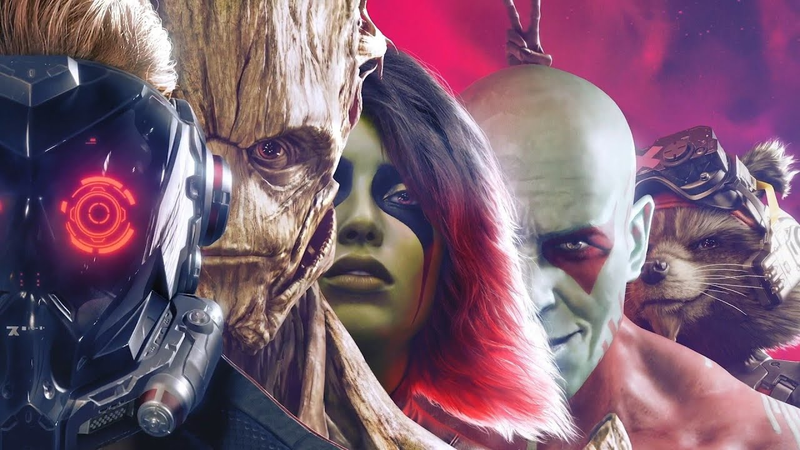
Guardians of the Galaxy Disappointing Sales | Games ReCAP
Square Enix has publicly identified the sales performance of Marvel’s Guardians of the Galaxy as disappointing, despite the title receiving significant critical acclaim and winning the Best Narrative award at the 2021 Game Awards.
- Square Enix has officially labeled the sales of Marvel’s Guardians of the Galaxy as disappointing, despite the title winning the Best Narrative award at the 2021 Game Awards.
- Internal financial benchmarks for major AAA titles have shifted, with publishers now frequently requiring 10 to 12 million units sold to justify rising development costs, compared to previous standards of 5 million.
- Square Enix has a recurring history of labeling high-quality titles as commercial failures, including the 2013 Tomb Raider reboot, Marvel’s Avengers, and Outriders.

All Tomorrow's Stories: The Future of Representation According to Gen Z Storytellers
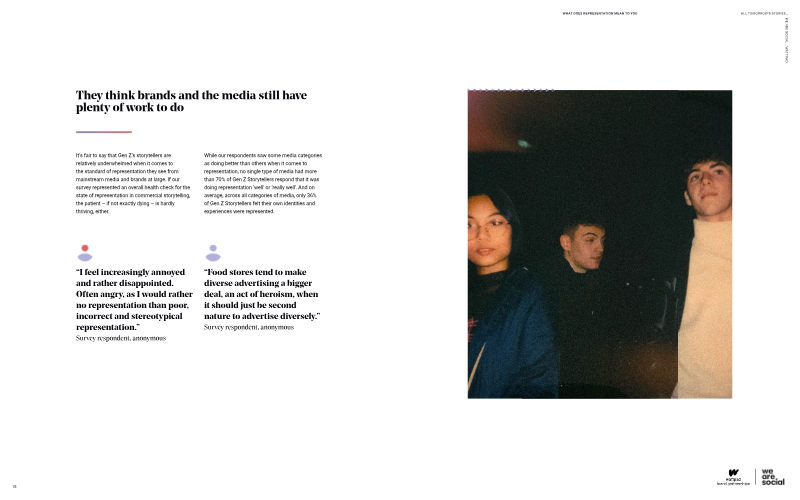
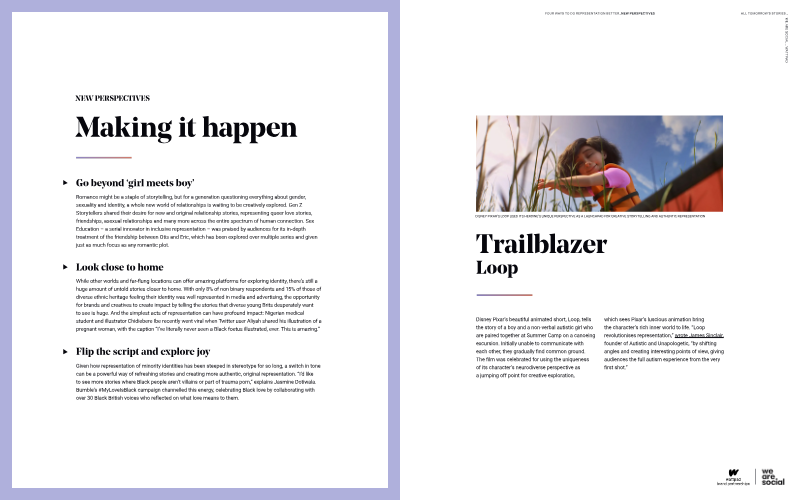
Inclusive representation has transitioned from an optional marketing consideration to a fundamental strategic imperative for brands seeking to engage Generation Z. This demographic views the accurate portrayal of diverse identities not as a trend, but as a baseline responsibility.
- While 87% of Gen Z storytellers advocate for greater inclusivity, only 36% believe contemporary media accurately reflects their identities.
- Satisfaction rates regarding representation drop to between 8% and 15% for non-binary, disabled, and ethnically diverse individuals, highlighting a critical failure in current content strategies.
- Gen Z audiences actively reject performative tokenism and inclusivity-washing, identifying superficial efforts that rely on rigid stereotypes or hyper-fixation on marginalized traits.

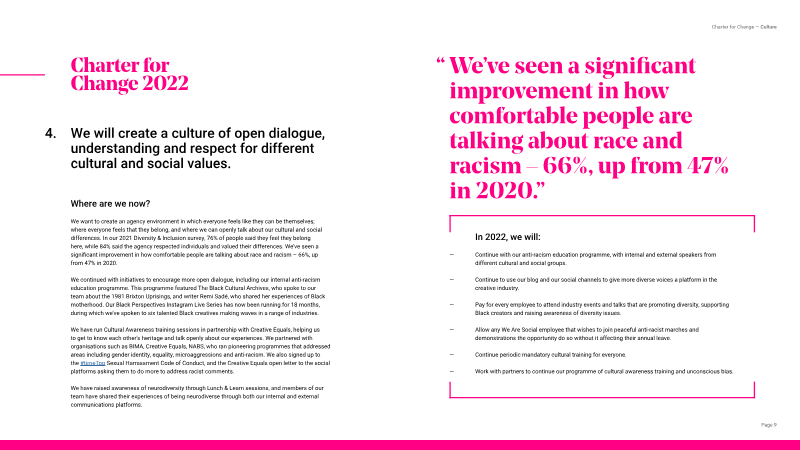

Charter for Change: 2022
The 2022 Charter for Change outlines a strategic framework for We Are Social to advance diversity, equity, and inclusion within the advertising industry.
- We Are Social failed to meet its 2021 multi-ethnic representation target of 25%, with actual representation remaining stagnant at 19%.
- The agency exceeded industry benchmarks for gender diversity, with women comprising 54% of the total workforce and 46% of leadership roles.
- LGBTQ+ representation within the agency saw significant growth, increasing from 12% in 2020 to 21% in 2021.

Inspiring Developers | Best of 2021 Part 5
Professional success in the modern game industry is increasingly defined by practical skill acquisition, adaptability, and the ability to navigate evolving workplace dynamics.
- The shift toward hybrid and remote work models is forcing studios to fundamentally restructure creative collaboration and talent retention strategies in response to broader labor trends like the Great Resignation.
- Operational efficiency in modern game development increasingly requires the integration of procedural tools and photogrammetry to manage high-volume content demands, despite internal resistance from established teams.
- Professional sustainability in the industry now depends on developers overcoming imposter syndrome and navigating high team turnover, with self-directed learning and mentorship becoming as effective as formal credentials for career advancement.

Personal Projects from Art Boost | Best of 2021 Part 4
The modern game art industry demands a sophisticated blend of technical proficiency and iterative problem-solving.
- Professional success in modern game art requires balancing labor-intensive manual techniques, such as hair card placement, with rapid prototyping tools like VR sculpting and voxel-based modeling.
- Concept artists must shift from static illustration toward modular design and architectural thinking to ensure artistic concepts function effectively within game level systems.
- Personal projects are critical for career longevity, serving as both a portfolio marketing tool and a necessary outlet to mitigate burnout from high-pressure studio production cycles.

Dealing With Haters & Bad Reviews As A Game Dev
Managing negative feedback and online criticism is a critical component of building a sustainable career as an indie game developer and content creator.
- Detach personal self-worth from public opinion to maintain the creative independence necessary for long-term professional growth.
- View negative feedback as a byproduct of increased visibility and audience reach rather than a personal failure.
- Protect mental health by limiting exposure to comments or ignoring them entirely after performing an initial safety and error check.
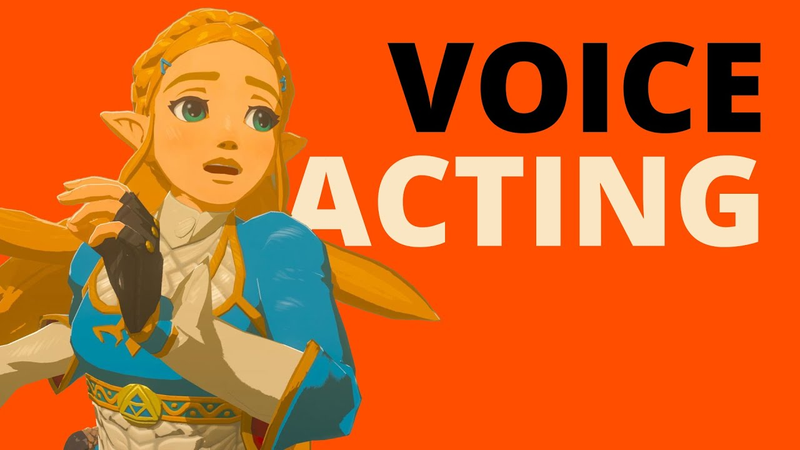
Add Voice Acting To Your Indie Game FAST & FREE
Integrating voice acting into indie game development is a viable, cost-effective strategy when leveraging accessible digital audio workstations and standard hardware.
- Technical post-processing can compensate for amateur vocal performances, allowing developers to achieve professional-grade results without hiring expensive studio talent.
- Developers can produce high-quality audio assets independently by investing in standard hardware like the Shure SM7B microphone and Focusrite Scarlett interface.
- Free software such as Audacity enables essential audio manipulation, including pitch adjustment, reverb application for room acoustics, and graphic equalization for frequency refinement.
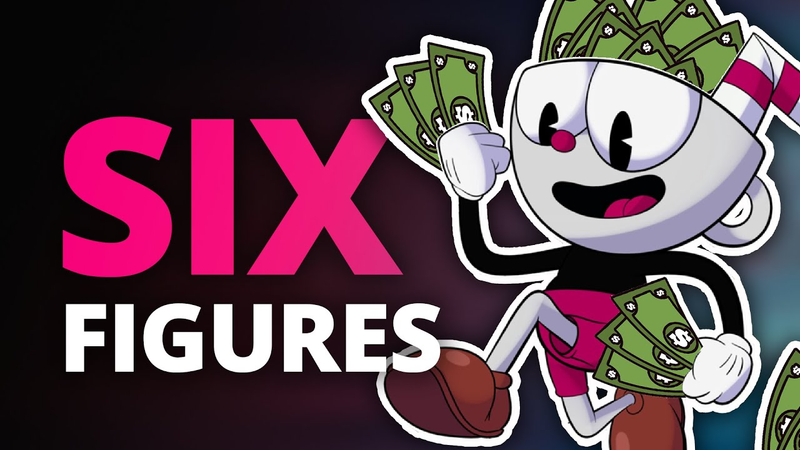
3 Ways To Make Money BEFORE Finishing Your Game
Independent game developers can achieve financial sustainability by generating revenue streams before a game’s official launch.
- Publishing deals can provide upfront capital advances ranging from $30,000 to $300,000 in exchange for 30% to 60% of future game revenue.
- Developers can generate consistent secondary income by selling game assets, such as 3D models, 2D art, or sound packs, on marketplaces like the Unity Asset Store and TurboSquid.
- Crowdfunding platforms like Kickstarter and Indiegogo serve as viable funding sources, though they require significant community engagement and strategic planning to succeed.
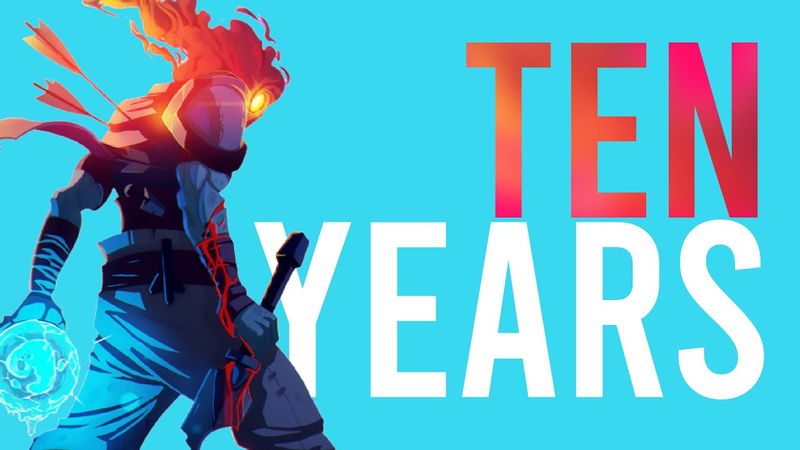
What I Learned After 10 YEARS of Game Dev
Drawing from a decade of experience in the independent game industry, this analysis outlines five core principles for achieving commercial success as a full-time developer.
- Prioritize marketability by letting marketing strategy dictate game design before production begins to ensure the project has a clear, viable audience.
- Build an audience early by cultivating a following across social media, Steam wishlists, and email lists to facilitate direct communication during product launches.
- Adopt a modular asset workflow to significantly reduce production time compared to traditional, bespoke, hand-drawn development methods.


User Motivations to Hit Your Target Audience
Effective mobile user acquisition requires a strategic shift from basic performance metrics toward a deep alignment between ad creative and core player psychology.
- Only 4% of casual game advertisements currently leverage the twelve primary psychological drivers necessary for effective user engagement.
- While playable ads offer the lowest cost-per-install, banner ads consistently deliver the highest return on ad spend across the gaming, e-commerce, entertainment, and finance sectors.
- Casual gaming acquisition strategies should prioritize highlighting player milestones, whereas midcore titles require creative content focused on excitement and thrill.

For the Game
The global gaming industry has matured into a primary cultural and entertainment hub, projected to reach 3.5 billion players and $225 billion in revenue by 2025.
- The global gaming industry is projected to reach 3.5 billion players and $225 billion in revenue by 2025.
- 40% of U.S. consumers participate in gaming primarily to foster a sense of belonging, shifting the industry from simple leisure to a community-driven ecosystem.
- Brands must abandon traditional, interruptive advertising in favor of motivation-based segmentation models that utilize data-fusion methodologies across 21 global markets.
The Hyper-Casual Benchmark Report: Q3 2022
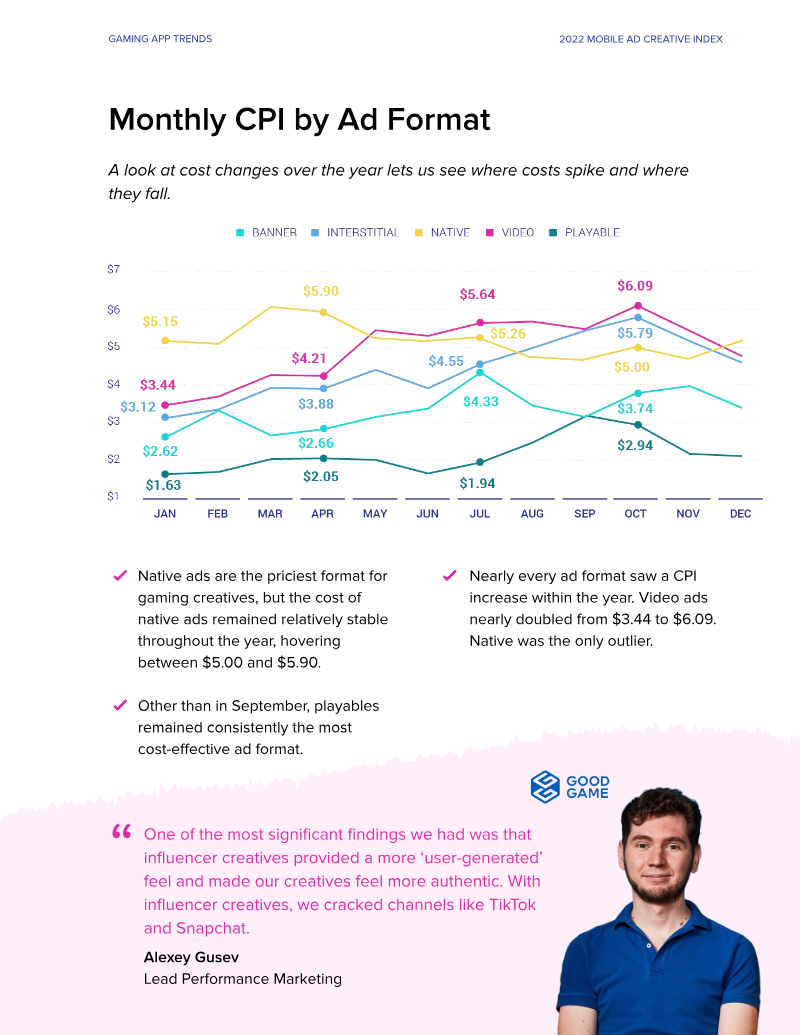
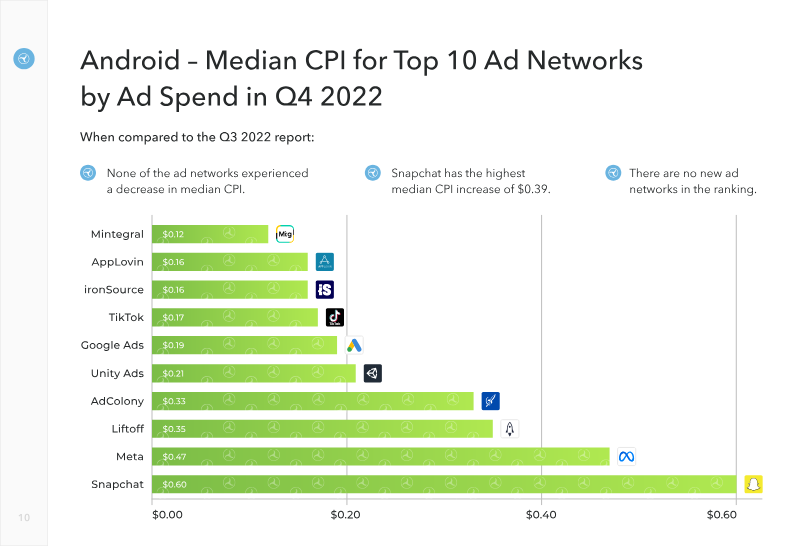
The Hyper-Casual Benchmark Report for Q4 2022 provides a comprehensive analysis of the mobile gaming landscape, focusing on key performance indicators including cost per install (CPI), ad spend distribution, and user retention.
- Retention is the primary differentiator for success, with top-tier hyper-casual games significantly outperforming the median cohort as acquisition costs rise.
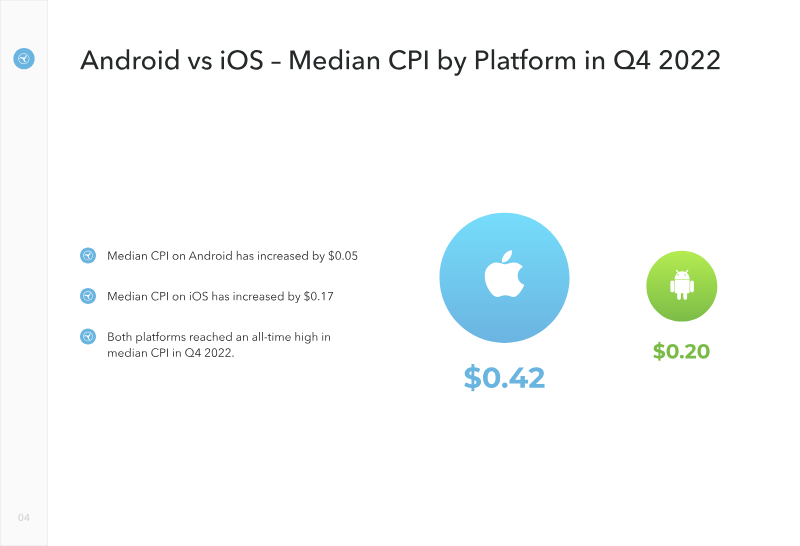
- Median cost-per-install (CPI) reached record highs in Q4 2022, hitting $0.20 on Android and $0.42 on iOS.
- iOS consistently outperforms Android in retention, with top-tier titles achieving 45% Day 1 retention on iOS compared to 38% on Android.