Marketing reports and market data
Documents

How The Specialist Works tracks mobile app downloads from TV ads
The Specialist Works provides a framework for integrating offline media, specifically television, into mobile user acquisition strategies.
- The Specialist Works enables performance-based TV advertising by correlating broadcast schedules with organic download spikes to attribute mobile installs to specific TV spots.
- Attribution is achieved by establishing baseline organic download rates and monitoring deviations within specific windows following a broadcast.
- Once installs are attributed to a TV spot, mobile SDKs track post-install metrics like lifetime value, retention, and in-app purchases to measure campaign ROI.
How your mobile game can succeed on a global scale
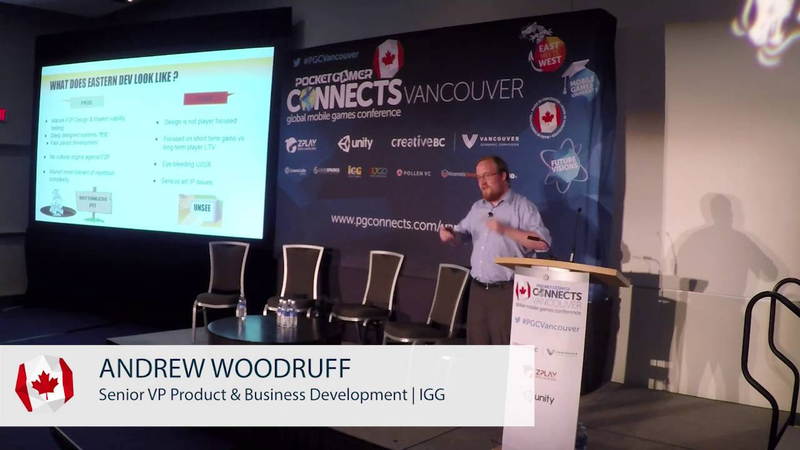
Achieving global success in the mobile gaming industry requires a strategic synthesis of Eastern development efficiency and Western player-centric design.
- Global success requires a hybrid strategy that combines the high-velocity, data-driven free-to-play mechanics of Eastern markets with the long-term, engagement-focused design principles of Western markets.
- Developers should prioritize direct operations over third-party publishing to maintain full control over player data and essential feedback loops.
- True localization must go beyond translation to include cultural nuances, regional UI standards, and tailored live operations, ideally managed by local native-speaking talent.
Trends in mobile game brands and branding
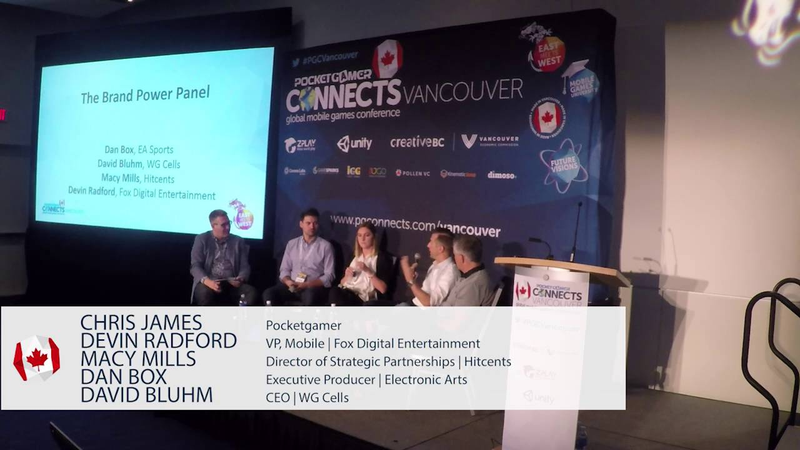
Mobile game branding functions as a strategic lever to mitigate rising user acquisition costs by capitalizing on established intellectual property.
- Mobile game branding is increasingly used as a strategic tool to counter rising user acquisition costs by leveraging established intellectual property to drive organic downloads.
- Successful IP integration now requires deep, collaborative partnerships where brand owners actively participate in the creative development process rather than acting as passive licensors.
- Major gaming franchises, including Call of Duty and Assassin’s Creed, are expanding into film and television to transform gaming titles into comprehensive, cross-media entertainment brands.

What's the deal with Game of War's terrible playable ads
The mobile gaming industry faces a growing disconnect between promotional content and actual gameplay, exemplified by the aggressive advertising strategies employed by Machine Zone for titles like Game of War and Mobile Strike.
- Machine Zone utilizes deceptive playable ads for titles like Game of War and Mobile Strike that feature mechanics, such as tower defense or dungeon runners, which are entirely absent from the actual core gameplay.
- The industry-wide practice of prioritizing high-volume user acquisition through misleading ads creates a disconnect that frequently leads to immediate player frustration and uninstalls.
- Aggressive, non-representative advertising strategies risk long-term brand degradation and damage the retention metrics of both the advertised product and the host application.

FTUE: Stormfall w/ added Megan Fox
The mobile strategy game Stormfall: Rise of Balur utilizes a highly structured First Time User Experience (FTUE) to onboard players, heavily relying on celebrity integration and repetitive, task-oriented mechanics.
- Stormfall: Rise of Balur utilizes celebrity integration, specifically featuring Megan Fox as an in-game tutor, to increase engagement and provide a recognizable guide during the initial tutorial phase.
- The First Time User Experience (FTUE) is designed as a highly structured, task-oriented loop that relies on 'skinner box' mechanics, such as frequent rewards of speed-ups, currency, and experience points, to reinforce player behavior.
- The onboarding process transitions from high-frequency, low-agency interactions—where directional arrows dictate every move—to an open-ended state, which serves as a critical friction point that often leads to player churn.
What does it cost to become an App Store millionaire?
Achieving commercial success in the mobile gaming market now requires a sophisticated, capital-intensive approach to user acquisition.
- Reaching the top 25 rankings on major app stores typically requires a capital investment of approximately $200,000 for user acquisition.
- Developers should allocate $5,000 to $10,000 during the soft launch phase to gather statistically significant data on monetization and conversion metrics.
- Data-driven testing on platforms like Facebook is essential for refining demographics and acquisition strategies before committing to high-cost channels like influencer partnerships.

Why your mobile RPG needs pre-registration marketing
Pre-registration marketing serves as a critical strategy for mobile game developers, particularly within the core and RPG segments, to build anticipation and secure a high-quality user base prior to launch.
- Pre-registered users demonstrate significantly higher retention rates compared to both organic users and those acquired through standard incentivized campaigns.
- A case study of an action RPG showed that 4,000 pre-registrations converted into 2,000 installs and $15,000 in revenue during the first week, yielding a 400% return on investment.
- The primary demographic for pre-registration campaigns consists of males aged 18 to 34 who exhibit a high propensity for in-app spending.
3 User Acquisition Mega Trends for 2016
The mobile gaming industry in 2016 is defined by a shift toward video-centric advertising, the consolidation of walled gardens, and the professionalization of user acquisition (UA) strategies.
- Video advertising is the dominant growth format, projected to capture nearly 50% of all mobile ad spend by 2018.
- The user acquisition landscape is bifurcating, as high costs for advanced analytics and attribution tools create significant barriers for mid-market developers.
- Walled-garden platforms are increasingly controlling both inventory and measurement, forcing developers to rely on their deterministic tracking capabilities to avoid inefficient spending.
20 words no one in the mobile games industry should use
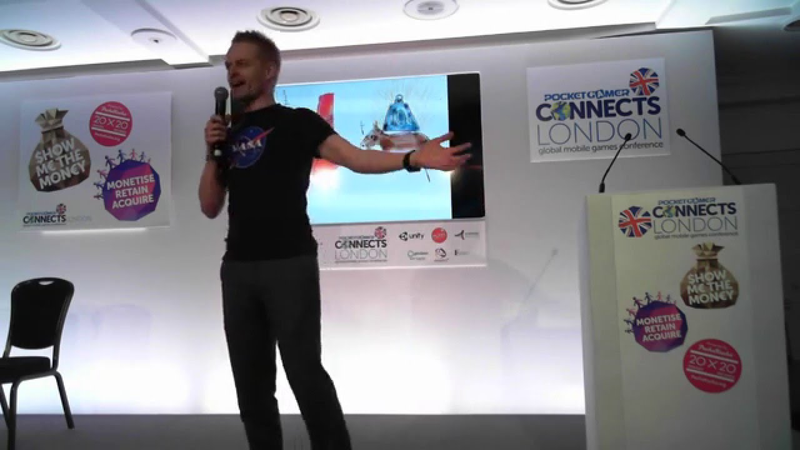
The mobile games industry relies heavily on a lexicon of jargon that often obscures business realities rather than clarifying them.
- The mobile games industry relies on jargon to mask poor strategic thinking and a lack of genuine innovation, which distances developers from player experiences and business health.
- Terms like 'whales' and 'users' dehumanize players by reducing individuals to mere revenue sources or abstract data points.
- An over-reliance on metrics like 'lifetime value' and 'key performance indicators' creates a false sense of precision that often justifies business models based on luck rather than sustainable design.

Machine Zone, Supercell and King spent $200M on US TV ads in 2015
The mobile gaming industry experienced a significant shift in marketing strategy during 2015, characterized by a rapid expansion into traditional television advertising.
- US television advertising spend for video games reached $630 million in 2015, marking a 47% year-over-year increase driven primarily by mobile-only studios.
- Machine Zone, Supercell, and King collectively spent nearly $200 million on US TV ads in 2015, with individual spends of $93 million, $60 million, and $41 million respectively.
- Top-tier mobile developers are utilizing a 'brute force' marketing strategy, leveraging calculated player lifetime value data to justify massive investments in broad-reach traditional media.

Casual Games Sector Report 2016: How to Compete in the Crowded Marketplace
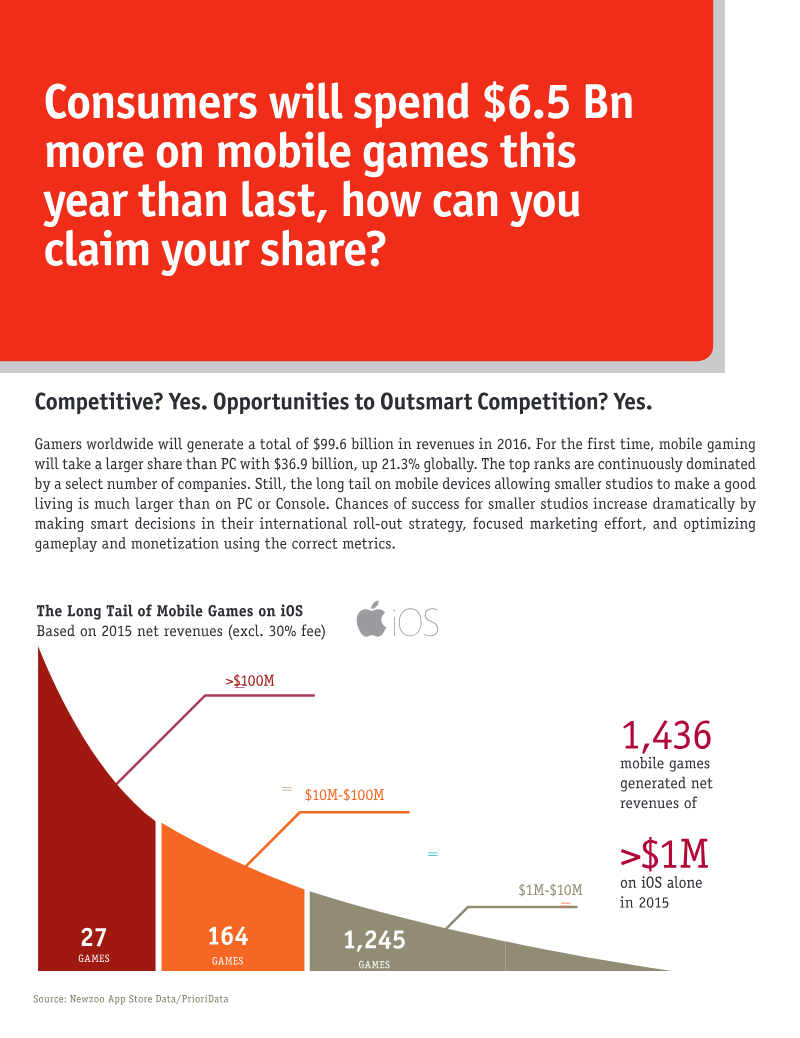
The 2016 Casual Games Sector Report provides a strategic analysis of the global mobile gaming landscape, focusing on how smaller studios can navigate a highly consolidated and competitive marketplace.
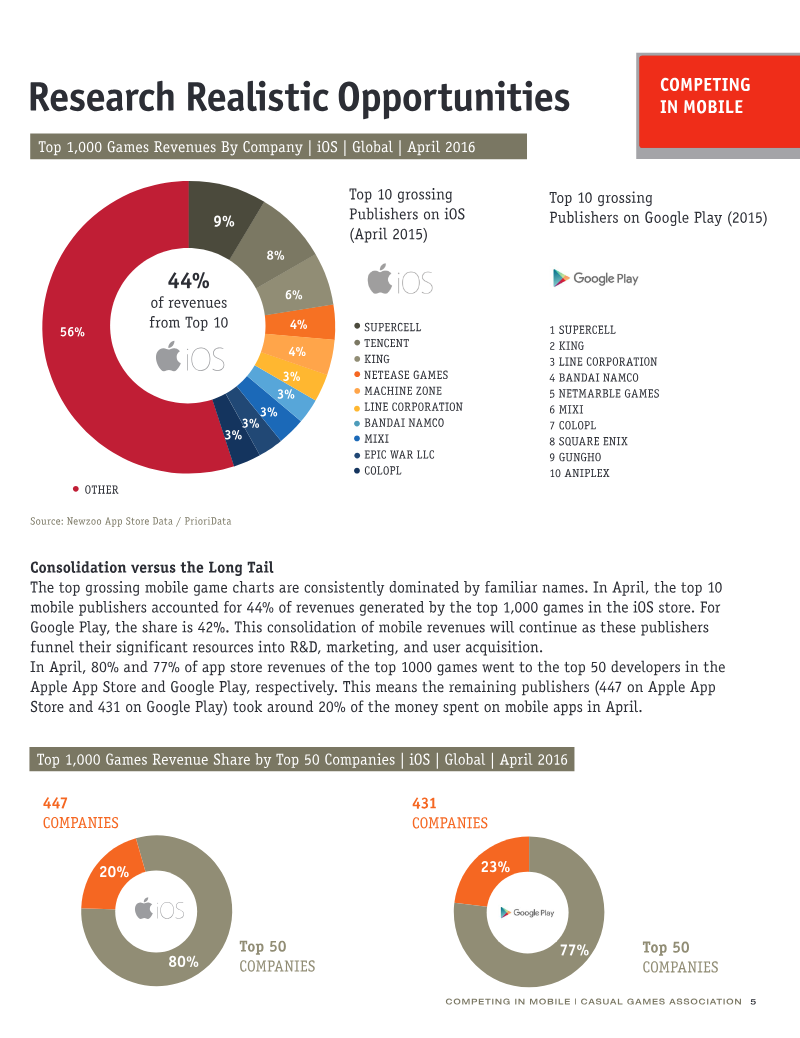
- The top 50 mobile developers capture approximately 80% of total app store revenue, highlighting a highly consolidated market dominated by a small group of publishers.
- Mobile gaming is the leading industry segment with $36.9 billion in 2016 revenue, representing a 21.3% year-over-year growth rate.
- The top 10 mobile publishers control 44% of iOS revenue and 42% of Google Play revenue, underscoring the difficulty for smaller studios to compete.
Space Ape on the power of CRM for F2P success
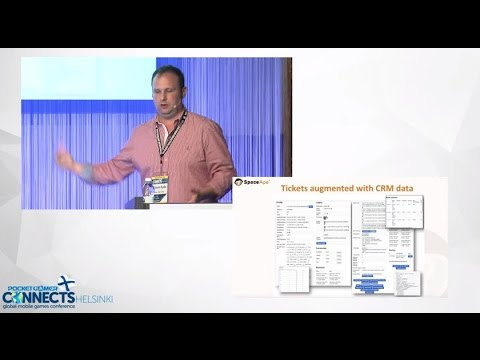
Space Ape Games emphasizes the strategic integration of customer relationship management (CRM) and data analytics to drive revenue and player retention in the free-to-play mobile gaming market.
- Space Ape Games found that 20% of total revenue was directly attributable to players who had experienced positive interactions with customer support.
- The studio prioritizes high-value users by augmenting support tickets with comprehensive player profiles that include spend history, churn propensity, and technical crash logs.
- Direct engagement with influential players via private, invite-only chat groups on platforms like LINE serves as a more effective marketing channel than traditional user acquisition.