
ReportNewzoo
Casual Games Sector Report 2016: How to Compete in the Crowded Marketplace
8 pages~8 min full read
The 2016 Casual Games Sector Report provides a strategic analysis of the global mobile gaming landscape, focusing on how smaller studios can navigate a highly consolidated and competitive marketplace. The central thesis posits that while the mobile sector is dominated by a small group of top-tier publishers, developers can achieve success by utilizing precise market intelligence, optimizing international roll-out strategies, and applying rigorous, non-average performance metrics to their business models.
The industry is experiencing significant growth, with global gaming revenues projected to reach $99.6 billion in 2016. Mobile gaming has surpassed PC as the leading segment, generating $36.9 billion—a 21.3% year-over-year increase. This growth is heavily concentrated in the Asia-Pacific region, with China alone contributing $2.9 billion in new revenue. Despite this expansion, market consolidation remains a defining feature; the top 10 mobile publishers account for approximately 44% of revenues on iOS and 42% on Google Play, while the top 50 developers capture roughly 80% of total app store revenue.
Methodologically, the report synthesizes global market revenue projections with granular app store data, demographic profiling of high-spending users, and performance benchmarks. It emphasizes that relying on average industry metrics is insufficient for profitability, advocating instead for the use of 75th-percentile benchmarks to set realistic targets for retention and monetization. By analyzing specific regional data—such as conversion rates in Switzerland or device penetration in Australia—the report illustrates how developers can move beyond generic strategies to identify niche opportunities. Ultimately, the findings suggest that success in the crowded mobile sector requires a data-driven approach that integrates global market trends with localized, platform-specific optimization.

Newzoo · 2026

Google · 2026

Newzoo · 2026

Newzoo · 2026
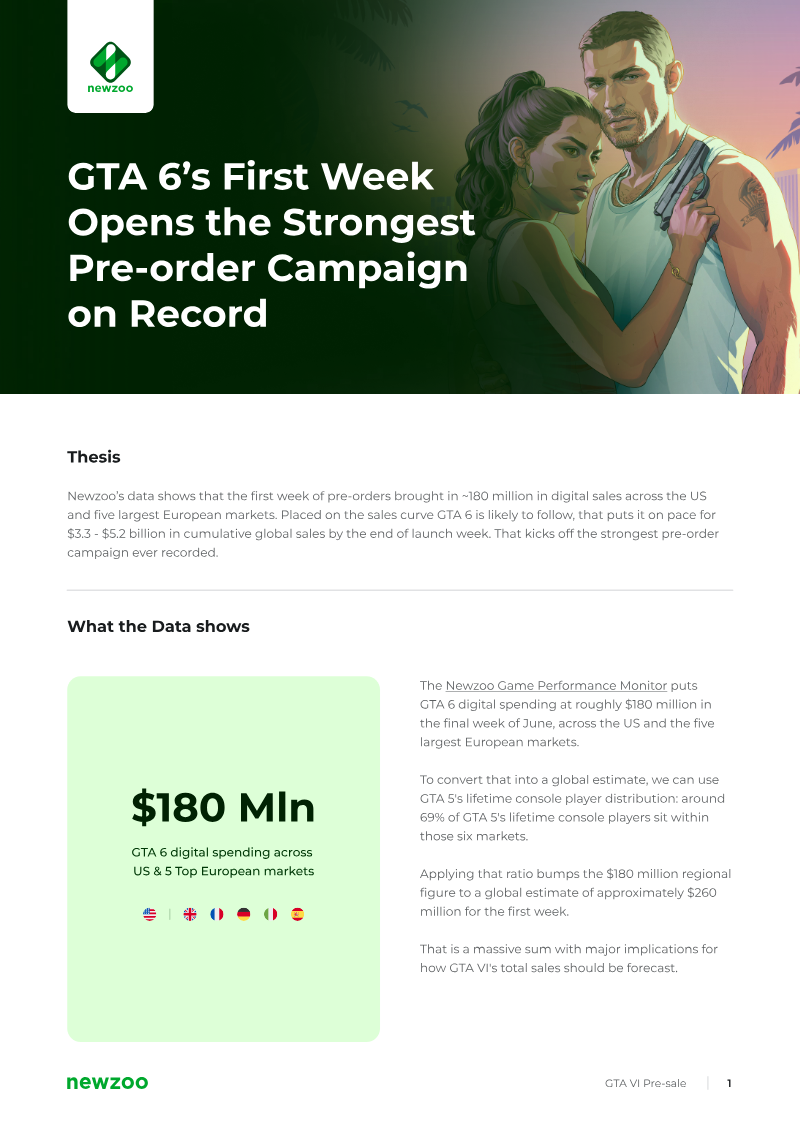
Newzoo · 2026

Newzoo · 2026
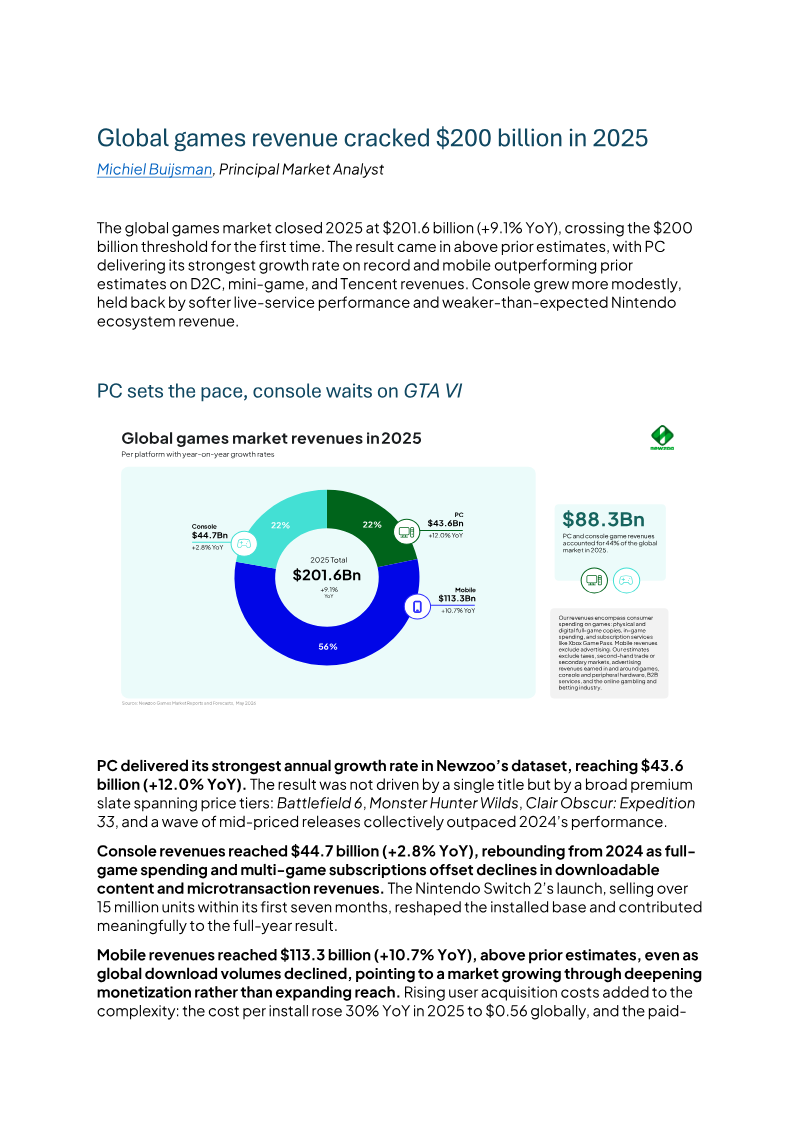
Newzoo · 2026
Newzoo · 2026

Deconstructor of Fun · 2026

Newzoo · 2026
Newzoo · 2026
Newzoo · 2026

Gamesforum

Almedia · 2026

SocialPeta · 2026
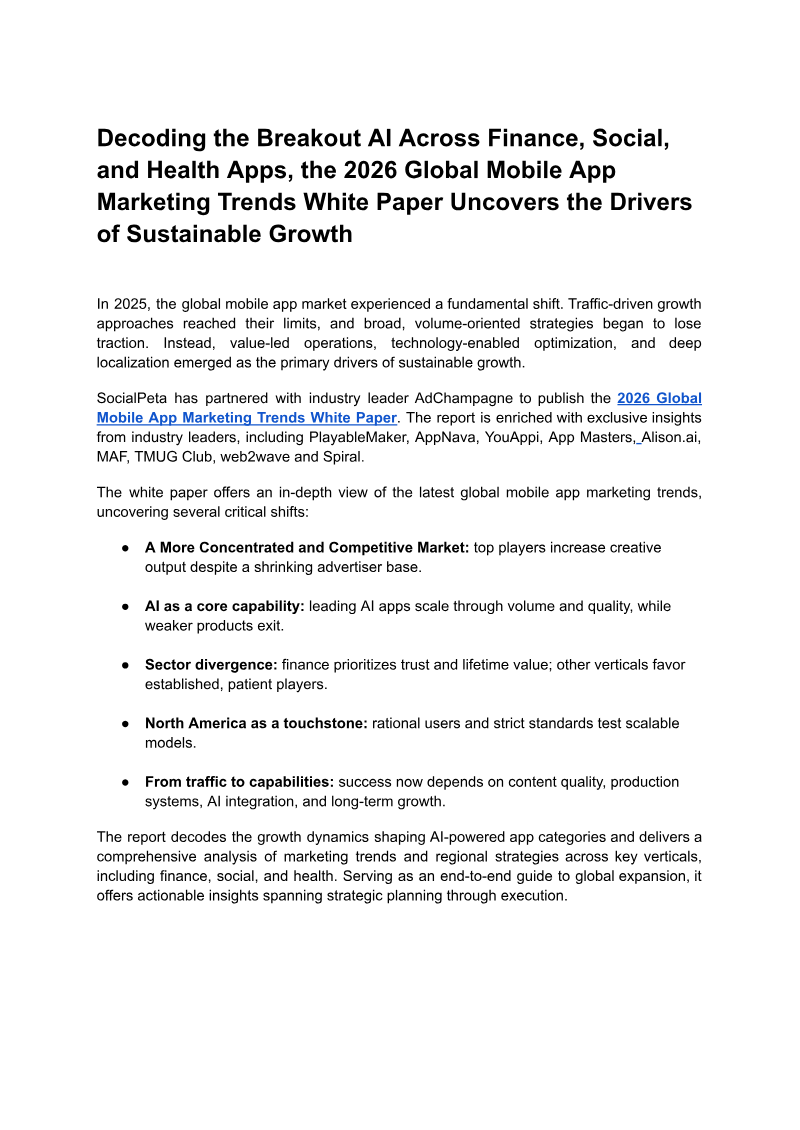
SocialPeta · 2026
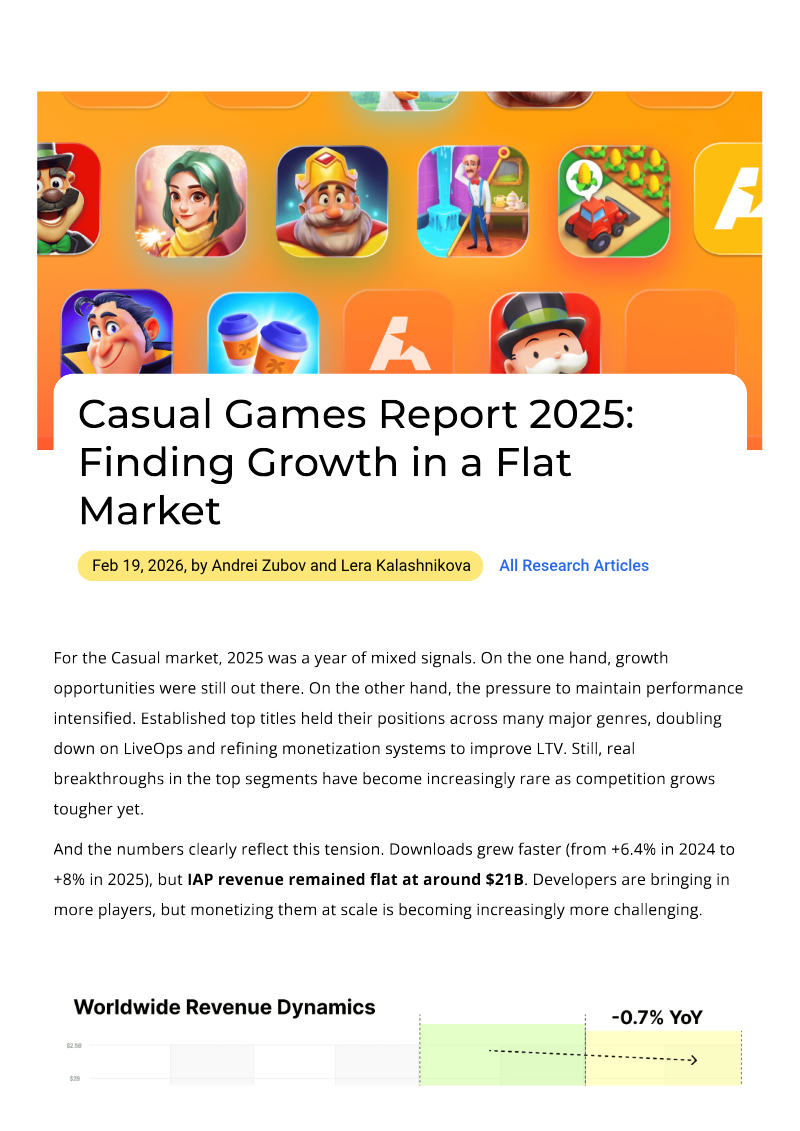
AppMagic · 2026

AppMagic · 2026

SocialPeta · 2026

SocialPeta · 2025

GamingReport · 2025

AppMagic · 2025

AppMagic · 2025

Aarki · 2025