1 free read left. Create a free account for unlimited reading + AI research.
Create free account
How your mobile game can succeed on a global scale
Key insights
6 takeaways- 01Global success requires a hybrid strategy that combines the high-velocity, data-driven free-to-play mechanics of Eastern markets with the long-term, engagement-focused design principles of Western markets.
- 02True localization must go beyond translation to include cultural nuances, regional UI standards, and tailored live operations, ideally managed by local native-speaking talent.
- 03Developers should prioritize direct operations over third-party publishing to maintain full control over player data and essential feedback loops.
- 04Rising entry costs and lengthening development cycles necessitate that studios mitigate risk by diversifying their portfolio of titles and securing first-mover advantages in new territories.
- 05Effective global expansion requires significant investment in localized marketing and customer support infrastructure to ensure a unified brand presence.
- 06To prevent technical fragmentation, studios should maintain a single, scalable build across all languages, reserving reskinning only for specific regions like the Middle East.
Ask AI about this video
Transcript
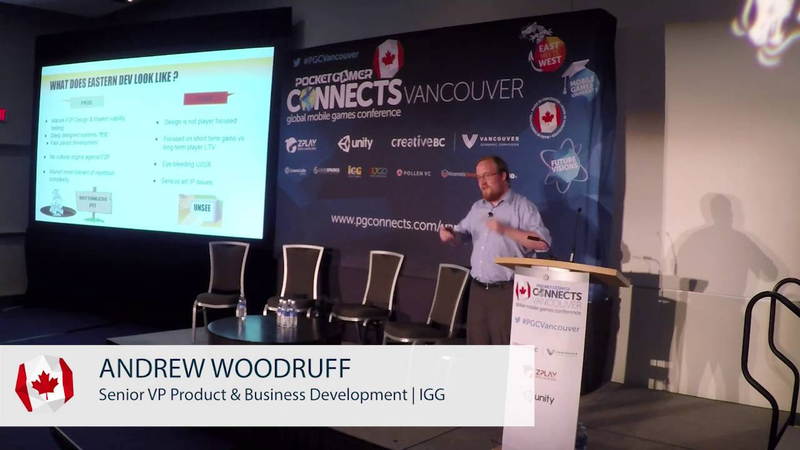
we can joke about it I know and I caught the end of the panel and a lot of the jokes was do it to start this in Mandarin you know monolingual people here so I'm Andrew Woodruff so just click to start this oh sorry Amanda Woodruff i'm the senior vp of product and business development igg as well as the producer here to talked about a pretty pompous subject how to succeed on a global scale and one of the things I want to go through I've had 10 years experience in the global industry in China sorry and I've worked in all facets marketing advertising operations branding design and now back
into being a producer and and part of the design team it's great to kind of bring everything together I like to kind of put in the my background where I used to be in charge of a Chinese dev team making a Chinese game for the Chinese market so yeah get the white guy to do that it's kind of a seriously weird a weird idea so take a harder no okay got it who are we what we find out a lot about in Vancouver is nobody knows who we are we know that one other Studios clothes and we try to interview people and they're like who are you we're better known for our games but a little bit on us we were found in 2006 we were listed in the Hong Kong Stock Exchange 2013 we open our office in Vancouver in early 2014 we currently globally have about a thousand people we have 300 million player accounts 18 million monthly active users on the app Annie
publisher rankings we were ranked 34th closer to home we were ranked 17th between blizzard and glue on the Pocket Gamer developer for twenty 16 3 15 326 yeah ok and we just celebrated our 10th year anniversary so we've been around a while but nobody's heard of us one of the things we started as a publisher back in two thousand six and we quickly realized there was an issue we couldn't get quality games because we were based in China we started in China we couldn't get the quality game so we soon realized that we need to develop our own games and that was the browser game area so we we started with client games and then we finally were moved into browser games we actually had our first success with galaxy on my two launched in 2010 still running to until today still making money so it's kind of a quite a big accomplishment there and then we are already pretty early on determined that we needed to move into mobile and so by 2013 we actually had
over eighty percent of our revenue in mobile so we were really quick in there from our browser and client era and our big hit castle clash is still out there we've celebrated a long two years with it but really we are really global we're everywhere we're in Canada USA south korea japan china thailand singapore Philippines were really everywhere we just opened an office in Belarus a month ago so we're putting in the resources to be there how you'd know us I'm not going to read through all this this is kind of a data dump on everyone here but i wanted to point out that we have games in so many different languages castle clash is in 15 languages we've been in the top 10 sometimes in the top one in several different geographies lords mobile we launched three months ago and it's in 16 languages and we'll be launching in other languages shortly too and it's also in the top 50 in several
the geos also really up there for some reason vietnam we're really we're really putting in a lot of resources there a couple of other all the games a clash of lords to 12 languages also ranks top 50 and quite a lot of different geographies deck heroes a little bit of a tractor from the other games it's a ccg it's a little harder to rank but we're still up there in the top 100 and a lot of the different areas then kind of back to us in Canada you can see this arts a little bit different from some of the earth that we have in our other games this actually I sent it to a colleague before we did this talk and he said you have to move these pictures in honor game they're not part of our company so they're still here this is actually a cup of this is a game that we're working on more locally it's post-apocalyptic it's not as cute as other games that we have or here in beautiful vancouver I'd be remiss to say that we're Hayward we're hiring that's why we're we came to this conference and you can see we more recently donated a
hundred thousand dollars to the wildfires that happened across Canada to the Red Cross so I had to talk a little bit about working in China I worked there for ten years just wanted to go through some funny anecdotes here remember one of the first companies I worked for called netdragon they used to be really big across the cross the world but they had an interesting thing I remember I was working on a very Gundam ripoff game called zero online and they were putting a panda in there and it was going to draw presents I kept on asking is it is at least a mechatronic panda or is it's gonna be cool no it's a panda I was okay well this is a little weird why are we doing it China's national treasure look it's not an answer but it was in there the players were happy that they got extra stuff but in another instance I remember grabbing another game I was more on the marketing side they called it zombies ate my pizza and I started playing it plated a couple
hours turned around and it was like hey wait a minute I saw the zombies I'm fighting the zombies versus ham pizza and it turned out ask the project manager he's like there's no pizza why is it called pizza guy don't don't worry about it and the last example was kind of more on the the VIP side of everything I'm sure you're all familiar with how in Asian different develop games a lot of them have these crazy VIP systems that really show off and it's like wearing a really expensive brand and you really want to show off and i remember in most of the games you have these VIP systems with titles and some of the RPG games would have these title systems where every single level you have this new title on top of it so you'd have these like three or four people running across screen with like 15 titles on there you're like what's going on I can't even see anything those are what what those are a bunch of the things that we had to change in all the companies i was i was at we had to develop ways that western players would accept them because you
don't need to have a whole screen of names it's silly so it was still a very positive experience being in china there's there's a lot of dif different different angles for how people do things but yeah it's very interesting now here what why we're here it's east meets west right one thing is that I GG is and was a very Chinese company and how did we get over being it well we really became a truly multicultural approach to both our development and our publishing we really needed to expand into new geographies and new new locations by putting in the resources we didn't just randomly go okay now it's a let's put this through google translate and see what happens I've seen that happen pretty often it's not doesn't work so just I know that a bunch of the people have talked about all sorts of different aspects of what is in eastern dev what is a Western yet but I'll just go through these points really quickly the pros for being in eastern death is there's a very mature free-to-play
design there nobody's scared of it it's there I wanted to teach everyone one word in Chinese that you have to understand when you're dealing with Chinese devs and that's wack ugh it's the idea of a bottomless pit for a design a lot of Western Devils they put a limit to what you can spend but in China you need to make a design that just you can throw your wallet in and it would never end and that's called wok hug so you've learned a little bit of Chinese wall here so it's a very fast-paced development there's no no no cultural stigma against free-to-play they actually kind of shy away oh I have to pay for that why would I do that and there's a really big tolerant tolerance for repetition and complexity you see one game comes out 150 other games come out within a few days again the design isn't very player focused it's not as as fun for the player but they try to get as much money as possible in these designs and that's what's the next one here there's a focus on short-term gains as opposed to the longer term player a lifetime value does
anyone here know how long a typical Chinese platform will put a game up before taking it down anyway you can just shout it out three days if it doesn't make a profit in three days it's over let's take a writedown you can't complain it's just gone so that's what one of the issues with publishing in China you know you're not given the light of day just looked on three days that's how fast it is and of course there's the serious IP issues so Western devs we focus on a lot more of the player experience as opposed to some of the more whack hung designs planning and development methodology I've seen it a little bit more forgiving people aren't killing themselves doing overtime there's a stronger understanding of appealing UI UX and there's a longer-term plan for success i know some of the profit and loss analysis that
have seen in some of the companies are planning an eight month for return so three days eight months it's a huge difference and there's a decisions being made across multiple channels so i'm kind of preaching the choir here because we're all here but unfortunately i find that there is a huge issue with the reluctance in adopting or adapting to the free-to-play style there's still that stigma and sometimes we're like oh well it's made here that everyone can accept it and then oh it doesn't do very bad it doesn't do very well there so what have we learned well we were always always in the free-to-play market so it wasn't hard for us to stay in it my suggestion is to adopt it and embrace it I know that's why we're all here play they're willing to spend so from the free-to-play design I know people are throwing out different words through it different ones but I like towards the use of word engaging games need to be more engaging for the the players it can't just be a random wack hung design and then I had to go back had to say
this again the UI and UX is terrible in China it's really bad and we're still learning about this so we still are working internally to to deal with this what have we done and I've used this as an interesting term I know investment a lot of people thinking money here but we need to invest in resources we've we've done that we have talent across a lot of offices instead of hiring that guy that had three years of experience in a German university is from China we hire the german guy that note that speaks German that knows the German market to really break in there localize the localization verse translation can't stress that enough if you looked why I brought up the fact that lick Lords mobile is in 17 or 16 languages we didn't have 17 different versions I know that we were talking a little bit during the panel about the the idea of breaking the build and having different versions well that can't happen if you have 17 different versions and so we have to plan out a UI that actually can fit all these different languages my go-to is German because derman can be really really long or Russian so if Russian and
German fits we're good then again I know this is the worst art we could possibly put on for this point but art with wide appeal a lot of our games have an appeal that can match any market I just like this because it's what we've done here at the hydrogen Canada office and then kind of moving on we have the the we r GG is quite big as I said we have a thousand people we spread risk by having 20 plus games and development at any point now that means in a market that keeps on shifting and changing if it changes and we don't don't hit it we hope that at least one of the others does so that's where there needs to be emphasis on making sure that you have to think ahead make sure that you're hitting the right market or if it changes up underneath you from an operational perspective I think the only way to do it is to do it at a global level as I said if you plan out properly should be able to get it done you have to build up the scope
and scale we have that operations department so you can put it in and be able to deal with it I would suggest doing it yourself having like twenty percent here thirty percent here going to all the different platforms in between you're not going to be able to get the limo mentum to move forward DevOps is a huge thing if you have a publisher in between you are you really learning what the player needs and respects in order to move to improve the game so having a closer tie between your operations and customer support with the developer is a huge advantage in creating a better game the other thing here is localized events one thing is in China players would rather have bonus so you say okay in this event you get a hundred percent more but in and a lot of the the Western based culture is like a you know look at steam you look at the sales it's all percentage-based all you get thirty percent off black friday for example it's not bonuses it's percentage discount so these are things you need to
do when you localize your events because if you did a discounted service in China they just wouldn't care marketing like we all know you have to spend the money I think we we have that luckily at igt we have the money to spend but you just have to do it from a localized promotions we for example in Russia printed things right on water bottles and distributed them so people could use a QR code or something in that similar fashion in order to get things in our game to trying it up because different different different markets have different ways of finding out or wanting to get involved with your games so kind of the takeaways here it's a constantly changing market I think it's great that players are accepting more and more discerning of like it's just harder games more mid-core especially the harder core versions of mobile games and this is leading on the dev side to longer dev cycles so you're having to
put in a lot more investment on that or hitting that market you have to identify the future trends so where are things going are we actually going to waste millions of dollars moving in the wrong direction it's not going to happen hopefully new generations of gameplay so being different being the first mover imitating isn't enough we all know that I know this is a kind of a moot point but you need to be new we need to be in the market first one of their advantages with castle clash even though there's still a lot of similarities with clash of clans we added heroes we added a lot of new innovations to it and we're also first to Android first to Russia first to a lot of different areas which gave us the advantage again we're here in east meets west track east and west need a meet think of the product first take the advantages of both sides and again back to my point investing in resources is a must in order to build up your your momentum to prove to put forward this is
our game that we're doing in OGG Canada kind of good to end on but thank you if you want to connect with us these are our contact details any questions very brief you kind of got me about any questions come on this is the question period um okay can I will I will old stand beside you Oh came up with a over the question so so you while you were busy watching our previous panel we're talking about the kind of the differences and you we were talking mainly about studios at working in one area where you of CF successfully managed the cross to some degree sometimes yeah I guess familiar from vice perspective gee what is there any one thing that you'd think that they saw summed up that you'd throw out there I always think that we'd ever expanded in any new of the new location without having the resources in place I think what a lot of people do is they say oh
we'll try Russia or we'll try another place but if you don't have the resources for it players get angry you don't hit the right you don't hit the Martin bright marketing area sometimes you just missed the mark yeah then it's very hard to get a second launch right yeah yeah okay yeah good so I was expecting questions are you you invite food for your various oh no questions no further questions look it was one that back there you go thank you just to jump on the front and on the back hello I think I've seen though you know one of the slides that localized LiveOps is very important like it how do you how do you manage like you have a like you you have large gaming so many countries how do you how do you how do you pull off a you know such localized events in different areas we like to balance a lot of that like of course I think they brought up for a perfect point in the last panel you don't want to break the version into too many different ways and the problem I find when you have the developer publisher
model is that oh this publisher needs these languages so we need to do it in a different one and then you end up making too many different editions because we're both the developer in the publisher a lot of a lot of our games or most of our games when we get to that point we try to balance that out we don't do too many localized events for a particular location or language we try to keep it in between so we could go further but in other aspects like for example it's we've we launched a game that's a reskin of castle clash in the arabic and mena region as well as turkey is doing really well so sometimes you just have to reskin so that there is there's a take there it is tough for sure you just don't want to go too far where you have to break the versions cool because it's one more questions and gentle here on the in the middle for starters year for you don't have the resources to get people to translate
language for you what can the system of the software the platform the website they provide that service so you can change the language and to be able to launch in a different country like I'm major country friends we work with a lot of different translation partners we don't do a lot of it internally so I think that keeps costs down because if I worked at a previous company where we actually had a full translation department so I think the general cost of translation you can do a first pass with with a particular company when i worked with netdragon we actually got a lot of our players to do it so if you have previous games you can give them items and your other games in order to get them to translate for you for free for free but it is it is difficult I think don't launch in that region if you don't have the full because you're starting a brand right if they see in your English version and your French version your spanish version etc they're all different or their differing they
actually get on forums and they do Fitchet you for that that you know you need to be I think more ready to have the same brand across all of your languages cool thank you very much come on applause please for entry very good your spawn time you
Summary
Achieving global success in the mobile gaming industry requires a strategic synthesis of Eastern development efficiency and Western player-centric design. The core thesis posits that developers must move beyond simple translation to achieve true localization, ensuring that cultural nuances, user interface (UI) standards, and live operations are tailored to specific regional preferences while maintaining a unified global brand.
Key findings emphasize that Eastern markets excel in mature free-to-play mechanics, characterized by high tolerance for complexity and aggressive monetization models, whereas Western markets prioritize long-term player lifetime value and intuitive user experiences. A critical operational insight is the necessity of investing in local talent—hiring native speakers who understand regional market dynamics rather than relying on automated translation or external publishers. Data indicates that maintaining a single, scalable build across multiple languages is essential to avoid technical fragmentation, though occasional reskinning may be required for specific regions like the Middle East.
The industry landscape is defined by rapid shifts, where development cycles are lengthening and the cost of entry is rising. Successful studios mitigate risk by maintaining a diverse portfolio of titles and prioritizing first-mover advantages in new territories. Methodology for global expansion should focus on direct operations rather than third-party publishing to ensure developers retain control over player data and feedback loops. Ultimately, the most effective strategy involves balancing the high-velocity, data-driven development style of the East with the long-term, engagement-focused planning favored in the West, supported by significant investment in localized marketing and customer support infrastructure.
















Comments