Market Analysis reports and market data
Documents

Essential Facts About Video Games in Italy 2023
Italy's video game market reached over €2.3 billion in 2023, a 5% increase on 2022 and 28% above 2019 levels, positioning the country among Europe's top five markets.
- Italy's video game market reached over €2.3 billion in 2023, up 5% on 2022 and 28% above 2019 levels, placing the country among Europe's top five markets.
- Growth was driven by hardware, where sales rose 63% to €665 million on the back of new-generation consoles, while software (71% of revenue at €1.6 billion) fell 8% year-on-year.
- Italy counted 13 million video game players in 2023, down 8% from the previous year, with the decline concentrated among occasional players while a core of 9.5 million weekly players remained comparatively stable.
The Games Sector in Ireland: An Action Plan for Growth
Forfás's action plan for Ireland's games sector argues that the industry is growing rapidly and that Ireland can become a global games hub for the 21st century, but only if policy is deliberately redesigned to capture the opportunity.
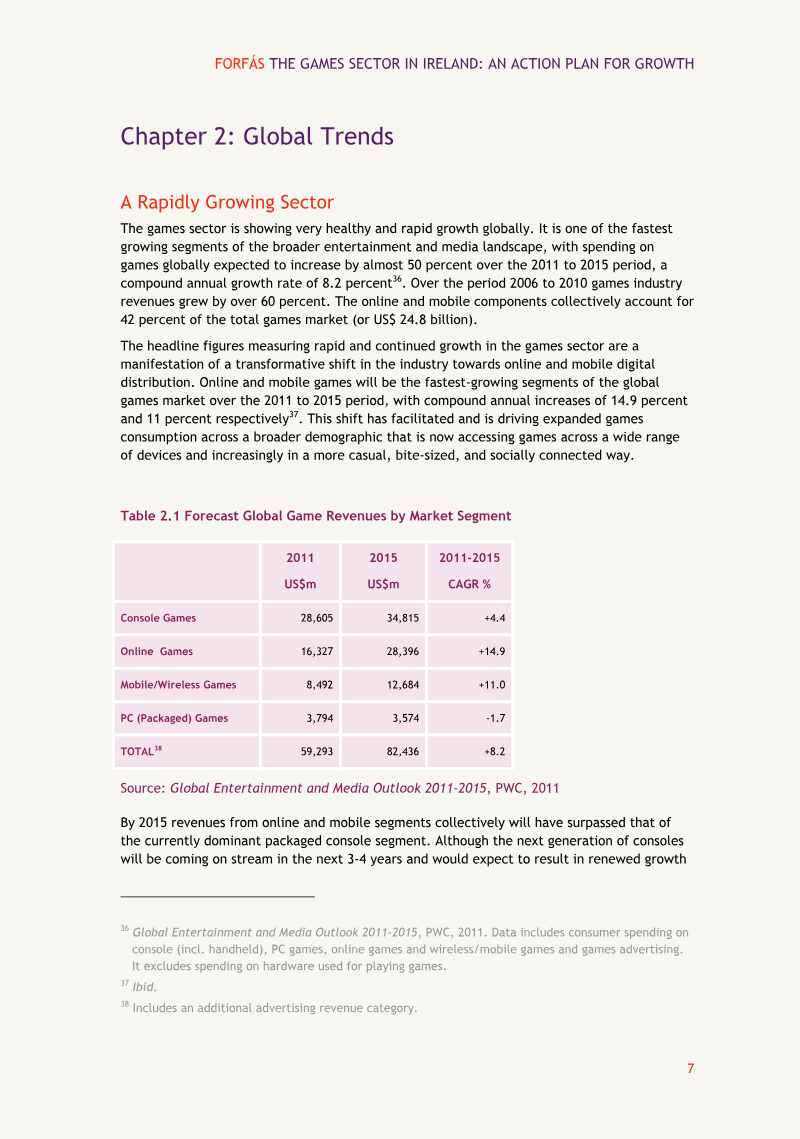
- Global games revenues are forecast to grow from US$59.3bn in 2011 to US$82.4bn by 2015, with online (14.9% CAGR) and mobile (11.0% CAGR) segments overtaking packaged console games.
- Ireland's core games employment has grown fivefold since 2004 to just over 2,000 people in 2011, with a target of 4,500 by 2014.
- Foreign-owned firms account for roughly 90% of Ireland's games jobs, concentrated in customer support, localisation, and game servicing, while indigenous firms are mostly micro-firms focused on development.

Audiovisual Action Plan
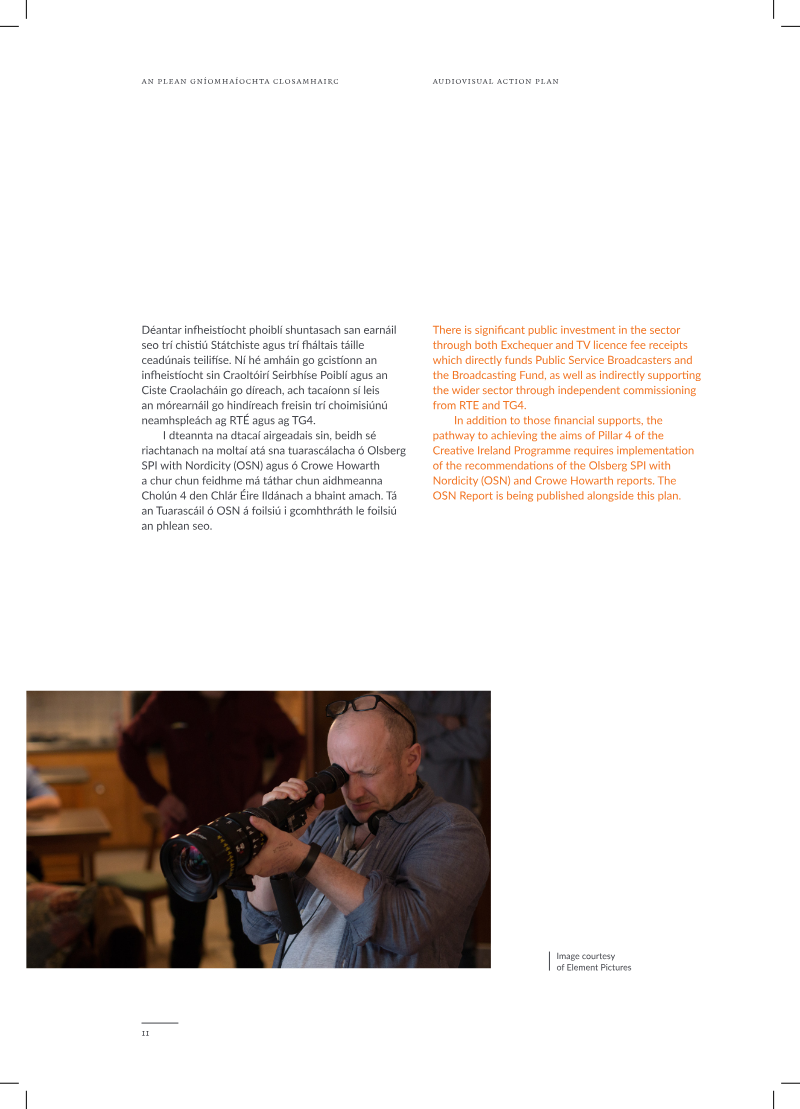
Ireland's Audiovisual Action Plan, a component of the Creative Ireland Programme, sets out the government's ambition to establish the country as a global hub for film, television drama, animation and, increasingly, games.
- Ireland's Audiovisual Action Plan, part of the Creative Ireland Programme, commits €200 million over ten years under the Investing in our Culture, Language and Heritage 2018–2027 plan to make Ireland a global hub for film, television drama, animation and games.
- The audiovisual sector supported about 14,370 full-time equivalent jobs and generated €857 million in gross value added in 2016 (about €1.1 billion including radio), with export earnings of around €191 million.
- Full implementation of the consultants' (Olsberg SPI/Nordicity) recommendations could roughly double film, television and animation employment to over 24,000 FTEs and generate nearly €1.4 billion in gross value added within five years.
Greece Mapping Results 2021
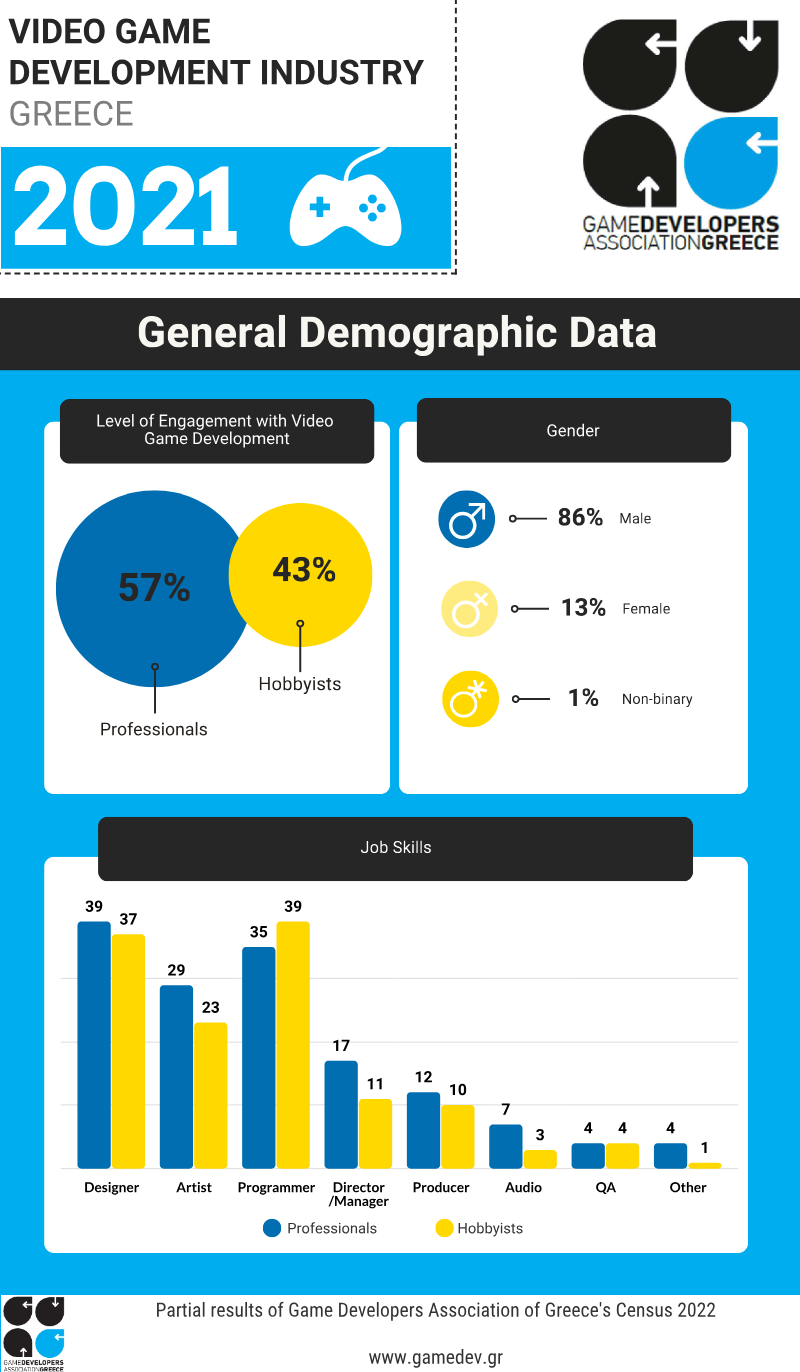
The Greece 2021 Game Developers Association mapping results offer a snapshot of the country's video game development community, drawing on survey data that captures demographics, professional roles, education, studio structure, and output for the year 2021.
- Greece's 2021 game development community is predominantly male, with half of respondents aged 25 to 34 and a substantial share aged 35 to 44, indicating a relatively mature workforce.
- Professionals form the clear majority of participants, and design, art, and programming together account for the largest share of reported job skills.
- More than half of respondents hold games-related degrees or training, while roughly a quarter have unrelated qualifications and a similar proportion report no formal games-related education.
The Game Industry of Estonia 2021
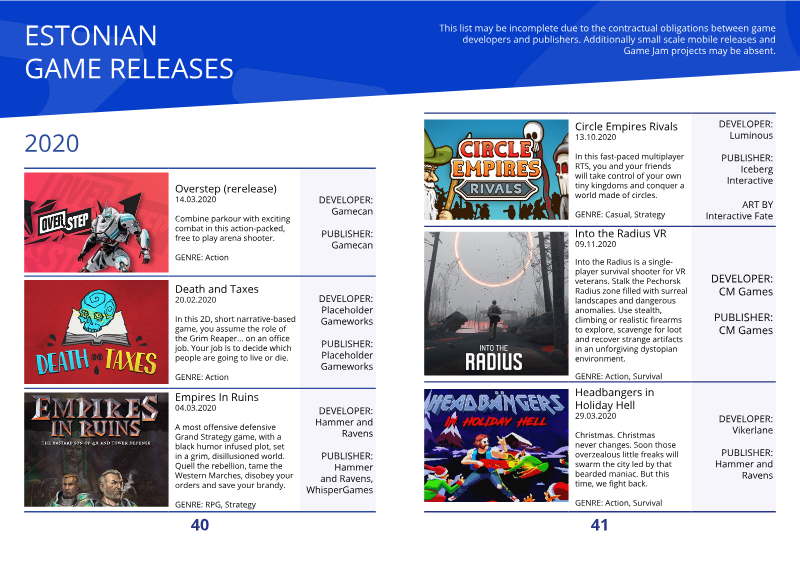
The Game Industry of Estonia 2021 surveys the state of Estonia's game development sector during 2021, drawing on company data, interviews conducted between November 2021 and February 2022, and an examination of education, support organizations, and community activity.
- Estonia's game industry grew 20.69% in 2021, with taxable turnover rising from €40.0 million in 2020 to €50.4 million, after 2020 had already surpassed 2019 levels, signalling sustained momentum despite the pandemic.
- The sector is highly concentrated: ZA/UM alone generated €20.7 million of the €50.4 million total, while other notable performers included Creative Mobile, Gamecan, Zaum Studio, and Ringtail (acquired by Magic Media in June 2021).
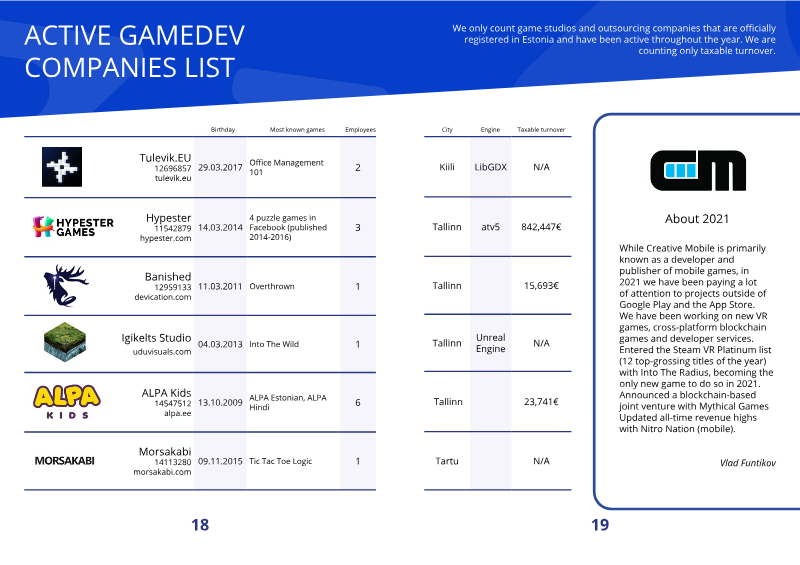
- The industry is dominated by very small firms, with 76% of its 41 active companies employing one to five people, and the sector overall employs roughly 300 people.
Belgian Games Key Facts 2021
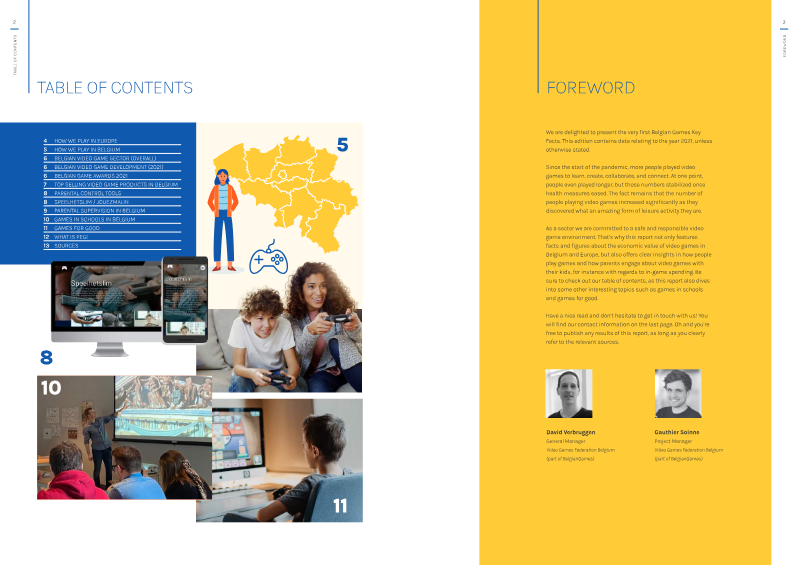
The Belgian Games Key Facts 2021 report, published by the Video Games Federation Belgium as part of BelgianGames, presents the first edition of a compiled overview of the video game sector in Belgium and Europe, covering primarily data from 2021.
- Belgium's video game sector was valued at an estimated €600 million in 2021, growing about 4% over 2020.
- Belgian video game development generated €88 million in turnover in 2021 across 110 companies employing 935 full-time equivalents.
- About 52% of Belgians aged 6 to 64 play video games, with an average player age of 31 and women making up 48% of players.
Belgian Games Key Facts 2022
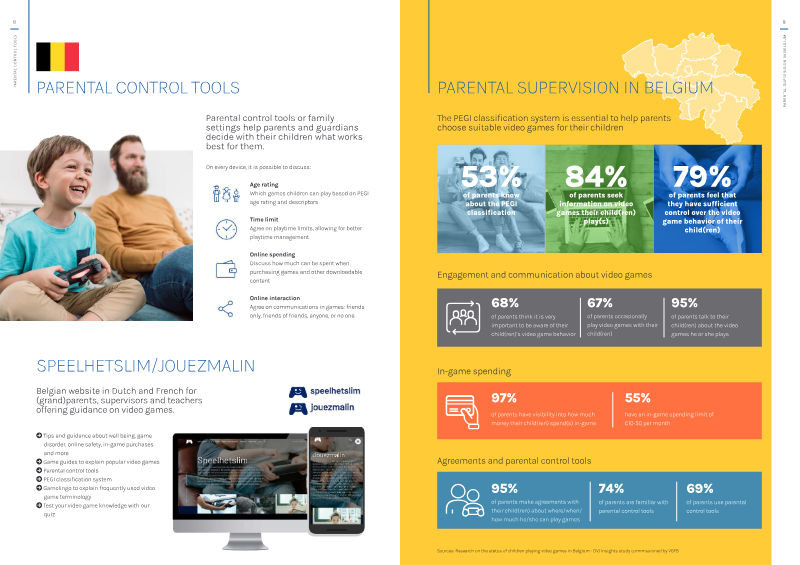
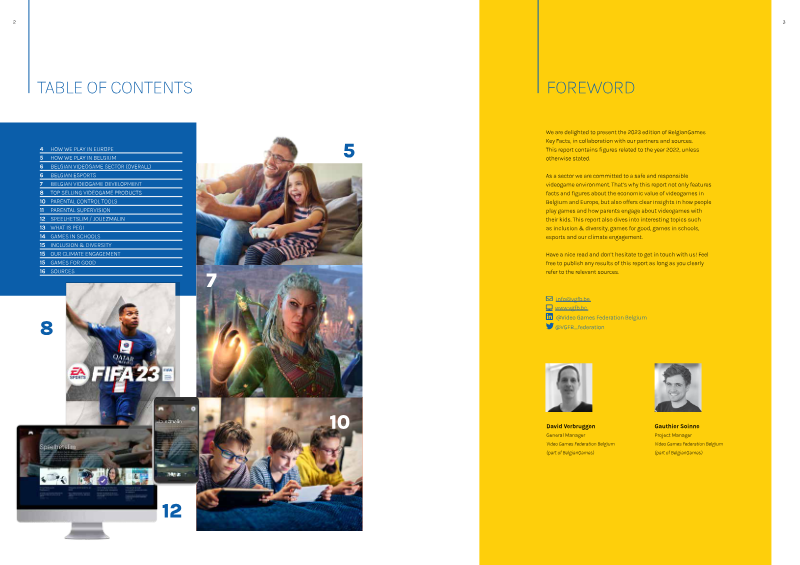
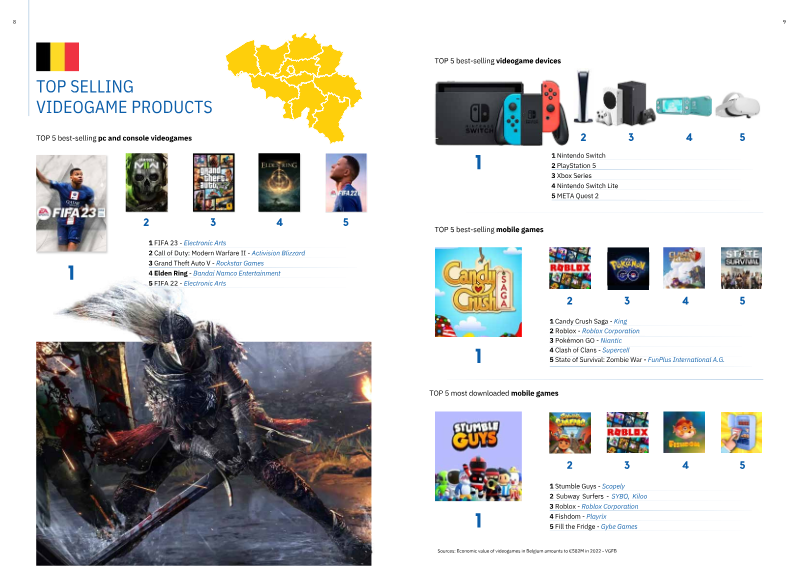
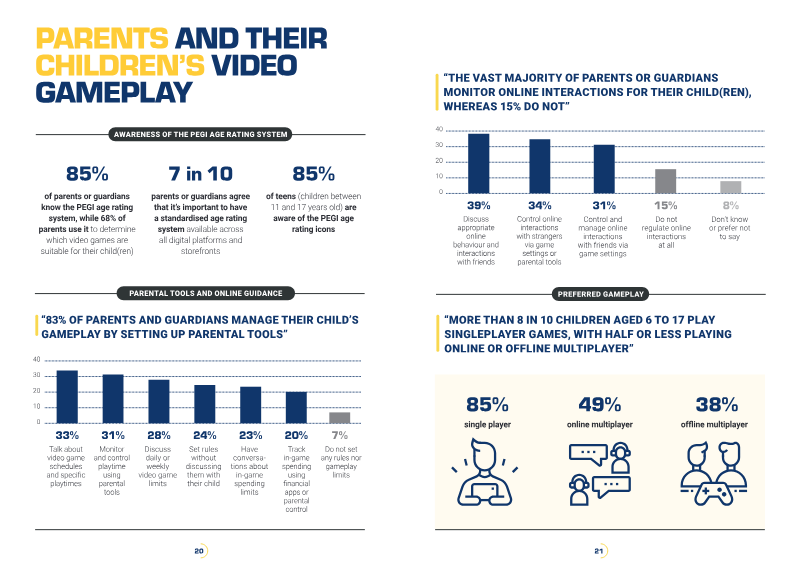
The Video Games Federation Belgium's "Belgian Games Key Facts 2022" (published as the 2023 edition) provides an overview of the videogame sector in Belgium and Europe, covering market value, player demographics, development, esports, parental oversight, and social engagement topics such as education, inclusion, and climate.
- The total value of videogames in Belgium reached €582 million in 2022, down 3 percent from 2021 but up 10 percent from the pre-pandemic year 2019.
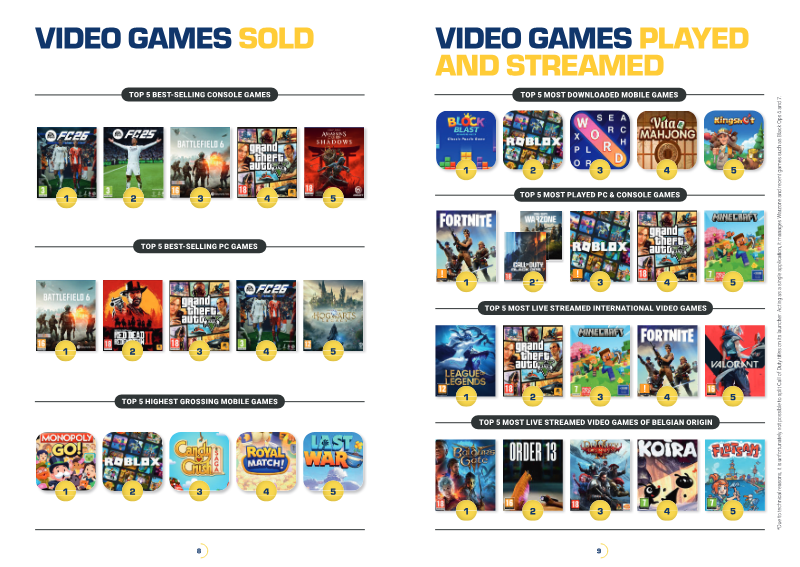
- Belgian videogame development employed 1,085 full-time equivalents across 133 companies, and mobile game downloads reached roughly 148 million, about one million more than the previous year.
- 53 percent of Belgians aged 6 to 64 play videogames, averaging 8.8 hours per week, with female players making up 46.7 percent of the player base.
Time to Game 2025: Insights Into Belgium's Video Game Sector
The Video Games Federation Belgium's 2025 Key Facts Report offers a comprehensive look at Belgium's video game sector, covering consumer sales, market size, player demographics, time spent playing, parental oversight, in-game spending, and the regulatory and educational tools available to families.
- Digital downloads accounted for 75 percent of full-game unit sales in Belgium in 2025, up from 58 percent in 2021, as physical full-game sales continued to decline.
- Total video game sales in Belgium reached roughly €698 million across software and hardware, with the PlayStation 5, Nintendo Switch 2, and Xbox Series X|S among the top-selling consoles.
- More than half of Belgians aged 6 to 75 play video games, equivalent to 6.3 million players, with an average player age of 34.7 years and a near-even male-female split overall.
Integrated Report 2017: Sega Sammy Holdings
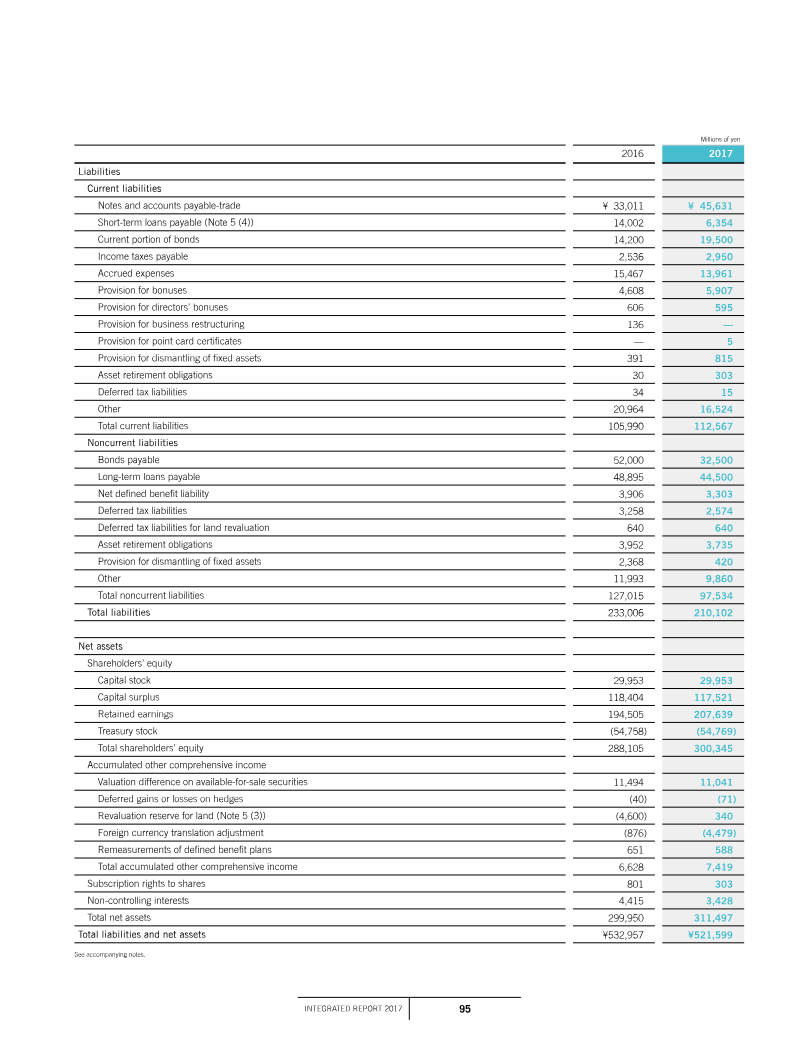
The Sega Sammy Holdings 2017 Integrated Report outlines the company’s strategic transition from a period of structural reform to a phase of sustainable growth, encapsulated by the "Road to 2020" initiative.
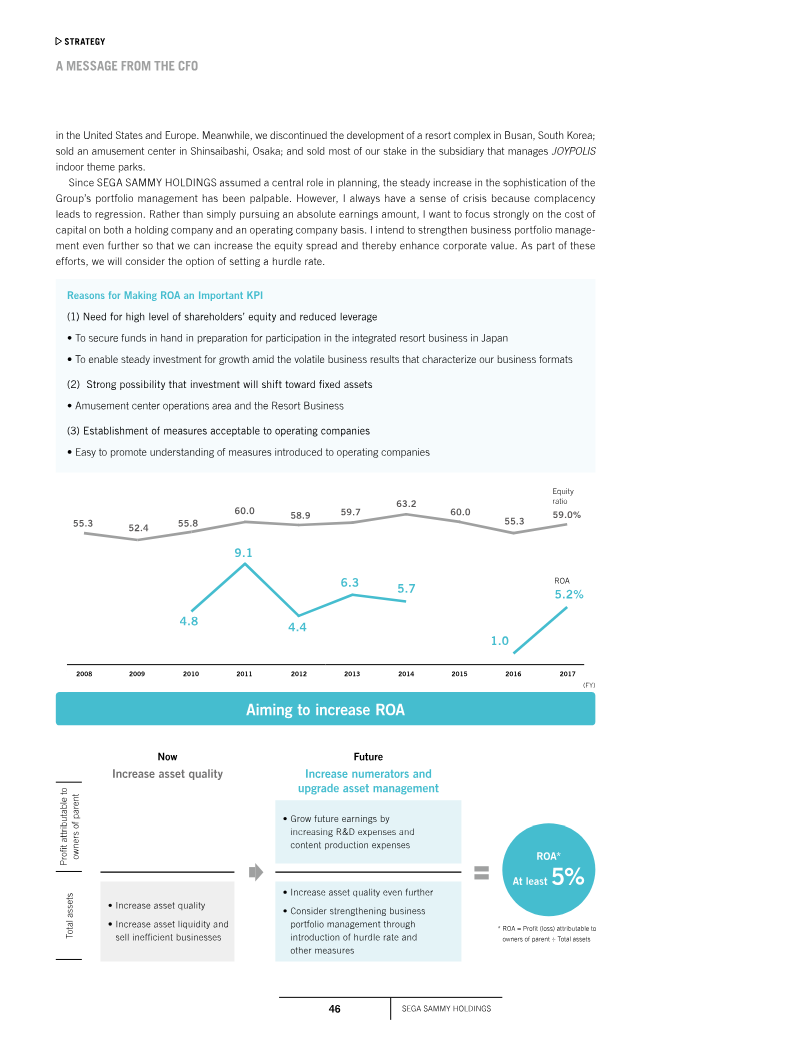
- Sega Sammy is executing a 'Road to 2020' strategy to transition into an IP-centric organization, targeting a 15% operating margin and 5% return on assets by fiscal 2020.
- Fiscal 2017 financial performance showed strong growth, with net sales increasing 5% to ¥366.9 billion and operating income rising 68% to ¥29.5 billion.
- The company is diversifying revenue streams away from the declining domestic pachinko market by expanding into global digital gaming and integrated resort development.
Sega Sammy Integrated Report 2020
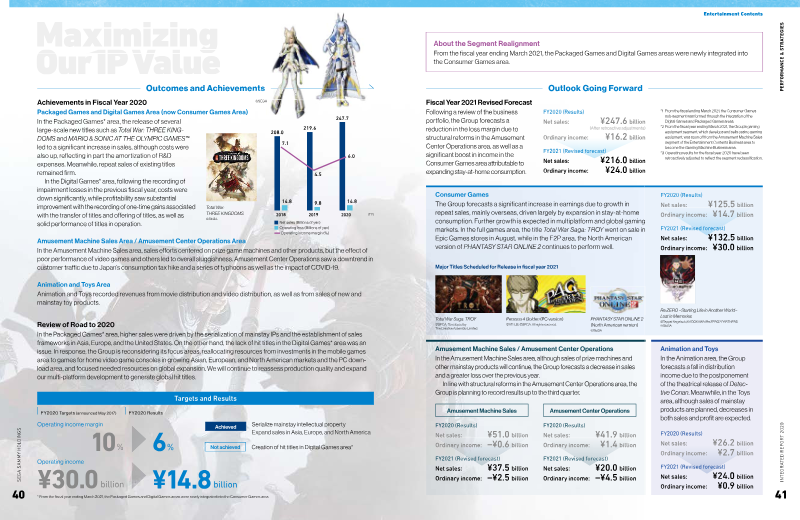
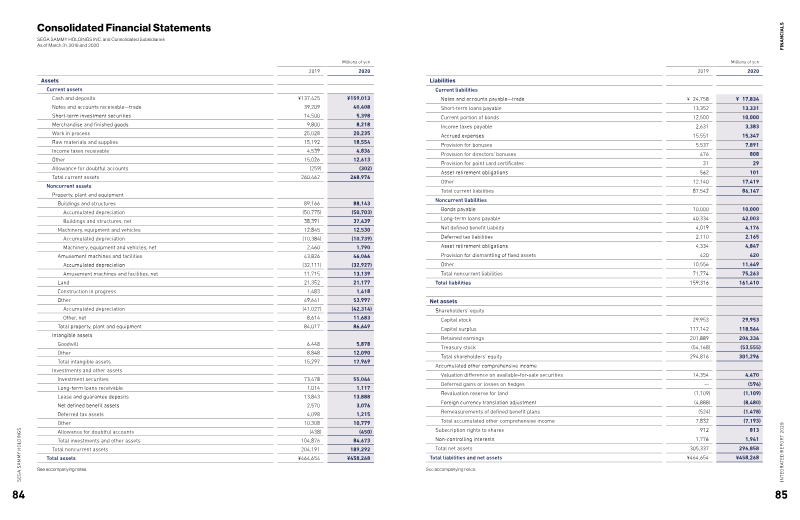
The Sega Sammy Integrated Report 2020 outlines a strategic pivot toward structural reform and global expansion in response to the COVID-19 pandemic and shifting market dynamics.
- Sega Sammy is pivoting from a reliance on domestic pachislot and pachinko operations toward a diversified, globalized business model centered on a unified consumer games division.
- For the fiscal year ending March 31, 2020, net sales grew 10.5% to ¥366.5 billion, while operating income more than doubled to ¥27.6 billion.
- The company is implementing ROIC-based management to improve capital efficiency and is prioritizing the development of global hit titles to enhance long-term corporate value.
Sega Sammy Integrated Report 2022
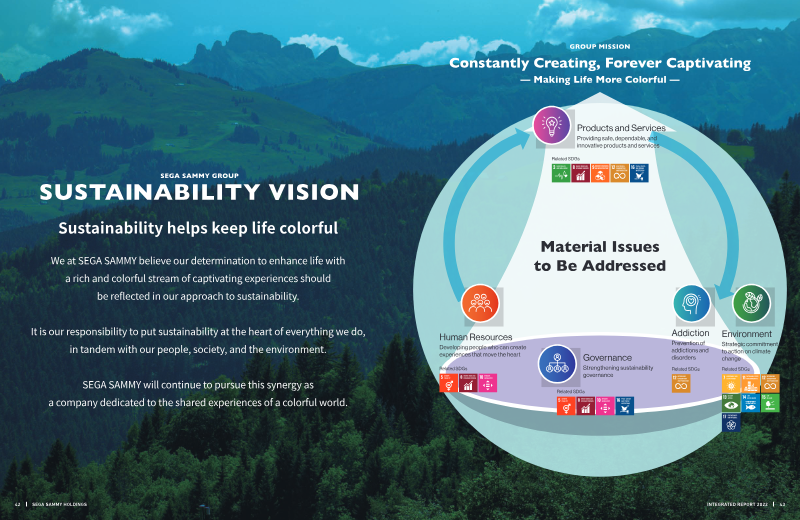
Sega Sammy Holdings’ 2022 Integrated Report outlines a strategic pivot toward becoming a global contents provider, underpinned by a medium-term plan to maximize the value of existing intellectual property and develop a flagship "Super Game" by fiscal year 2026.
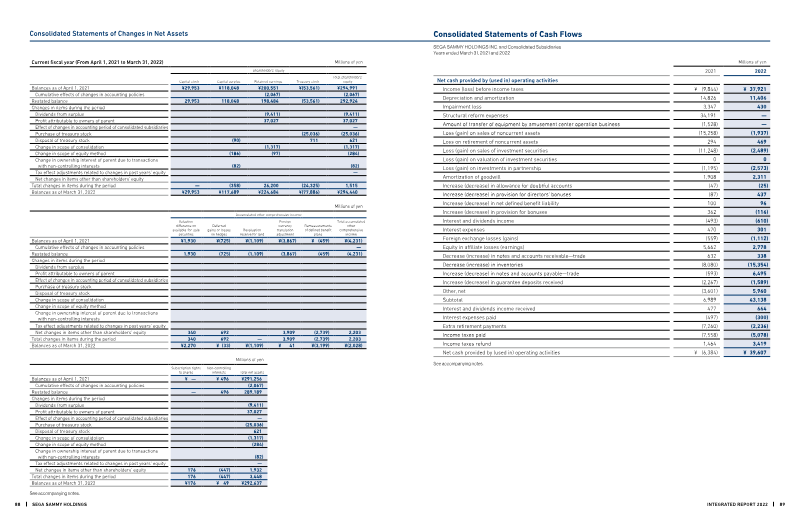
- Sega Sammy achieved a significant financial recovery in fiscal year 2022, reporting consolidated net sales of ¥320.9 billion and a 389% year-on-year increase in operating income.
- The company has set a medium-term target to achieve an ROE exceeding 10% and ordinary income above ¥50 billion by fiscal year 2026.
- A ¥250 billion investment plan is allocated through 2026 to strengthen development pipelines and transition to an ROIC-based management framework.
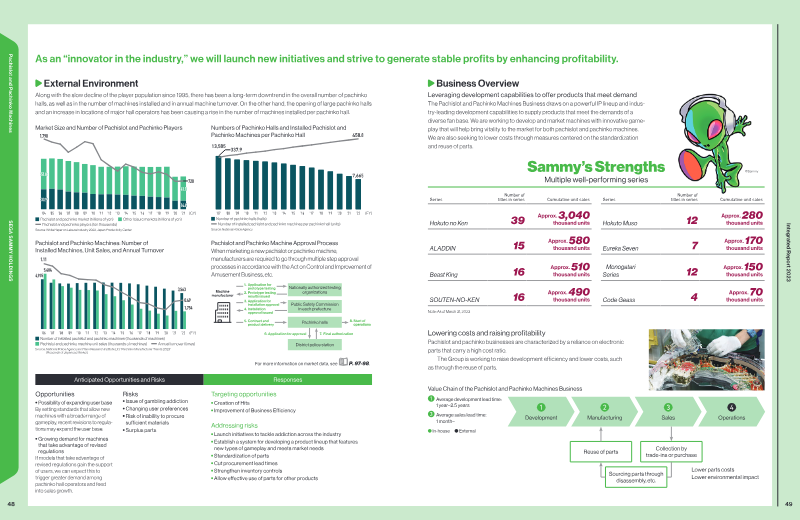
Sega Sammy Integrated Report 2023
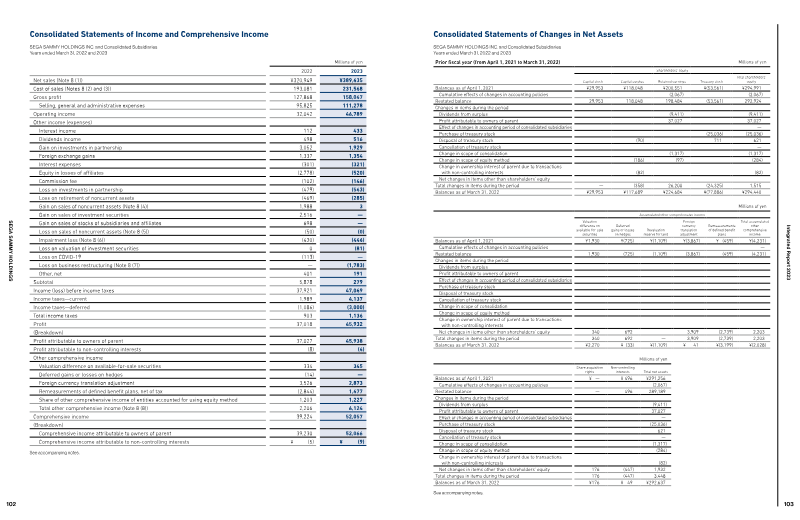
Sega Sammy Holdings’ 2023 Integrated Report outlines a strategic transformation aimed at establishing the company as a global leader in content provision by 2030.
- Sega Sammy achieved its medium-term financial targets one year early, reporting net sales of ¥389.6 billion (a 21.4% increase) and operating income of ¥46.7 billion (a 45.9% increase) for the fiscal year ending March 2023.
- The company is executing a 'transmedia' strategy to leverage core intellectual properties like Sonic the Hedgehog, Like a Dragon, and Persona across gaming, film, animation, and merchandise to reach global leadership by 2030.
- Strategic growth initiatives include the development of 'Super Games,' the acquisition of Rovio Entertainment to bolster mobile gaming, and a focus on global talent acquisition.