Market Analysis reports and market data
Documents

Biz Daily: Will Apple TV be a viable paid game platform?
Apple TV represents a potential shift in the gaming landscape, offering a platform that may move away from the dominant free-to-play (F2P) model prevalent on mobile devices toward a more traditional paid-game ecosystem.
- Apple TV is being evaluated as a potential alternative to the mobile free-to-play model, aiming to establish a premium ecosystem for paid games priced between five and ten dollars.
- Developers face a significant technical constraint with a 200-megabyte download limit, which complicates the porting of larger, high-fidelity titles.
- The platform mandates support for the bundled motion-sensitive remote control, forcing developers to adapt their control schemes to specific hardware requirements.

The Global Games Market: Trends, Market Data and Opportunities
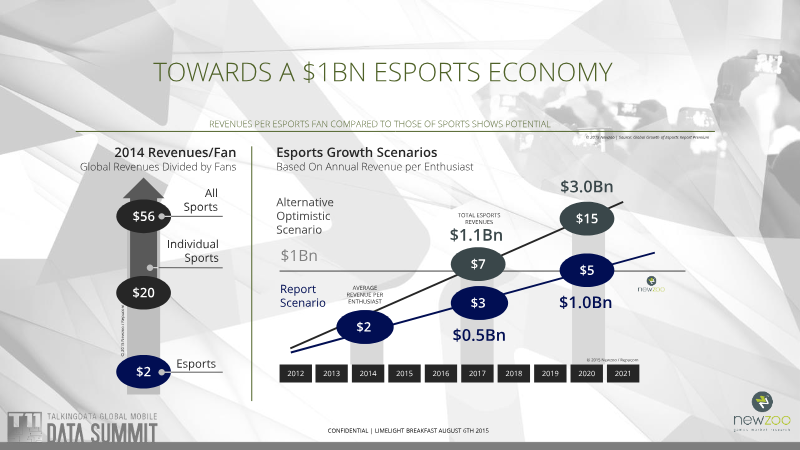
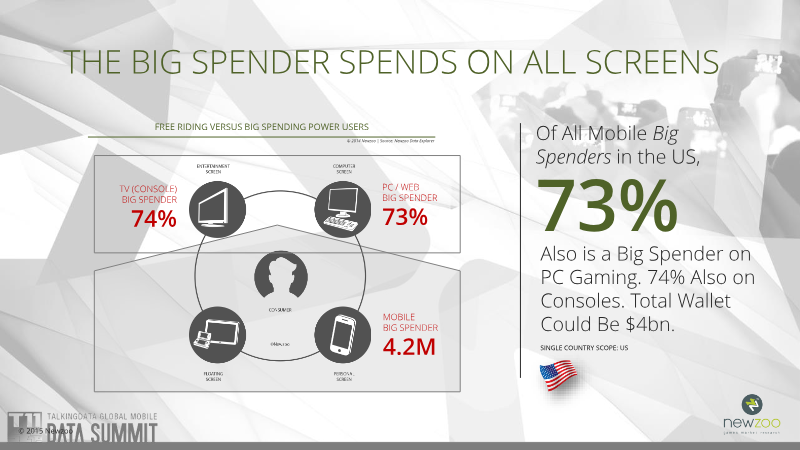
The global games market, as analyzed in September 2015, is characterized by significant growth across various segments, with a particular emphasis on mobile gaming and the emerging esports economy.
- Mobile gaming is the dominant global revenue driver, with the United States, China, and Japan serving as the primary engines of growth.
- The esports sector is projected to reach a $1 billion valuation by 2019, driven by the convergence of traditional sports and digital competitive play.
- In the United States, the most valuable consumer segment is comprised of employed, family-oriented males aged 21 to 35 who engage across multiple platforms.

Biz Daily: Will Apple TV be a core gaming device?
The introduction of the new Apple TV marks a strategic shift toward integrating the living room into the existing Apple ecosystem through the launch of tvOS and a dedicated App Store.
- Apple TV is positioned as a secondary streaming and application device rather than a direct competitor to core gaming consoles, with a retail price point between $150 and $200.
- The platform utilizes tvOS and a dedicated App Store to enable universal applications, allowing users to transition gameplay seamlessly between mobile devices and the television.
- Hardware limitations, specifically the lack of a dedicated gaming controller, restrict the device primarily to casual, family-oriented experiences rather than high-fidelity gaming.
How Kabam is looking to crack China
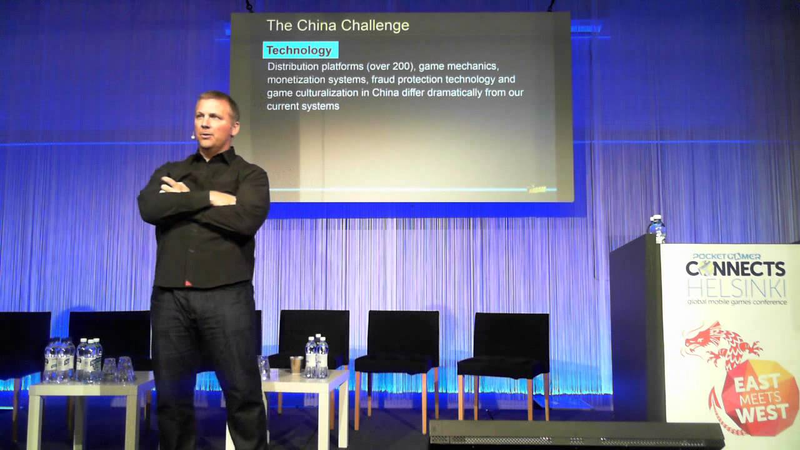
Kabam’s strategy for navigating the global mobile gaming market centers on the necessity of "culturalization"—the deep adaptation of game systems to fit local preferences—rather than simple localization.
- Asian markets including China, Japan, and Korea now account for over 50% of global mobile gaming revenue, yet remain dominated by local developers due to high barriers to entry.
- Kabam’s strategy for market penetration relies on 'culturalization'—deeply adapting game systems like VIP features to local preferences—rather than simple translation.
- To succeed in China, Kabam leverages local partnerships for distribution and regulatory compliance while utilizing its Beijing studio to maintain internal control over code and IP.


The eSports Industry to Date: The Drivers Behind Current and Future Growth
The esports industry is experiencing rapid expansion and increasing mainstream recognition, driven by major events, substantial prize pools, and significant viewership.
- The esports industry is on a trajectory to grow from $252 million in 2015 revenue to a $1 billion economy by 2019.
- Industry growth is driven by high engagement on streaming platforms like Twitch and a transition toward mainstream professionalization.
- Significant capital is entering the market, evidenced by a $26 million venture capital investment in Super Evil Megacorp.
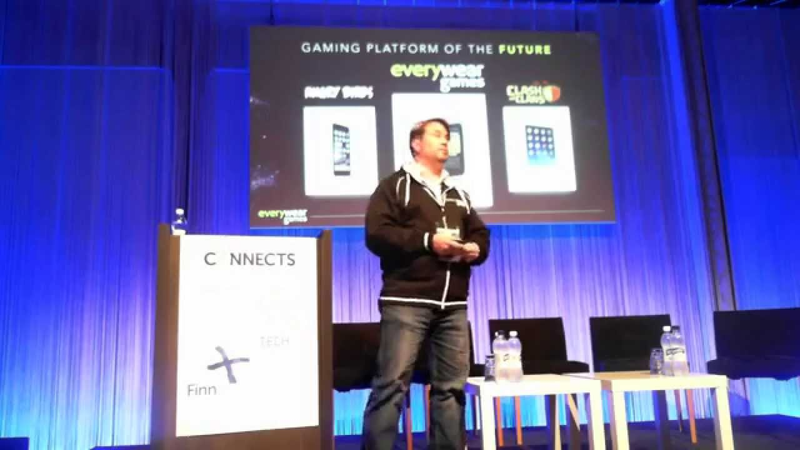
Apple Watch is the most accessible games platform ever created
The Apple Watch represents a paradigm shift in gaming accessibility, characterized by its constant availability and seamless integration into the user's daily life.
- The Apple Watch's constant availability enables high-frequency engagement, with some users accessing games as often as every six minutes.
- Everywear Games successfully utilized a television-series model for their title Runeblade, delivering episodic content to drive long-term player retention.
- Runeblade's development strategy resulted in significant market reach, including multiple Apple features and coverage from over 1,000 media outlets.
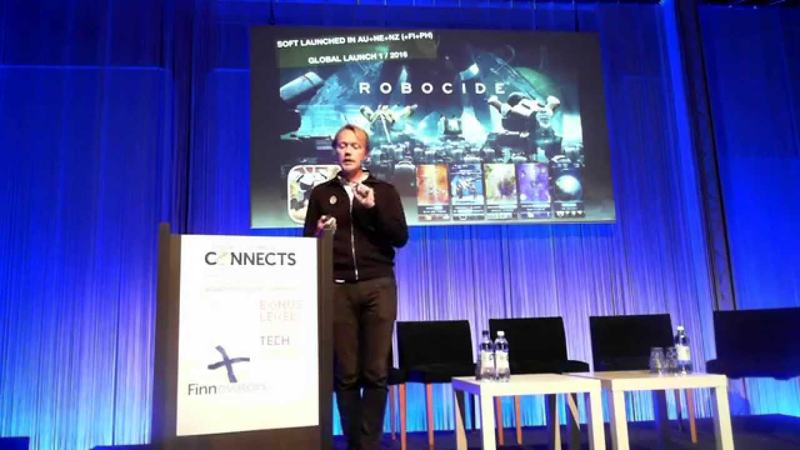
PlayRaven CEO: We don't make clones
PlayRaven’s operational philosophy centers on the rejection of cloning in favor of original, high-risk innovation within the free-to-play mobile gaming market.
- PlayRaven maintains a lean, agile structure with a team of 23 employees to facilitate rapid iteration and cross-pollination of ideas across multiple concurrent development projects.
- The studio rejects the industry trend of cloning, instead focusing on high-risk, original free-to-play mobile titles to differentiate itself in a market saturated with aging games.
- Operational strategy centers on 'burning the boats' by committing exclusively to the free-to-play model and utilizing radical transparency to accelerate the 'time to mistake' through early-stage public testing.

Vlambeer's Rami Ismail on the State of the Mobile Games Industry
The mobile games industry is currently characterized by extreme market saturation, declining growth rates, and a shift toward professionalization that makes entry increasingly difficult for independent developers.
- The mobile games industry has shifted from a low-barrier environment to a saturated market that requires significant marketing investment and high production values for visibility.
- Market success is increasingly concentrated among a few established players, leading to a collapse of the middle market and a bifurcation between high-budget AAA titles and struggling independent projects.
- Developers are engaging in a circular migration between mobile, PC, and console platforms, often failing to account for the unique ecosystem requirements of each market.

Biz Daily: Will Instagram be the next UA goldmine?
The integration of Instagram into Facebook’s advertising ecosystem marks a significant development in mobile user acquisition (UA) for the gaming industry.
- Facebook is integrating its advertising infrastructure with Instagram to open its 300-million-user base to mobile game developers.
- Major mobile game developers currently allocate approximately 30 percent of their revenue toward marketing, driving the demand for new high-scale acquisition channels.
- Mobile measurement partners have been authorized to provide granular analytics for Instagram, enabling developers to track ad performance, user interaction, and geographic reach.

Biz Daily: Why Undead Labs shut down Moonrise before it launched
The cancellation of the creature-based RPG Moonrise by Seattle-based developer Undead Labs highlights the challenges of the modern mobile games-as-a-service model.
- Undead Labs cancelled the creature-based RPG Moonrise because it failed to meet essential 1-day, 7-day, and 30-day player retention benchmarks during its eight-month soft launch.
- The project was deemed commercially unsustainable because the developer could not achieve the monetization levels required to offset the high ongoing infrastructure and operational costs of a live-service model.
- Publisher Kabam shifted its strategic focus away from original intellectual property, prioritizing high-revenue branded content like Marvel-themed titles instead.

Biz Daily: The $10 billion mobile game franchise
The mobile gaming industry is currently evaluating the feasibility of a $10 billion franchise, a milestone that would represent a significant escalation from the current billion-dollar benchmarks established by titles such as Candy Crush Saga, Puzzle & Dragons, Clash of Clans, and Monster Strike.
- The mobile gaming industry is currently evaluating the feasibility of scaling franchises to $10 billion in lifetime revenue, a tenfold increase over current benchmarks like Candy Crush Saga, Puzzle & Dragons, Clash of Clans, and Monster Strike.
- Reaching the $10 billion threshold will likely require adopting high-efficiency monetization mechanics from the Japanese market, where revenue per paying user can reach hundreds of dollars compared to the lower-spending models common in Western markets.
- The convergence of major regional markets—North America, Europe, China, and Japan—into a more unified global landscape is a primary driver for the potential expansion of mobile game revenue.

Biz Daily: Can Amazon disrupt F2P games with its Underground move?
Amazon Underground represents a strategic shift in the mobile gaming ecosystem, functioning as an experimental platform that challenges the prevailing free-to-play (F2P) monetization model.
- Amazon Underground replaces traditional free-to-play monetization with a compensation model that pays developers $0.002 per minute of active gameplay.
- The payout structure equates to approximately $1 for every eight hours and twenty minutes of user engagement, shifting revenue reliance from microtransactions to total playtime.
- The platform aims to disrupt the mobile market by offering premium games and in-app purchases for free, removing barriers like currency grinding and wait times to drive user acquisition.