Live Ops reports and market data
Documents
Building a F2P Liveops Playbook | ft. The Games Consultant Matt Emery
Live operations in the free-to-play sector function as a critical mechanism for balancing long-term player engagement with the continuous optimization of key performance indicators.
- Prioritize live operations initiatives based on a strict ROI-first methodology, focusing development resources exclusively on activities that maximize lifetime value (LTV) relative to implementation costs.
- Implement a repeatable operational loop that moves from strategic prioritization to production and rigorous multivariate split testing to ensure continuous KPI optimization.
- Avoid reliance on static industry benchmarks by building internal data vaults and utilizing pattern matching to identify specific opportunities for improvement within your unique player base.
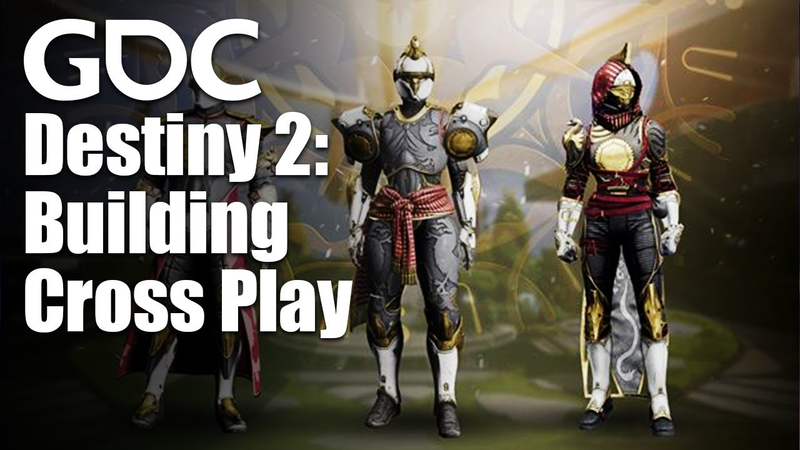
Bringing Players Together: Building Cross Play for 'Destiny 2'
The implementation of cross-play for Destiny 2 represents a strategic shift toward unifying a fragmented player base across seven distinct hardware platforms.
- Bungie transitioned from platform-specific social systems to a unified 'Bungie Name' identity system to ensure players remained recognizable when moving between seven different platforms.
- The development of Cross Play for Destiny 2 took approximately one year, moving from initial planning in summer 2020 to a full public release in August 2021 during the 'Season of the Lost'.
- To maintain competitive integrity, Bungie implemented two distinct matchmaking pools: a console pool (Xbox, PlayStation, Stadia) and a PC pool (Steam, Microsoft PC Store), preventing PC players from entering the console-only matchmaking environment.

Narrative Breadcrumbs: Guiding the Player Experience with Live Events
The integration of narrative into live-service mobile games serves as a powerful tool for increasing player engagement, retention, and monetization.
- Integrate narrative as a core structural component rather than superficial flavor text to increase player engagement, retention, and monetization in live-service mobile games.
- Utilize a 'breadcrumb' narrative strategy to guide players through an ongoing, evolving journey instead of a static story with a definitive conclusion.
- Apply the 'context, characters, and conflict' framework to embed narrative directly into gameplay mechanics and event structures.

Panel: How To Successfully Scale Your Game Through Community Engagement
Successful game scaling depends on a shift from broad demographic targeting to a nuanced understanding of player archetypes, motivations, and behavioral data.
- Integrate community feedback directly into the product roadmap, as some firms have successfully derived nearly 50% of their recent game updates from player suggestions.
- Shift from broad demographic targeting to segmenting players into distinct archetypes—such as competitive core gamers versus social-first casual users—to improve long-term retention.
- Utilize active monitoring of user reviews and community platforms like Discord and Reddit as a critical early warning system to identify and mitigate potential churn.
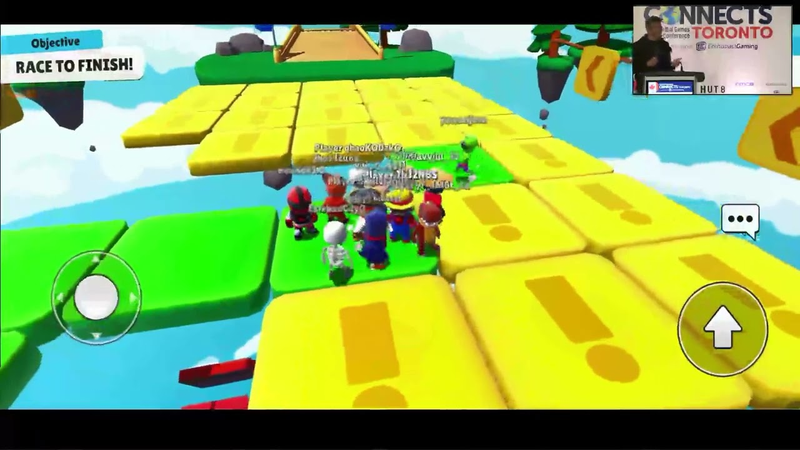
Cooperation Boosts Retention
The integration of collaborative mechanics into game design serves as a powerful driver for player retention and community growth.
- Collaborative mechanics significantly increase player retention by leveraging psychological social cooperation, which triggers dopamine responses that reinforce long-term engagement.
- The mobile game Stumble Guys achieved 22 million daily active users by utilizing real-time multiplayer infrastructure and tournament systems that facilitate both competition and collaboration.
- Players who participate in organized tournament systems exhibit higher retention rates compared to those who engage only in solitary gameplay.

National Game Engines Could Shape The World - The Metacast by Naavik
The gaming industry is currently navigating a complex intersection of participatory governance, geopolitical technological sovereignty, and aggressive market consolidation.
- State-sponsored development of national game engines is emerging as a tool for governments to exert political influence, surveillance, and social engineering within virtual spaces and the metaverse.
- Corporate consolidation is accelerating as companies prioritize financial synergy and technological control over organic growth, leading to a market dominated by fewer, larger-scale acquisitions.
- Unity’s acquisition of ironSource represents a strategic shift toward integrating ad-tech and monetization capabilities to maintain competitiveness against rivals like AppLovin.
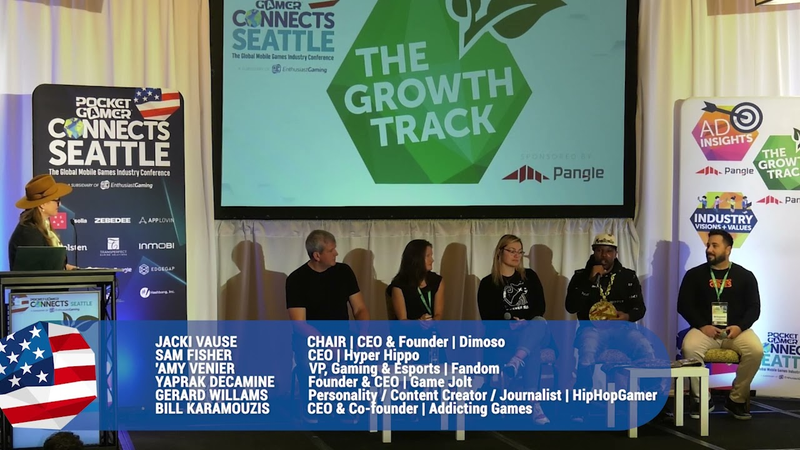
Panel: How To Engage Communities To Grow Your Business
Community building serves as a foundational pillar of modern game development, shifting the industry paradigm from traditional marketing toward the cultivation of long-term, authentic relationships with players.
- Community building is a strategic necessity for long-term growth, shifting the industry model from traditional marketing to cultivating active player evangelists.
- Studios should involve audiences as early as the conceptual stage through beta testing, polls, and feedback loops to inform development without sacrificing the core creative vision.
- Community managers must act as essential, human bridges between players and internal decision-makers, utilizing platform-specific interactions rather than automated responses to build brand loyalty.
Boost Engagement in Your Game by Supercharging Live Ops With Time-based Machine Learning
Machine learning serves as a powerful tool for mobile game developers to enhance player engagement, retention, and monetization through personalized experiences.
- Effective machine learning in gaming relies on event-based data—such as session starts, wins, losses, and spending—rather than static demographic data, to predict future player behavior based on past patterns.
- Predictive modeling should focus on achievable, short-term goals like seven-day engagement or churn rather than attempting to predict long-term metrics like 365-day lifetime value within the first few minutes of play.
- The most predictive features are discovered by mapping player events onto a timeline, allowing models to identify specific moments of friction or engagement that influence retention.
Retention Is the New Acquisition – Retention Best Practices From the World’s Biggest Mobile Games
The mobile gaming industry faces a significant challenge regarding player retention, as approximately 90% of acquired players churn within 30 days.
- The mobile gaming industry loses approximately 90% of acquired players within the first 30 days, resulting in billions of dollars of wasted acquisition spend annually.
- Games24x7 achieved a 50% increase in player lifetime value (LTV) by implementing an automated, data-centric retention framework.
- Transitioning from manual, engineering-dependent campaign management to low-code, drag-and-drop platforms allows marketing teams to scale from dozens to thousands of concurrent player interventions.
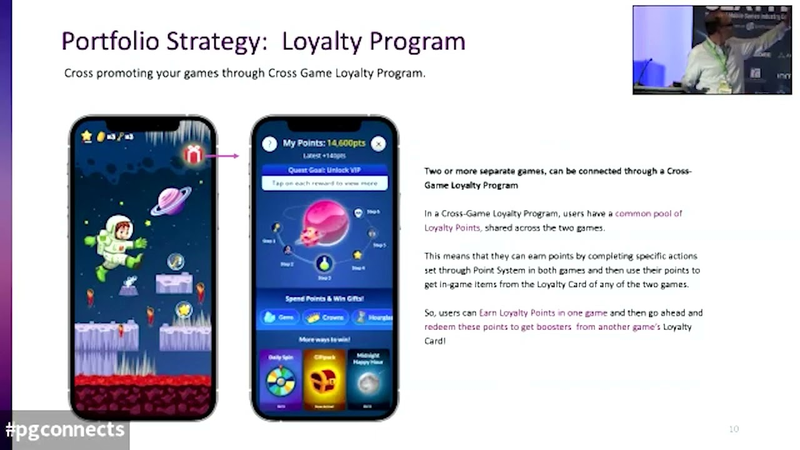
Keynote: Next Best Action: Best Practices for a Winning Portfolio Strategy
The mobile gaming industry faces significant challenges in player acquisition due to the deprecation of the Identifier for Advertisers (IDFA) and evolving data privacy regulations.
- Due to the deprecation of Apple's IDFA and rising acquisition costs, mobile game studios must shift focus from external user acquisition to maximizing player retention and lifetime value (LTV) within their existing game portfolios.
- Studios can implement 'feeder app' strategies by using low-monetization, high-organic-install games (such as hyper-casual titles) to funnel players into higher-LTV, IAP-oriented games within the same portfolio.
- Promotional pricing should be based on behavioral signals—such as device information, geolocation, and engagement metrics—rather than dynamic surge pricing, to offer the right price at the right time to specific player segments.
Fireside Chat: The Future of Multiplayer
Success in the modern gaming industry is increasingly defined by rapid execution and iterative development rather than rigid, long-term planning.
- Modern multiplayer success relies on rapid, iterative development and continuous updates rather than rigid, long-term planning or monolithic release structures.
- Studios should prioritize maintaining a playable build throughout the production cycle to mitigate the risks associated with the technical complexities of scaling multiplayer games.
- Multiplayer titles are evolving into persistent social networks, necessitating a shift in development strategy toward live-service models.
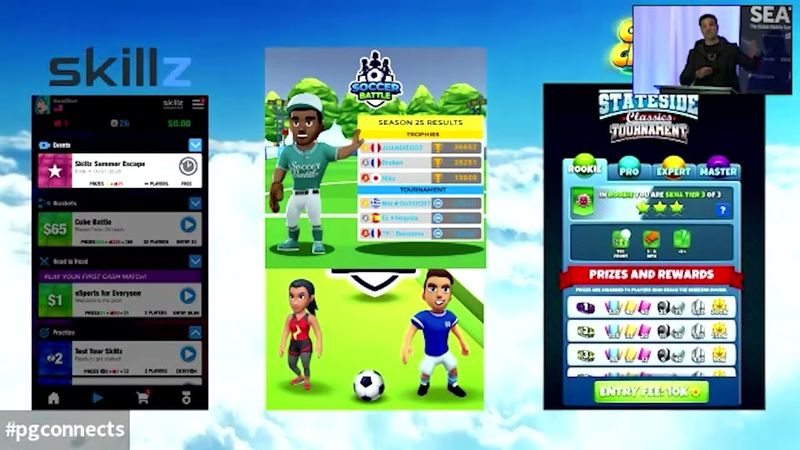
Keynote: Competition Boost Retention
Competition serves as a fundamental driver of player retention and community engagement in modern multiplayer gaming.
- Integrating short-form, in-game tournaments significantly boosts daily retention rates by leveraging players' psychological desire for status and achievement.
- In Stumble Guys, a title with 90 million monthly active users, tournament participants demonstrate substantially higher retention rates, with the most engaged players reaching up to 90% retention.
- Tournament systems function as effective economic sinks by requiring in-game currency for entry, allowing developers to retain a portion of fees while distributing the remainder to winners.