1 free read left. Create a free account for unlimited reading + AI research.
Create free account
Keynote: Next Best Action: Best Practices for a Winning Portfolio Strategy
Key insights
7 takeaways- 01Due to the deprecation of Apple's IDFA and rising acquisition costs, mobile game studios must shift focus from external user acquisition to maximizing player retention and lifetime value (LTV) within their existing game portfolios.
- 02Promotional pricing should be based on behavioral signals—such as device information, geolocation, and engagement metrics—rather than dynamic surge pricing, to offer the right price at the right time to specific player segments.
- 03Studios can implement 'feeder app' strategies by using low-monetization, high-organic-install games (such as hyper-casual titles) to funnel players into higher-LTV, IAP-oriented games within the same portfolio.
- 04Cross-promotion is most effective when triggered by churn prediction; when a player shows signs of leaving one game, the system should serve an interstitial or banner to migrate them to another title in the portfolio.
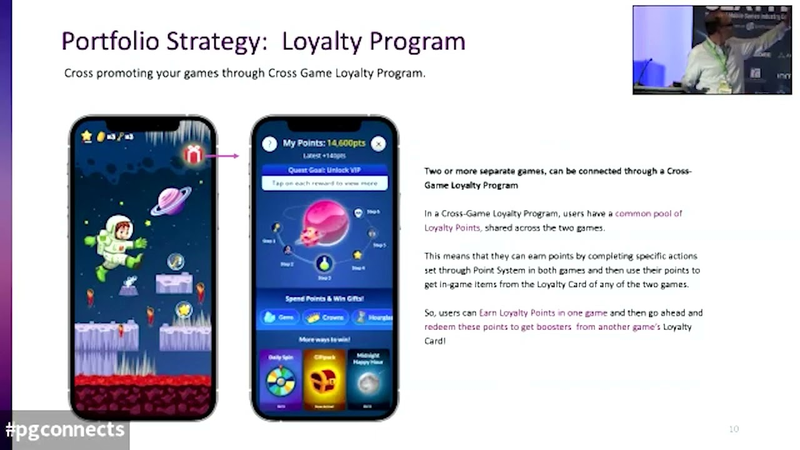
- 05When building a cross-game loyalty program, developers must carefully manage the game economy and establish clear exchange rates, as the value of points may differ significantly between titles in the same portfolio.
- 06Implementing a cross-game loyalty program allows players to earn points in one game and redeem them for in-game items in another, which increases retention and encourages spending by providing virtual rewards with zero marginal cost.
- 07The 'Next Best Action' framework utilizes AI-driven counterfactual simulations to predict player behavior and determine the optimal intervention—whether a price offer, a cross-promotion, or a loyalty reward—to maximize total portfolio value.
Ask AI about this video
Transcript
[Music] hello my name is ted ronnie i'm head of business development for for wapier to talk about we call next best action right best practices for uh winning portfolio strategy um not about the metaverse but you know it's a little quick you know apologies about that um though we are beginning let's get the clicker going well i have the right one there we go cool just quickly about the company um we've been a little over seven years now primarily simply put we help mobile game companies make more money outside of core gameplay we do it with a couple um
sort of portfolio solutions one is pricing optimization so optimizing iep so what's the right price right time right location we also complement that with engagement application solutions um loyalty program be kind of one the more dominant one along that too and yes we are getting into metaverse as well we're taking some of these same solutions that worked well for free to play gaming applying them for blockchain gaming but also introducing some new solutions to help companies with drops or creating a white label marketplace too but newer solutions for the company but not the purpose of today's conversation um this all everything we do is built on top of some pretty deep insights into player behavior that's when we talk about content here about the next best action so it begins with understanding of player behavior and then what do you do with that information and we do that right now with the good companies out there mobile gaming so just set the stage a little bit here in terms of current situation right so you know can the news flash right data prime apple idfa now it's just taken for granted it's not news flash it's not
kind of what we do the reality situation is that what apple's done in terms of deprecating idfa and you know making it such to where then traditional ways of game acquisitions are just not available it's just harder and harder it's no longer a reliable sort of path towards acquiring players in a very profitable way so becoming much more expensive much more problematic to acquire new players in the game uh result is frankly you need to you know keep those people in your game as much as possible it's also led to a fear of unknown so because of what's going on in the marketplace yeah ad tech companies buying ad tech right bigger ones so app loving and you know iron sources out there just you know acquiring different you know smaller ad tech companies to but also mobile publishers so larger studios acquiring either whole studios and jam city buying and all of you know ludia or individual studios where gmc bought some individual games in portfolio accumulation right through acquisition you know it's not just you
know recently you know this is going to be i think a trend that's can continue and become even many ways you know more necessary as as players go forward to acquire you know this speaks directly if you've if you read mobile dev memo and you follow you know the script you've heard eric swift talk about you know contract fortress and this is absolutely you know spot on and something we've also been talking about in our company for a while as far as and key for portfolio strategies just to you know have a large collection of games where you can drive one game to another game so path forward so you know i mentioned earlier so yeah so while idfa is not available it's no longer reliable way to go out you know acquire new customers to go to your favorite ad network to do that you do still have the ability to track players within your own portfolio games you have access to the idf the identifier for vendors so as long as within your own portfolio games you can use that track information you know within apple's privacy laws and then be able to actually direct people into different games yourself so that's um kind of key and that's becomes now sort
of you know just comparison and i'm going to hit this think of the size from exact summer and hit each one of these so maximize ip revenue you know with promotional pricing you know is another key thing to do as far as next best action street promotion to you know higher ltv games becomes also strategic imperative now and indeed this is kind of the bulk of this conversation more so you know right now one way you know tactical is feeder apps so you know having a bunch of you know low monetizing games driving them to higher monetizing games right ltv games and then taking it to next level in terms of cross-promotion is actually creating a loyalty program to where you know taking people from your one hit game and driving over to your next hit game so let's talk about each one of these elements you know on their own too so first is uh the promotional pricing so promotion pricing again one of the core things we do this you can do yourself gives a little bit of insights into some of the data behavior that we want to track here from from players and what you can do yourself so first you need a
way to ingest data you need insights into player behavior i call these pricing signals so there's a lot of information that's available for you then to to use so device information the geolocation these are signals of affluence so even when someone first comes in your game these right away tell you some information about the player about willingness to maybe potentially make a purchase when someone returns to your game i've got more data now i've got engagement data and i know like how long did they play for what level did they actually go within the game did you spend anything you know yes or no we're like how if you did spend how much to spend so all these different signals we translate those in price offers right this is the core of promotional pricing and just to be clear from that talk about promotional pricing i'm not suggesting dynamic pricing where you're kind of you know where you become your game becomes sort of like uber and from search pricing here it's not always suggesting here um but rather promotional pricing those are the special offers in the game they tend to either be time based or event based so
whenever some a player goes to that the kind of expectation is that they will go away so it's a great opportunity to introduce per user pricing so when someone goes to that that the question is like to pay if you already if you haven't spent anything in the game you're new to the game i'm trying to convert you as quick as possible you know if you already are you know a spender in the game too and trying to extend your lifetime value right in terms of optimal pricing really that is really the core goal here and then because we make predictions around churn you're on the way out you know one last opportunity for one big spend that's promotional pricing so but what we want to do is talk about instead is um for portfolio management and this is you know again not a new you know idea you know companies have been buying other companies for a while so think you know play tica for reason genre you know acquiring seriously in hugo right you know not to be so dependent in the the social casino in your category you have also then people just buying revenue right you know so even like glue you know acquiring cried stuff you know gluten getting acquired by ea right
these are motions to require revenue but speaks directly to the requirement of the portfolio strategies the company is recognizing that they need to get as many games as possible to draw cross-promote in the game in this word so the things we want to track to drive cross promotion here is ltv and probability to trim we want to keep moving people up to just move them up to the higher ltv game ideally right it depends on the scope of your portfolio game so one tactic as a feeder app so and this is why zingbot rolex this is why rovio bought ruby games right these are hyper you know again they didn't fit in the portfolio of the games that these companies had before they're hyper casual games right you know and so with hyper capital games they're kind of interesting right because they used to make you know there are you know organic you know 10 10 get downloaded you know pretty easily it's organic so the cost of install is very low they also have high churn right so that's you know so if your mixture nice mixture of
hyper casual with more iep oriented game you know that's where the theater app comes through so try to move people as quickly as possible over to more iep oriented game so that's one even if you don't have that even within your own game just as many games as possible so obvious being you know genre if you are idle games you know sort of like hyper hippos got a collection of you know we work with them io games being able to cross promote those games is a great way too but also the ltv predictions or just always you know end of the day you know game makes most money is a hit game so you want to try to move people migrate you know folks over to other hit games you have or if you're able to predict that churn right knowing when someone is on the way out similar to what i was talking about promotional pricing within your portfolio strategy and cross-promotion being okay highly monetized you know someone's going to be leaving their game so rather than have them just churn and then go play someone else's game great opportunity to put up some sort of interstitial a banner you encourage them to then download your next game that might be similar just
another ltv you know high lpb game or new game so next taking the next phase um of working together of or working within your portfolio game so one is the cross promotion to similar titles or moving it up to more ltv titles that we just talked about too loyalty program kind of takes its next level right you know so and really what specifically i'm talking about is the idea of creating a cross-game loyalty you know program within your portfolio of games too so you have a lot of games out there we want to move people from one game to the next game one way is to then going further instead of just putting up a banner hey download this game it's fun better still is hey download this game you know because let me give you some points some loyalty points i'm going to come back to that first one talk a little bit about what a world frames because the building blocks and starting point is to create a loyalty program for your game
and loyalty program in this case within the next best action framework is first what we do is first of all a local program is it's pretty simple right you know it's pick your favorite airline your hotel your coffee shop most businesses out there in the real world they got loyalty programs they know businesses know that the best thing the way to grow your revenue is to take care of your current customers so similar idea if within mobile gaming you want to have this loyalty program to exist outside of core gameplay going to this local you can see these features are they're like they're basically best best practice engage retention features very familiar within game design in our case running it separately and what we're doing is we want to attach points to that right again that's the arcade that's something you can do it's what we do but something you can do is create points associated to it now it's very important to actually really have a good sense of the game economy you don't want to give away so much points way to have because what you do with points is you redeem them for stuff you sell
so in-game currency in-game items the great thing about these items is there's you know it's no marginal cost right so it's it's a great thing to give away versus a car or some sort of physical item but understanding of your game economy very critical because the whole goal of a loyalty program here is what retention primarily i'm trying to get people to come back more often summer time in the game wealthy features do that but also it's the um you know it's also to we want to encourage people by giving them items to purchase they buy something to get something for free it works very similar to rewarded video right where if like if i give you some currency you go buy something you're a higher level in the game maybe you're having more fun you're also an appreciation of what the value you get from making a purchase or buying something in the game too works exactly the same way so we give away items people buy something but we only give away so much to where they have no incentive or reason to go back and make a purchase because that's really what we want to get people to drive iap revenue everything we do as a company is built around trying to drive
iep revenue so that's essentially what wealth department is and then really taking it to the um you know next level is across games this comes back to the next best action portfolio strategy is you know if you are fortunate to have a large portfolio games and so too is create a common pool within your world so instead of an individual game so panda pop here it's instead of a panda pop loyalty program it's a you know company wide you know world frame across all of your games so players halfway along and loads print playing panda pop going next level getting a little more in this game that's again going back earlier saying you know what do we want to predict you want to predict lifetime value we want to churn right so lifetime value that helps us to know a little bit like what game we want to cross-promote you want to drive them into those games churn is when i want to know when that the timing of when to do these offers too so at that moment is when i want to say check out genies and gems but you don't want to like offer that genius of gems
at the point where they're just getting engaged just moving up you know starting their player journey right that's the timing of it becomes very key but then rather than having churn out go some other game right they're still just they're within my portfolio games so now they're playing my other game within there too so um and that's where we do that with uh common pool of low defense so point turn in one game can redeem in another game important point two what we do what you want to think about if you're doing yourself is figure out the exchange rate points are in one game are not necessarily the same as points earned in another game even if there's some similar tactics rolled into there so that's a very careful consideration because it is a common pool of points but then it's also a great opportunity retargeting because as you know so someone's already because you have your sdk or we have sk in there you have your own signaling and tracking of the information there as someone's now on the second game in game b maybe getting bored of that game right you know well maybe drive them to another higher monetize the game you have a newer gaming portfolio if you're not as fortunate to have such a broadca bring them back to the game you knew
that they liked before right and that's another way that cross game promotion can work very nicely all right here's um updates sort of trying to pull it um together you know a little bit here is um so this is um called next passenger everything we do is next best action right so you know next best action is the yeah starts with the ingestion of data you know it is you know the the behavioral and the you know the um the contextual insights that we have with it but then it's also combined in with the content factory with it so and the next best action is what we'd use for promotional pricing is what we would use for you know cross-game promotion and what you would use also for a cross-game loyalty right here so it begins but it gives you an idea of how kind of we're thinking about sort of flowing from data that you do yourself and so start look at john here john is we you know this is
descriptive analytics right so how are we getting we're getting some information on john actually i don't really know his name but yeah i know he's got an iphone and his model of iphone right i know he's from the country sweden actually know whether or not he's an urban area you know or you're nom urban that's a pretty good you know influence as well i know what he spent so far i know what now i'm having my predictions of you know lifetime value for them that's what's descriptive analytics but i also have some predictive analytics on on john so predictive analytics is you know actually this is and how do i have that this is where the machine learning comes in because i've analyzed you know the players other players who have similar characteristic descriptive characteristics as john has here so john is a player who plays at noon he goes after noon you know i already have notion of normal session link i have a notion of you know how much he spends if he is a spender already in the game how quickly um but that's why then based on i have some predictions for on top of that then i've already now run some you know character factual
simulations right that's the you know ai csf so i'm evaluating and what i'm doing is i'm valuing ltv impact by running counterfactuals on a whole host of different scenarios so all a bunch of if and when you know type of sort of scenarios run out to me and so what is the most interesting then is when unexpected behavior happens right so we have a notion of john's regular player behavior within the game and it's when something unexpected like if he normally plays or purchases certain time when he goes out of that norm that's kind of like what you can imagine sort of like ringing like alarms not really alarms generally alarms in our office but if we were you know that would be the idea so that's what signals for the engine to let us know okay there's an opportunity for intervention but we've already run the counterfactual simulations in advance we may do nothing with that information but we already have a notion a sense of what game because like again what i'm saying earlier is it's a combination of ltv predictions combined with churn predictions that makes this most interesting and most effective for driving a portfolio strategy because
we've already determined it would be b because game b has that 22 lifetime value also we're tracking portfolio value 45 so that would be the game we'd promote potentially with that and then taking because that's the last element there is influence so with the insights into player behavior expectations what they're doing we're always trying to influence that and then going back that again that's kind of the three core things that talked about within strategies you know so promotional pricing it's always influencing with the right price right timer location whether it's trying to you know convert you know a player into a payer as quickly as possible or it's trying to extend the lifetime value of you know an existing payer in the game certainly with cross promotions this is all the same data same information across reasoning similar with cross promoting knowing when someone's maybe turning out of the game is the perfect opportunity to cross promote someone and then going further if you've been able to you know create some sort of loyalty program you know way of rewarding you know your your players you know that becomes another opportunity to take it
to the next level and that's it and then in the real time this is the content factory it's assembly expression of value we call it so this is assembling the what the offer is right that could be a price offer that could be a promo banner you know for the um download it could be you know talking about different features it could be an ad if your game is a little more ad or anything but real time you know is generating the the creative you know for it you know what correct color what's the call to action and also what they offer is is for that that holds their next best action framework one minute left yeah yeah so i think you know times right now for you know it's critical to do have a portfolio strategy within your game it's you know harder than ever to acquire new players so keep them around as long as possible you know by using the data whether it's loyalty program but also knowing when people are going to leave you know it's a great opportunity to cross-promote and then
finally you know pricing is all about trying to maximizing the the revenue from the per user basis thank you any questions or do you have time well i'm also yeah i mentioned so we are actually here also tomorrow we have a table outside the vip room if you're shy you know or just you know you think it's secret you just have such a good question you want to keep it one-on-one and that's fine um but i'll be here also tomorrow as well so yeah b choose the table rap years of the company name