Japan gaming industry reports and market data
Documents

Localisation isn't everything for Japanese success, says Metaps' McCarthy
Entering the Japanese and South Korean mobile gaming markets requires a strategic shift in focus from traditional localization to core gameplay quality and aggressive user acquisition.
- Prioritize core gameplay quality and effective monetization over perfect linguistic localization, as over-localizing can create an uncanny valley effect that alienates Japanese players.
- Success in Japan requires releasing a dedicated Android APK to fully leverage Google Play store features, alongside aggressive pre-registration and boost campaigns to acquire high-quality users.
- South Korean players exhibit high churn rates, making technical stability and performance optimization critical; even minor lag can lead to immediate user loss.

Monetizer: GungHo's Freak Tower
Freak Tower, developed by GungHo Online, represents a hybrid mobile gaming experience that blends the structural management mechanics of simulation titles like Tiny Tower with active, arcade-style monster defense gameplay.
- GungHo Online’s Freak Tower utilizes a hybrid model that combines vertical tower management simulation with active arcade-style monster defense mechanics.
- The game caps its maximum in-app purchase price at approximately $35, significantly lower than the industry-standard $99.99 tiers found in many free-to-play titles.
- To minimize accidental spending and refund requests, the developer implemented a mandatory three-step confirmation process for all in-app transactions.

Mobile games industry news (w/e 16 August 2013)
The mobile games industry in mid-August 2013 was characterized by significant capital investment, strategic consolidation, and a focus on data-driven advertising models.
- Baidu acquired the Android app distribution channel 91 Wireless for $1.85 billion to strengthen its position in the Chinese mobile market.
- Millennial Media bid $225 million to acquire JumpTap, a move aimed at consolidating gaming-focused mobile advertising networks.
- The Japanese mobile games market reached a valuation of $5.1 billion in 2012, with feature phones still maintaining a significant 50% share of the market alongside smartphones.

Game Developers' Life and Consciousness Survey: CEDEC 2013
The Computer Entertainment Developers Conference (CEDEC) 2013 initiative aims to establish a comprehensive understanding of the professional landscape for individuals working within the computer entertainment industry.
- The CEDEC 2013 survey was launched to establish a recurring, data-driven baseline for the computer entertainment industry, covering professional development, skill acquisition, and workplace environments.
- The study methodology involved a structured 42-question questionnaire distributed throughout July 2013 to both CESA members and non-members.
- The survey data is categorized into six core areas: personal background, job roles, corporate affiliation, employment transitions, workplace culture, and long-term career aspirations.

Talking Puzzle & Dragons' success with GungHo Online
Puzzle & Dragons achieved global commercial dominance as one of the world’s most profitable mobile games while maintaining a remarkably lean development structure.
- Puzzle & Dragons achieved global commercial dominance with a lean development team that grew from an initial core of four people to only 20 staff members.
- The studio leverages high-profile collaborative partnerships, such as the June 2013 integration of characters from Clash of Clans and Hay Day, to drive user acquisition and retention.
- Development philosophy balances data-driven analytics with intuitive design, utilizing direct feedback from family members to test game accessibility and engagement.


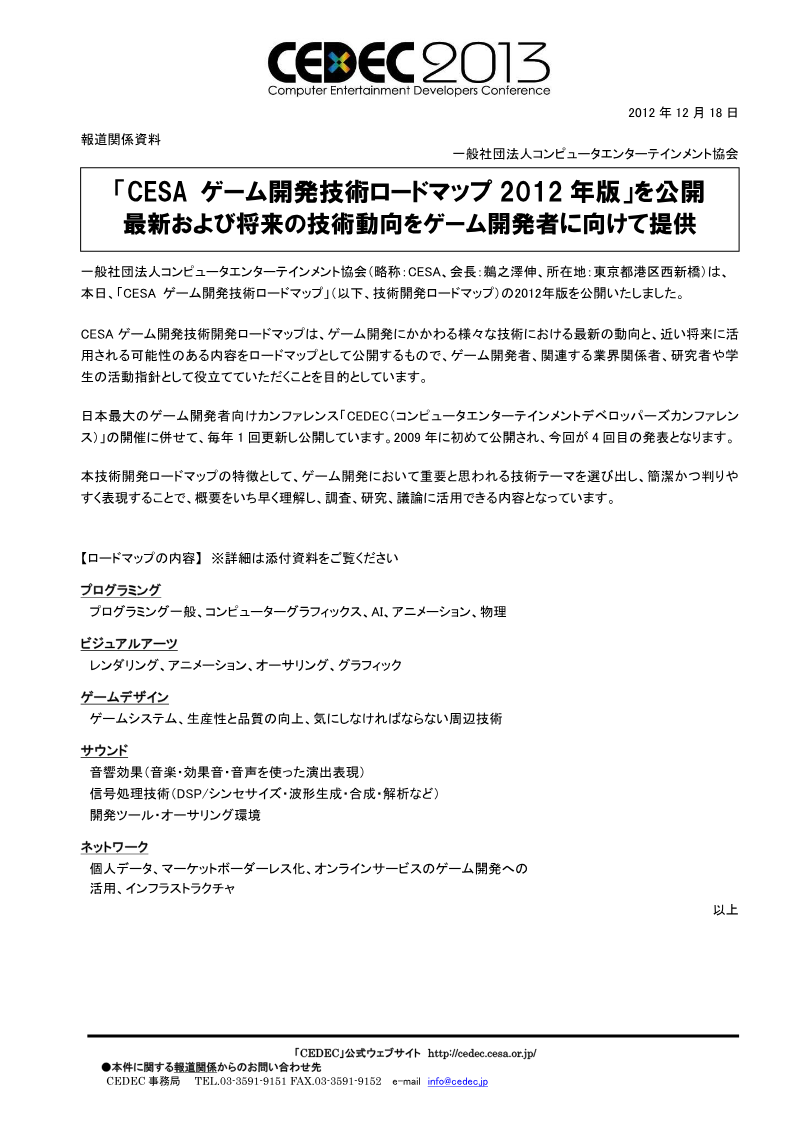
CESA Game Development Technology Roadmap: 2012 Edition
The 2012 CESA Game Development Technology Roadmap serves as a strategic guide for industry professionals, researchers, and students, outlining current trends and future technological trajectories in game development.
- The industry is transitioning toward highly integrated, automated development pipelines characterized by cross-platform compatibility and the maturation of standardized game engines.
- Development strategies are increasingly shifting toward cloud-based services, necessitating new focus on data privacy, cybersecurity, and the ethics of content accessibility.
- Game design is being fundamentally reshaped by the adoption of free-to-play business models and the use of player analytics to optimize user experience.

The Myth of the Gun - Why America Loves FPS Games So Much - Extra Credits
The prevalence of first-person shooters (FPS) in the United States compared to Japan is rooted in fundamental cultural differences regarding the perception of weaponry, conflict, and individual identity.
- The prevalence of the FPS genre in the United States is rooted in American cultural mythology, which frames the gun as a symbol of personal independence and the citizen-soldier as a heroic ideal.
- Japanese martial philosophy, influenced by Shinto and Buddhist traditions, views weapons as extensions of the self, which naturally favors third-person perspectives or internal power-based mechanics over the FPS format.
- In the American FPS, the weapon is conceptualized as an external, replaceable instrument of individual will, whereas the Japanese perspective treats the gun as a tool of last resort for survival.


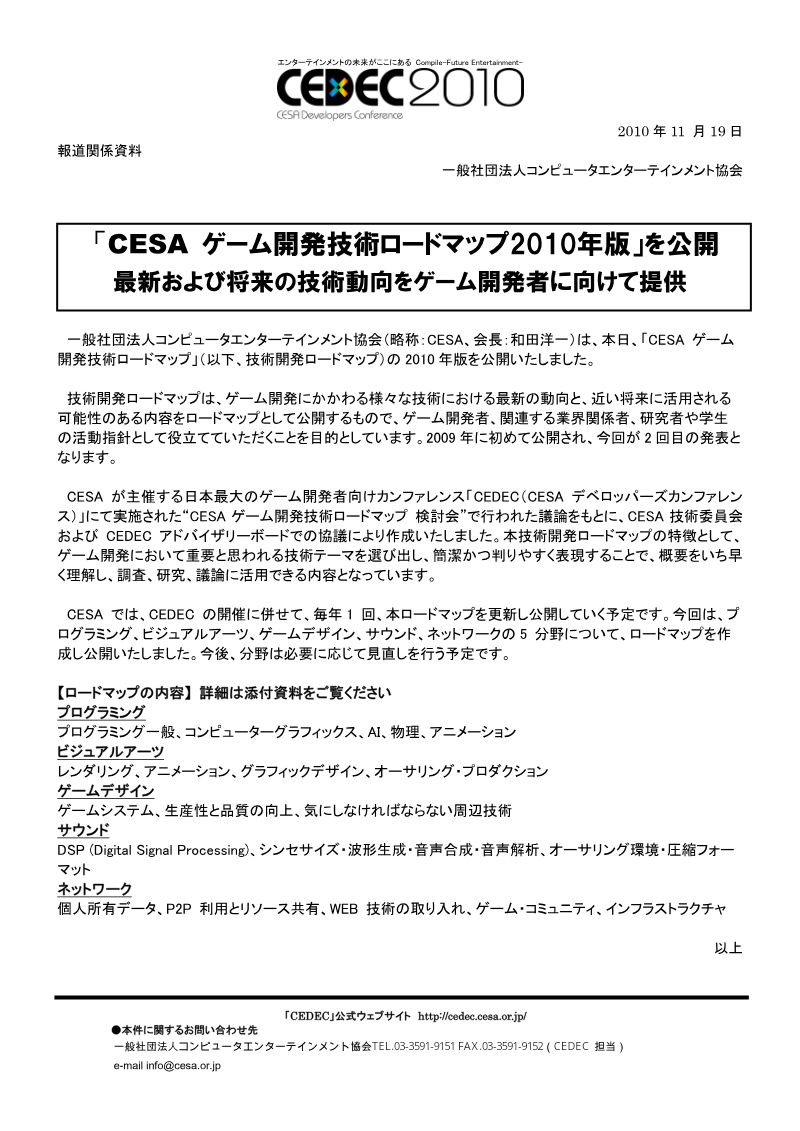
CESA Game Development Technology Roadmap: 2010 Edition
The CESA Game Development Technology Roadmap 2010 serves as a strategic guide for game developers, researchers, and industry stakeholders to navigate current and emerging technical trends.
- The industry is shifting toward increased automation, cloud integration, and cross-platform scalability to support device-agnostic gaming environments.
- Programming and visual arts workflows are transitioning from traditional C/C++ toward higher-level languages and the integration of real-time physics, global illumination, and procedural generation.
- Game design is increasingly utilizing data-driven insights, psychological modeling, and the standardization of motion-control interfaces.
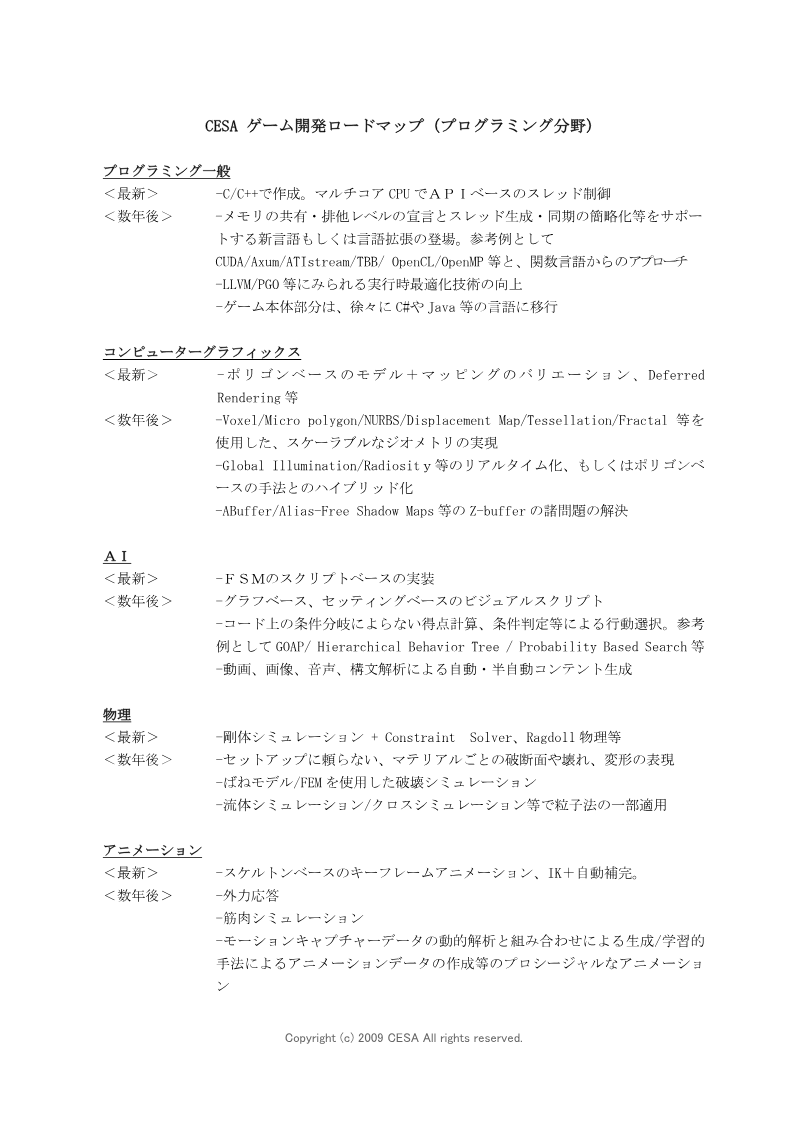

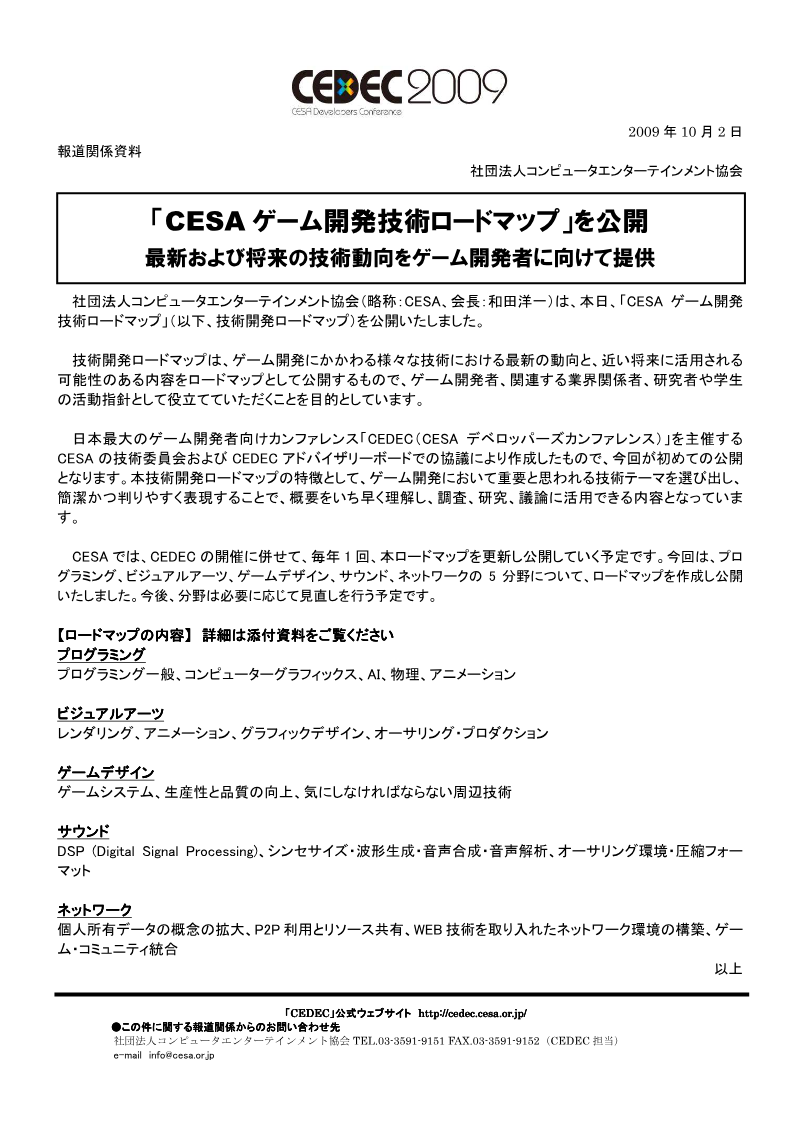
CESA Game Development Technology Roadmap: 2009
The 2009 CESA Game Development Technology Roadmap serves as a strategic guide for industry professionals, researchers, and students to navigate the evolving landscape of game production.
- The industry is shifting toward automated, scalable development systems, emphasizing the integration of sophisticated asset management and automated testing to increase productivity.
- Programming efforts are prioritizing multi-core optimization and the adoption of higher-level languages to handle increasing technical complexity.
- Visual arts production is transitioning toward procedural generation, physical simulation, and real-time rendering techniques.

CERO Age Rating System: Survey Results After New System Implementation
The Computer Entertainment Supplier’s Association (CESA) conducted a nationwide survey of 681 retail outlets in Japan to evaluate the implementation of the revised CERO age rating system.
- As of mid-2006, 95.1% of Japanese retailers surveyed by CESA perform mandatory age verification for Z-rated video game products.
- Industry adoption of the revised CERO rating system is high, with 91.2% of the 681 surveyed retail outlets reporting a clear understanding of the new operational requirements.
- Retailer compliance with physical store standards is strong, as 85.3% of stores have successfully implemented segregated display practices for Z-rated titles.
Company Profile: May 2005
Capcom concluded the fiscal year ending March 31, 2005, with robust financial results, reporting net sales of 65.8 billion yen and an operating income of 7.7 billion yen.
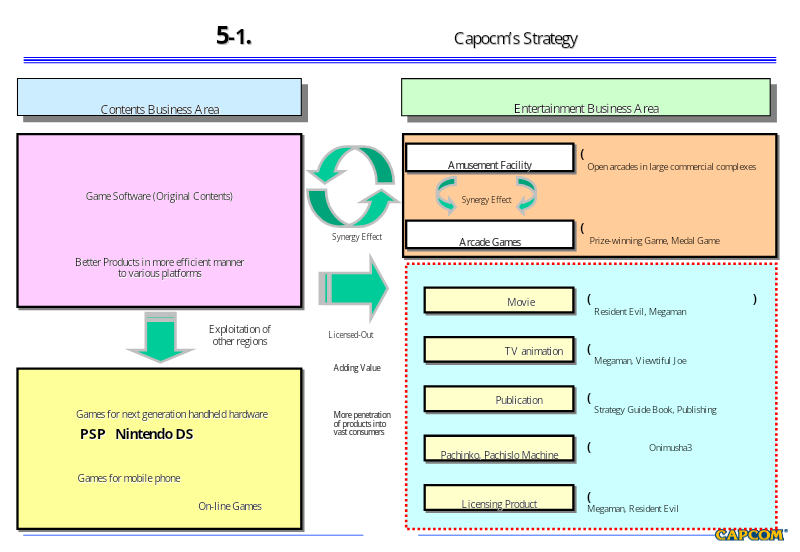
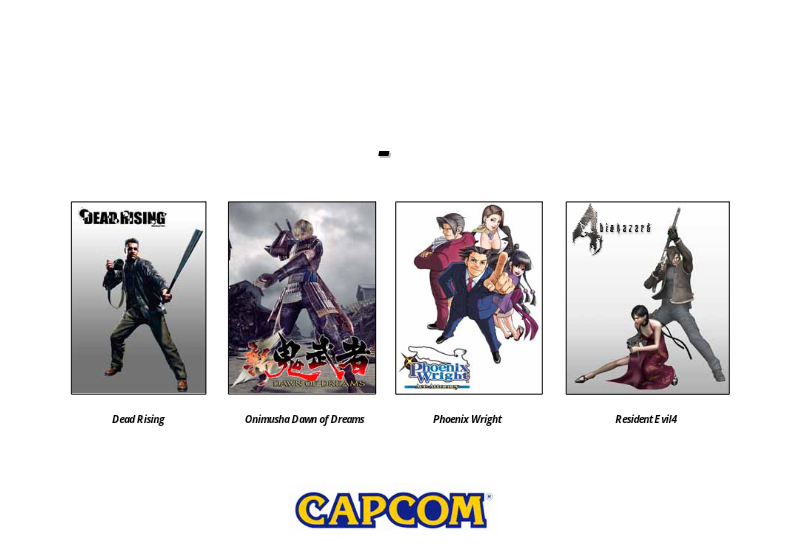
- Capcom reported fiscal year 2005 net sales of 65.8 billion yen and an operating income of 7.7 billion yen, driven by Resident Evil 4, Mega Man, and the pachislo LCD business.
- The company projects net sales of 70 billion yen for the 2006 fiscal year, despite acknowledging volatility in the hit-driven home console market.
- Capcom is targeting a global sales distribution ratio of 2:5:3 across Japan, North America, and Europe to mitigate the maturity of the domestic Japanese market.

提言:我が国コンテンツ産業の国際競争力強化に向けた支援体制の構築
Japan’s content industry, encompassing games, animation, manga, film, and music, serves as a critical engine for national economic growth.
- Japan must establish a centralized, specialized support organization to consolidate fragmented government efforts and align industrial policy with rapid global market shifts.
- The proposed entity will integrate expertise in finance, law, intellectual property, and international distribution to provide end-to-end support from production to global market entry.
- A core function of the new structure is to shift from isolated, project-based interventions to a cohesive, long-term strategic framework for the content industry.