Japan gaming industry reports and market data
Documents

Puzzle & Dragons did $1B in 2015, but is now in decline
GungHo Online Entertainment maintains a dominant position in the global mobile gaming market, anchored by the sustained performance of its flagship title, Puzzle & Dragons.
- Puzzle & Dragons generated $1.3 billion in 2015, yet it accounted for 89% of GungHo Online Entertainment's total revenue, highlighting a dangerous lack of product diversification.
- GungHo is experiencing a clear financial contraction, with 2015 year-over-year sales falling 11% and operating profit dropping 23%.
- The company's heavy reliance on the Japanese market has limited global growth, as evidenced by the failure of Puzzle & Dragons to replicate its domestic success in North America despite nine million downloads.

How to engage with Asian mobile publishers (Tencent, Gamevil, Nexon)
Engaging with major Asian mobile publishers—such as Tencent, Gamevil, and Nexon—requires a strategic approach that prioritizes long-term relationship building, deep market research, and a sophisticated understanding of free-to-play mechanics.
- Asian publishers prioritize developers who demonstrate a deep understanding of free-to-play mechanics, as this is the primary monetization model in markets like China.
- Publishers look for unique, innovative concepts rather than clones of existing hits; for example, Tencent evaluated over 6,200 games in a year but only a small fraction met their criteria for publishing.
- When pitching, developers must provide concrete, honest data, such as retention rates (e.g., Day 1, Day 7) and payment rates, rather than relying on best-case scenarios or anecdotal success.

FTUE: Downtown Showdown
Downtown Showdown, a mobile title from Japanese publisher COLOPL, serves as a case study in the adaptation of city-building mechanics for Western markets.
- COLOPL is utilizing 'Downtown Showdown' as a strategic vehicle to adapt Japanese city-building design sensibilities for Western markets in Europe and North America.
- The game hybridizes traditional urban simulation mechanics with competitive, combat-oriented progression systems similar to 'Clash of Clans'.
- The monetization model relies on standard free-to-play mechanics, specifically using premium 'diamonds' to bypass construction timers and wait times.

Biz Daily: What next for Nintendo in a post-Iwata world?
The passing of Nintendo CEO Satoru Iwata has placed the company at a critical strategic crossroads, prompting an evaluation of its future direction in a rapidly fragmenting gaming landscape.
- Nintendo is at a strategic crossroads following the 2015 passing of CEO Satoru Iwata, necessitating a shift in direction to navigate a fragmenting gaming landscape.
- Despite the hardware successes of the DS and Wii during Iwata’s 2002–2015 tenure, the company struggled with the 3DS and the commercial failure of the Wii U, leading to stagnant share prices.
- Nintendo’s institutional hesitation regarding mobile gaming is evidenced by a lack of specific details for its five-title partnership with DeNA, reflecting a broader internal resistance to modern monetization models.

Biz Daily: Why did GREE sack 30% of its SF office?
GREE, a prominent Japanese mobile gaming platform, has initiated a significant restructuring effort by laying off 30% of its San Francisco-based workforce.
- GREE has laid off 30% of its San Francisco workforce as part of a broader international contraction that previously included closing its London office and Vancouver development studio.
- The restructuring aims to address profitability challenges and recurring project cancellations despite the company generating approximately $800 million in annual revenue.
- The company is struggling to transition from its historical dominance in the Japanese feature phone market to achieving a breakout hit in the global smartphone gaming sector.

Biz Daily: Can Gacha, Fusion and Collection work in the west?
The global mobile gaming industry is currently at a critical juncture, with experts projecting significant growth potential by adopting mechanics that have long defined the Japanese market.
- The global mobile gaming industry could see revenue increase tenfold by adopting Japanese-centric engagement models that prioritize collection, randomization, and fusion over traditional skill-based progression.
- Western mobile development is currently in a state of pre-peak growth, lagging behind the Japanese market's superior revenue per user metrics.
- The core strategy for growth relies on three pillars: Gacha for randomized monetization, collection for inventory depth, and fusion for asset management and power progression.
The New Future of Japan - The Auteur Movement - Extra Credits
The Japanese game industry is currently undergoing a significant shift characterized by an auteur movement, where veteran developers are departing from large-scale AAA studios to form smaller, independent teams.
- Veteran Japanese developers like Hideo Kojima, Keiji Inafune, and Koji Igarashi are leaving major AAA studios to form smaller, independent teams to regain creative control.
- This auteur movement is a direct response to the unsustainable AAA model, which prioritizes marketing-driven sequels and high-fidelity graphics over gameplay innovation.
- These independent studios typically operate with lean budgets ranging from $10 million to $20 million, allowing them to bypass the constraints of traditional major publishers.

GuiltyGearXrd's Art Style : The X Factor Between 2D and 3D
The transition of the Guilty Gear franchise from traditional 2D sprites to a 3D framework represents a significant technical and aesthetic milestone in fighting game development.
- The Guilty Gear Xrd development team achieved a 2D aesthetic in 3D by rejecting standard rendering conventions like normal maps and global lighting, which they identified as causes of a generic digital appearance.
- The workflow prioritizes manual artist intervention over automated rendering, utilizing Unreal Engine 3 and Softimage to treat each frame as a hand-posed keyframe.
- Visual consistency is maintained by manipulating vertex-based data—specifically vertex colors, surface normals, and lighting vectors—rather than relying on resolution-dependent textures.

Top 50 Developers of 2015: #2 GungHo Online
GungHo Online Entertainment secured the number two position on the 2015 Top Developers list, primarily driven by the sustained dominance of its flagship title, Puzzle & Dragons.
- GungHo Online Entertainment’s 2015 market position was anchored by Puzzle & Dragons, which at its peak accounted for 50% of all consumer spending in the Japanese mobile gaming sector.
- The company is actively diversifying its revenue streams by using cash flow from Puzzle & Dragons to acquire console developers, including Grasshopper Manufacture, and investing in brand extensions like theme parks.
- GungHo is expanding its global footprint through strategic partnerships with Tencent and equity stakes in Chinese developers such as Chukong to penetrate the Chinese market.

Will Nintendo be successful making mobile games?
Nintendo’s March 2015 decision to enter the mobile gaming market through a partnership with DeNA marks a significant strategic shift for the company.
- In March 2015, Nintendo shifted its long-standing policy of exclusive hardware development to enter the mobile gaming market through a strategic partnership with DeNA.
- The move was prompted by the declining performance of the Wii U and 3DS consoles, which led to Nintendo’s first period of financial losses in decades.
- Nintendo aims to leverage its iconic intellectual property, such as Mario, Donkey Kong, and Pokémon, to reverse its financial trajectory on smart devices.
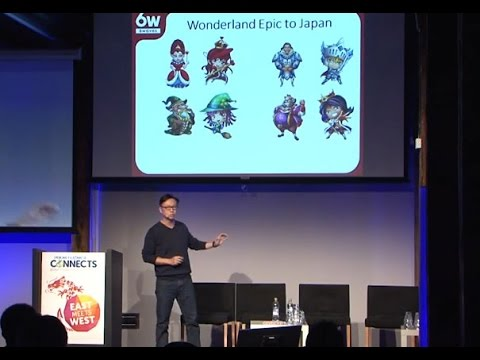
English language games ignore two-thirds of global market says 6waves
The global mobile gaming market is significantly underserved by developers who focus exclusively on English-language releases, effectively ignoring two-thirds of the potential audience.
- Releasing games only in English ignores approximately two-thirds of the global market, as 82% of current industry growth originates from Asia.
- Asia accounts for 45% of the total global games market, with seven Asian countries ranking in the top 20 for iOS and Google Play revenue.
- Localized game versions can yield significant revenue growth; for example, Supercell’s 'Boom Beach' saw a 17% increase in downloads and a 4x revenue increase after launching a Japanese version.

Difficult to crack but Japan, China and Korea are vital mobile gaming markets
Japan, China, and South Korea represent the most lucrative mobile gaming markets globally, consistently ranking at the top of Google Play and iOS App Store revenue charts.
- Japan, South Korea, and China represent the most lucrative mobile gaming markets globally, with Japan ranking first in both Google Play and iOS App Store gross revenue.
- Western marketing practices are largely ineffective in China, where developers must bypass the absence of Google Play by partnering with local marketplaces like Tencent or 360 to navigate a fragmented ecosystem of hundreds of Android stores.
- Success in South Korea requires collaboration with dominant local platforms like Kakao and experienced publishers such as CJ or WeMade to manage deep localization and unique, high-incentive marketing campaigns.