Investment reports and market data
Documents
Embracer Group Divests Gearbox Entertainment: Investor Presentation
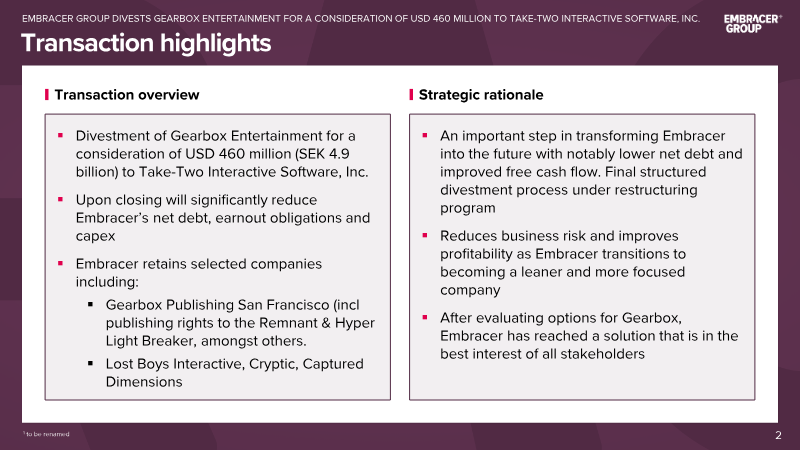
Embracer Group has finalized the divestment of Gearbox Entertainment to Take-Two Interactive Software, Inc. for a total consideration of USD 460 million.
- Embracer Group is selling Gearbox Entertainment to Take-Two Interactive for USD 460 million to reduce net debt and improve free cash flow.
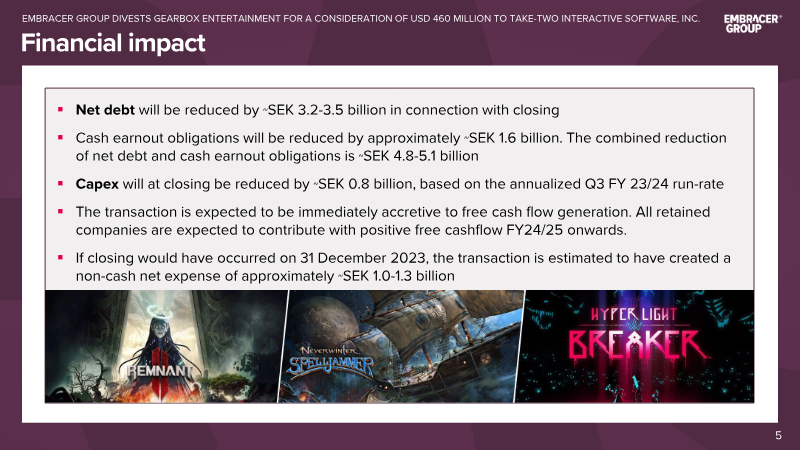
- The transaction is expected to generate net cash proceeds of SEK 3.2 billion to 3.5 billion after Embracer liquidates the newly issued Take-Two shares received as payment.
- The deal eliminates approximately SEK 1.6 billion in cash earnout obligations and reduces annual capital expenditure by roughly SEK 0.8 billion.
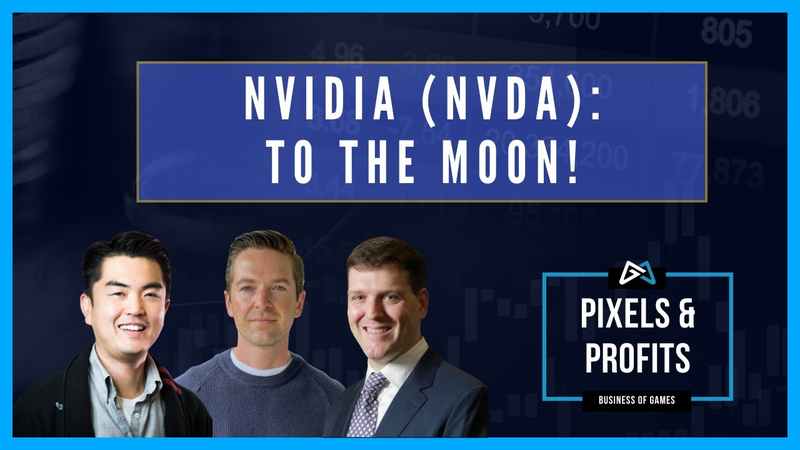
Nvidia (NVDA) to the moon! | Pixels & Profits #9
Nvidia has successfully pivoted from its origins as a gaming hardware manufacturer to become the primary architect of the global artificial intelligence infrastructure.
- Nvidia's revenue structure has shifted heavily toward data centers, which generated $18 billion in the quarter ending January 2024, accounting for over 80% of total revenue.
- Nvidia maintains a significant competitive moat due to the immense capital and hardware-focused infrastructure required for chip production, which is far more difficult to replicate than software-based competition.
- The company is successfully expanding its ecosystem beyond hardware through software SDKs and platforms like Maxine, Riva, NeMo, and Omniverse, which facilitate generative AI development and 3D world simulation.

What Makes an Investable Founding Team with Maria Kochmola & Dara Leung & Phylicia Koh
Successful venture capital investment in the gaming industry hinges on a founder’s ability to balance visionary product development with disciplined business execution.
- Investor priorities shift from team composition and market conviction at the pre-seed stage to proven product-market fit, board governance, and financial metrics like burn rates at the growth stage.
- Founders must maintain transparency during fundraising, as the venture capital community shares information and will detect fabricated competition or inconsistent terms.
- Effective pitching requires a fluid, interactive communication style that is considered as critical to securing investment as the underlying product itself.
Crafting an Unbeatable Game Thesis with Phillip Black
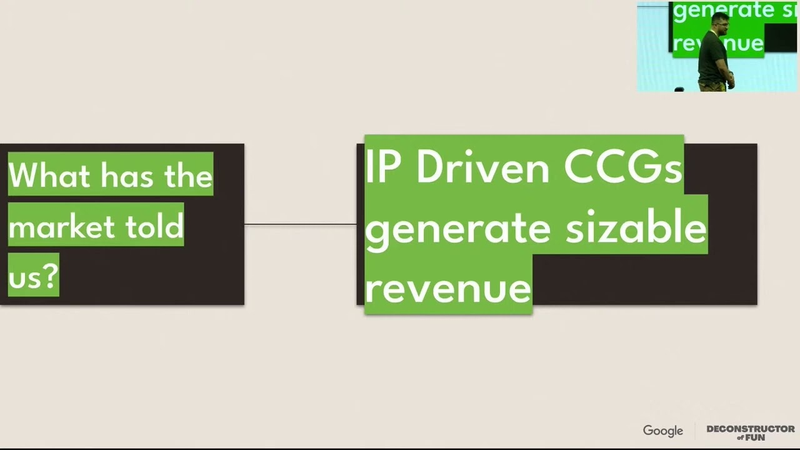
A game thesis serves as a strategic, logical argument for a game’s existence, moving beyond personal preference to provide a persuasive case for investors, publishers, and internal development teams.
- A game thesis functions as a strategic business proposition that justifies a project's existence to stakeholders by proving market viability and resource alignment.
- The framework requires answering five core questions: market size, specific opportunity, balance of innovation versus standards, content retention pipelines, and monetization hooks.
- Developers should hedge risk by adopting proven mechanics from successful industry titles while innovating in areas where competitors are limited by legacy constraints.
The Intricacies of Venture Capital Investments with Joakim Achren, F4 Fund
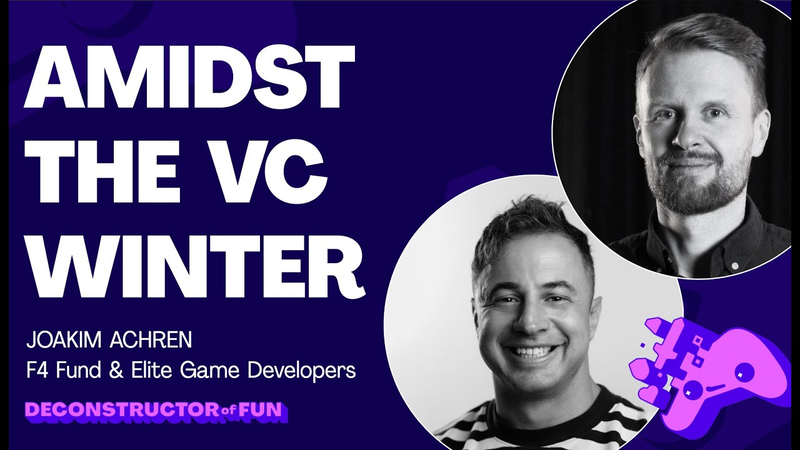
The venture capital landscape for gaming and consumer software is undergoing a significant correction, moving away from the high-burn, vanity-metric growth models that characterized the zero-interest-rate era.
- Venture capital investment in gaming has shifted from high-burn, vanity-metric growth models to a focus on early-stage, thesis-driven sustainability and profitability.
- Traditional mobile studio models are increasingly viewed as unfavorable by investors due to market saturation and prohibitively high user acquisition costs.
- Founders must now integrate marketing expertise directly into their core teams to prioritize organic distribution over reliance on paid user acquisition.
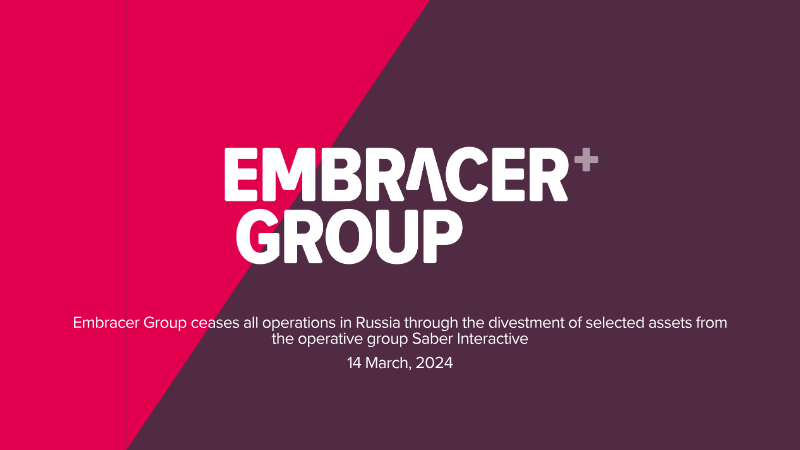
Embracer Group Ceases Operations in Russia: Divestment of Selected Saber Interactive Assets
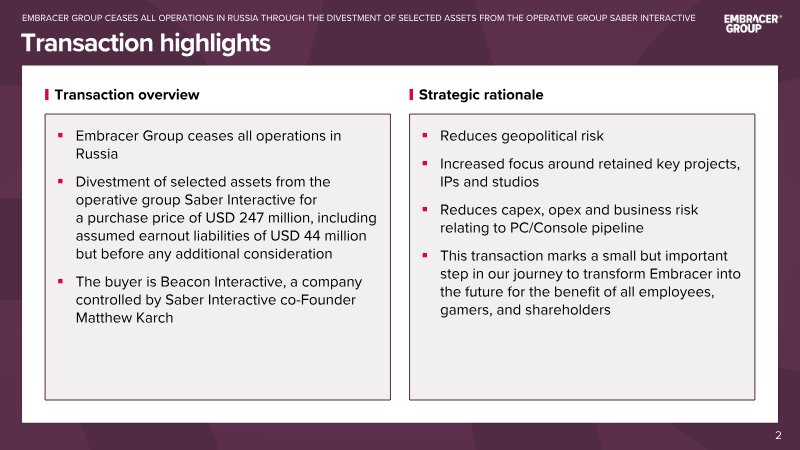
Embracer Group has finalized the complete cessation of its operations within Russia through the divestment of selected assets from its Saber Interactive operative group.
- Embracer Group has exited Russia by divesting selected Saber Interactive assets to Beacon Interactive, a company controlled by Saber co-founder Matthew Karch, for a total transaction value of USD 247 million.
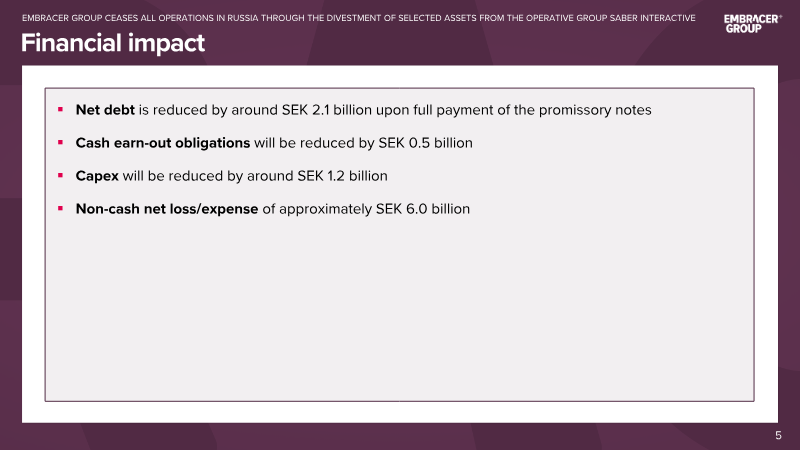
- The deal includes an option for the buyer to acquire 4A Games and Zen Studios, and it is expected to reduce Embracer’s net debt by approximately SEK 2.1 billion and annual capital expenditure by SEK 1.2 billion.
- Embracer anticipates a non-cash net loss of approximately SEK 6.0 billion as a result of the divestment, which is part of a broader corporate transformation strategy to reduce operational risk and expenditure.

Gaming Market Insights with Goldman Sachs & Lightspeed Venture Partners
The global gaming industry is currently navigating a period of structural rebasing, transitioning from the unsustainable demand spikes of the pandemic era toward a more disciplined, efficiency-focused market.
- The gaming industry is undergoing a structural correction to move away from pandemic-era demand spikes, shifting toward operational efficiency and disciplined balance sheet management in response to high interest rates.
- Venture capital investment is currently prioritizing well-capitalized studios capable of developing multi-billion-dollar, platform-oriented franchises rather than broad, speculative consumption.
- Artificial intelligence is identified as the primary long-term growth catalyst, with potential to significantly improve development efficiency and enable advanced gameplay through intelligent non-player characters.

Emulator Armageddon / Netflix Ports / Private Equity / Early 2024 Winners
The gaming industry is currently navigating a significant structural correction, moving away from an era of unsustainable growth and hyper-realistic, high-budget development toward a model that prioritizes operational efficiency and core gameplay.
- The gaming industry is shifting from high-budget, hyper-realistic development toward operational efficiency, as evidenced by the commercial success of mid-tier, community-focused titles like Helldivers 2 and Palworld.
- Private equity firms are increasingly acquiring established studios, such as Jagex and Saber Interactive, signaling a strategic pivot toward stable cash flows and lean operations over debt-fueled expansion.
- Nintendo’s successful legal action against the Yuzu emulator highlights a hardening stance on intellectual property protection, while the Epic Games versus Apple antitrust battle continues to create volatility in mobile distribution.
Why Video Game Layoffs Aren't Done Yet I Extra Credits Gaming
The current wave of layoffs in the video game industry, which has resulted in approximately 9,000 to 12,000 job losses over the past year, is not indicative of a systemic industry collapse.
- The current wave of industry layoffs, totaling approximately 9,000 to 12,000 job losses over the past year, is a structural correction rather than a systemic collapse.
- Mass workforce reductions are a direct result of companies over-hiring and over-leveraging during a period of historically low interest rates that prioritized growth over profitability.
- Tech-driven game development relies heavily on human capital, allowing corporations like Amazon, Unity, Embracer, and Epic Games to scale headcount up during cheap credit cycles and cut it rapidly when economic conditions tighten.

Finding a publisher: Live Q&A
Securing a publishing deal for premium PC and console titles requires a fundamental shift from creative-led development to a rigorous, business-oriented strategy.
- Publishers prioritize risk mitigation, requiring developers to present a comprehensive business case that includes realistic budgets, detailed timelines, and clear revenue projections.
- Success in securing a deal depends on demonstrating market demand through tangible metrics such as Steam wishlists, community engagement, and social proof.
- Developers should pitch a singular, confident vision supported by a functional vertical slice that highlights core mechanics and unique selling points, rather than offering multiple design concepts.
Türkiye Game Market 2023 Report
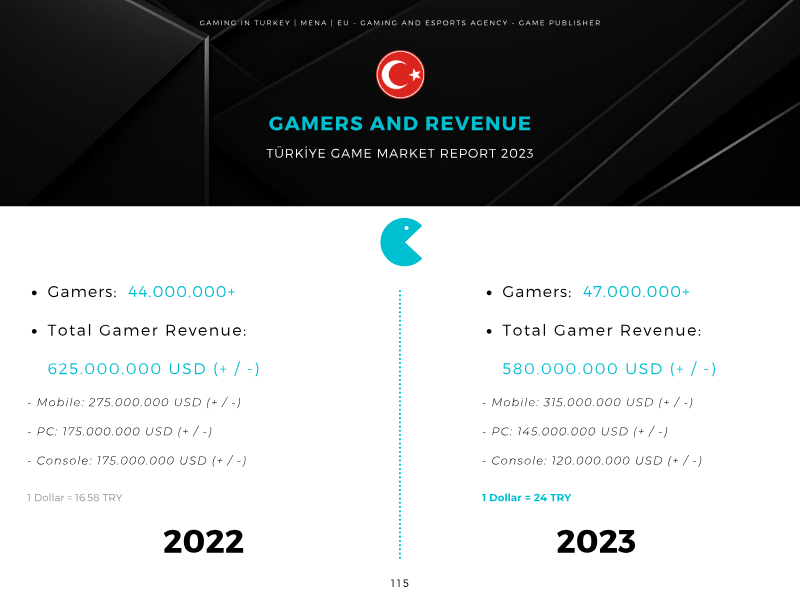
The 2023 Türkiye Game Market Report provides a comprehensive analysis of a resilient and evolving gaming ecosystem navigating significant economic volatility and geopolitical instability.
- The Turkish gaming market generated $580 million in revenue in 2023, supported by a player base of 47 million people.
- Approximately 90% of games produced in Türkiye are exported internationally, with titles like Royal Match demonstrating the country's capacity for world-class content.
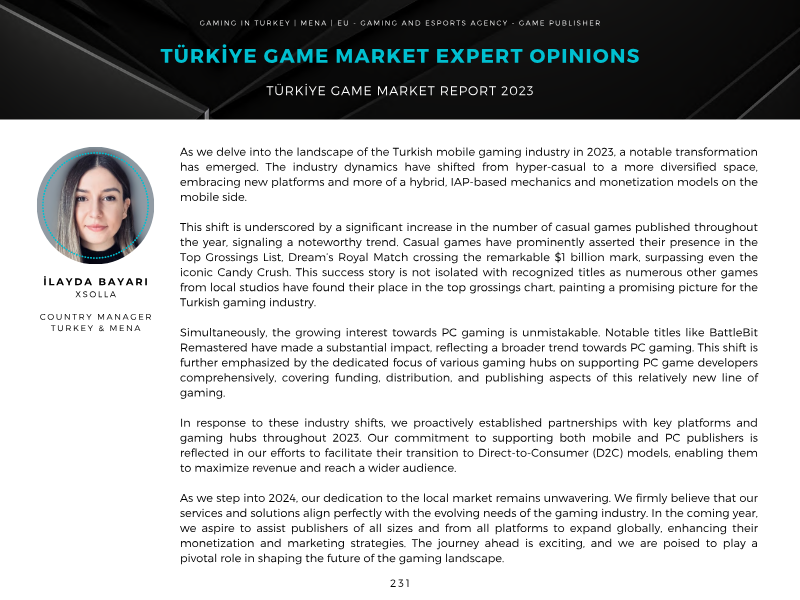
- The industry is strategically shifting away from hyper-casual mobile titles toward more sustainable business models, including hybrid-casual, indie productions, and PC/console development.



Keywords Studios FY 2023 Results
Keywords Studios achieved a resilient financial performance in 2023, reporting €780 million in revenue and a total growth rate of 13%.
- Keywords Studios reported €780 million in revenue for 2023, representing 13% total growth and 9% organic growth despite currency headwinds and U.S. labor strikes.
- The company achieved an adjusted operating margin of 15.6% and an EBITDA of €158.3 million, supported by a strong cash conversion rate of 82.3%.
- Management is pursuing a revenue target exceeding €1 billion, supported by a €225 million investment in five acquisitions during 2023 and a $400 million revolving credit facility.