VideoDeconstructor of Fun
The Intricacies of Venture Capital Investments with Joakim Achren, F4 Fund
15 Mar 202478 min video
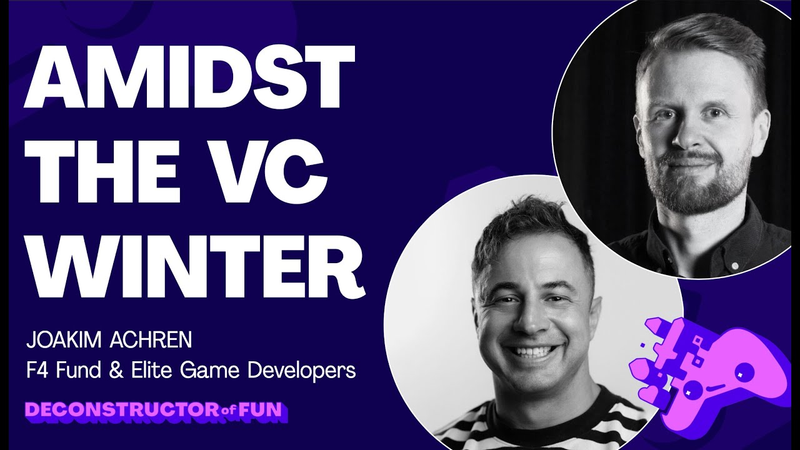
hey folks and welcome to the deconstructor of fun podcast I'm your host Mishka katkov and in this episode I'm joined by my friend Yoki friend um this podcast was recorded at my home so if somebody for somewhat reason would be interested um head on to YouTube and and you can watch the uh the episode there in case you're listening this onapple podcast but ify or whatnot in this podcast so by the way if you don't know yakim yakim is a seasoned entrepreneur he has funded at least a couple of game companies I know one of them went bankrupt and the other one ipoed uh that was next games and which was later acquired by Netflix games and after his entrepreneur journey of about 20 years he started blogging uh podcasting writing a newsletter and all that leads to one destination which is becoming a VC so now he has his fund F4 fund with Mr David K that they are running
together now in this podcast we are delving into the VC winter we talk about key drivers in the market the importance of identifying Market drivers such as new platforms or Innovations we talk about the challenges in startup growth how important it is to have deliberate growth strategy from early on how important it is to focus on distribution the the uh The Innovation to differentiate your company from others in an increasingly more competitive landscape we discuss our investment philosophies and strategies and uh provide our long-term Outlook and different opportunities uh spoiler alert we are optimistic when it comes to gaming uh in in long term and see uh see a lot of uh a lot of growth in in you know in this vast market so anyways this is the podcast I hope you enjoyed Yim will be at GDC so if you want to meet
with him pitch your company for F4 fund uh I suggest that you uh follow the link in the description get in touch with Yim he has um he's a good dude so anyways without further Ado ladies and gentlemen Mr Yim [Music] M Yim welcome to my home thank thanks thanks M it's good to be good to be here a sunny cold day a super cold day it's like- 17 - 18 so that's how we roll in Finland yeah but today we're not going to talk about how cold it is we're going to talk about Venture Capital because you have become a full-time venture capitalist yeah so if I tell the audience a little bit about yourself Yim aen you we met when you were at supercell so you were doing you were director of analytics back then yes after supercell you started your second
company before supercell you had your first startup actually I remember you from there but uh that failed that's a different story then you started your second startup after supercell called next games and next games eventually ipoed and was acquired by Netflix so correct that was your Founders path uh long tulous and successful then after next games you left next games and you started Elite game developers a Blog a podcast a newsletter sounds familiar and that was focused on really helping Founders and you actually wrote a book as well which was called longterm game long-term game yes how to build a video games long-term game Link in the description uh so you built you you you wrote a book you started a site uh you had a successful podcast a growing newsletter and then you were like this is not enough I'm going to become a full-time VC and you started F4 fund yes
and that's where we are right now correct what is F4 it's a it's an early stage Venture fund investing in not only gaming but also consumer SAS things that have like a Bottoms Up user adoption like the way that you could grow something virally for instance I think that's that's where me and my partner David K we're both coming from the gaming background we see that there's a lot of products out there that have those kind of characteristics and we can spot them quite early and become involved so not a gaming focused fund but gaming is one of the focuses it is one of the focuses that's interesting because it probably coincides with with the Venture crash in gaming well it is in a way like finding something that could be a competitive Advantage compared to the funds
in the last five six years like I don't know how many gaming funds started probably like 20 more yeah so you have a situation where most of those funds are globally competing with each other crazy competition uh and then if you have a fund you need to invest in 20 to 30 companies out of a fund maybe 20 to 35 companies so how many good companies can you pick in a fund like a time span of 3 years when you need to deploy your LP's money yes uh I think we're in a sweet position with this fund where we have indicated that we're not going to do like a gaming fund but rather gaming is just one of the parts of of this equation so we have more time to pick the winners that we feel are better like we can have like eight gaming companies and that's totally fine versus like 25 which I think is a lot harder um to pick
winners from so we can take our time to pick the right ones okay so you're expanding from gaming to a little bit of a broader Tech with an aspect of virality is the key like not not virality but maybe there has to be some kind of competitive advantage in how these companies grow we've seen this happen really well when founders from the games industry leave to do something else outside of gaming that's where you can see really happened like if you think about Stuart Butterfield who started slack and before that flicker both companies started off as a games company which is so ironic and fun yes the same thing very much a gaming focused um platform it was a game company before that hammer and chisel yes exactly so it's it's very common and toron natural motion CEO he left to start uh after their exit to zingga he he took some time off and now he's
running a defense AI tech company interesting so it's there's a lot of patterns out there of gaming Founders going outside and doing a big sort of interesting thing and and so your focus is more on like finding these people with gaming experience but they could be either focusing again on gaming or outside gaming yes that would be our sweet spot got it gamification people if you will um I'm I'm curious to talk about this Venture crash so so um let's start with the with the yeah with just defining it like why did the Venture Capital crashed like we've seen Investments go down by 70% in terms of volume and probably even more in terms of money deployed of course we're comparing it to 2020 21 22 which are absurd years Co years but nevertheless it's been a significant collapse in in Venture funding so can you talk a little bit about that yeah there's a there's an Acron called the zp M the zero interest
rate phenomenon that era of uh which ended in 2022 um that period of time money was kind of cheap and the way that you would want to deploy that money was not in sort of highin yield uh assets but rather like more risky assets uh like then you would figure out okay crypto is one place but also venture Capital um so a lot of money found its way uh to to this like interesting sort of like in in investment Assets in VC high risk high yield yes you have special funds like gaming it's like okay gaming the pandemic just shut up the numbers it's a really nice story uh as a niche where you know people coming outside of gaming putting money there but it's also it happened in other Tech sectors as well with VC so VC got very
like overweighted uh and why the crash really happened that there's several reasons but I want to highlight one of the reasons is LPS Who deployed um they couldn't really like get liquidity as they probably would have expected less exits than they they they thought there would be no IP window no Acquisitions m&a stried up MH uh so so you're kind of like saying to yourself okay I put this much already into VC and then the VC is coming back to me to do either a capital call or either a new fund so for a new fund it's easy to say okay we're not going to you know we're Tapped Out on VC uh which means that oh yeah like the the VC kind of things okay now I need to lengthen my investment period from three years to maybe four do less deals this year so that I can smaller deals focus
on the companies that are growing clearly and dump those that are not yeah and and postpone the next fund race into a better era mhm so like all of that circulates into a situation where you have startups that want to go and raise the next round like preed to seed seed to series a and there's no funds there who are deploying yeah because they're postponing their next fund race to a further point in history okay so a lot of unpack so Market uh gaming Market basically reverts back to where it was and yeah the the revenues are down the there's no IPOs happening uh the interest rates go up so you can technically just put in your money into long-term investment and securely get back like 5% 4% easily um so there's there's that Avenue that probably takes part of the LP's money but most importantly the a lot of the funds haven't returned M and when they ask for
more money for a new fund you're not going to give it and then Capital call meaning meaning that the fund that you promise money let's say the fund is 10 million they have four Capital calls meaning that 2.5 million comes in at certain interval so they can deploy it so you don't have to give all of your money at once but you basically pledge certain amount and those Capital calls are what did you mention about them yeah so like you go and ask your LPS to put the the next installment of what you've promised uh which should be done like maybe once or twice a year where you do the capital call but it's like the VC is feeling that oh there's a like like especially in 2022 and last year 23 when you were still thinking about the the the public markets are down which is the place where usually the LPS have the liquidity so they don't want to do like draw Downs in that sector to pay the capital call so there's a stress on the VC decide to postpone the capital call
so there's a lot of like okay let's wait for better times but markets are up now so now it's a different situation where I think there will be more deployment of the dry powder happening but that doesn't like mean that all of a sudden there's more exits more m&a more returns from these funds so that's a still a problem the the L uh VC asset class yeah hasn't really been what it was promised to be exactly the returns and this is really important I'm I'm diving deep into this conversation because a lot of the times people talk about VCS without having any understandment of what it is or having a sort of hyperbolic understanding based on Instagram or Twitter or whatever uh but this is wealth management as as with with other classes and you have to understand different wealth management classes whether it's private Equity or or VC or Sovereign wealth funds like or stock markets or bonds like they have there
are different instruments with different goals with different approaches and so when understanding why VCS are doing something or not doing something it's important to understand what are their incentives and how they operate and so in this sense Venture Capital works with LP so limited partners and depending on the size of the Venture Capital if it's a small fund then a lot of uh LPS are individuals and if when it's a large fund then a lot of LPS are institutions like uh colleges Sovereign wealth funds uh other companies etc etc so so that's that's the uh the case but I'm I'm interested now that you were raising for F4 mhm how was it was it you started raising in 23 right yes early that's that's the winter of of the VC it was probably the worst time the worst start yes uh you good good good uh good timing yeah it it was like I think the experience of not having it easy gives you the feeling later on that you learned a lot yeah uh compared to like
if I would have been raising 2 years ago early 2021 which probably would have meant that okay I can just you know just yeah just walk in everywhere and just get the money mon two months 10 million 15 million done like a bigger fund as well like now like we have a much smaller fund which yet we haven't announced uh but like we we definitely had the point there last year where it was like okay we really don't have enough to show that we can go to these institutions we can go to family offices fund the funds yet we can start having discussions uh introducing ourselves it was U it was more like more we go to our friends uh Founders who've had an exit at race from them which just meant that we would have to do a lot more smaller um LP Investments a lot of them yeah um and that it was just a lot more work
yeah a lot of pitching because now you're chasing smaller tickets in order to fill the fund yeah and so you're talking about like hundred more people yes which is actually kind of an okay thing I think many people should start with a smaller fund at first because that that's where you have more like a chance to learn the ropes of VC cuz I was doing Angel Investing for a few years before um I was also a part of play Ventures but when you kind of like sit into the role of uh starting a new fund that hasn't doesn't have any track record everything you need to like think about like how do I actually present what I'm going to do with this fund what is the competitive Advantage the thesis and you can't really say the things that everybody else is saying because like a lot of people are quite sophisticated and they've already put money into what you're
saying so that was a learning experience for me to think about like what are our differentiations so that's I think that's crucial like when whenever you're starting a business you should think about why your business is going to succeed versus all the other businesses yeah it's very very similar to Startup fundraising a VC raising from LPS what is what kind of traction do you already have like how much have you raised already who's your anchor yes anchor who's the the sort of what are the Investments you've already made do you have like Angel Investments that we can take a look at um like those kind of things no well you had like 50 Angel Investments EGD had a Syndicate yes well 30 30 well I like to over exaggerate close let's call it 50 it's good uh so but that's a that's a a hefty of a background of investing yeah how I'm I'm curious just because it took you like
you said it was difficult and it took quite a while and you had to do a lot of leg work a lot of pitching but with your background I mean supercell next games Elite game developers like 30 Angel Investments working at play before starting your own fund it should have been much easier it wasn't like it was very much a situation where um like the the circumstances of the market yeah the worst timing yes like there too much money in VC like we've already invested into these nine funds we we cannot add the third fund anymore um and also my background in gaming meant that like I had this stamp of this is another gaming fund even though we had the the angle of we're going to do consumer apps and things like that now now that we've done it several Investments we can show a portfolio of that hey this is actually what we said we're going to do and we did it so people were so allergic towards gaming there's so much money in gaming VC and
of course like my network is very substantially gaming heavy yeah where I go to talk to people who've already talked to every gaming fund yeah and might have already the most likely candidates have already deployed into VC interesting and um what's the difference between Angel Investing that you were doing and Venture investing that you're doing now yes that's a really good question um the way I would say is like the difference for sure is that okay I have we as the general Partners me and David can make the decisions on our own with the angel Syndicate it was like okay I have a deal that I'm presenting to a group of angels and then I convince people to invest um here it's more we can move quickly we can create uh also a lot of discretion where we don't share pitch decks to 200 people yeah uh where we don't need to let the
founder feel that this is like a you know crowd sourcing yeah crowdfunding that's the problem with syndicates especially as they grow larger is like you're showing your pitch deck to your competitors yes exactly um I think those are the main things and well this becomes more like a full-time job where you're building a company uh where you also like build something where the founder is looking at what what you are doing as a fund versus like an angel is like an individual uh there might be more to actually get from a fund like as a hey what is the thesis like things like that I think an angel could operate as a fund like like all the same things regarding like what kind of support you're doing and things like that um I think that was a Natural Evolution for me to think about like what do I do because the The Syndicate model even though it has a lot of pro like pros but
it also has the con of okay it's not a company and I'm an entrepreneur by heart so I feel like a venture firm is more of a company and and now that you're um so you're a full-time Venture cap like you've limited actually the the amount of content that comes for example through EGD like you're not doing the podcast anymore no the newsletter used to be weekly but now it's bi-weekly mhm how does that feel uh I would be happy to do more content but I'm also like conscious that like my time should be spent on building this company right now more uh and then putting more focus into the piece that I put out uh they can have more impact or I want them to have more impact uh so it's it's a trade-off that just needed to happen yeah yeah yeah so more thoughtful more more time but you had a good system the weekly ones were good yeah you could return to that I think at some point maybe maybe yeah yeah I
understand and um and what's the uh what's the life now because when you were doing lead game developers you were still working at play the content was coming at more rapid Pace you had your Syndicate and El leite game developers now but now you've kind of not working a play you're working for F4 uh you've limited the time that you spent on Elite game developers quite significantly Y and so where the time is going right now like what is the life of a of a partner yeah so maybe like Twitter like no it's it's to be honest like when you do a fund you have your limited partner relationships like you're building new relationships You're Building keeping the existing relationships um like which is a lot of meetings communication sharing updates do is it like a generic sharing or like what does it mean LP like limited partner Rel relationship like do you meet them or like like what is what is it in practice it's a lot of uh we do
try to have regular catch ups with our LPS wow like calls um not with all of them it's really like specifically tailored for people who who are also investing like their own Capital as angel investors who might be uh looking at deals so there we do a lot of like uh sharing of what we're doing also trying to communicate regular updat dates like B monthly like a investor update like a startup would do that's what we craft like a few page this is what what's happening what the Investments we've done uh content we put out and putting that out to all the LPS is something that we put a lot of focus on but that's like something I didn't really have when I was Angel Investing so that that just took up a lot of my weekly time it's like few days a week which just is devoted to those relationships wow and how about um how
about going through pitch decks that's there's a lot more than there was before cuz like there's two of us now uh where the other one is seeing some some deal come true and then we're interested in it we spend a lot more time talking about these deals together I think that's also something when you're alone you kind of like do more this decision making inside your head and like try to think about is this good maybe you do reference checks and things like that but here like partner meetings yeah are a big sort of like space of time where we do try to spend a year like an annual I know a daily like an hour or two just talking about stuff that's interesting because you guys live 10hour time difference apart D is in Los Angeles you're in Hing that's 10hour time difference yeah when when do do these long s happen mornings evenings
God damn just uh you know ADH hard calls a lot we do have a few scheduled meetings where we talk about projects and Deals and that's rough it's it's okay because I think we are both entrepreneurs so it's like we're constantly thinking about things uh and it's very organic as well so usually it means that just do you have a SE let's talk about this sound horrible if somebody would be asking me every evening hey man do you have a SE I'll be like now I guess I need to have a se but it's evening and it's what what would be horrible for me would be if it's in the calendar really yeah that's worse but then you can just say like every Wednesday like for example I do podcasts on Wednesdays that is my only evening that I've devoted for for that and it's like it's either that this Wednesday or if not then though next Wednesday next Wednesday then it's the Wednesday after yeah we do have like a few things in the
calendar but since we want to talk on a daily basis if I would have like every evening uh sort of 15 minute uh time slot that's impossible with kids and everything exactly but this time this kind of mode where I'm like hey I have free time now do you have free time now it we've kind of settled that that's a really good Mo mode for working and it works talk to me in a year sounds horrible anyways uh I know David it's good that you have a good relationship and everything but it is challenging no matter what no matter what kind of organization you're working with but when when the people are stress about that too much there's other stuff that I TR what do you stress about them yeah I think it's more about the the way that how do we evolve as a fund like what is the next evolution of f four uhhuh which is more like I don't
really know yet but I think like we're we're on a trajectory to to grow the fund most likely but what does it look like if we add people is a big Stress For Me Yeah from different time zones yes uh because then it requires like okay then we need more structure um and now it's more adhoc and we're just you know doing it pretty much winging it yeah um but it's still working because we're both looking into what we're doing we're working asynchronously on a lot of projects yeah and that's that's moving us forward but like can we sustain that that we keep our appetite and motivation in what we're building yeah so that's a question mark and keep yourself aligned towards the same goal because once you grow and and overall just when you're a part it's very easy to become un align especially with more people and then then the easiest way at that point is like okay
you take five I take five I invest my five and you invest and we'll just present that we're a United team but frankly like we're working asynchronously you do this I do that and it's just much easier that's what tends to happen behind the closed you know kind the doors yeah decision making is an interesting topic in a fund where you have like if you would be like a solo GP fund like of course you're making decisions when you have more than one person uh there's pros and cons in making consensus decisions versus like the other person being very much like against what the other one wants to do uh like that's an area where we're trying to evolve like what are the right questions to ask the other partner about like the good things and I think going into these are the right questions might mean is the is like if this becomes huge what could it look like or what needs to happen in order to this to become big and those questions often can shoot down
things where we just have a fog of War we don't understand like all the the variables um so it's tough well let's talk about then those decision- making because as an early stage fund so okay actually let's first talk about what is the difference between an early stage fund like F4 and a late stage fund like light speed yes uh I think everything goes into the topic of ownership that the the VC gets when they invest in a company um there there is like a small fund like ours if we participate in a $10 million round like when somebody raises 10 million like we would not get a lot of percentage we will get very low probably under 1% which which is kind of weird in a way okay if that company uh how many 10 billion do exits there are in the year let's say in the games industry zero yeah and that
usually like there was a um the Mitch L and Blake Robbins on their podcast talk about like usually these 10 billion exits means that the company has already ipoed and then somebody buys them from the the public market yeah double exit yes and that's hell of a lot harder for a VC to stick around and own those shares and wait for that big change because every time a new investment comes you need to put in more money to on the table or geted to a smaller percentage of the overall pot and you also have the stress of okay returning something to your lpce and maybe selling part of your ownership in that round yeah so like if we are an early stage fund so what we need to do in order to get more ownership to have a chance of okay if there's a $200 million exit like we're not going to make a lot of money if we put money at the the stage where it's a $10 million investment cuz we
cannot get the ownership that we need so later stage fund can Bo that much money and get several percentage ownership but we would get like 0 point something so if we invest at the first situation where the company is Raising at like A5 to1 million valuation our small check can mean that we get 1 2 3 4 5% mhm of this round and that is already a meaningful ownership even through dilution we still would own a lot exactly and then so the earlier you come the cheaper it is and the bigger percentage you can get that then can sustain or decrease less with all the future funding rounds exactly and that means that usually when we think about the or talk about not usually when we talk about funding rounds it's preed which is you would determine as as a team gets together they have maybe an idea but you're funding already just the team then there's a seed where they have
a product Market fit sort of figure it out there's a prototype there's demo there's all that and you give them seed money so you can hop over the preed raise just go directly to a seed so bootstrap something on the side and and make it have bootstrap meaning do it with on on the side of your main job or just without getting paid then after seed comes series a and series a means you have tangible traction and you're raising against that attaction on the market so you have a product the product is resonating and now needs money to for more content and for more growth and then you get to a b which is basically you're already growing and let's grow even bigger so now you get to those gigantic checks and this is you know you're heading towards an IPO or some other type of an exit so with with those type of rounds understanding these things and then after B comes C D and so forth and that's usually how it is how it is and understanding these steps you are investing mainly into pre-seed and seed
right yes so that means either you've identified a great team or you have identified a great team that also has identified a product Market fit yeah and my question is like giving this background to the people is like what is an investable team it is very much a characteristic pattern matching that we dohm where we listen to them answer our questions present what they're doing with a combination of looking what they've done before how how did they do it before mhm um we're looking for resilience usually I think that's the the characteristic that you want in a Founder mhm um how do you look for that it's a great question like it it really comes through partially by asking them questions about what they've done before as a kid yes you can start from asking like what was your first entrepreneurial EXP experience and what comes out as an
answer is very telling uh then you go and talk to their colleagues or friends or people who've known them for a long time and then you figure out those kind of questions from them as well and and so what do you specifically looking in resiliency is it a person that doesn't give up or is it a person that is like like what is it I think it's it is like we do want to invest in people who are entrepreneurs by heart where they feel that they have to have like their project that they're working on passionately and doing it uh like pushing themselves forward also creating Insight along the way and learning from mistakes understanding but is that a little bit different thing than resiliency cuz the way I understand resiliency is when you know [ __ ] gets tough you don't give up and you don't get paralyzed it's like you like like you don't have the tools but you still need to make it happen yeah I like one yeah that's true I think one of the key components there is that you
learn and that's a component of resilience which maybe sounds counterintuitive but like there there will be failures and you will shut down what you started and things like that but if you learned if you if you went through that experience and picked up things that you won't repeat you will not do it again I think that's that shows resilience in a way got it okay resiliency and yeah startups is all about failing maybe maybe another Point here like what we try to do a lot uh which is kind of that talks about the founder as well there's this uh I don't know it's Buffett or Monger who said this but like the the like the the great founder against the bad Market versus like the bad founder was great Market um usually everything works in a great Market yes the the market wins yes always always so that's also coming back
to what the founder wants to do mhm like there's a bad market and they're still going there yeah so that that's reflects back to what the founder thinks about if I'm correct I because I've listened to both quite a lot they talk about a great product and a great leader and then they said that in their investment so these are the best investment investors in the history I would say so right well we could just say yeah or if not best then among top 10 investors in all time history and they've they made this it was who was saying this and he was saying cuz he was asked is like something about like how do you recognize a good leader I'm paraphrasing a lot and like they said that they have no ways to identify who is a good leader uh and what is a good leader and and so forth yeah uh and that's why they focus so heavily on the product and he gave an example of Coca-Cola which they have owned forever and it's a pretty good company you say and he said that in the 8S uh the the the CEO of Coca-Cola was
mentally hampered or he used some kind of a word he didn't use the r word but he definitely ensued to that that direction and he said nevertheless the product was so good that it didn't matter worst leader ever doesn't matter we have the great product and that is and that's why they said we aren't able to find like to really have the formula to identify great leaders and put them in charge but we can identify great and we will invest into great prods that have a great Market because it doesn't matter who's at the I think buffet and Mong are late stage very late stage so you have they're so late that there's they can't even invest in most of the companies yeah that there you you're always looking at the the product Market fit MH with like very clear indicators so for us where there is usually no product Market fit there it's more about the Insight that these guys have and can we understand this Insight yes with the mar like knowing what the market is
doing what the founder like characteristics are so it's and when you have two GPS like we have me and David we can talk about these things from different backgrounds where I'm coming from a different background I have a like this like European mobile um like very oriented data driven versus do everything cheaply yes well it's more like the ca tol TV kind of thing thinking uh how like what happens there usually and then David comes from more like a a PC you like American uh background where there's more like you need to build stuff from the ground up like you don't really rely on user acquisition that much which is great because that like you need to have those mixes in between like and we can talk about things from different backgrounds and different perspectives well let me ask you about elements that usually are when we that
are usually present when talking about investable founding team and you tell me about this so um pedigree versus scrappiness scrapp meaning meaning pedigree meaning like I come in from like no no shade of this but Riot blizzard uh you name a big Studio Rockstar yeah and you come in from an organization that has all the resources and more and you've used to really like drive that organization towards your goal and you might be heading a franchise and so forth but you had an abundance of resources and you're very good at at managing those and then uh somebody who comes in from a smaller company has never used those type of resources never had access to them and had had to do with much less and figuring things out yeah and they are the ones who use the tools first AI of course uh narrative direct narrative designer we we don't have time cat gbt will do narrative uh
images mid Journey will do images and like trying to find different tools trying to hostile to make things happen to build the product to get forward rather than asking for more money in order to build this organization M yeah yeah there's there's a lot of headache that the founder is you know going forward into if they think that money will solve things yeah well well those headaches were taken off in 2021 22 we saw fund rounds of seed funds going up to 50 million giving all the resources and more where you essentially you're just changing jobs you get the same salary that you had at your uh premium AAA studio um you got way more upside because now you're in charge of your own upside and essentially they say yeah use the same resources as used there but yeah it's almost like a publisher model yeah the the funny thing with these companies is that which we don't really see is most of them like even though you raise 20 million mhm or you raise 2 million both these companies have an 18
to 24 month Runway yes so it's like you're still it's just more expensive to do this product the way you do it yeah than the other person is doing it so I think the sophisticated VC in 2024 knows already like okay the there is no expertise that is 10 times more you know you want to pay for it when there are all the Reas rks involved there as there are in the 2 million raise company usually that's the case and then you also get into a point okay the 22 million round you need to do a like a billion dollar company to to have a meaningful exit as a VC and the other company um you can have like a 200 million exit which is like a amazing result yeah and they have to raise Capital less less rate ra less yeah so prowder like should understand these
dynamics that what kind of game they're entering where okay this is more like a like consider it as a prison like the 20 million round because then you're committing to a certain kind of future where you need to hit this billion dollar outcome for your vs to be sort of happy to sell or happy to be like supporting you in the first the next round and the next round yeah exactly so okay so you're you're going more for the the scrappy ones definitely um how about commitment like what does it mean to you commitment as a as from Founders yeah like do you measure commitment levels uh that's a good question I think there's there's like the trust um what kind of person they are we do a lot of reference checks so it helps us to understand uh what kind of person we're going to be working with um there is a certain level of okay
somebody who is uh like this kind of wild stallion founder might might be somebody who breaks things along the way and it's really hard to say okay we don't want to be involved in this kind of headache yeah in quotes where the person might actually have some kind of situation where they end up also like creating hardship in the future with other people with co-founders everything but if they are really good at like some sector of building a company it might still make sense to invest yeah but that's a really hard dilemma well you're you're making a business decision it's not uncommon to have you know well Elon Musk is at the uh at the the totem pole of that but you would put Steve Jobs in the same category people who are like notoriously difficult um and hard to work with uh
issues this and that but nevertheless when you look at the returns hello yes like as an investor you have to say hey wild stallion as you said but you need to let that stallion run yeah yeah yeah if you're looking purely at the investment side which is what VCS are supposed to do yeah and especially in the early stage uh it's very cool to see when you find this kind of wild stallion type uh and then think about like should we invest or or not and then you might talk to people who know them and there's like red flags all over the place but it still might make sense it's very difficult but that's a it's an interesting point of um I don't there was this there's this concept of a peacetime leader and a wartime leader and in that concept like you're talking about a constant wartime leader yes that the person who just drives forward there's no time it's like we do this now and and um great for startups yeah I think the the the challenge there is to
understand if they actually are a wartime leader who will Who will you know get [ __ ] done or just be dysfunctional because of their trait of course of course that's that's true that's the question but I've noticed that um that then that there's peacetime leaders who are who have no red flags just likeed by everybody don't make necessarily good startup leaders because they look for consensus they look for building a nice culture this and that which are super important elements but when you have very limited Runway and you got to get the product [ __ ] out and making money and raising funds and convincing people it's like they don't have that fire and they don't get there and they die on their way or you know the company gets bought because it maybe has a good culture and so forth so that's not a loss per se it is a loss for a VC it might be a more fun company to work at but it's not a good investment yeah I think it's you want both yeah so of the the peace time war
time like in a really like where it matters yeah that you have these times where it is like you focus on building there's so few of them like Zuckerberg would be a a both type yeah but those are the true unicorns who can do both sides they are yes yeah interesting are you a peace or wartime leader probably it's hard to say CU I I really feel that now I'm doing Venture fund I think we've gone through a lot of difficult times in the last year to raise the fund uh I don't know if it's something that I just didn't want to do anything else just to focus on this one and get it through yeah um I could probably be a wartime CEO if that's needed in this situation I'm definitely more time type of a person yeah I become
lazy with uh with the peace times okay lazy you need both you need both yeah yeah yeah it's uh but it's it's a different I I like the uh the sort of award like what is most important now let's do this let's attack this let's make sure that the team executes if somebody's not executing we got to make the tough decision that's fun yep it is but um but yeah I understand that there are people who absolutely would not like to work that way um how about synergies so this is something that is interesting is how do you assess the synergies between different Founders so founding team comes in you know you have these people who often times haven't worked together what is the assessment that you're making because on the on the flip side on front side you would say hey they are clearly liking each other on paper they are um filling the gaps that each other has like this is a technical person this is the art person you got the marketing person you got the the BD person perfect
founding team it's it's impossible to know for sure but what we did when we were starting F4 is I brought this up like I never had the opportunity previously I just didn't know to do confounder coaching uh to have an intermediary in a like a session every month where you can openly talk about things so what we decided to do is we actually hired a Finnish company called lau and we spend uh a session a month like one and a half hours just talking about things that you know in the relationship where we feel there's friction where there's the the good and the bad yes kind of highlighting those from both ends interesting and it works so because like people would be like why would I need an intermediary here's why when you have a founding team basically your business partners then and you're trying to make
something happen as business partners the last thing that would to most people that would come to mind is like let's start [ __ ] fighting yeah it's like no you just swallow your things you're like you know what I hate when this person does it it is what it is we need to we have a mission and we need to complete like you're not going to do a retrospective or stuff like but the problem is that it should be done because when you SW these things they bottle up when they bottle up they will break down the line yeah and you're every day swallowing it again yeah and uh like it does it could sound like it's a Kumbaya thing you're doing it's a therapy session yeah it is a therapy coup therapy yeah it is couples therapy which impacts your well-being so much yes because you can get things out you're like yeah like David would say I hate when Yim does this m like it drives me cra crazy because I want to do things this way and he does this way and You' be like oh
interesting I didn't know that but the reason why I do these things is this this this and in my previous experience X Y and Z have been like oh okay well that makes a lot of sense but it would be crazy to bring it up in some call it could cause a fight and especially as men that's the last thing that you want to do y yeah like the the process for us is that like we do like work constantly crazy like like pushing forward um and then there are situations where I'm like okay what did he mean with that like what was the why are we doing mes yeah well it it is like some expectation management as well or expectations that come from feeling like oh we're not you know doing this or that enough or sometimes you're not doing enough of this and then we can talk it talk in this session very openly and also find a balance to go forward and
then in a month's time we can reassess what's been happening I don't know like I haven't really gone to a point this is something we've been toying around with but like why wouldn't a venture fund actually create a deal like you have all this you know data AI cheap package if you join our like if you raise money from us we get a discount for you why not a la discount why not you're a venture capital funder you can create a deal with they support your guys I've sent a few people already to them Founders but it's I think it's it is a bit of a okay we educate like in this kind of format we say that we're doing this co-founder coaching it's not about like oh you should do this but hey this worked for us I'm not saying you should do it but this is a really good option for you yeah there are the one of the things that that some of the funds that I've talked to have said that they would bring on Executive coach Coes so that's another thing that can help you but that is a little bit of a different thing
that is how you drive your team that's probably more towards like series a type of a support execution execution advisory really like finding yourself as a as a as a leader because one of the interesting Parts about the startup Journey or anybody's startup journey is for most people it's the first time that they are in this position and yet again like when you are the CTO the CMO the CEO the COO for the first time but people see your title they're like well you're a CEO of this company you should know what to do it's like well I was kind of promoted to this position by myself so the fact is that everybody's learning everything constantly there's new stuff that you can explore the expectations are totally different course like you're the sort of you you should know it you should know it yeah that's biggest cliche ever you should know these because of your title um okay so we talked about synergy um we we talked about commitment commitment was for me commitment was more as like how
committed are you at doing a startup and this is what I talk to people about I was like are you ready to get paid 3,000 a month M and you know for some people that's enough but for other people who have been getting like 10 to 15 that even though it's not about like they're not going to go broke yes but they're like wow that is a quite of a hit and I remember for me it was quite of a hit just on a self-esteem level where you're like I'm I'm really not paid well like I'm I'm getting less money than I was getting at my first job in games 15 years after and it plays games in your head yeah that that is a it's kind of like what what we do as a job with like when we talk to a Founder who's pitching us yeah like we have like 100 questions that we should be asking uh for instance like the the commitment side of things so for that I think one of the the high
level questions is like how much runway will you have if you raise this money and okay uh do you have a data room where you're projecting like you're spend uh like per month and then we can look at salaries and things like that so it's more about like what kind of signals can we pull out of the the stuff you send us uh and that will show more uh than us asking an individual question for each thing so we just look at a lot of material and then we can find the red flags there yeah yeah that's a but but that's a the commitment part is very interesting and the commitment part comes also to a sense that that you can see in your Investments that that people just lose the commitment to it they're like this is going nowhere which is absolutely normal feeling with any startup in the beginning when you just raised the fund you're thinking that this is the next Nvidia or or epic or Unity if you will or super supercell Y and then very quickly the reality
subsides is that you are nothing and you're poor like you're not getting paid your product is not that great everybody else is going faster the market is this it's that and it's like it's really really daunting and depressing to be a startup founder and that is where the commitment is is like you need like when you're saying about these wild stallion it's like I would rather put money on those people who are crazy because I think you have to be crazy to do a startup yeah it is not logical no it isn't that's the truth yeah yeah and it's it's like a drive to see this happen like the question we attempt to always ask is why are you doing this yeah why are you doing this company and that will tell you a lot about the person yeah yeah that's that's a that's a great question and and in and in that sense also it's a very good position to kind a line on is like what is there a reason
because if the reason is to get rich we could align on that that's good I want to return funds you want to make something big because you worked here and you believe you can make the same things and take the same earnings that's fine but when I find it hard to align when the founders come up with lofty goals like oh I want to create the best culture for it's like I'm fun a bus like you've been reading too many books like you're talking about the things that happen when you have a successful company and not even necessarily there we know plenty of companies the biggest company in the world Microsoft is not known for their outstanding culture it's known as a corporation yeah and it's still the most valuable company in the world nobody who's invested in Microsoft would be like God damn it if they only would have a good like like a prestigious culture it's like people are like no I like it because they're they're at the Forefront of Technology every time time and and have great products and modes and so forth so so in that sense like I
find it very difficult to invest in in teams that are not business focused it's like your goal is to get the product out to be profitable to be competitive to make more with less and dominate it's like all right let's go yeah yeah and there's there's also the the risk taking that the founder is taking is a is a topic which is really interesting to look at like are they are they using up their savings yeah that is a risk yes are they uh are they taking like a loan for the company that's bad that is bad but it still shows like commitment things like that so yeah I think the risk level can come up as a as a way to assess commitment yeah yeah and and I'm I'm actually not like like I know there are some funds and that that like the Founders to take a very very tiny salary and I agree that that should be in the
beginning because you have to create hardships in order to to be successful I believe so like you you know pressure make diamonds whatever you want to say but I think it's important that you're not paying yourself well because that gives you the feeling of of you need to move fast in order to get to the stage where you can reward yourself with a normal salary so I I believe with that at the same time I'm I'm of the opinion of like when you get to series a you have to pretty quickly start rewarding the founders for their their path because this is something that came up with Anon KY for example in the podcast is uh founder of morco and he he was you know the the point that that he was making and that I was kind of interpreting is if you're constantly in the stage of like I'm not getting paid I can't get a car I can't have a house I have a kid and I'm like poor but I'm a CEO of this company that's not a good position either given your company is scaling like your your company's worth tens of millions already and you barely can make your you know payments and you
can't go to Starbucks to buy a coffee I think that is unsustainable also so you have to kind of have find that happy medium where in the beginning you go into this cockroach mode and you do everything as cheaply as possible and move as fast possible to a position where you got traction you're hopefully generating revenue and now you're paying yourself normally and eventually getting secondaries as well so that you're more committed to this company in the long term that that you get settled because part of that stress part of that um that sort of aggressiveness that Founders have is also being hungry and when you satisfy a little bit when they can get their houses and and their their um their cars and kids and all that set up then they're like okay I got all my Basics everything that that I need done now I can put my my effort and my soul into building this into a into a you know longlasting company yeah some yeah and not sell it as soon as possible yeah that's definitely I can buy that okay um and then last one out of these uh path
to profitability MH like that was never really a question in 2020 21 it was like you will raise SE preed seed series a series B the profitability is not really an issue but now we see in all the companies in all the tech the profitability is very important thing so when you're seeing these calculations when when these teams are pitch you how much are you you know focusing on what is their path to profitability it's more I think profitability is a is a number that like or a metric that you can assess uh on like the like likelihood of this company has been de risk to a to a certain State at that point in time but I think there are different kind of numbers and metrics to look at like insane user retention uh things like
growth uh through an Arbitrage that is unique to this company yeah and people can spot it when they get to know the company like there's there's other kind of value that can be created um and I think it's more about the thing where you're asking about road to profitability comes from a place where you were really betting that there's always going to be the next round because this compan is growing with metrics that were probably vanity is metrics or or certain user growth that was not sustainable yeah so I think we're going to a place where there's more sustainability on business growth where profitability can be one one of those numbers that you look at yeah but it's I I think it's it's risky to have it as the only kind of like goal I I've I've seen some cases that that come in with uh with Studios that
with with Founders that are pitching a studio and the type of game they want to make is incredibly ambitious and you ask them like okay so you're going to go for preed it's going to give you half a million yeah what are you going to get for half a million they're like we're going to get there how much you going to raise then we're going to raise that is that enough no that's not enough so seed is not enough and you're going to go like like how much you're really raising and they're talking about tens of millions to get something done yeah and that is in the C like it used to work when you get like andreon or light speed and you have a good pedigree and a great team they could raise that 20 30 40 60 million um for a startup and and start building the type of a product they want with some um you know with with not many trade-offs to be honest but but we haven't seen those work I mean I think secondar is the only one that has been successful and I don't know if you know is it successful from Venture funding perspective no like taking an example of a mobile game Studio which
you have you raise the preed like this this is the default how it happened previously you have a a team experienced team has a pitch for a new Match Tree game yeah of course they raise hybrid casual yes two and a half million they start working uh 12 months to 18 months later 1 million spent yes or half let say or or close to two and they have done technical soft launch and they have some retention numbers to share and they need to go raise the next round it doesn't work that way anymore it's very hard to go to from this 2 and A2 to raise five or six or seven well from Two and a Half you would have to raise 10 to 15 yes it's well you need to do some kind of yeah um to make it like work the The Venture path to work uh what what happens now is there's nobody there who's happy to fund that kind of
progress yeah cuz it's a risk cuz now you're giving a lot of money yeah to see if this scales yes and it hasn't yet proven or der risk anything and it looks like everything else and you're like okay interesting and so now you have this pretty slick demo and you need 10 million yeah we need 10 million to really start how where where does this 10 million lead you it's like well we Pro we're going to reach Global launch and then you're going to raise more to fund your UA and we know that UA is a mess and and so forth and so forth so it's a it's a like you start calculating like I'll give you five now your other investors is going to do Prada so follow the investment and then the next round I need to give you 10 probably and that's only like that's when we start seeing if you're really worth it yeah it's the game isn't going out if you don't launch properly to show that this can be scaled yeah if you cannot prove the scalability at with the first raise I think you will
have a lot of headache later it's not impossible to raise but the odds are stacking against you and I think all the VCS in gaming are starting to realize this as well that they just don't bet on gaming Studios unless there is like hell of a lot of drisking happening during the runway that you get from the race yeah and that's why I think the path to profitability is very important because if you have a studio like they might have said like we're going to go and build this next you know RPG game yes it's like well drisk it make it so that you can get out in the market with 1 million and not spend the whole 2.5 to get a demo out yeah and and I think that's a that's that's a major change in in in the way the market operates and especially in Mobile which is very competitive uh saturated yeah what yeah what what kind of level of content do you need to have to actually have a shot at like having a positive return on
your ad spend yes it's not like million or two will cut it especially in the western like Market where salaries are typically a bit like okay you're going to be spending like 100k at least a month exactly so 2 million you get like 20 months and you need to go to the market and raise again probably a lot earlier than the 20 months so it's that's what what doesn't work work yeah all right last question Aaron gerker posted like a lot of people posted but he he had few and I'm going to just take some of them um what are the market drivers that you're seeing right now like what is driving the market on gaming side Innovations yeah I think you want to see new platforms come out because then you have a blue ocean opportunity where if this like like just the question that I asking and we are asking with we talked about earlier if if everything goes well how big can this be become and What
needs to go well like if those questions are like not very risky to say that they could happen to this company it's great and usually that requires a blue ocean opportunity like a new platform like Roblox yeah I don't think it's like you have a challenge in these kind of environments that have been out there for a while a lot of people have tried and attempted and you can see the bodies already in the graveyard and you can ask the the people who knew those people before they died what happened yeah ufn Roblox but you have to kind of go in early because there are success cases there but they're not as plenty so you're trying to like when new platforms form up if you get early and you and that platform does grow then you're in a good place because if you got early into VR but that didn't grow you're kind of [ __ ] yeah but you know you kind of have to take the BET yes I I think one
of the interesting developments is the whole Apple special Computing thing uh which opens a new market interesting but the problem is that like it's going to take many years until there's enough market penetration there with that device form factor needs to get better which I'm I'm a believer that it will like eventually happen that we will get rid of laptops and we will use that kind of interface for a big monitor yeah uh and a keyboard so going into that area now is probably too early I would say to place a bet yeah uh of course there will be these bets where it's like the pedigree investing will happen into that even now if you come in and you invest super early like a preed into a team that clearly can deliver in this Market that is not there yes but nevertheless they will be so early that
they can get like acquired by another company that just needs that talent and you get the sort of like an early Oculus effect or so forth where they just acquire that team but you have to be very early in the investment and really locate that team yeah doesn't fit big investors but early investors can can make a move there might be opportunities already in Vision Pro like in the spatial Computing uh platform because if you can become an aggregator of content in there uh like a distribution platform for spatial Computing like things like that can already happen with a smaller uh device penetration yeah but it's a long-term bed yeah and it's different from content like an app investment um how do you look at competitive edges when or otes or or stuff like that like I know the in the um in the gamecraft podcast talked about distribution Competitive Edge and distribution it's like how do you look
at those we look at switching cost L switching cost okay yeah usually we are still investing in things where there is a competitive landscape established already so how do we pull people away from what they're doing already to this thing mhm and carving out niches is great where you just didn't realize that the switching cost is actually lower for certain people who really need this solution uh so like we've been we talk a lot about this book called seven Powers by Hamilton Helmer which is all about the modes and everything oh yeah yeah the the economy of scale and and that kind of stuff yeah I've read it yeah so we we talk about that a lot internally with David about like how do we see this this company and how does it relate to what mhm what the seven poers kind of like interesting and when it comes to overall investment philosophy is this
something that you have written down and you're comparing against this or is it more ad hoc based it is very much like a pattern matching exercise um we do see so much stuff and we constantly talk about everything we see uh so we haven't written down but it is in a way uh whenever we talk about companies there are certain topics that come up yeah always um so yeah it is like oral currently but it works yeah yeah because you're a scrappy startup yes and when you grow you have to have everything written yeah I think there's there's also the the way that if you think about like giving power to your employees like if we would have people we would still want them to develop their own conviction as investors around uh thesises why they like certain spaces and then placing bets on like how they see things
yeah well i' I've seen I've seen the deck or not the but internal material of of larger like large funds yeah and they are very thesis based and if it's outside the thesis there's no investment yes that that like relates to like this is something I learned from fundraising with LP is you have LPS are looking at VC there subcategories in VC like like if you would invest in the the public markets you would buy S&P you would buy you know index different kind of n 100 shout out Toc 100 great great ETF like you would buy like different kind of ETFs from different sectors defense ETF like crypto whatever you're you're deploying in different areas so an LP who looks at VC might say that okay I have these kind of geographies covered here these kind of sectors so the thesis is more about giving the lp a more clearer base to understand where they bucket you exactly but also it does help
you to think about like where your circle of competence is yes uh are you investing in something you definitely don't understand you shouldn't probably do that or have competitive advantage in those Investments exactly 100% um last question 2425 from a VC perspective yeah I think things are looking better what yeah well they are well stock market is looking better for sure yeah well like we're not going to go back to what it was and that's something we need to realize like the the competitiveness of gaming makes it really hard to have exits mhm um like there's there probably will be consolidation waves again which are impossible to predict uh but gaming is so huge and it's not stopping the the the like if you think
about the kids of these days there's nothing else that video games that pulls people's attention Tik Tok yes and social media it's everywhere gaming is everywhere yeah well gaming is in Tik Tok as well yeah so just think about like my son who's 12 his hobby is to create YouTube shorts of fortnite D that he plays and he he's like growing a you should start making Roblox games no but like it's it is so kind of that's a hobby yeah like gaming has a really bright future but we're just in a lull because of challenges with Venture returns yeah yeah that's but we also in a challenge of of unsustained growth during the last few years that that came in because of government well like because of lockdowns and because of money allali findus people compare numb well
in 21 it's there was no 21 erased that was that when when people were given free money and set at home yeah yeah that didn't happen because they were building like meta invest what 20 billion into metaverse like that's not true like it's not that binary to be honest like good or bad in the industry I think it's more like how harder it is now like it's four to five times harder or something yeah and and well I more in terms of like what it was couple of years ago is you don't don't compare to that compare it to compare it to to like um to sorry compared to 2019 2018 when when the market was more normal rather than than like these very unique time periods and and and so in that sense yeah but please go on like 20 20 24 25 so looking better uh things are clearing up um yeah like I do want to reiterate that the whole possibility of like raising for a mobile studio with
the existing okay cactu L TV Playbook you need to come up with some distribution Innovation already super important yeah it's like if you're if you're doing the same same old Lean Startup methology we're going to make fast games we're going to throw them at the market we're going to see some numbers we're going to put UA money against that and then it's going to grow it's like that is dead you have to approach it from a deliberate startup model where you start first thinking about how are you going to Market this like like there's a product Market fit and then that part of that has to be this is how we grow this it's an established Market what is your Edge yeah and you go from there and it's not hard it's just the reality it is hard because like if you go like that isn't really important for for for listeners who are thinking about pitching is like whatever the company you're planning to make like just think very thoroughly of how you're going to grow it and Pitch it with that angle if you can't find that
angle then you don't have a company it is then you're going to pitch for 6 months maybe you'll find a VC who's going to give you some money that's not going to be very educated VC and then you will be running that startup for a while for a year or two waste your time because you won't get a follow-up round because you've never figured out how to grow that yes whatever you're building totally correct yeah so it's a it's a question to answer first and I think it's important to have people marketing Focus people in in your even founding team because that has to be you know day one Focus yep yeah the platforms are not growing by themselves no yeah yeah did we cover most of it I think we did for for the first time all right uh we covered a lot this was a conversation everywhere because we've had so many conversations you were a advisor at my company uh an investor in my company so uh this is not like the first time we're sitting down no but these are really fun CHS all right so in the comments uh you
will see long-term game yim's first book not the last book no there's more coming there's more coming so so get that one very interesting one follow F4 is there a web page F4F fund F4F fund a web page for yim's and David K's fund both of the gentlemen have their newsletters and um Yim will be back on the podcast so keep the questions coming and we'll we'll have them thank you Yim thanks M so Isa yes
Auto-generated captions from YouTube — names and numbers may be misheard.
The venture capital landscape for gaming and consumer software is undergoing a significant correction, moving away from the high-burn, vanity-metric growth models that characterized the zero-interest-rate era. As the industry navigates a challenging period marked by limited liquidity and a scarcity of exits, investment strategies have shifted toward early-stage, thesis-driven approaches that prioritize sustainability and profitability. Firms are increasingly skeptical of traditional mobile studio models, which are now hampered by prohibitive user acquisition costs and market saturation. Consequently, the current environment demands that founders demonstrate a clear, defensible competitive advantage and a pragmatic path to financial viability from the outset.
Success in this climate requires a fundamental change in how startups approach growth and leadership. The era of relying solely on rapid prototyping and paid user acquisition has ended; instead, founders must integrate marketing expertise directly into their core teams to drive organic distribution. Investors are actively seeking resilient, disciplined leaders capable of operating in a lean, frugal manner while maintaining the aggressive execution necessary for venture-scale returns. This involves a delicate balance between the grit required to survive early-stage volatility and the strategic foresight to scale effectively as market conditions evolve.
Ultimately, the long-term outlook for the sector remains positive, provided that companies can navigate the current liquidity constraints. By focusing on pre-seed and seed rounds, investors aim to secure meaningful ownership in teams that exhibit deep market insight and a commitment to long-term alignment. The emphasis has moved toward identifying founders who can leverage modern tools to bypass resource-heavy models, ensuring that only those with a proven ability to adapt to shifting platform dynamics and distribution challenges will secure the follow-up funding necessary to thrive in a post-pandemic economy.

Deconstructor of Fun · 2026

Deconstructor of Fun · 2026

Deconstructor of Fun · 2026

Deconstructor of Fun · 2026

Deconstructor of Fun · 2026

Deconstructor of Fun · 2026

Deconstructor of Fun · 2026

Deconstructor of Fun · 2026

Deconstructor of Fun · 2026

Deconstructor of Fun · 2026

Deconstructor of Fun · 2026

Deconstructor of Fun · 2026

The Game Business · 2026

The Game Business · 2026

The Game Business · 2025

Deconstructor of Fun · 2025
Deconstructor of Fun · 2025
Deconstructor of Fun · 2025

Deconstructor of Fun · 2025
Deconstructor of Fun · 2024

Deconstructor of Fun · 2024
Deconstructor of Fun · 2024

Deconstructor of Fun · 2024
Deconstructor of Fun · 2023
Comments