Investment reports and market data
Documents

Curated Panel: International Collaboration – Success Comes With a Global Perspective.
International collaboration has become a fundamental necessity for modern game studios seeking to navigate the challenges of escalating production costs and the widening gap between development expenses and traditional pricing models.
- Modern game development requires a distributed model, as the scale of content demands—often requiring thousands of developers for a single title—makes single-location studios unsustainable.
- International collaboration mitigates financial risk by allowing studios to leverage proven, specialized partners rather than maintaining large, expensive internal teams.
- Successful international expansion requires a core group of local, high-level talent to set standards and maintain quality, while outsourcing specific work to global partners.
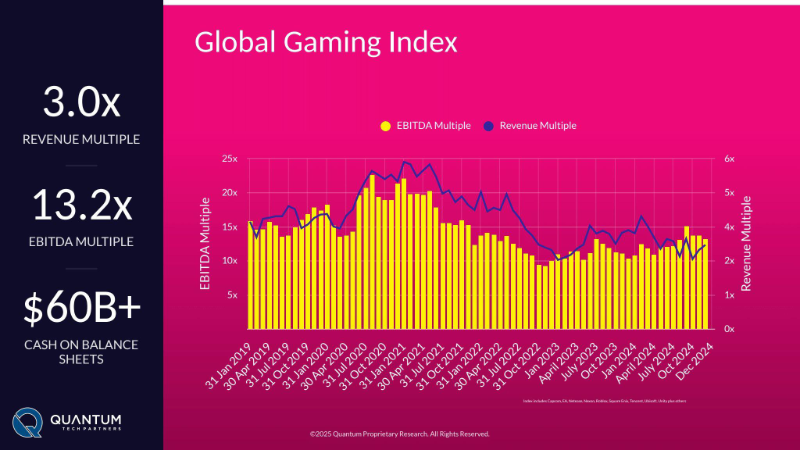
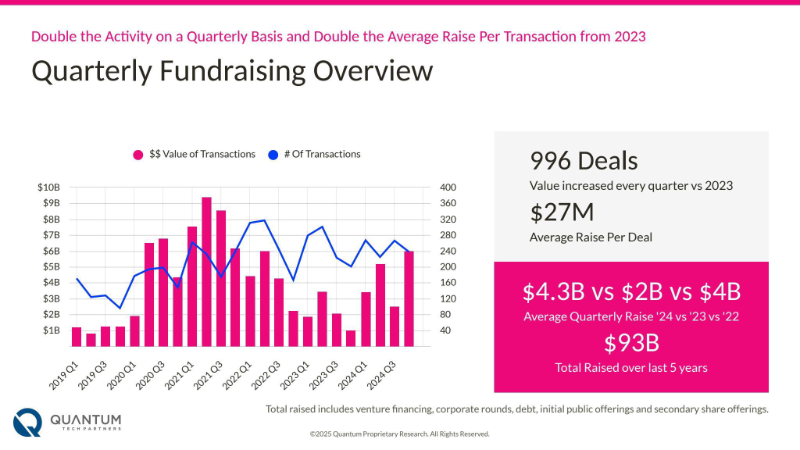

2025 Gaming Industry Report: M&A and Fundraising Update
The gaming industry has entered a period of stabilization, with merger and acquisition activity settling at $11.5 billion.
- Fundraising reached $17.2 billion in 2024, a 102% year-over-year increase that reflects a trend toward larger, more concentrated capital investments.
- Merger and acquisition activity has stabilized at $11.5 billion, marking a return to pre-pandemic valuation norms following post-2022 market corrections.
- Investor capital is increasingly shifting toward artificial intelligence and Web3 technologies, while the eSports sector faces a 66% decline in funding.
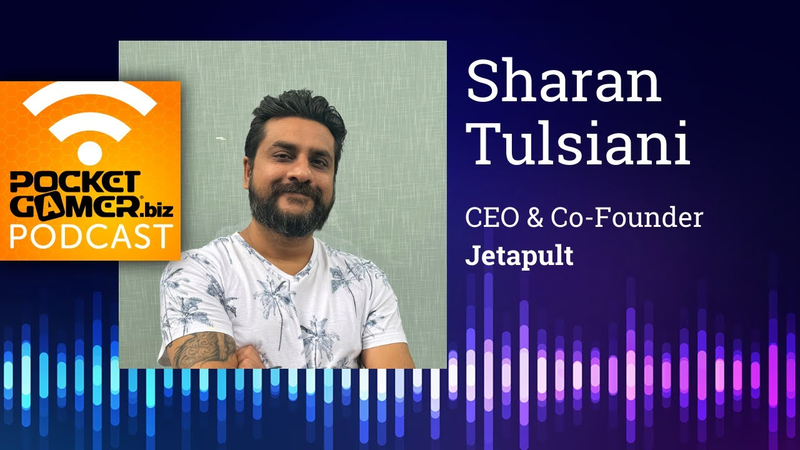
The Problem with Traditional VC Funding in Gaming—and Jetapult’s Solution
Traditional venture capital models often prioritize rapid, capital-intensive expansion, which frequently undermines the long-term sustainability of gaming studios.
- A partnership-driven funding model acts as a co-founder to provide a hybrid of equity-based and low-risk scaling capital, allowing studios to maintain creative control while professionalizing operations.
- Studios utilizing this data-driven framework to optimize user retention, engagement, and conversion have reported performance gains exceeding 50 percent.
- The integration of AI-driven development pipelines significantly accelerates production cycles by reducing the time required for complex tasks such as 3D asset creation.
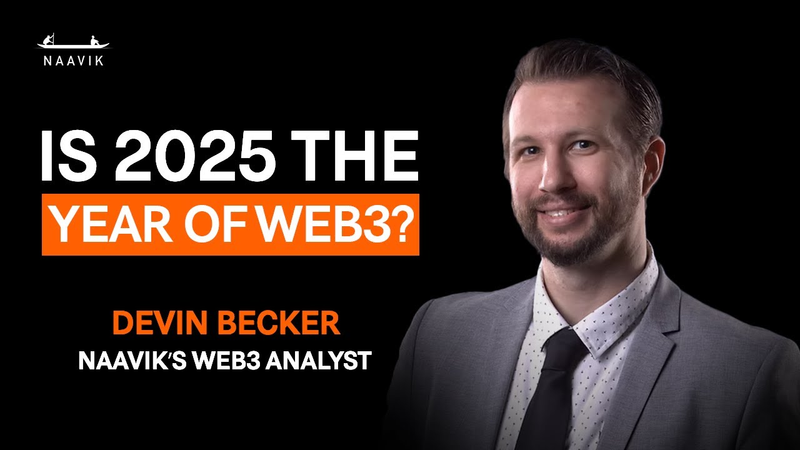
Web3 Gaming: What Will 2025 Bring?
The web3 gaming industry enters 2025 transitioning from a period of speculative volatility toward a focus on sustainable development and product quality.
- The web3 gaming funding landscape remains cautious, with 2024 seeing a 17% increase in investment rounds compared to 2023, though total capital remains significantly lower than the 2021-2022 peaks and is characterized by smaller, more conservative bets.
- AAA studios are currently prioritizing risk mitigation by focusing on established IP and smaller, internal studio experiments rather than large-scale web3 integration, waiting for a proven, scalable business model to emerge from smaller developers.
- Off the Grid has emerged as a critical industry benchmark for quality in web3 gaming, though its long-term success remains tied to whether its optional, tokenized economy features actually improve the core gameplay experience.

From Failures to Funding: Strategic Moves Founders Should Know with Joe Wadakethalakal, CEO of PvX
Building a high-growth business requires a strategic focus on massive total addressable markets, specifically within the United States, China, or India.
- Founders should prioritize tech-led business models over those dependent on non-recurring revenue or programmatic advertising to ensure long-term scalability.
- Non-dilutive financing strategies allow companies to borrow against predictable user acquisition returns, enabling growth and M&A activity while preserving equity.
- High-growth potential is primarily found by targeting massive total addressable markets within the United States, China, or India.

Inside NCSoft: Strategy, Partnerships, and Korean Gaming Trends
NCSoft’s strategic evolution reflects a broader transition within the Korean gaming industry, moving from rigid, subscription-based PC models toward diversified, globalized revenue streams.
- NCSoft shifted its business model starting around 2008, moving away from rigid subscription-based PC gaming toward diversified revenue streams driven by microtransactions and mobile platforms.
- The company’s internal transformation required integrating data science and artificial intelligence to refine player engagement and support large-scale international expansion.
- The Korean gaming market leverages high-density infrastructure and a history of PC-cafe culture to act as a primary testing ground for global-scale mobile and technological innovations.
Gaming CEO Survey: 2024 in Review
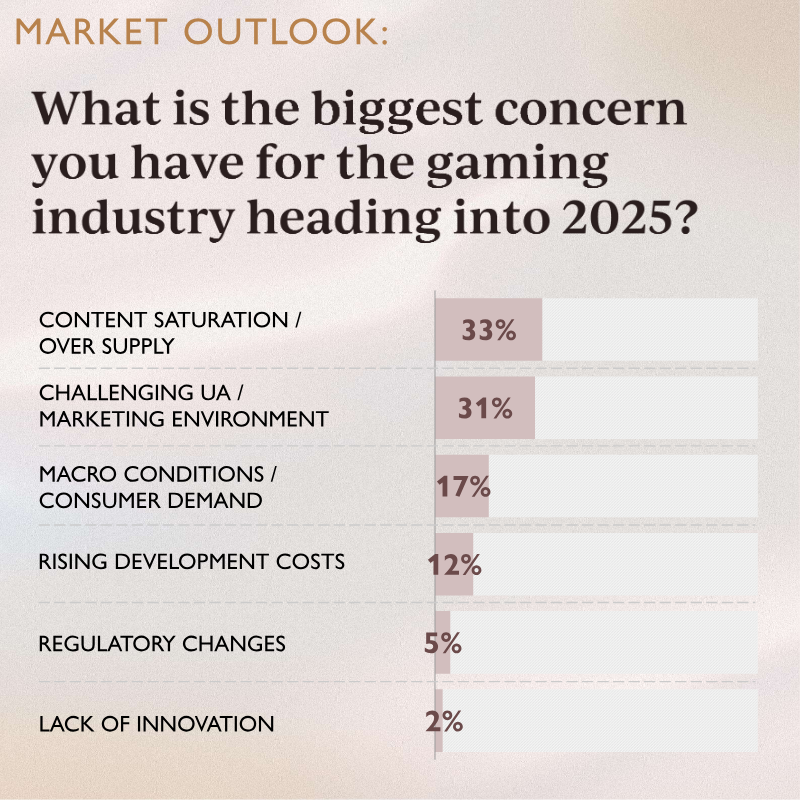
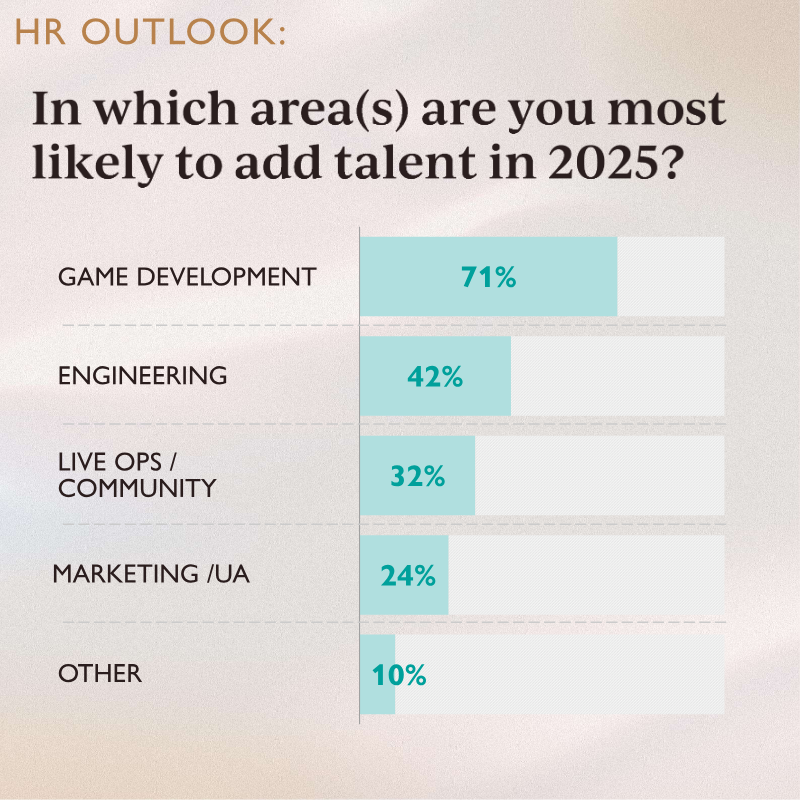
The 2024 gaming industry executive survey reveals a landscape defined by cautious optimism and strategic expansion.
- Industry leadership is optimistic for 2025, with 98% of executives expecting consumer spending to increase or remain stable.
- AI adoption is widespread, with 84% of companies already implementing the technology across functions like art, game design, and engineering.
- The M&A landscape is expected to intensify, as 71% of executives anticipate more deal-making opportunities in 2025 compared to the previous year.
The Game Industry of Poland: 2025
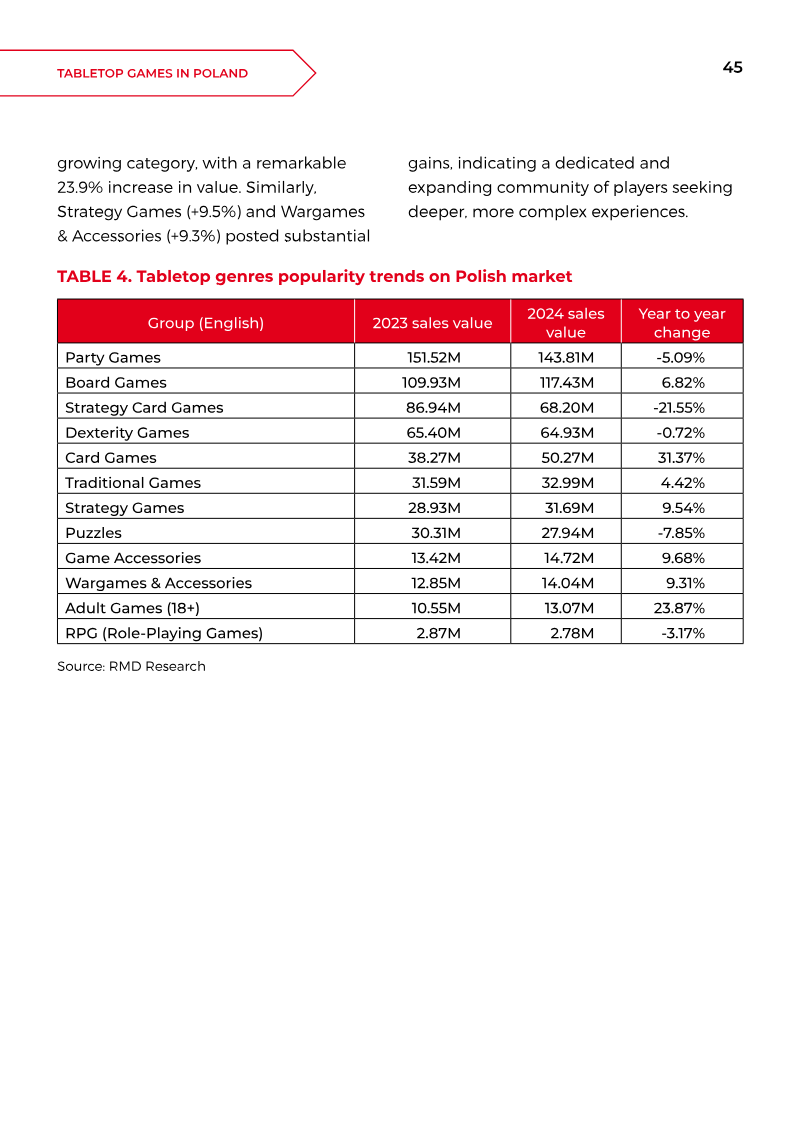
The Polish video game and tabletop sectors have matured into a cornerstone of the nation’s creative economy, establishing Poland as the second-largest market in Europe.
- The provided report content contains only the title and author credits, lacking the body text, statistical data, or specific industry findings required to generate factual insights.
- Due to the absence of substantive data in the provided source, it is impossible to extract growth rates, company performance metrics, or industry trends for the Polish game industry in 2025.
- The source material consists exclusively of administrative metadata regarding the report's contributors and institutional affiliations.

Dynamics of Gaming Deals
The analysis tracks global venture-capital activity in the video-game sector from the first quarter of 2019 through the second quarter of 2024, focusing on deals funded by VCs, strategic investors and publishers.
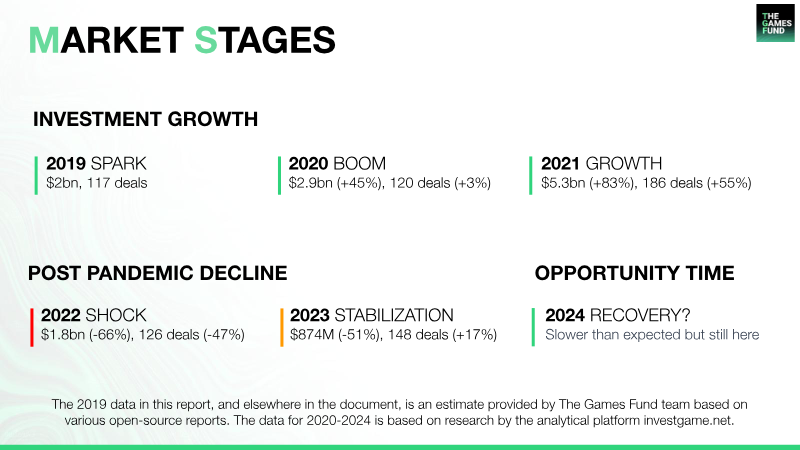
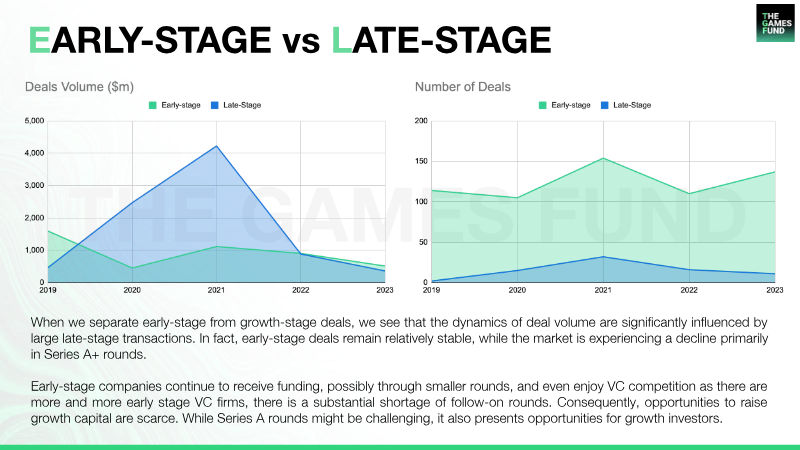
- Global gaming VC investment peaked at $5.3 billion across 186 deals in 2021 before contracting sharply to $874 million in 2023.
- The decline in total capital was primarily driven by a scarcity of Series A-plus growth-stage funding, even as early-stage financing remained relatively stable.
- A modest market rebound is underway in 2024, supported by the entry of new funds and expectations for higher returns despite ongoing user-acquisition challenges.



InvestGame Q4'24 Report (Unknown Time)
The gaming industry experienced a strategic shift in 2024, moving away from short-term financial arbitrage toward long-term, objective-driven transactions.
- The gaming industry is shifting toward long-term, objective-driven transactions, evidenced by a strong Q4 2024 M&A market and a 22% year-over-year increase in private investment funding.
- Venture capital is pivoting away from game development studios in favor of platform and technology startups, forcing corporate venture arms to become the primary source of studio financing.
- The work-for-hire sector is seeing major consolidation, underscored by the $2.8 billion buyout of Keywords.



La Financiación de un Videojuego: España
The guide aims to equip Spanish video-game developers and publishers with a practical framework for securing external financing, emphasizing investment agreements (AI) as a flexible alternative to traditional bank credit.
- Investment Agreements (AI) function as a hybrid financing model that provides developers with cash infusions linked to development milestones without requiring immediate equity dilution.
- AI structures grant investors political and economic rights—including voting and dividend privileges—comparable to shareholders, while tying repayment directly to a percentage of project revenue.
- Key contractual protections for investors include profitability targets with time-bound thresholds, 'bad leaver' clauses for founders, and the right to capitalize debt into equity if revenue targets are not met.

Financing Video Games: Spain
The guide aims to equip Spanish video-game developers and publishers with a practical framework for securing external financing beyond traditional bank credit.
- Investment agreements (IAs) serve as a hybrid financing model for Spanish developers, bridging the gap between equity and debt by granting investors shareholder-like rights without requiring immediate capital increases.
- Unlike traditional bank loans, IAs replace fixed repayment schedules with returns tied directly to project profitability, often including conversion mechanisms that turn credit into equity if revenue targets are missed.
- IAs typically structure capital as lump-sum or milestone-linked payments, with returns defined by a percentage of commercial revenues, such as a €100 investment targeting a €120 return.