Global reports and market data
Documents

First Experimental Results of ProbCut Applied to Chess
This research explores the application of ProbCut and Multi-ProbCut (MPC) heuristics to computer chess, aiming to enhance the standard alpha-beta search algorithm.
- Integrating Multi-ProbCut (MPC) into the CRAFTY chess engine resulted in a 59.4% win rate against the original version in a 64-game match.
- MPC-enhanced CRAFTY improved its win rate against the YACE chess program from 51% to 56% under speed chess conditions.
- The implementation of MPC heuristics allowed the engine to achieve an average search depth increase of approximately 0.5 plies.
Search and Knowledge in Lines of Action
The development of the Lines of Action programs YL and MoNA illustrates the fundamental tension between computational search depth and the sophistication of positional evaluation.
- Strategic evaluation quality is a more significant driver of long-term engine performance than raw computational search depth.
- Identifying potential mate threats is a superior predictor of success in Lines of Action compared to increasing the depth of the search tree.
- The marginal utility of additional search depth diminishes over time, making complex, knowledge-rich evaluation models the primary differentiator for elite performance.
Learning to Score Final Positions in the Game of Go
Machine learning systems can achieve near-perfect accuracy in determining the final scoring of Go games by classifying the life-and-death status of stone blocks.
- Machine learning models achieve 98.9% accuracy on 9x9 Go boards and 99.4% on 19x19 boards by classifying the life-and-death status of stone blocks.
- The system utilizes a recursive partition neural network trained on human game records to replace static knowledge bases with adaptive, learned representations.
- Models trained exclusively on 9x9 board configurations demonstrate high performance on 19x19 boards, proving the methodology is effective at generalizing across different board sizes without additional training.
Monte-Carlo Go Developments
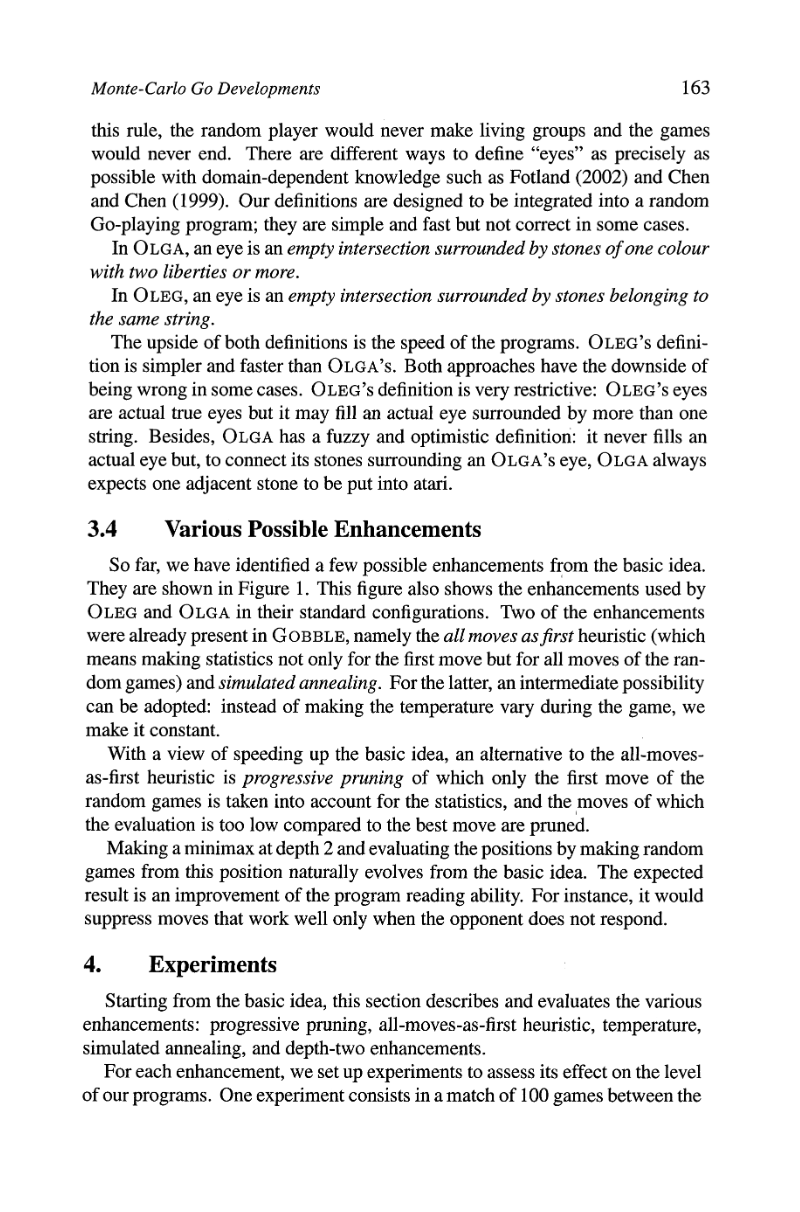
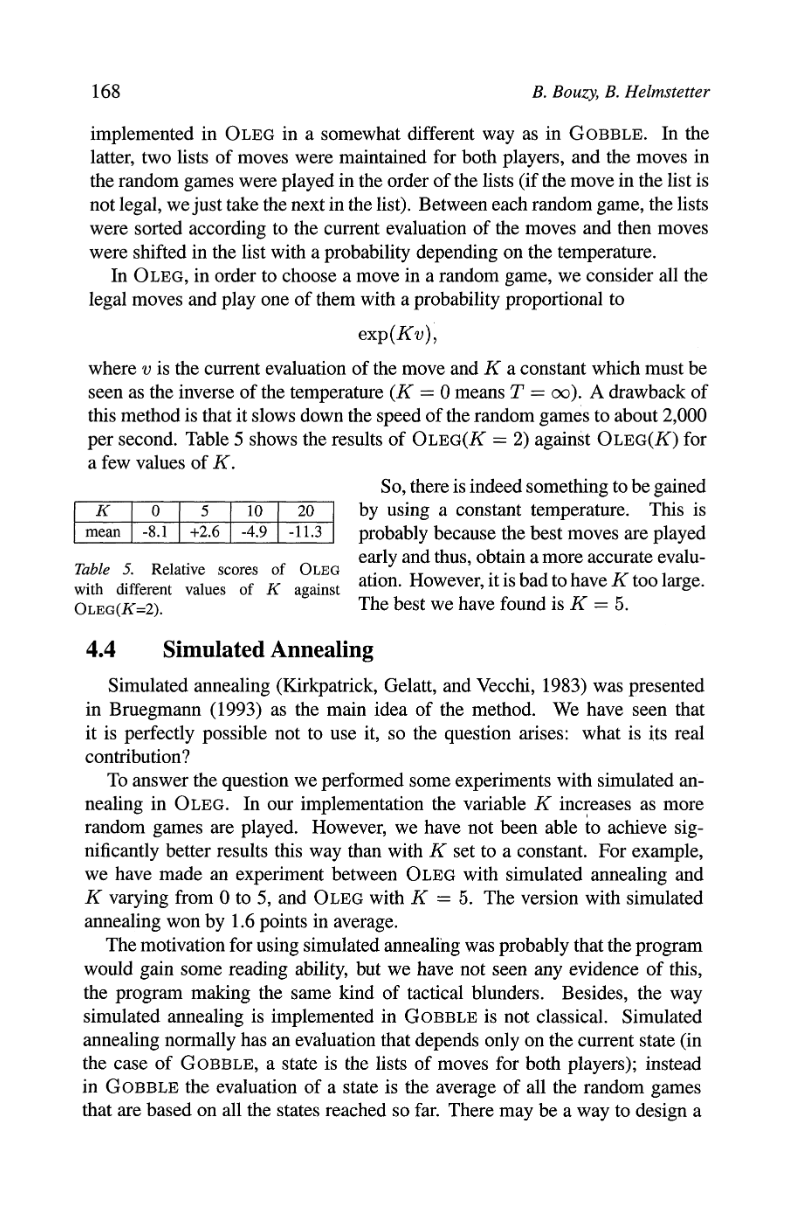
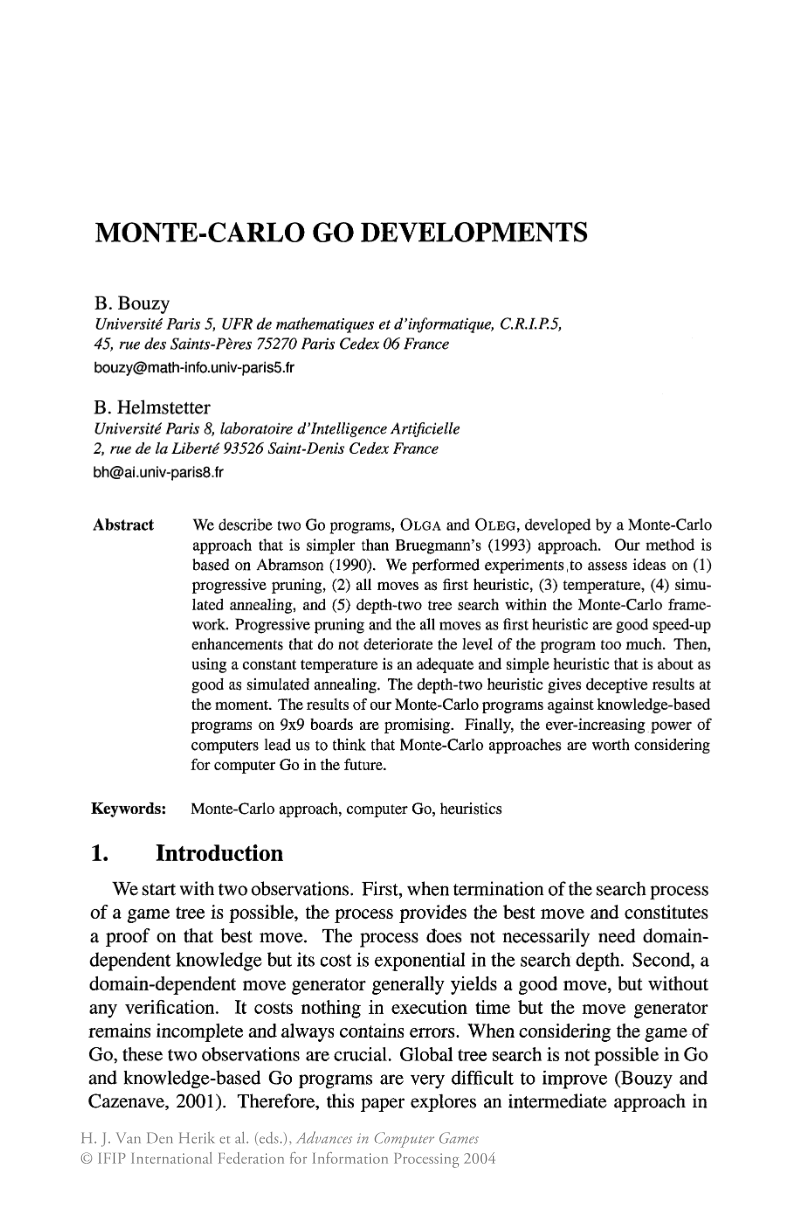
Monte-Carlo methods represent a significant shift in computer Go development, moving away from traditional, knowledge-heavy tree searches toward statistical simulation.
- Monte-Carlo methods represent a shift in computer Go from knowledge-heavy tree searches to computationally efficient statistical simulations.
- Programs like OLGA and OLEG demonstrate competitive parity with engines such as INDIGO on 9x9 boards, though they currently lack the tactical depth of GNUGo.
- Algorithmic optimizations including progressive pruning and the all-moves-as-first heuristic are essential for increasing processing speed without compromising competitive integrity.


Player-Centered Game Environments: Assessing Player Opinions, Experiences, and Issues
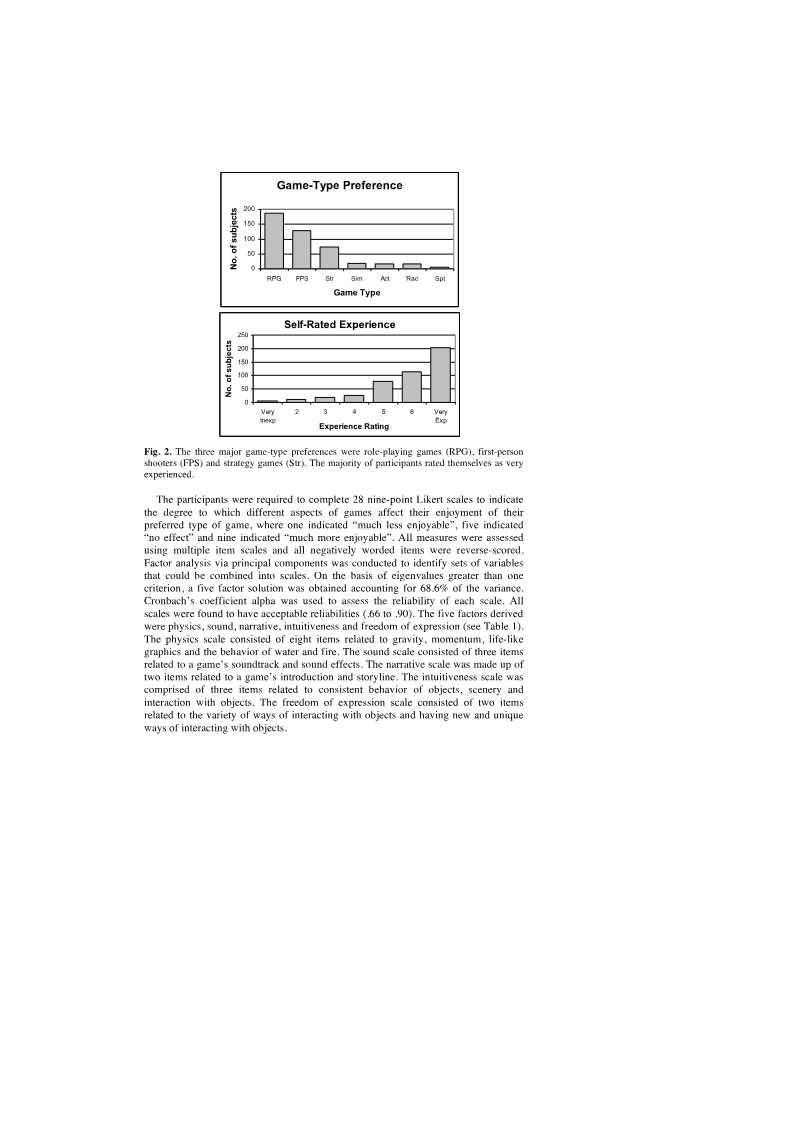
Player-centered game design prioritizes the user experience over traditional developer-centric metrics to foster deeper engagement and minimize frustration.
- Player-centered design relies on five core pillars: physics, sound, narrative, intuitiveness, and freedom of expression to drive engagement and minimize frustration.
- Experienced players are more critical of design flaws than novices, showing heightened sensitivity to issues with intuitiveness, narrative coherence, and freedom of expression.
- The importance of the five design pillars varies by genre, with first-person shooters specifically requiring high-quality physics and sound to maintain immersion.


Chess Endgames: Data and Strategy
The development of advanced chess endgame tablebases marks a significant evolution in computational strategy, moving beyond traditional Depth-to-Mate metrics toward more efficient alternatives like Depth to Conversion and Depth to Zeroing.
- Modern chess engines are shifting from traditional Depth-to-Mate metrics toward more efficient alternatives like Depth to Conversion (DTC) and Depth to Zeroing (DTZ) to optimize 3-to-6-man endgame performance.
- Integrating DTZ50 and DTR metrics allows engines to navigate the constraints of the 50-move rule, preventing forced draws in positions that were previously misplayed as winning.
- Traditional endgame strategies frequently result in unnecessary draws because they fail to account for the practical move-limit constraints inherent in high-level play.


Interactive Audio on the Web: Review and Recommendations
Published in December 2002 by the MIDI Manufacturers Association, this document provides a comprehensive review and set of recommendations for interactive audio on the web, addressing the fragmented landscape of existing technologies.
- The 2002 web audio landscape is defined by extreme fragmentation, forcing developers to rely on incompatible proprietary technologies like Macromedia Flash, QuickTime, RealOne, and Java.
- Macromedia Flash is currently the most viable and ubiquitous tool for interactive web audio, despite its lack of native digital signal processing and advanced sequencing capabilities.
- Advanced platforms like Java Sound and Beatnik offer superior synthesis and real-time manipulation but are marginalized by high barriers to entry and inconsistent browser integration.
Complex Games and Palm Computers
The primary objective of this analysis is to address the technical and functional design challenges inherent in developing complex games for Palm handheld computers.
- The window for independent, one-person game development on the Palm OS platform is a transient opportunity that will close as hardware evolves toward specialized gaming devices requiring professional teams.
- Developers frequently fail to account for Palm hardware constraints, specifically low-resolution displays, limited memory, and the device's primary function as a tool for quick, task-oriented business use.
- Seven recurring design failures hinder Palm game viability: excessive screen density, navigation complexity, high memory overhead, poor control mapping, reliance on external materials, lack of interruptibility, and the necessity for external manuals.
Touch Space: An Embodied Computing Mixed Reality Game Space
Touch-Space introduces a novel mixed reality (MR) gaming framework designed to reintegrate physical interaction, human touch, and social presence into computer entertainment.
- Touch-Space utilizes an embodied computing framework to integrate physical movement, tangible object manipulation, and social interaction into room-scale mixed reality gaming.
- The system features a seamless transition interface that allows players to switch between AR and VR modes while maintaining continuous physical and social awareness of other participants.
- By anchoring digital 3D objects to physical locations and movements, the framework replaces traditional screen-based interfaces with natural gestures and body language.
A Metric for Entertainment of Boardgames: Its Implication for Evolution of Chess Variants
This research introduces a quantitative metric to evaluate the entertainment value of board games, specifically focusing on the evolutionary trajectory of chess variants.
- The entertainment value of a board game, E(G), is quantitatively defined by the ratio between the average number of plausible moves and the average game length, where a lower value indicates higher entertainment.
- Historical evolution of chess variants demonstrates a deliberate optimization process aimed at balancing strategic complexity with player engagement by reducing E(G).
- Modern chess has reached a mature equilibrium by utilizing powerful pieces like the Queen and modern promotion rules to minimize game duration and draw frequencies compared to earlier variants.
The Technoludic Film: Images of Video Games in Movies (1973–2001)
The technoludic film represents a distinct cinematic genre emerging from the convergence of video games and traditional film.
- The 'technoludic film' genre emerged from the convergence of cinema and video games, as evidenced by an analysis of 53 feature-length commercial films released between 1973 and 2001.
- Cinema incorporates electronic gaming through four distinct modes: commentary, quotation, adaptation, and remediation.
- Adaptation and remediation represent a structural shift where traditional cinema adopts gaming conventions, including non-linear narratives, role-playing metaphors, and digital aesthetics.
Issues and Approaches in Artificial Intelligence Middleware Development for Digital Games and Entertainment Products
The document examines the challenges and solutions in developing Artificial Intelligence (AI) middleware for digital games and entertainment products.
- AI has shifted from a secondary concern to a priority in game development, yet developers still rely on a narrow set of techniques and lack flexible, reusable tooling.
- Dedicated AI middleware, a software layer that supplies agent behavior and decision-making services to game engines, is presented as the likely next step for improving game AI and freeing developers for creative work.
- Dominant practice relies on finite state machines, hierarchical and fuzzy state machines, A pathfinding, steering behaviors, decision trees, and rule-based systems, each trading off speed, expressiveness, and predictability.