ReportNewzoo
Spotting the Mobile Spenders: An Analysis of Paying Smartphone and Tablet Gamers
31 pages~16 min full read
Key insights
5 slides
Market Growth
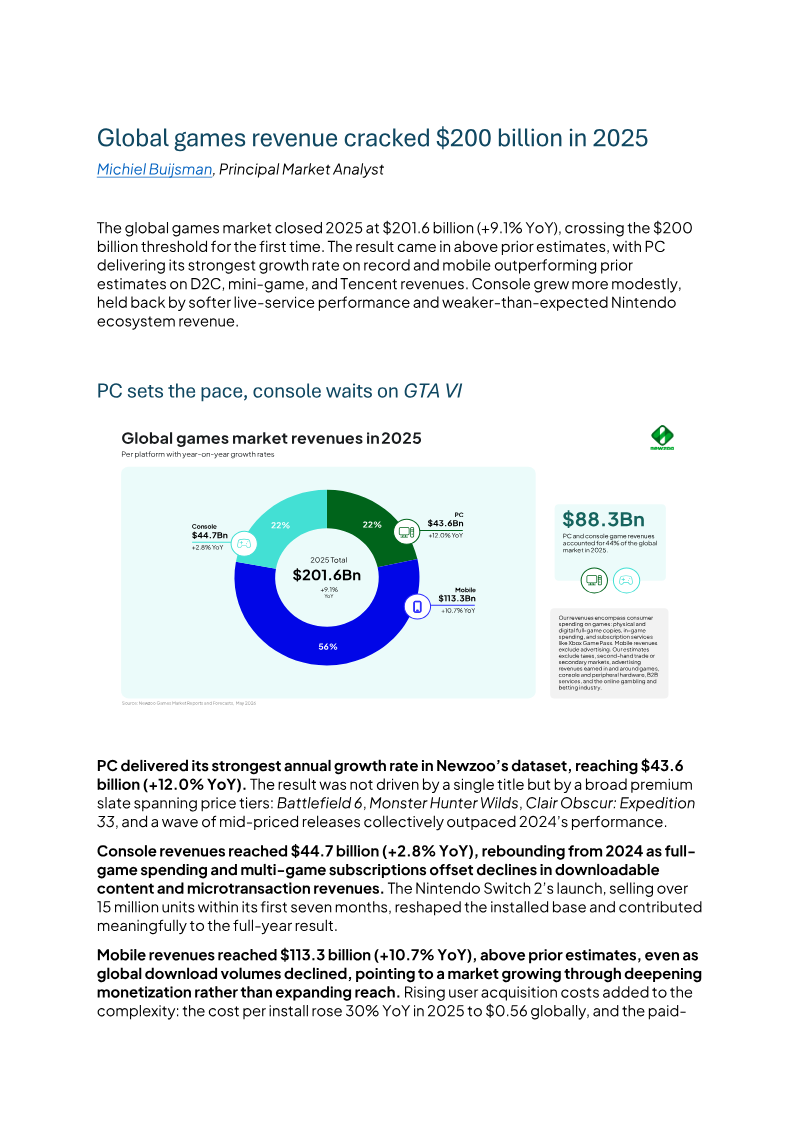
Mobile gaming revenue is projected to reach $25 billion globally by 2014.
The mobile gaming industry is experiencing significant expansion. This growth is driven by increased conversion rates and higher average monthly spending per user.
Page 6 of the report$25 billion
Projected global mobile gaming revenue by 2014.
- Projected share of total game revenues by 2017
- 50%
Channel Value
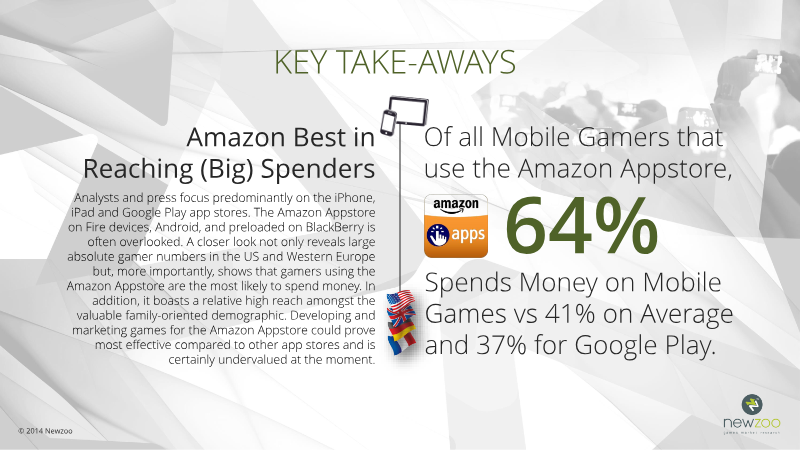
The Amazon Appstore is an undervalued channel for mobile game monetization.
Users on the Amazon Appstore demonstrate a higher propensity to spend money. This is compared to users on Google Play or Apple platforms.
Device Demographics
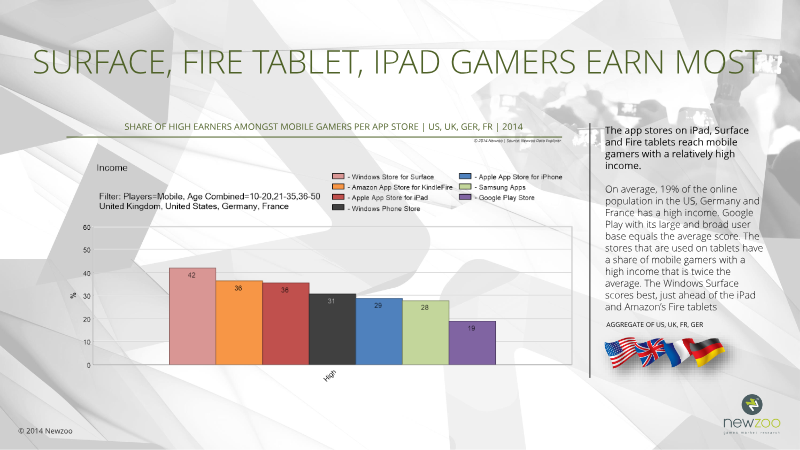
Tablet users on specific devices represent a high-value demographic.
These users, on iPad, Windows Surface, and Amazon Fire devices, tend to have higher incomes. They also show an increased propensity for spending.
Spender Profile
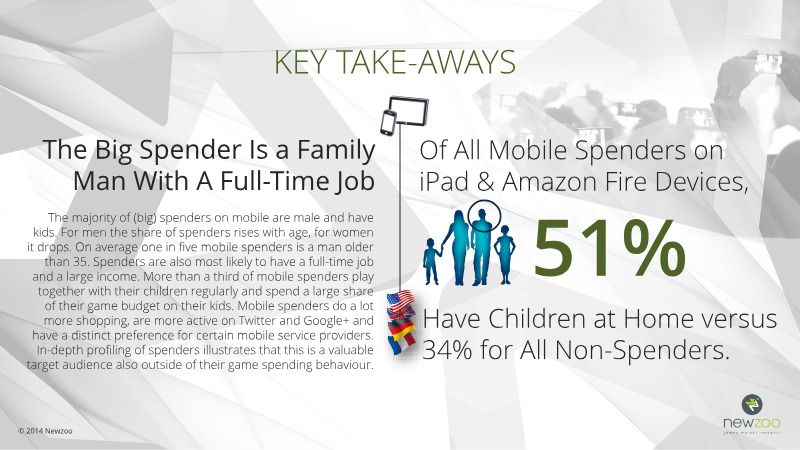
Mobile spenders are typically employed males with children.
These users exhibit high engagement across social media and retail platforms.
Think of them as the 'super-consumers' who are active in many areas, not just gaming.
Motivation Drivers
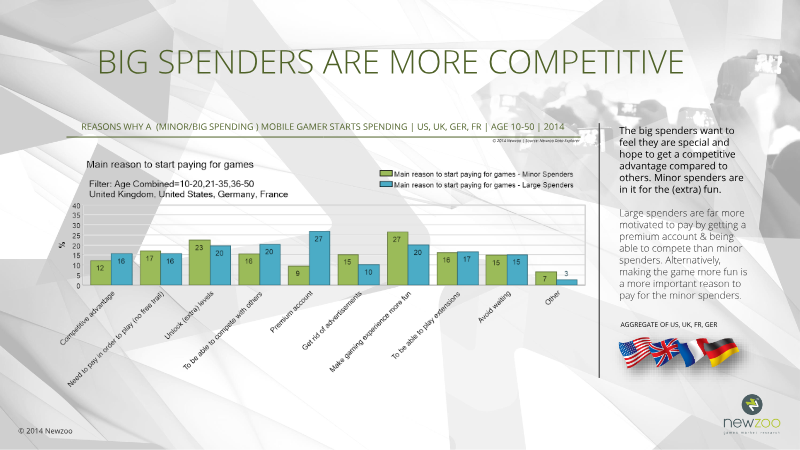
Big spenders are primarily motivated by competitive advantages in games.
In contrast, minor spenders are driven by entertainment value. Recommendations from friends and family remain the primary driver for game discovery.
1 / 5
Ask AI about this report